Gary Haynes – författare
Visar alla böcker från författaren Gary Haynes. Handla med fri frakt och snabb leverans.
8 produkter
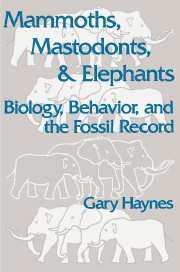
Mammoths, Mastodonts, and Elephants
Biology, Behavior and the Fossil Record
Av Gary Haynes
Häftad, 1993
927 kr
Lägg i varukorg
The diminishing populations of African and Asian elephants call to mind the extinctions of other elephantlike species, such as mammoths and mastodons, that occurred more than 10000 years ago. The purpose of this book is to examine the ecology and behaviour of modern elephants to create models for …
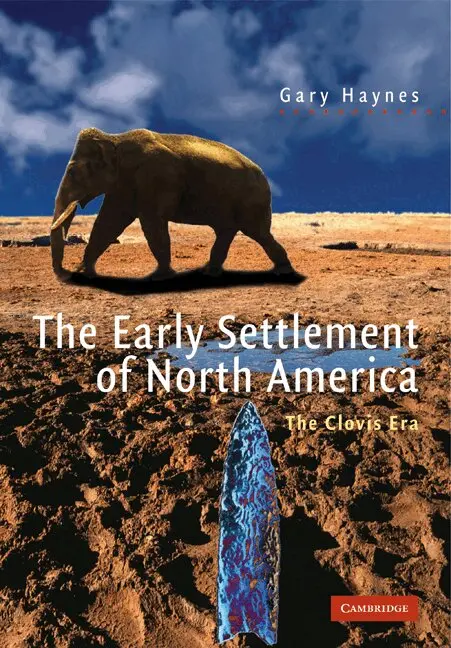
The Early Settlement of North America
The Clovis Era
Av Gary Haynes
Häftad, 2002
821 kr
Lägg i varukorg
The Early Settlement of North America is an examination of the first recognisable culture in the New World: the Clovis complex. Gary Haynes begins his analysis with a discussion of the archaeology of Clovis fluted points in North America and a review of the history of the research on the topic. He …
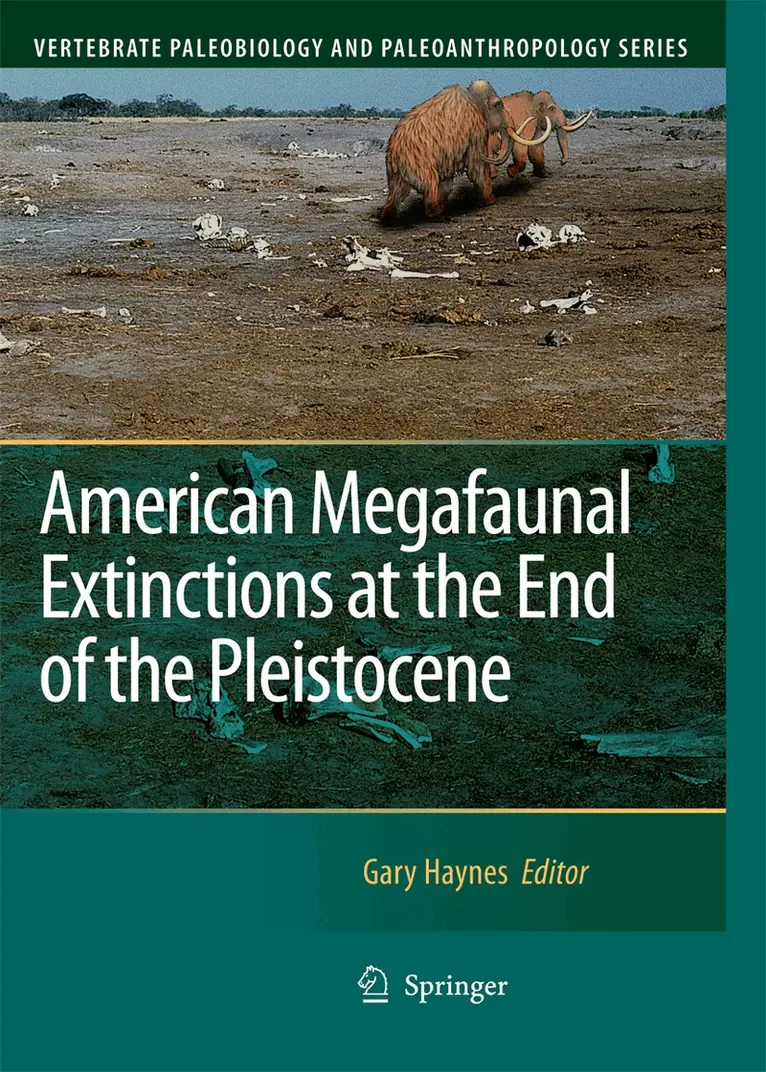
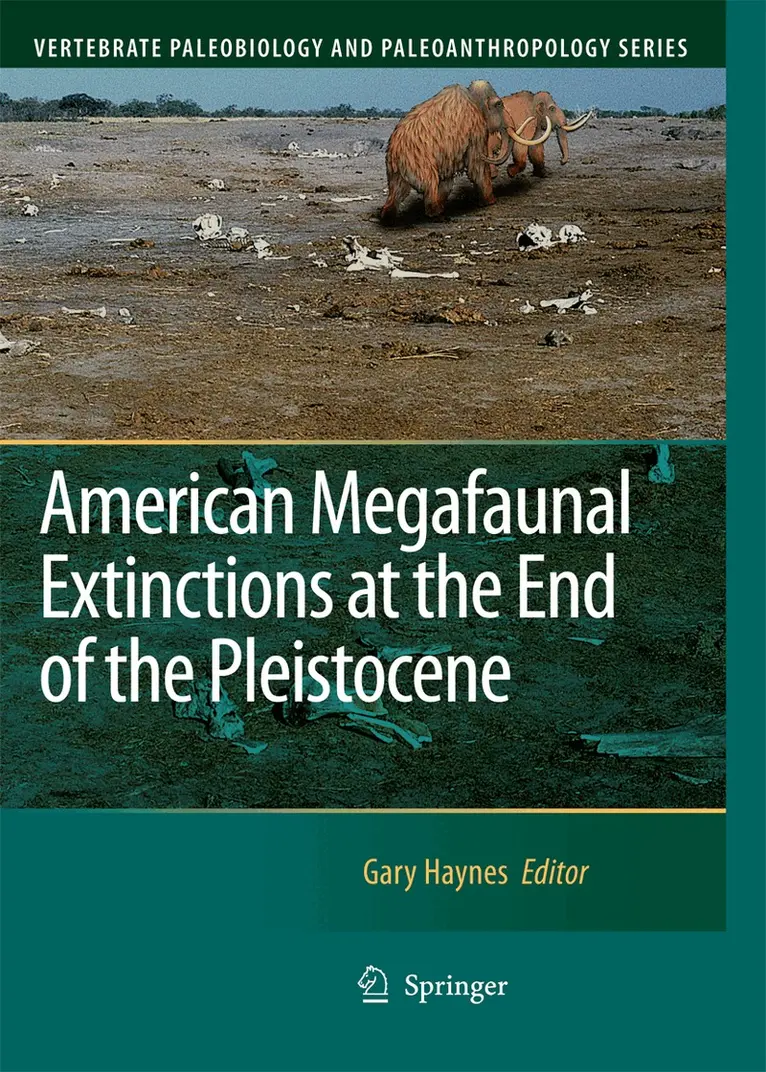
American Megafaunal Extinctions at the End of the Pleistocene
Av Gary Haynes
Inbunden, 2009
1237 kr
Lägg i varukorg
The volume contains summaries of facts, theories, and unsolved problems pertaining to the unexplained extinction of dozens of genera of mostly large terrestrial mammals, which occurred ca. 13,000 calendar years ago in North America and about 1,000 years later in South America. Another equally …
American Megafaunal Extinctions at the End of the Pleistocene
Av Gary Haynes
E-bok, 2008
1670 kr
Lägg i varukorg
The volume contains summaries of facts, theories, and unsolved problems pertaining to the unexplained extinction of dozens of genera of mostly large terrestrial mammals, which occurred ca. 13,000 calendar years ago in North America and about 1,000 years later in South America. Another equally …
State Of Honour
Av Gary Haynes
E-bok, 2013
33 kr
Lägg i varukorg
One man, one mission; prevent the outbreak of the next world war…Live reports of an explosive attack in Pakistan are flooding the world’s newsrooms. The US Secretary of State is missing – and with tensions on the international diplomatic scene at boiling point Special Agent Tom Dupree has only …
State Of Attack
Av Gary Haynes
E-bok, 2015
34 kr
Lägg i varukorg
State of Attack sees the return of Special Agent Tom Dupree in another turbocharged political thriller from Gary Haynes. Tom Dupree must embark on his most dangerous mission yet: a desperate search to track down the Sword of Allah, a jihadist otherwise known simply as Ibrahim.But the closer Dupree …
Blameless Dead
Av Gary Haynes
Häftad, 2020
255 kr
Lägg i varukorg
In the dying days of World War Two, Pavel Romasko and his Red Army colleagues pick their way through the detritus of a dying Berlin. Stumbling upon the smoking remains of a Nazi bunker, they find something inside that eclipses the horror of even the worst excesses in the city above them.
American Megafaunal Extinctions at the End of the Pleistocene
Av Gary Haynes
Häftad, 2010
1237 kr
Lägg i varukorg
The volume contains summaries of facts, theories, and unsolved problems pertaining to the unexplained extinction of dozens of genera of mostly large terrestrial mammals, which occurred ca. 13,000 calendar years ago in North America and about 1,000 years later in South America. Another equally …