Gary Macy - Böcker
Visar alla böcker från författaren Gary Macy. Handla med fri frakt och snabb leverans.
7 produkter
7 produkter
1 095 kr
Skickas inom 5-8 vardagar
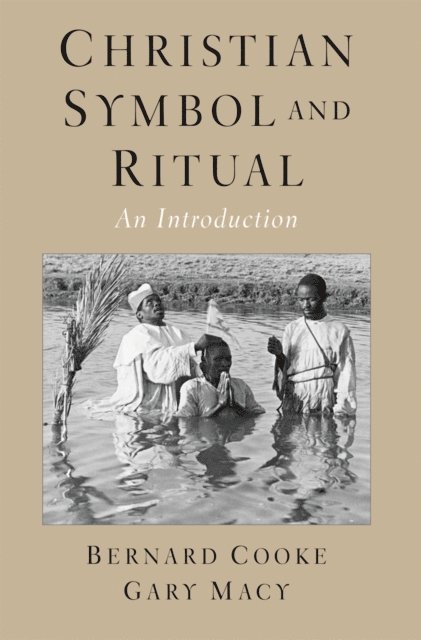
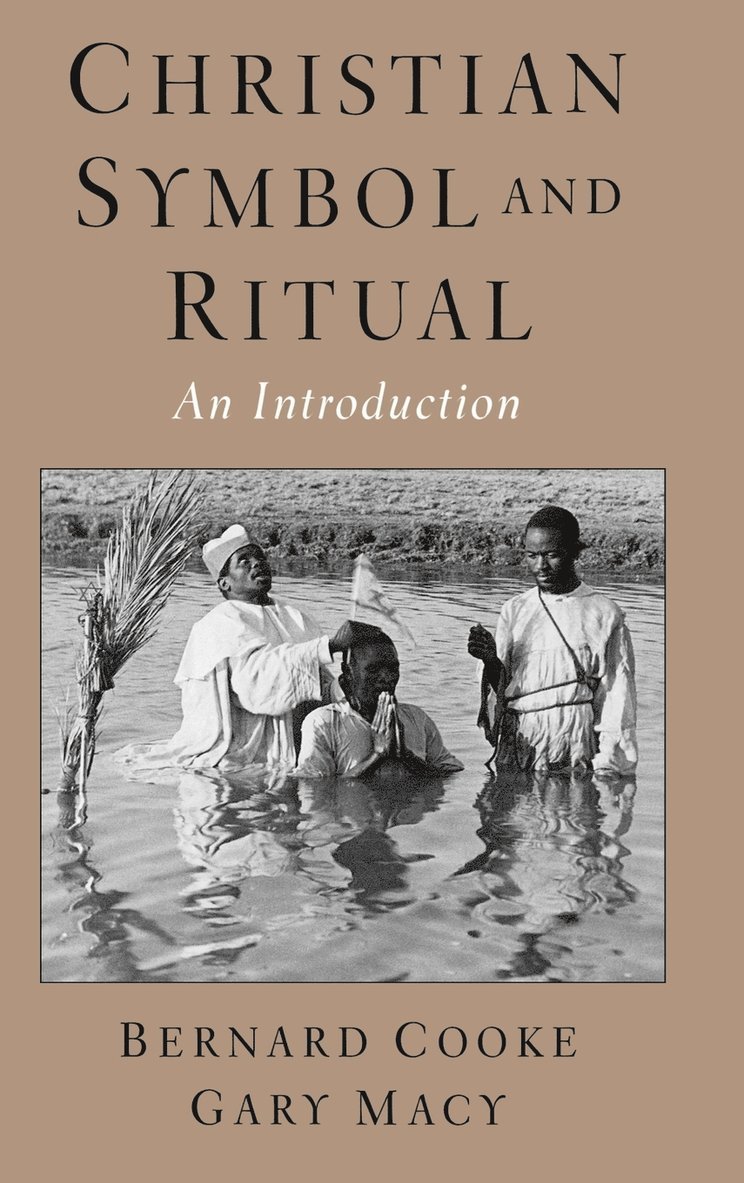
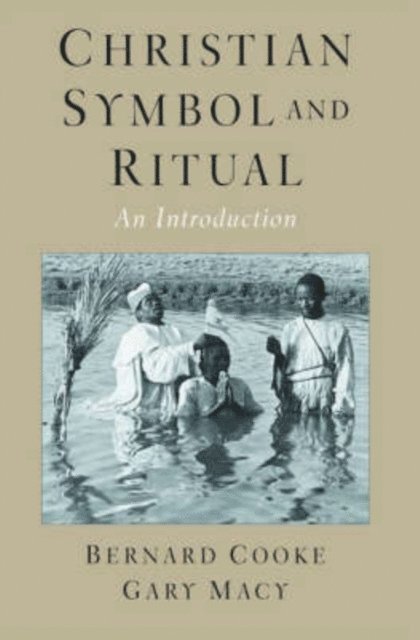
Existing books on Christian ritual and the sacraments tend to presuppose a good acquaintance with Roman Catholic thought and practice. Today, however, even at Catholic institutions students tend to lack even a basic knowledge of Christian ritual. Moreover, for many modern people the word "ritual" carries negative connotations of rigidity and boredom. In this accessibly-written book two noted authors offer an engaging introduction to this important topic. Their goal is first to demonstrate that celebration, ritual and symbol are already central to the readers' lives, even though most do not see their actions as symbolic or ritualistic. Once this point has been made, the book connects central Christian symbols to the symbols and rituals already present in the readers' lives. The Christian theology of symbol, ritual, and sacrament is thus placed in the context of everyday life. The authors go on to discuss such questions as how rituals establish and maintain power relationships, how "official" rituals are different from other "popular" Christian rituals and devotions, and how Christian rituals function in the process of human "salvation." Their lively yet solidly grounded work will appeal to intelligent lay readers and discussion groups, as well as being useful for courses in ritual and the sacraments at the undergraduate and seminary level.
363 kr
Skickas inom 5-8 vardagar
Existing books on Christian ritual and the sacraments tend to presuppose a good acquaintance with Roman Catholic thought and practice. Today, however, even at Catholic institutions students tend to lack even a basic knowledge of Christian ritual. Moreover, for many modern people the word "ritual" carries negative connotations of rigidity and boredom. In this accessibly-written book two noted authors offer an engaging introduction to this important topic. Their goal is first to demonstrate that celebration, ritual and symbol are already central to the readers' lives, even though most do not see their actions as symbolic or ritualistic. Once this point has been made, the book connects central Christian symbols to the symbols and rituals already present in the readers' lives. The Christian theology of symbol, ritual, and sacrament is thus placed in the context of everyday life. The authors go on to discuss such questions as how rituals establish and maintain power relationships, how "official" rituals are different from other "popular" Christian rituals and devotions, and how Christian rituals function in the process of human "salvation." Their lively yet solidly grounded work will appeal to intelligent lay readers and discussion groups, as well as being useful for courses in ritual and the sacraments at the undergraduate and seminary level.
529 kr
Skickas inom 5-8 vardagar
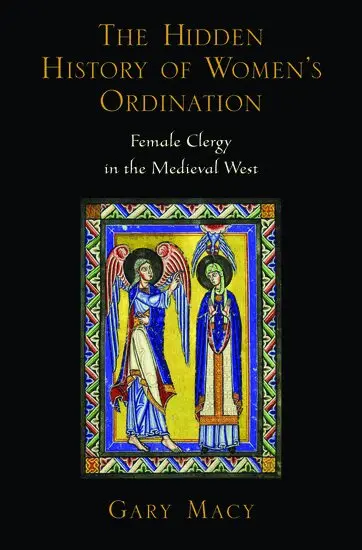
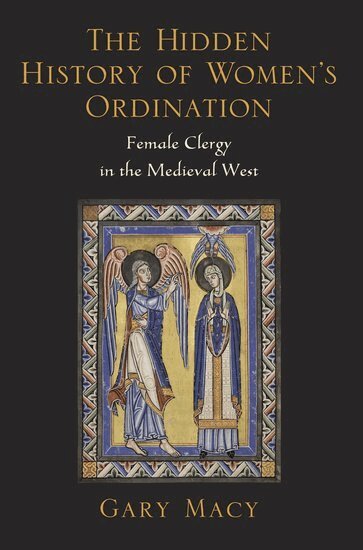
The Roman Catholic leadership still refuses to ordain women officially or even to recognize that women are capable of ordination. But is the widely held assumption that women have always been excluded from such roles historically accurate? How might the current debate change if our view of the history of women's ordination were to change?In The Hidden History of Women's Ordination, Gary Macy offers illuminating and surprising answers to these questions. Macy argues that for the first twelve hundred years of Christianity, women were in fact ordained into various roles in the church. He uncovers references to the ordination of women in papal, episcopal and theological documents of the time, and the rites for these ordinations have survived. The insistence among scholars that women were not ordained, Macy shows, is based on a later definition of ordination, one that would have been unknown in the early Middle Ages. In the early centuries of Christianity, ordination was understood as the process and the ceremony by which one moved to any new ministry in the community. In the early Middle Ages, women served in at least four central ministries: episcopa (woman bishop), presbytera (woman priest), deaconess and abbess. The ordinations of women continued until the Gregorian reforms of the eleventh and twelfth centuries radically altered the definition of ordination. These reforms not only removed women from the ordained ministry, but also attempted to eradicate any memory of women's ordination in the past.With profound implications for how women are viewed in Christian history, and for current debates about the role of women in the church, The Hidden History of Women's Ordination offers new answers to an old question and overturns a long-held erroneous belief.
309 kr
Skickas inom 5-8 vardagar
The Roman Catholic leadership still refuses to ordain women officially or even to recognize that women are capable of ordination. But is the widely held assumption that women have always been excluded from such roles historically accurate?In the early centuries of Christianity, ordination was the process and the ceremony by which one moved to any new ministry (ordo) in the community. By this definition, women were in fact ordained into several ministries. A radical change in the definition of ordination during the eleventh and twelfth centuries not only removed women from the ordained ministry, but also attempted to eradicate any memory of women's ordination in the past. The debate that accompanied this change has left its mark in the literature of the time. However, the triumph of a new definition of ordination as the bestowal of power, particularly the power to confect the Eucharist, so thoroughly dominated western thought and practice by the thirteenth century that the earlier concept of ordination was almost completely erased. The ordination of women, either in the present or in the past, became unthinkable.References to the ordination of women exist in papal, episcopal and theological documents of the time, and the rites for these ordinations have survived. Yet, many scholars still hold that women, particularly in the western church, were never "really" ordained. A survey of the literature reveals that most scholars use a definition of ordination that would have been unknown in the early middle ages. Thus, the modern determination that women were never ordained, Macy argues, is a premise based on false terms.Not a work of advocacy, this important book applies indispensable historical background for the ongoing debate about women's ordination.
342 kr
Skickas inom 3-6 vardagar
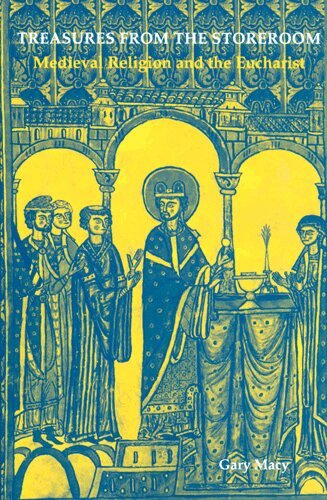
Do we really know about religion in the Middle Ages? Gary Macy suggests that what most people believe about the Church of the Middle Ages is actually wrong or founded on the perspective of one figure, Aquinas. Now, after two decades of research, Macy explores the truth about medieval religion and the Eucharist in Treasures from the Storeroom, an intriguing look into the forgotten areas of our Christian heritage. Using a wide range of original sources for these articles, Macy discusses such topics as theology, devotion, ecclesiology, and historical methodology.This collection of eight essays provides an important backdrop to the plenary address, The Eucharist and Popular Devotion," presented at the 1997 national convention of the Catholic Theological Society of America (CTSA), since several themes raised in that address are actually summaries of the fuller arguments presented in these articles. By presenting them here as a whole in the form of a book, Macy offers readers a clearer, more systematic look at the themes raised in that address.As comforting as it may be for today's theologians (and others) to pick and choose from the past so that history conveniently leads to their own favorite conclusions, Macy suggests that the Church's true tradition is diversity. Writing to fellow scholars, he offers Treasures from the Storeroom as a text for classroom use and as simply interesting reading.The chapters in Treasures from the Storeroom are *Introduction to The Theologies of the Eucharist in the Early Scholastic Period. A Study of the Salvific Function of the Sacrament According to the Theologians, c. 1080-c.1220, - *The Theological Fate of Beranger's Oath of 1059. Interpreting a Blunder Become Tradition, - *Reception of the Eucharist According to the Theologians: A Case of Diversity in the 13th and14th Centuries, - *Beranger's Legacy as Heresiarch, - *The 'Dogma of Transubstantiation' in the Middle Ages, - *Demythologizing 'the Church 'in the Middle Ages, - *Commentaries on the Mass During the Early Scholastic Period, - and *The Eucharist and Popular Religiosity. - Gary Macy, PhD, teaches at the University of San Diego and is widely published in the areas of medieval theology and devotion."
313 kr
Skickas inom 5-8 vardagar
4 629 kr
Skickas inom 3-6 vardagar