Gavin Arnall - Böcker
Visar alla böcker från författaren Gavin Arnall. Handla med fri frakt och snabb leverans.
4 produkter
4 produkter
1 031 kr
Skickas inom 7-10 vardagar
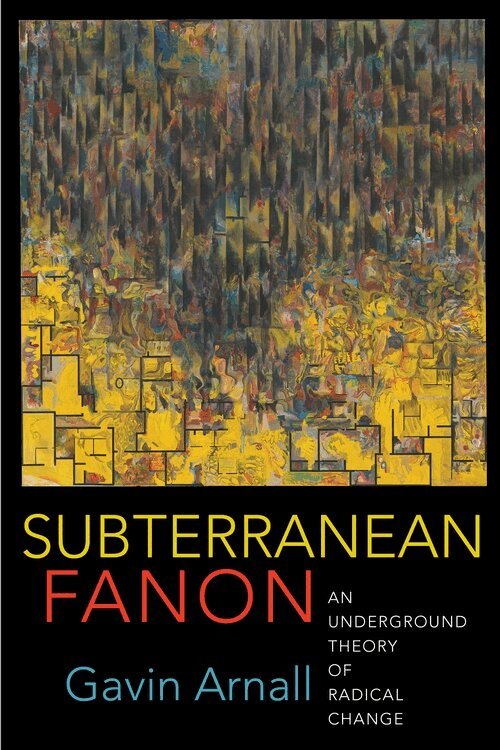
The problem of change recurs across Frantz Fanon’s writings. As a philosopher, psychiatrist, and revolutionary, Fanon was deeply committed to theorizing and instigating change in all of its facets. Change is the thread that ties together his critical dialogue with Hegel, Marx, Freud, and Nietzsche and his intellectual exchange with Césaire, Kojève, and Sartre. It informs his analysis of racism and colonialism, négritude and the veil, language and culture, disalienation and decolonization, and it underpins his reflections on Martinique, Algeria, the Caribbean, Africa, the Third World, and the world at large.Gavin Arnall traces an internal division throughout Fanon’s work between two distinct modes of thinking about change. He contends that there are two Fanons: a dominant Fanon who conceives of change as a dialectical process of becoming and a subterranean Fanon who experiments with an even more explosive underground theory of transformation. Arnall offers close readings of Fanon’s entire oeuvre, from canonical works like Black Skin, White Masks and The Wretched of the Earth to his psychiatric papers and recently published materials, including his play, Parallel Hands. Speaking both to scholars and to the continued vitality of Fanon’s ideas among today’s social movements, this book offers a rigorous and profoundly original engagement with Fanon that affirms his importance in the effort to bring about radical change.
259 kr
Skickas inom 7-10 vardagar
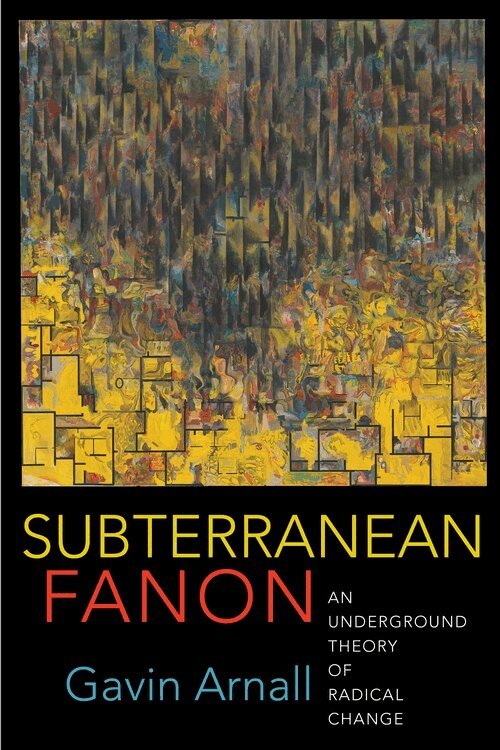
The problem of change recurs across Frantz Fanon’s writings. As a philosopher, psychiatrist, and revolutionary, Fanon was deeply committed to theorizing and instigating change in all of its facets. Change is the thread that ties together his critical dialogue with Hegel, Marx, Freud, and Nietzsche and his intellectual exchange with Césaire, Kojève, and Sartre. It informs his analysis of racism and colonialism, négritude and the veil, language and culture, disalienation and decolonization, and it underpins his reflections on Martinique, Algeria, the Caribbean, Africa, the Third World, and the world at large.Gavin Arnall traces an internal division throughout Fanon’s work between two distinct modes of thinking about change. He contends that there are two Fanons: a dominant Fanon who conceives of change as a dialectical process of becoming and a subterranean Fanon who experiments with an even more explosive underground theory of transformation. Arnall offers close readings of Fanon’s entire oeuvre, from canonical works like Black Skin, White Masks and The Wretched of the Earth to his psychiatric papers and recently published materials, including his play, Parallel Hands. Speaking both to scholars and to the continued vitality of Fanon’s ideas among today’s social movements, this book offers a rigorous and profoundly original engagement with Fanon that affirms his importance in the effort to bring about radical change.
1 539 kr
Skickas inom 10-15 vardagar
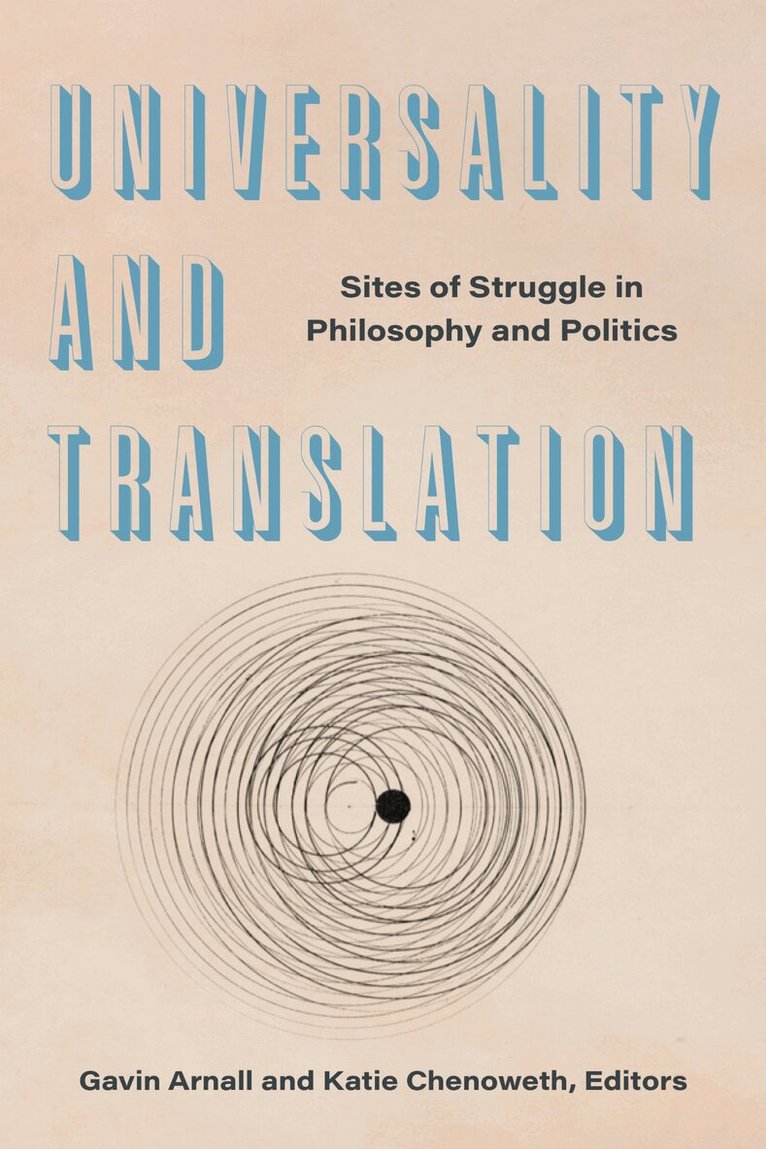
Within contemporary theory, the concepts of translation and universality have frequently been associated with different and even opposed philosophical and political projects: watchwords of either domination or liberation, the erasure of difference or the defense of difference. The universalizing drives of capitalism, colonialism, and other systems of oppression have precipitated widespread suspicion of any appeal to universality. This has led some, in turn, to champion the very notion of universality as antithetical to these systems of oppression. Similarly, recent scholarship has begun to grapple with the fundamental role of translation not only in forging inclusive democratic politics but also, by contrast, in violence, including imperial expansion and global war. The present volume advocates neither for nor against translation or universality as such. Instead, it attends to their insurmountable ambiguity and equivocity, the tensions and contradictions that are internal to both concepts and that exist between them. Indeed, the wager of this volume is that translation, universality, and their relationship name irreducible yet overlapping sites of struggle for a diverse array of struggles on the Left.Drawing from multiple intellectual traditions and orientations, with a special emphasis on deconstruction and Marxism, this volume both reveals and participates in a subterranean current of thought committed to theorizing the dynamic, plural, and ultimately inextricable relationship between translation and universality. Its contributors approach this problem in ways that challenge and unsettle dominant trends within translation studies and critical and postcolonial theory, thereby opening new lines of inquiry within and beyond these fields.
416 kr
Skickas inom 7-10 vardagar
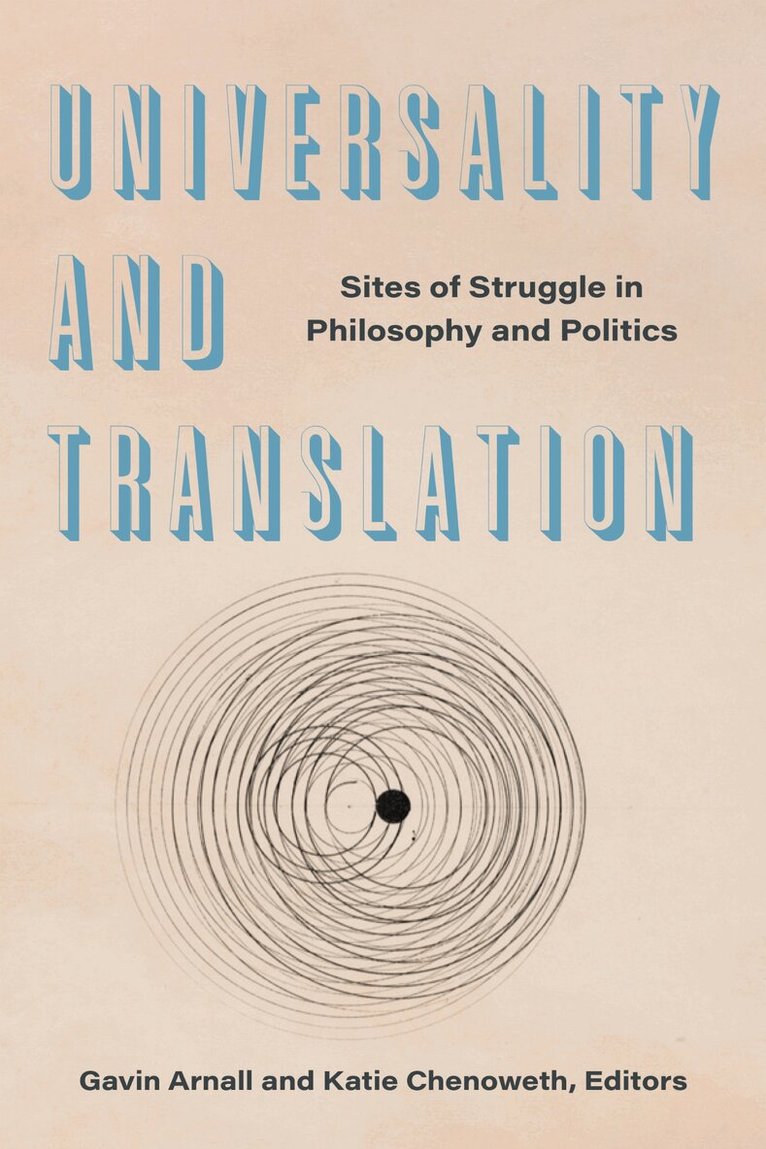
Within contemporary theory, the concepts of translation and universality have frequently been associated with different and even opposed philosophical and political projects: watchwords of either domination or liberation, the erasure of difference or the defense of difference. The universalizing drives of capitalism, colonialism, and other systems of oppression have precipitated widespread suspicion of any appeal to universality. This has led some, in turn, to champion the very notion of universality as antithetical to these systems of oppression. Similarly, recent scholarship has begun to grapple with the fundamental role of translation not only in forging inclusive democratic politics but also, by contrast, in violence, including imperial expansion and global war. The present volume advocates neither for nor against translation or universality as such. Instead, it attends to their insurmountable ambiguity and equivocity, the tensions and contradictions that are internal to both concepts and that exist between them. Indeed, the wager of this volume is that translation, universality, and their relationship name irreducible yet overlapping sites of struggle for a diverse array of struggles on the Left.Drawing from multiple intellectual traditions and orientations, with a special emphasis on deconstruction and Marxism, this volume both reveals and participates in a subterranean current of thought committed to theorizing the dynamic, plural, and ultimately inextricable relationship between translation and universality. Its contributors approach this problem in ways that challenge and unsettle dominant trends within translation studies and critical and postcolonial theory, thereby opening new lines of inquiry within and beyond these fields.