Katie Chenoweth - Böcker
Visar alla böcker från författaren Katie Chenoweth. Handla med fri frakt och snabb leverans.
4 produkter
4 produkter
242 kr
Skickas inom 7-10 vardagar
A significant event in Derrida scholarship, this book marks the first publication of his long-lost philosophical text known only as "Geschlecht III." The third, and arguably the most significant, piece in his four-part Geschlecht series, it fills a gap that has perplexed Derrida scholars. The series centers on Martin Heidegger and the enigmatic German word Geschlecht, which has several meanings pointing to race, sex, and lineage. Throughout the series, Derrida engages with Heidegger's controversial oeuvre to tease out topics of sexual difference, nationalism, race, and humanity. In Geschlecht III, he calls attention to Heidegger's problematic nationalism, his work's political and sexual themes, and his promise of salvation through the coming of the "One Geschlecht," a sentiment that Derrida found concerningly close to the racial ideology of the Nazi party.Amid new revelations about Heidegger's anti-Semitism and the contemporary context of nationalist resurgence, this third piece of the Geschlecht series is timelier and more necessary than ever. Meticulously edited and expertly translated, this volume brings Derrida's mysterious and much awaited text to light.
984 kr
Skickas inom 10-15 vardagar
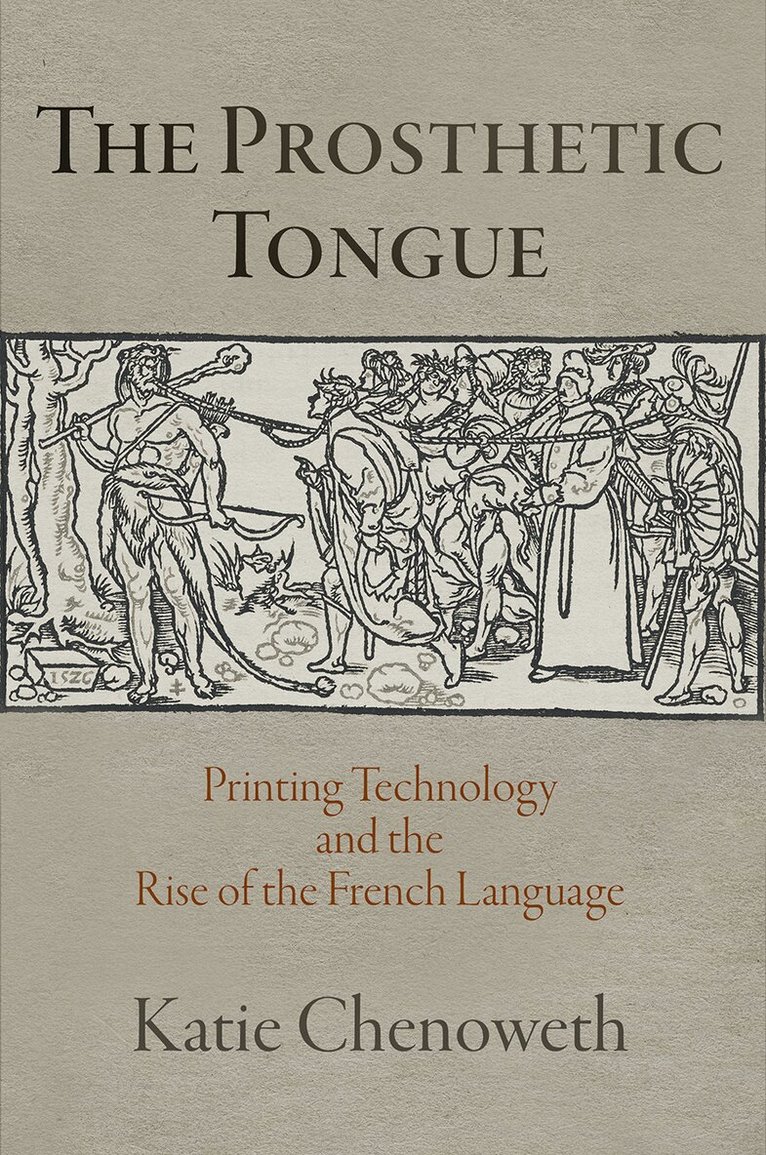
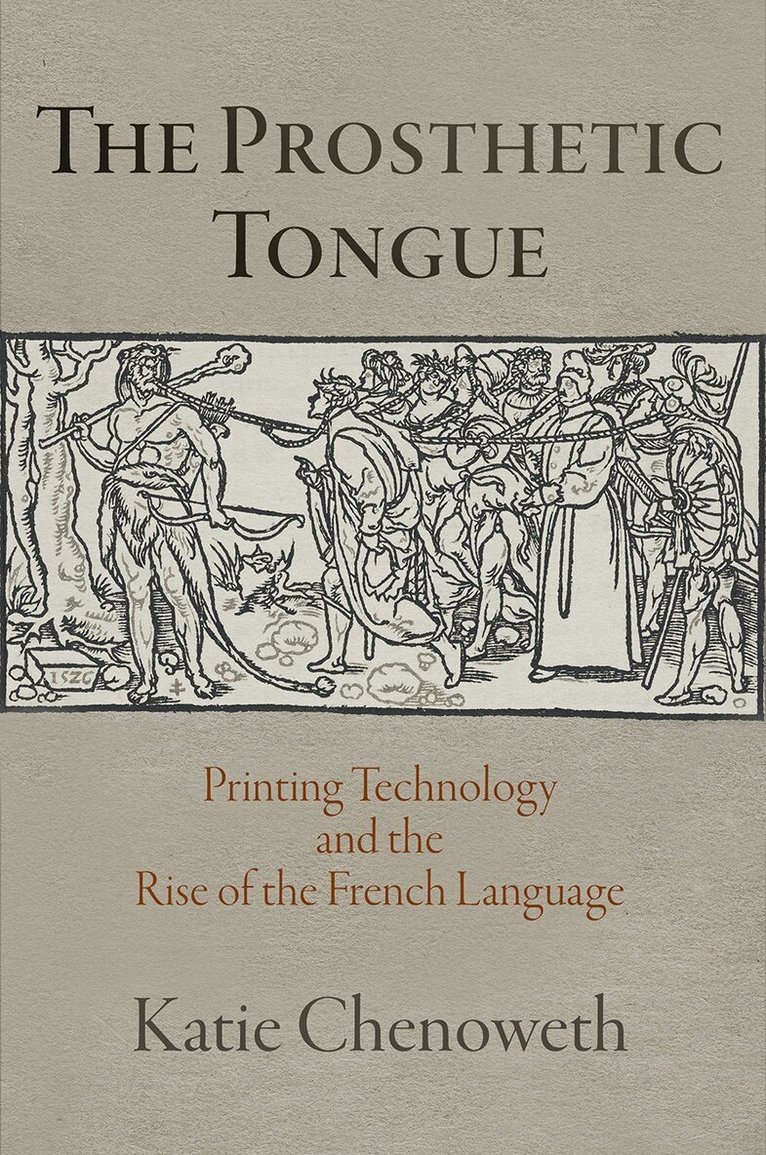
Of all the cultural "revolutions" brought about by the development of printing technology during the sixteenth century, perhaps the most remarkable but least understood is the purported rise of European vernacular languages. It is generally accepted that the invention of printing constitutes an event in the history of language that has profoundly shaped modernity, and yet the exact nature of this transformation-the mechanics of the event-has remained curiously unexamined.In The Prosthetic Tongue, Katie Chenoweth explores the relationship between printing and the vernacular as it took shape in sixteenth-century France and charts the technological reinvention of French across a range of domains, from typography, orthography, and grammar to politics, pedagogy, and poetics. Under FranÇois I, the king known in his own time as the "Father of Letters," both printing and vernacular language emerged as major cultural and political forces. Beginning in 1529, French underwent a remarkable transformation, as printers and writers began to reimagine their mother tongue as mechanically reproducible. The first accent marks appeared in French texts, the first French grammar books and dictionaries were published, phonetic spelling reforms were debated, modern Roman typefaces replaced gothic scripts, and French was codified as a legal idiom.This was, Chenoweth argues, a veritable "new media" moment, in which the print medium served as the underlying material apparatus and conceptual framework for a revolutionary reinvention of the vernacular. Rather than tell the story of the origin of the modern French language, however, she seeks to destabilize this very notion of "origin" by situating the cultural formation of French in a scene of media technology and reproducibility. No less than the paper book issuing from sixteenth-century printing presses, the modern French language is a product of the age of mechanical reproduction.
1 533 kr
Skickas inom 10-15 vardagar
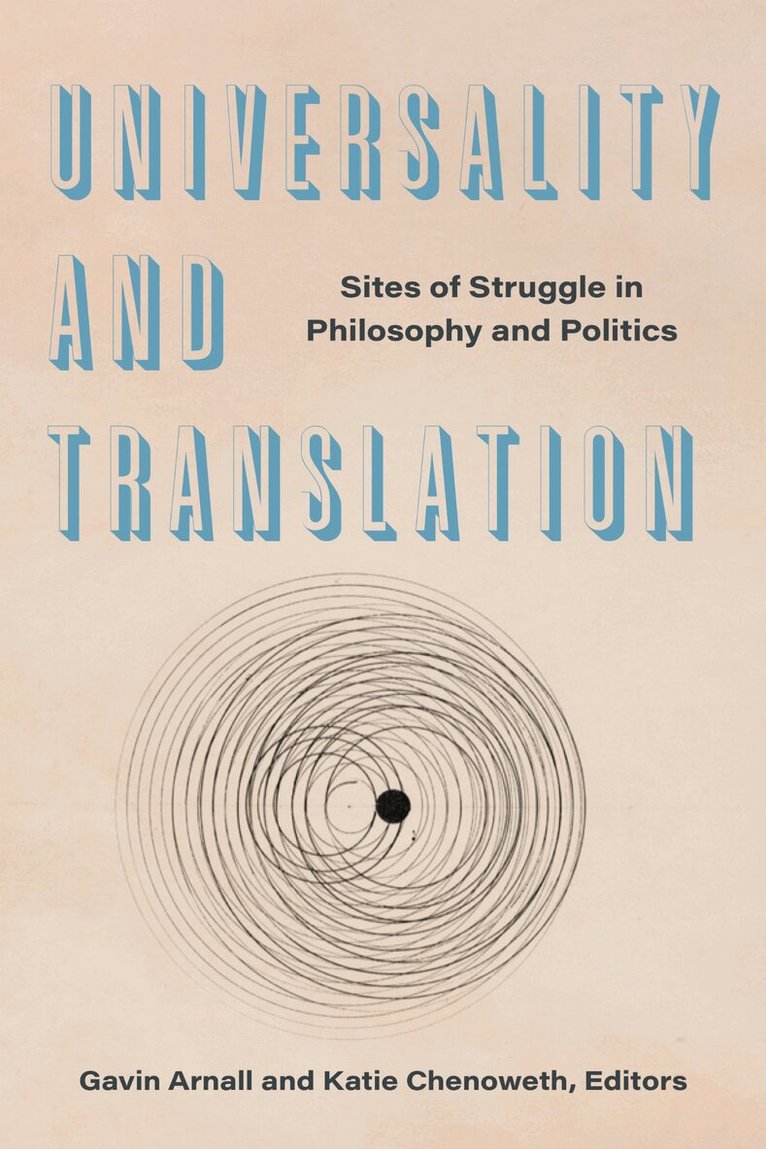
Within contemporary theory, the concepts of translation and universality have frequently been associated with different and even opposed philosophical and political projects: watchwords of either domination or liberation, the erasure of difference or the defense of difference. The universalizing drives of capitalism, colonialism, and other systems of oppression have precipitated widespread suspicion of any appeal to universality. This has led some, in turn, to champion the very notion of universality as antithetical to these systems of oppression. Similarly, recent scholarship has begun to grapple with the fundamental role of translation not only in forging inclusive democratic politics but also, by contrast, in violence, including imperial expansion and global war. The present volume advocates neither for nor against translation or universality as such. Instead, it attends to their insurmountable ambiguity and equivocity, the tensions and contradictions that are internal to both concepts and that exist between them. Indeed, the wager of this volume is that translation, universality, and their relationship name irreducible yet overlapping sites of struggle for a diverse array of struggles on the Left.Drawing from multiple intellectual traditions and orientations, with a special emphasis on deconstruction and Marxism, this volume both reveals and participates in a subterranean current of thought committed to theorizing the dynamic, plural, and ultimately inextricable relationship between translation and universality. Its contributors approach this problem in ways that challenge and unsettle dominant trends within translation studies and critical and postcolonial theory, thereby opening new lines of inquiry within and beyond these fields.
414 kr
Skickas inom 7-10 vardagar
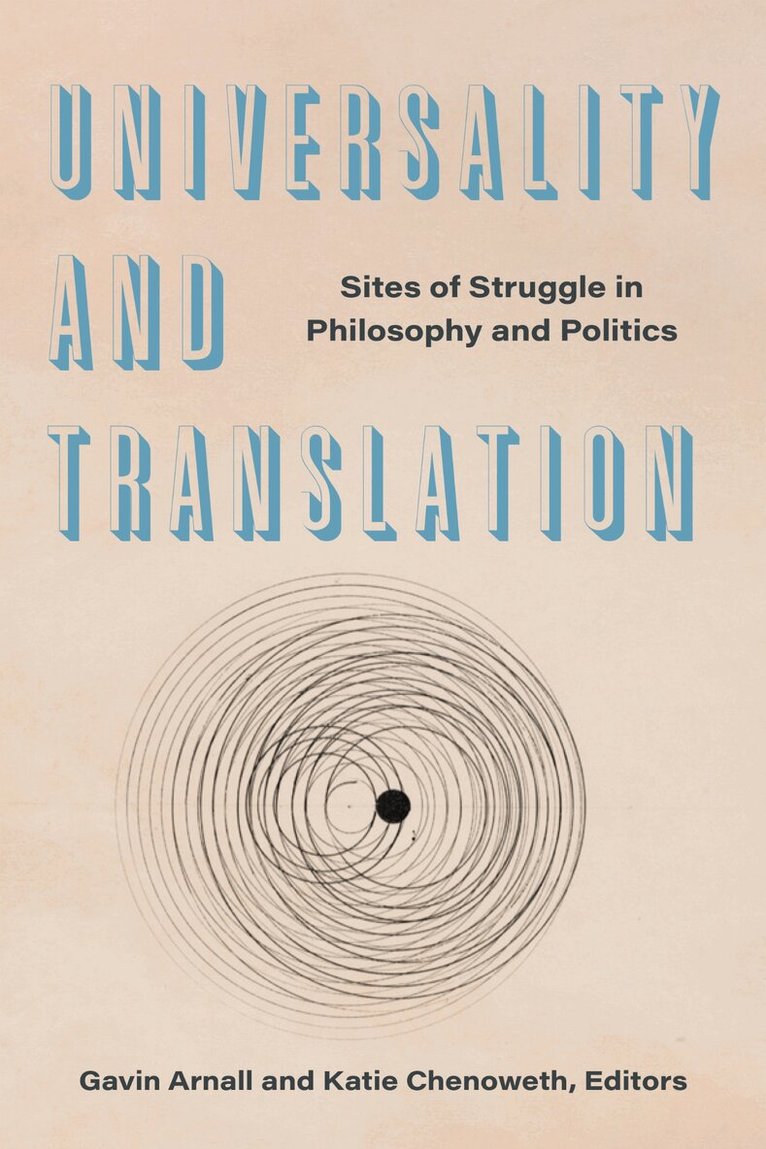
Within contemporary theory, the concepts of translation and universality have frequently been associated with different and even opposed philosophical and political projects: watchwords of either domination or liberation, the erasure of difference or the defense of difference. The universalizing drives of capitalism, colonialism, and other systems of oppression have precipitated widespread suspicion of any appeal to universality. This has led some, in turn, to champion the very notion of universality as antithetical to these systems of oppression. Similarly, recent scholarship has begun to grapple with the fundamental role of translation not only in forging inclusive democratic politics but also, by contrast, in violence, including imperial expansion and global war. The present volume advocates neither for nor against translation or universality as such. Instead, it attends to their insurmountable ambiguity and equivocity, the tensions and contradictions that are internal to both concepts and that exist between them. Indeed, the wager of this volume is that translation, universality, and their relationship name irreducible yet overlapping sites of struggle for a diverse array of struggles on the Left.Drawing from multiple intellectual traditions and orientations, with a special emphasis on deconstruction and Marxism, this volume both reveals and participates in a subterranean current of thought committed to theorizing the dynamic, plural, and ultimately inextricable relationship between translation and universality. Its contributors approach this problem in ways that challenge and unsettle dominant trends within translation studies and critical and postcolonial theory, thereby opening new lines of inquiry within and beyond these fields.