
Gavin Speed – författare
Visar alla böcker från författaren . Handla med fri frakt och snabb leverans.
3 produkter
3 produkter
- Nyhet
Häftad, Engelska, 2026
176 kr
Skickas
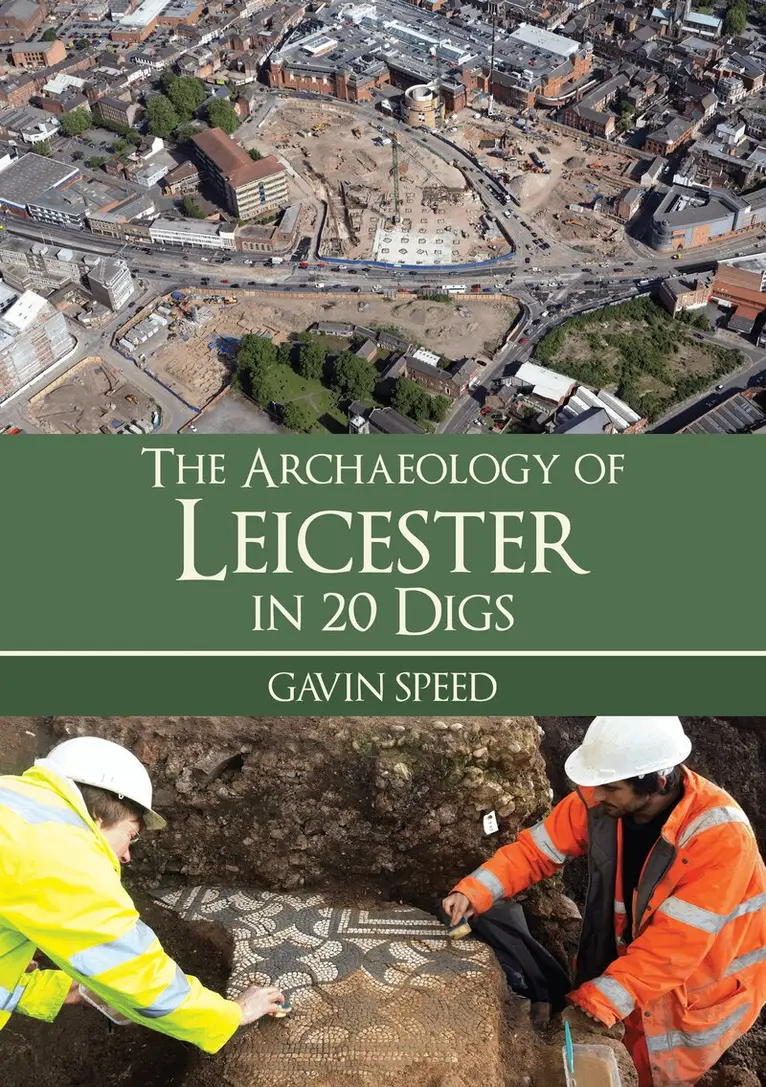
Leicester is one of the most intensely excavated historic cities in the country, resulting in many fantastic archaeological discoveries comprising a rich array of ancient buildings, objects, and the remains of the people who once lived in Leicester’s Roman and medieval past. The city’s heritage hit the global headlines with the discovery of King Richard III below a car park in 2012 but look beyond this and there is much more to learn.This book takes the reader on a journey from Leicester’s Iron Age origins along the riverbank to its establishment as a Roman town and Civitas Capital with large public buildings and spaces, along with lavish townhouses featuring fine mosaics. After Roman rule, the ruinous former city was still lived in with evidence for rarely found Anglo-Saxon buildings. Later, the medieval town has evidence for houses, a brewery, monastic buildings, cemeteries, and the burial of King Richard III.The Archaeology of Leicester in 20 Digs selects twenty of the most important archaeological sites and celebrates the discoveries from over 100 years of investigations, which have transformed our understanding of the city’s rich 2,000-year history. This book includes the most recent discoveries, and newest interpretations, with Leicester’s heritage presented in a fresh and accessible way, with photographs, illustrations, and links to provide a gateway to further reading.
- Nyhet
E-bok
Engelska, 2026171 kr
Läs direkt efter köp
Leicester is one of the most intensely excavated historic cities in the country, resulting in many fantastic archaeological discoveries comprising a rich array of ancient buildings, objects, and the remains of the people who once lived in Leicester's Roman and medieval past. The city's heritage hit the global headlines with the discovery of King Richard III below a car park in 2012 but look beyond this and there is much more to learn.This book takes the reader on a journey from Leicester s Iron Age origins along the riverbank to its establishment as a Roman town and Civitas Capital with large public buildings and spaces, along with lavish townhouses featuring fine mosaics. After Roman rule, the ruinous former city was still lived in with evidence for rarely found Anglo-Saxon buildings. Later, the medieval town has evidence for houses, a brewery, monastic buildings, cemeteries, and the burial of King Richard III.The Archaeology of Leicester in 20 Digs selects twenty of the most important archaeological sites and celebrates the discoveries from over 100 years of investigations, which have transformed our understanding of the city s rich 2,000-year history. This book includes the most recent discoveries, and newest interpretations, with Leicester s heritage presented in a fresh and accessible way, with photographs, illustrations, and links to provide a gateway to further reading.
Häftad, Engelska, 2014
525 kr
Skickas
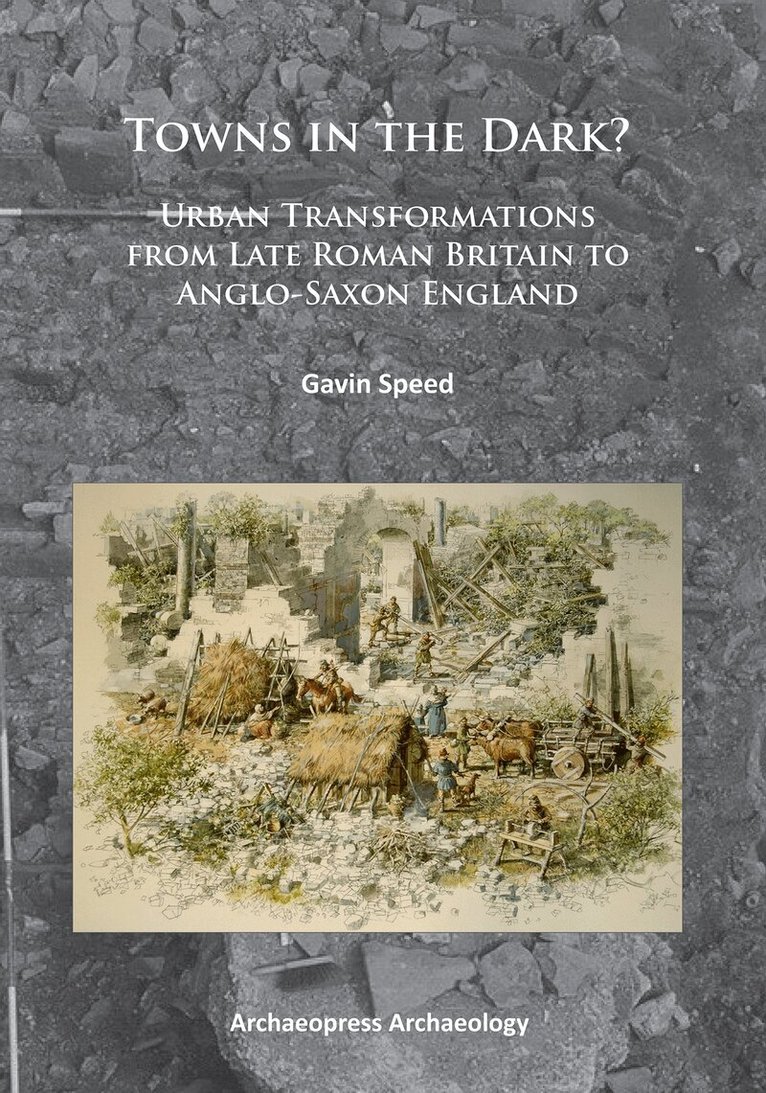
What became of towns following the official end of ‘Roman Britain’ at the beginning of the 5th century AD? Did towns fail? Were these ruinous sites really neglected by early Anglo-Saxon settlers and leaders? Developed new archaeologies are starting to offer alternative pictures to the traditional images of urban decay and loss revealing diverse modes of material expression, of usage of space, and of structural change. The focus of this book is to draw together still scattered data to chart and interpret the changing nature of life in towns from the late Roman period through to the mid-Anglo-Saxon period. The research centres on towns that have received sufficient archaeological intervention so that meaningful patterns can be traced. The case studies are arranged into three regional areas: the South-East, South-West, and Midlands. Individually each town contains varying levels of archaeological data, but analysed together these illustrate more clearly patterns of evolution. Much of the data exists as accessible but largely unpublished reports, or isolated within regional discussions. Detailed analysis, review and comparisons generate significant scope for modelling ‘urban’ change in England from AD 300-600. ‘Towns in the Dark’ dispels the simplistic myth of outright urban decline and failure after Rome, and demonstrates that life in towns often did continue with variable degrees of continuity and discontinuity.