Gavin Weightman – författare
Visar alla böcker från författaren Gavin Weightman. Handla med fri frakt och snabb leverans.
9 produkter
9 produkter
129 kr
Skickas inom 5-8 vardagar
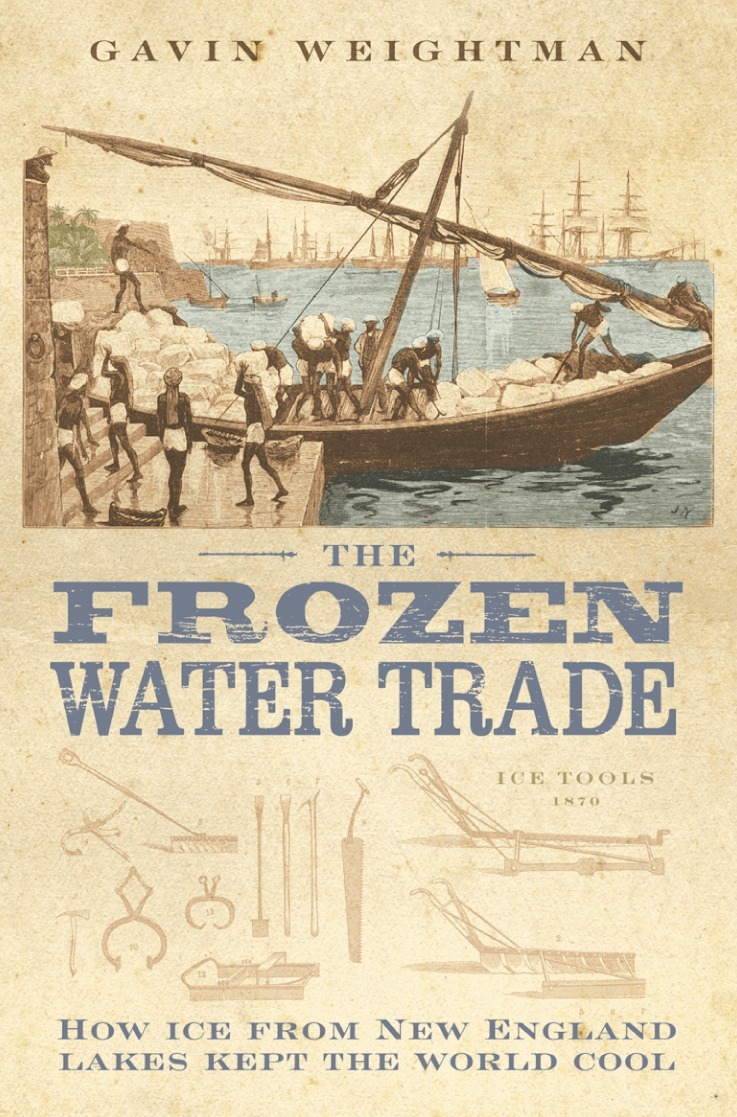
The story of the 19th-century ice trade, in which ice from the lakes of New England – valued for its incredible purity – revolutionised domestic life around the world.In the days before artificial refrigeration, it was thought impossible to transport ice for long distances. But one man, Frederic Tudor, was convinced it could be done. This is the story of how, almost single-handedly, and in the face of near-universal mockery, he established a vast industry that would introduce the benefits of fresh ice to large parts of the globe.Thanks to Tudor, the American fashion for drinks ‘on the rocks’ spread to tropical areas such as the West Indies and British India. By the 1830s fleets of schooners carried the frozen cargo, packed with sawdust and tarpaulins for insulation, to all corners of the world. The harvesting of the ice from New England’s lakes employed thousands of men.The frozen water trade had a profound influence on the tastes of a large part of the world, but with the development of artificial cooling systems in the first quarter of the 20th century, the huge industry established by Frederic Tudor vanished as if it had never been.
168 kr
Skickas inom 5-8 vardagar
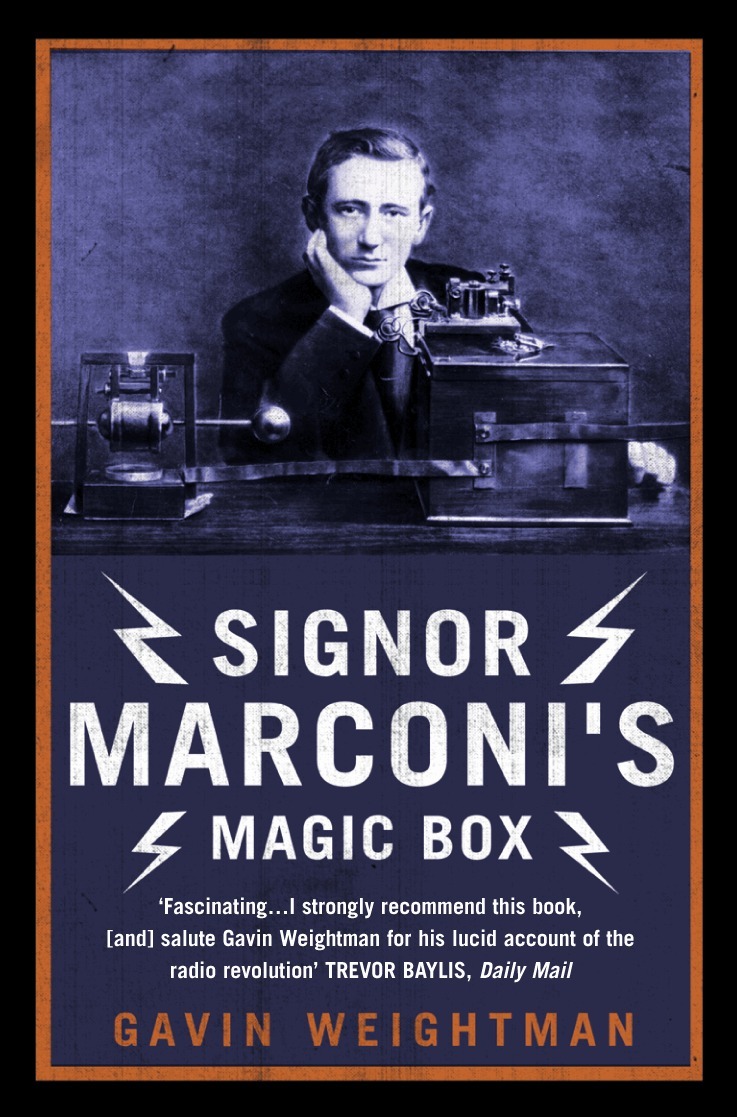
The intriguing story of how wireless was invented by Guglielmo Marconi – and how it amused Queen Victoria, saved the lives of the Titanic survivors, tracked down criminals and began the radio revolution.Wireless was the most fabulous invention of the 19th century: the public thought it was magic, the popular newspapers regarded it as miraculous, and the leading scientists of the day (in Europe and America) could not understand how it worked. In 1897, when the first wireless station was established by Marconi in a few rooms of the Royal Needles Hotel on the Isle of Wight, nobody knew how far these invisible waves could travel through the ‘ether’, carrying Morse Coded messages decipherable at a receiving station. (The definitive answer was not discovered till the 1920s, by which time radio had become a sophisticated industry filling the airwaves with a cacaphony of sounds – most of it American.)Marconi himself was the son of an Italian father and an Irish mother (from the Jameson whiskey family); he grew up in Italy and was fluent in Italian and English, but it was in England that his invention first caught on. Marconi was in his early twenties at the time (he died in 1937). With the ‘new telegraphy’ came the real prospect of replacing the network of telegraphic cables that criss-crossed land and sea at colossal expense. Initially it was the great ships that benefited from the new invention – including the Titanic, whose survivors owed their lives to the wireless.
154 kr
Tillfälligt slut
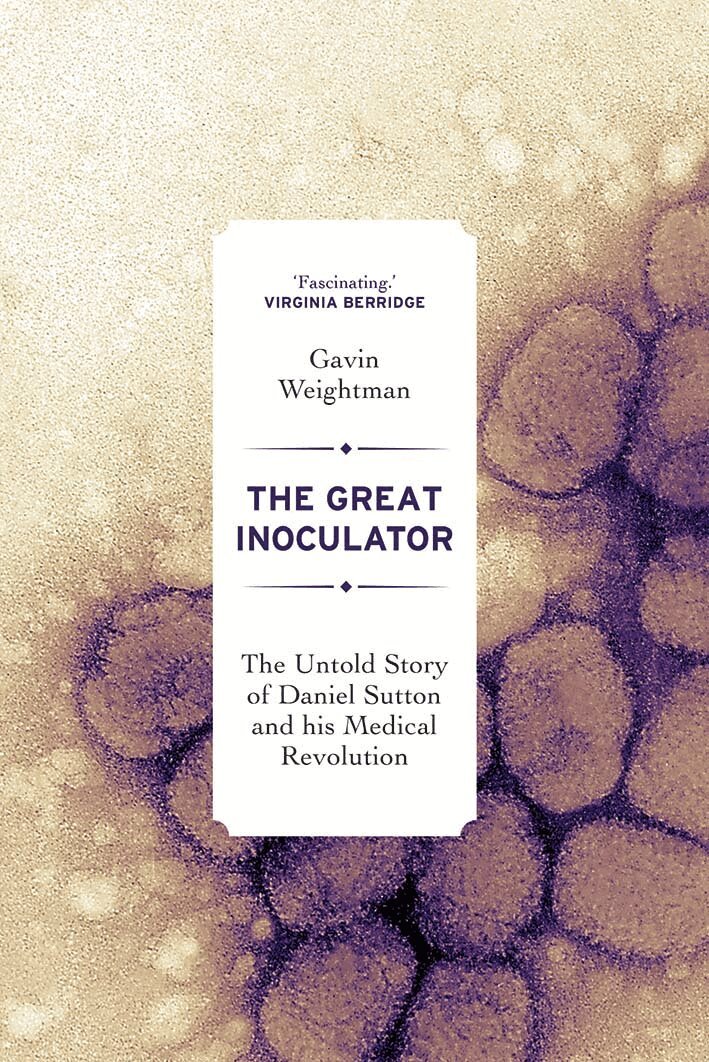
Great Inoculator
The Untold Story of Daniel Sutton and his Medical Revolution
Inbunden, Engelska, 2020
236 kr
Skickas inom 7-10 vardagar
This timely history of the neglected figure of Daniel Sutton—the medical revolutionary who paved the way for present-day vaccination—was named a best book of 2020 by BBC History MagazineSmallpox was the scourge of the eighteenth century: it showed no mercy, almost wiping out whole societies. Young and old, poor and royalty were equally at risk – unless they had survived a previous attack. Daniel Sutton, a young surgeon from Suffolk, used this knowledge to pioneer a simple and effective inoculation method to counter the disease. His technique paved the way for Edward Jenner’s discovery of vaccination – but, while Jenner is revered, Sutton has been vilified for not widely revealing his methods until later in life.Gavin Weightman reclaims Sutton’s importance, showing how the clinician’s practical and observational discoveries advanced understanding of the nature of disease. Weightman explores Sutton’s personal and professional development, and the wider world of eighteenth-century health in which he practised inoculation. Sutton’s brilliant and exacting mind had a significant impact on medicine – the effects of which can still be seen today.
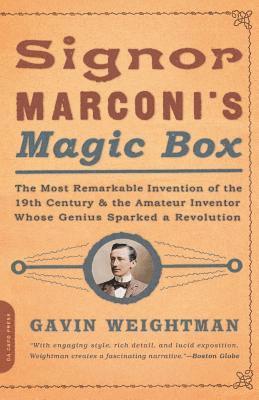
Signor Marconi's Magic Box
The Most Remarkable Invention Of The 19th Century & The Amateur Inventor Whose Genius Sparked A Revolution
Häftad, Engelska, 2004
208 kr
Skickas inom 10-15 vardagar
The world at the turn of the twentieth century was in the throes of "Marconi-mania"-brought on by an incredible invention that no one could quite explain, and by a dapper and eccentric figure (who would one day win the newly minted Nobel Prize) at the centre of it all. At a time when the telephone, telegraph, and electricity made the whole world wonder just what science would think of next, the startling answer had come in 1896 in the form of two mysterious wooden boxes containing a device Marconi had rigged up to transmit messages "through the ether." It was the birth of the radio, and no scientist in Europe or America, not even Marconi himself, could at first explain how it worked...it just did.Here is a rich portrait of the man and his era-a captivating tale of British blowhards, American con artists, and Marconi himself-a character par excellence, who eventually winds up a virtual prisoner of his worldwide fame and fortune.
295 kr
Skickas inom 3-6 vardagar
258 kr
Skickas inom 3-6 vardagar
179 kr
Skickas inom 5-8 vardagar
289 kr
Tillfälligt slut
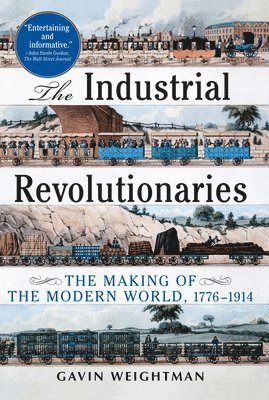
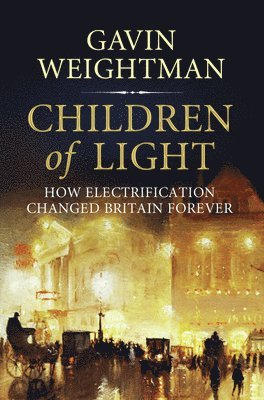
In the early 1870s a night-time view over Britain would have revealed towns lit by the warm glow of gas and oil lamps and a much darker countryside, the only light emanating from the fiery sparks of late running steam trains. However, by the end of this same decade that Victorian Britons would experience a new brilliance in their streets, town halls and other public places. Electricity had come to town. In Children of Light, Gavin Weightman brings to life not just the most celebrated electrical pioneers, such as Thomas Edison, but also the men such as Rookes Crompton who lit Henley Regatta in 1879; Sebastian Ziani de Ferranti, a direct descendant of one of the Venetian Doges, who built Britain's first major power station on the Thames at Deptford; and Anglo-Irish aristocrat, Charles Parsons inventor of the steam turbine, which revolutionised the generating of electricity.Children of Light takes in the electrification of the tramways and the London Underground, the transformation of the home with 'labour saving' devices, the vital modernising of industry during two world wars, and the battles between environmentalists and the promoters of electric power, which began in earnest when the first pylons went up. As Children of Light shows, the electric revolution has brought us luxury that would have astonished the Victorians, but at a price we are still having to pay.