Häftad, Engelska, 1993
346 kr
Skickas inom 10-15 vardagar
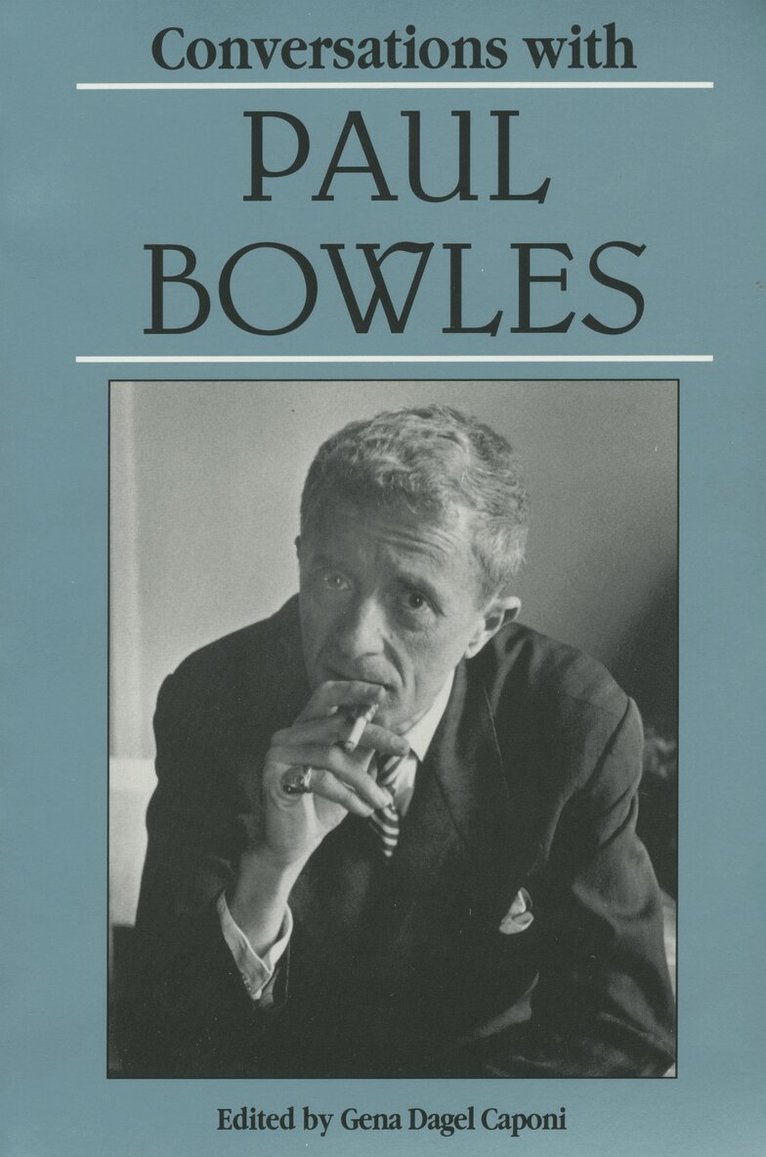
For the past forty years, Paul Bowles has answered questions about the autobiographical references in his novels (The Sheltering Sky, Let It Come Down, The Spider's House, and Up Above the World) and about his work as a composer in New York, all the time insisting, ""I don't want anyone to know about me.""In these more than twenty interviews dating from 1952 to the present, Bowles gives a variety of answers that reveal as much as they conceal. Too gracious to refuse interviews, he regards inquiries with the same clear-eyed detachment that marks his prose, wondering, ""Why is it that Americans expect an artist's work to be a reflection of his life? They never seem to want to believe that the two can be independent of each other and go their separate ways."" Despite his reticence, Bowles frankly discusses his ""unconscious"" writing practice, his views on the ""illiterate imagination,"" existentialism, his various experiments with altered states of consciousness, and nearly fifty years of expatriate life in Morocco.Included are three interviews never before published, several interviews that originally appeared in now obscure journals, plus interviews by Jay Mclnerny for Vanity Fair, Jeffrey Bailey for The Paris Review, and Michael Rogers for Rolling Stone.