Gene I. Rochlin - Böcker
Visar alla böcker från författaren Gene I. Rochlin. Handla med fri frakt och snabb leverans.
3 produkter
3 produkter
Del 3 - Studies in International Political Economy
Plutonium, Power, and Politics
International Arrangements for the Disposition of Spent Nuclear Fuel
Häftad, Engelska, 2018
811 kr
Skickas inom 3-6 vardagar
In the early 1970s, the major industrial states were preparing to shift to nuclear fission as their principal source of electrical power. But that change has not occurred. In part, this is due to a growing public recognition that techniques and institutions for management of spent nuclear fuel, separated plutonium, and long-lived radioactive wastes are not yet fully developed. The consequent pressures for resolution have spurred a series of often ill-defined and sometimes contradictory attempts to promote international cooperation and control of hazardous activities. How are these varied suggestions to be compared and evaluated? By what criteria can plans be selected that are likely to be both effective and negotiable? In this study, Gene I. Rochlin, physicist and social scientist, explores the technical, political, and institutional aspects of international nuclear export and fuel cycle policies. He categorizes existing proposals and suggests way to develop new ones that better promote both national and international goals. Dr. Rochlin argues neither for nor against the use of nuclear power or plutonium fuels. Instead, he addresses the question of how international arrangements could be reached that might jointly satisfy the objective of the several key nations, yet not be too difficult to negotiate. He concludes that a major fault has been the tendency to improvise arrangements for specific technical or industrial operations. As a result, overall social and political goals have become the bargaining points for compromise. Yet attempts to simultaneously resolve all problems are unlikely to prove fruitful. Dr. Rochlin suggests instead the formation of institutions organized around more limited social, political, and technical objectives, even at the expense of excluding some nations or omitting some aspects of the nuclear fuel cycle. Only by so doing, he argues, can immediate agreements be reached that preserve the potential for more comprehensive future arrangements without sacrificing industrial, environmental, or nonproliferation goals. This important book will be of interest to scientists, social scientists, government officials, and others concerned with the problems of plutonium management and nuclear wastes.This title is part of UC Press's Voices Revived program, which commemorates University of California Press’s mission to seek out and cultivate the brightest minds and give them voice, reach, and impact. Drawing on a backlist dating to 1893, Voices Revived makes high-quality, peer-reviewed scholarship accessible once again using print-on-demand technology. This title was originally published in 1979.
Del 3 - Studies in International Political Economy
Plutonium, Power, and Politics
International Arrangements for the Disposition of Spent Nuclear Fuel
Inbunden, Engelska, 2024
1 469 kr
Skickas inom 3-6 vardagar
In the early 1970s, the major industrial states were preparing to shift to nuclear fission as their principal source of electrical power. But that change has not occurred. In part, this is due to a growing public recognition that techniques and institutions for management of spent nuclear fuel, separated plutonium, and long-lived radioactive wastes are not yet fully developed. The consequent pressures for resolution have spurred a series of often ill-defined and sometimes contradictory attempts to promote international cooperation and control of hazardous activities. How are these varied suggestions to be compared and evaluated? By what criteria can plans be selected that are likely to be both effective and negotiable? In this study, Gene I. Rochlin, physicist and social scientist, explores the technical, political, and institutional aspects of international nuclear export and fuel cycle policies. He categorizes existing proposals and suggests way to develop new ones that better promote both national and international goals. Dr. Rochlin argues neither for nor against the use of nuclear power or plutonium fuels. Instead, he addresses the question of how international arrangements could be reached that might jointly satisfy the objective of the several key nations, yet not be too difficult to negotiate. He concludes that a major fault has been the tendency to improvise arrangements for specific technical or industrial operations. As a result, overall social and political goals have become the bargaining points for compromise. Yet attempts to simultaneously resolve all problems are unlikely to prove fruitful. Dr. Rochlin suggests instead the formation of institutions organized around more limited social, political, and technical objectives, even at the expense of excluding some nations or omitting some aspects of the nuclear fuel cycle. Only by so doing, he argues, can immediate agreements be reached that preserve the potential for more comprehensive future arrangements without sacrificing industrial, environmental, or nonproliferation goals. This important book will be of interest to scientists, social scientists, government officials, and others concerned with the problems of plutonium management and nuclear wastes.This title is part of UC Press's Voices Revived program, which commemorates University of California Press’s mission to seek out and cultivate the brightest minds and give them voice, reach, and impact. Drawing on a backlist dating to 1893, Voices Revived makes high-quality, peer-reviewed scholarship accessible once again using print-on-demand technology. This title was originally published in 1979.
517 kr
Skickas inom 7-10 vardagar
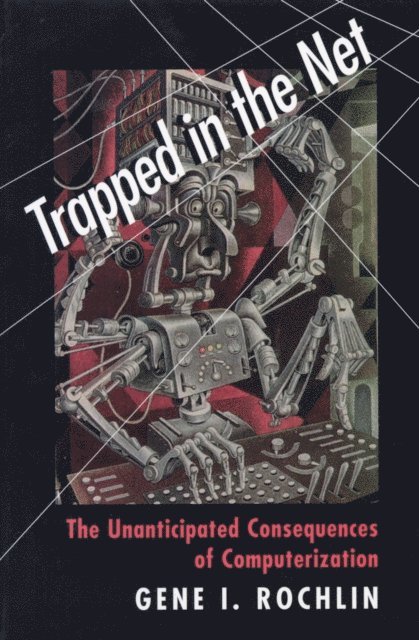
Voice mail. E-mail. Bar codes. Desktops. Laptops. Networks. The Web. In this exciting book, Gene Rochlin takes a closer look at how these familiar and pervasive productions of computerization have become embedded in all our lives, forcing us to narrow the scope of our choices, our modes of control, and our experiences with the real world. Drawing on fascinating narratives from fields that range from military command, air traffic control, and international fund transfers to library cataloging and supermarket checkouts, Rochlin shows that we are rapidly making irreversible and at times harmful changes in our business, social, and personal lives to comply with the formalities and restrictions of information systems. The threat is not the direct one once framed by the idea of insane robots or runaway mainframes usurping human functions for their own purposes, but the gradual loss of control over hardware, software, and function through networks of interconnection and dependence. What Rochlin calls the computer trap has four parts: the lure, the snare, the costs, and the long-term consequences.The lure is obvious: the promise of ever more powerful and adaptable tools with simpler and more human-centered interfaces. The snare is what usually ensues. Once heavily invested in the use of computers to perform central tasks, organizations and individuals alike are committed to new capacities and potentials, whether they eventually find them rewarding or not. The varied costs include a dependency on the manufacturers of hardware and software--and a seemingly pathological scramble to keep up with an incredible rate of sometimes unnecessary technological change. Finally, a lack of redundancy and an incredible speed of response make human intervention or control difficult at best when (and not if) something goes wrong. As Rochlin points out, this is particularly true for those systems whose interconnections and mechanisms are so deeply concealed in the computers that no human being fully understands them.