Genevieve Abravanel – författare
Visar alla böcker från författaren Genevieve Abravanel. Handla med fri frakt och snabb leverans.
4 produkter
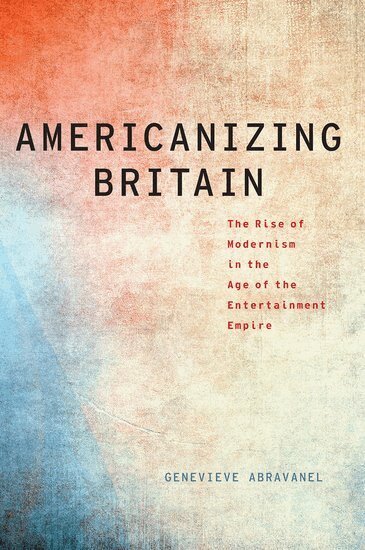
Americanizing Britain
The Rise of Modernism in the Age of the Entertainment Empire
Häftad, 2016
776 kr
Lägg i varukorg
How did Great Britain, which entered the twentieth century as a dominant empire, reinvent itself in reaction to its fears and fantasies about the United States? Investigating the anxieties caused by the invasion of American culture-from jazz to Ford motorcars to Hollywood films-during the first …
Americanizing Britain
The Rise of Modernism in the Age of the Entertainment Empire
Inbunden, 2012
2062 kr
Lägg i varukorg
At the beginning of the twentieth century, many in Britain believed their nation to be a dominant world power that its former colony, the United States, could only hope to emulate. Yet by the interwar years, the United States seemed to some to embody a different type of global eminence, one based …
Americanizing Britain
The Rise of Modernism in the Age of the Entertainment Empire
E-bok, 2012
485 kr
Lägg i varukorg
How did Great Britain, which entered the twentieth century as a dominant empire, reinvent itself in reaction to its fears and fantasies about the United States? Investigating the anxieties caused by the invasion of American culture-from jazz to Ford motorcars to Hollywood films-during the first …
Americanizing Britain
The Rise of Modernism in the Age of the Entertainment Empire
E-bok, 2012
485 kr
Lägg i varukorg
How did Great Britain, which entered the twentieth century as a dominant empire, reinvent itself in reaction to its fears and fantasies about the United States? Investigating the anxieties caused by the invasion of American culture-from jazz to Ford motorcars to Hollywood films-during the first …