Geoffrey Hartman - Böcker
Visar alla böcker från författaren Geoffrey Hartman. Handla med fri frakt och snabb leverans.
11 produkter
11 produkter
408 kr
Tillfälligt slut
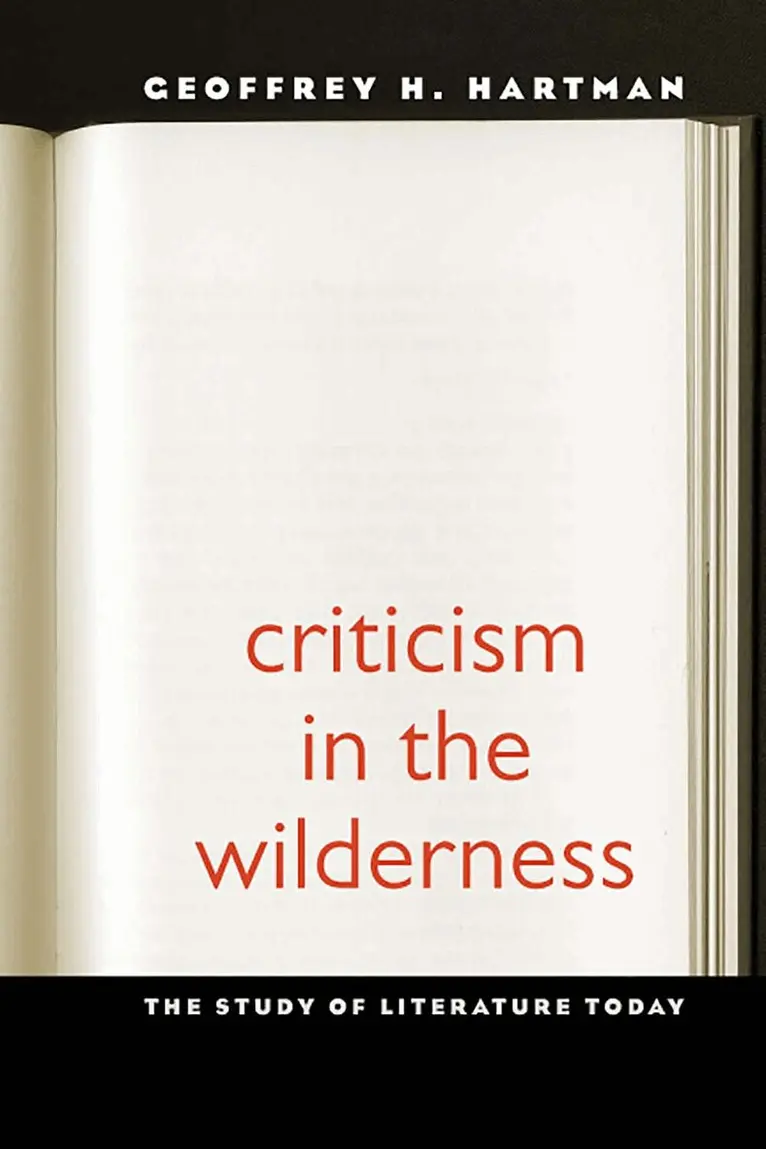
Originally published in 1980, this now classic work of literary theory explores the wilderness of positions that grew out of the collision between Anglo-American practical criticism and Continental philosophic criticism. This second edition includes a new preface by the author as well as a foreword by Hayden White.“A key text for understanding ‘the fate of reading’ in the Anglophone world over the last fifty years.”—Hayden White, from the Foreword“Criticism in the Wilderness may be the best, most brilliant, most broadly useful book yet written by an American about the sudden swerve from the safety of established decorum toward bravely theoretical, mainly European forms of literary criticism.”—Terrence Des Pres, Nation“A polemical survey that reaffirms the value of the Continental tradition of philosophical literary criticism.”—Notable Books of the Year, New York Times Book Review
738 kr
Skickas inom 5-8 vardagar
The drama of consciousness and maturation in the growth of a poet's mind is traced from Wordsworth's earliest poems to The Excursion of 1814. Mr. Hartman follows Wordsworth's growth into self-consciousness, his realization of the autonomy of the spirit, and his turning back to nature. The apocalyptic bias is brought out, perhaps for the first time since Bradley's Oxford Lectures, and without slighting in any way his greatness as a nature poet. Rather, a dialectical relation is established between his visionary temper and the slow and vacillating growth of the humanized or sympathetic imagination. Mr. Hartman presents a phenomenology of the mind with important bearings on the Romantic movement as a whole and as confirmation of Wordsworth's crucial position in the history of English poetry. Mr. Hartman is professor of English and comparative literature at the University of Iowa. "A most distinguished book, subtle, penetrating, profound."—Rene Wellek. "If it is the purpose of criticism to illuminate, to evaluate, and to send the reader back to the text for a fresh reading, Hartman has succeeded in establishing the grounds for such a renewal of appreciation of Wordsworth."—Donald Weeks, Journal of Aesthetics and Art Criticism.
1 890 kr
Skickas inom 7-10 vardagar
Winner of the 2006 Truman Capote Prize for Literary AchievementGeoffrey Hartman’s interests range over almost the entire field of contemporary literature and culture. In this, the first Reader of his work, significant essays reflect his abiding interest in English and American poetry, focusing not only on Romanticism but also on the transition from early modern to modern and including reflections on the radical elements in artistic representation.Hartman, whose book on Wordsworth changed our understanding of that poet, brings theory and close reading together. A major consideration of Freud is accompanied by intensive analyses of Lacan and Derrida, and a psychoesthetic theory of literary genesis is proposed. Popular literature is examined through the American detective novel; Jane Austen, Virginia Woolf, and Bernard Malamud are brought together in an examination of realism; the premodern mode of midrashic interpretation is reintroduced to literary study; and major trends in criticism, including trauma studies, receive attention.Hartman’s assessment of the media revolution and cultural studies is represented by shorter pieces of film criticism as well as his classic essays on ‘Public Memory and its Discontents’ and ‘Tele-Suffering and Testimony’ - the latter also describes a pioneering effort to collect on video the experiences of Holocaust survivors.This anthology is both highly readable and, because of its range and intellectual vigour, essential for all those concerned with the fate of the humanities and the future of literary criticism.Features*Leading US critic of contemporary literature and culture, particularly in the areas of poetry, Romanticism, trauma studies, public culture, pedagogy, and literary theory and criticism*Selection ranges across Geoffrey Hartman's illustrious career with the readings organised into six thematic parts*Publication coincides with the 50th anniversary of Geoffrey Hartman's first published book
500 kr
Skickas inom 7-10 vardagar
Winner of the 2006 Truman Capote Prize for Literary AchievementGeoffrey Hartman’s interests range over almost the entire field of contemporary literature and culture. In this, the first Reader of his work, significant essays reflect his abiding interest in English and American poetry, focusing not only on Romanticism but also on the transition from early modern to modern and including reflections on the radical elements in artistic representation.Hartman, whose book on Wordsworth changed our understanding of that poet, brings theory and close reading together. A major consideration of Freud is accompanied by intensive analyses of Lacan and Derrida, and a psychoesthetic theory of literary genesis is proposed. Popular literature is examined through the American detective novel; Jane Austen, Virginia Woolf, and Bernard Malamud are brought together in an examination of realism; the premodern mode of midrashic interpretation is reintroduced to literary study; and major trends in criticism, including trauma studies, receive attention.Hartman’s assessment of the media revolution and cultural studies is represented by shorter pieces of film criticism as well as his classic essays on ‘Public Memory and its Discontents’ and ‘Tele-Suffering and Testimony’ - the latter also describes a pioneering effort to collect on video the experiences of Holocaust survivors.This anthology is both highly readable and, because of its range and intellectual vigour, essential for all those concerned with the fate of the humanities and the future of literary criticism.Features*Leading US critic of contemporary literature and culture, particularly in the areas of poetry, Romanticism, trauma studies, public culture, pedagogy, and literary theory and criticism*Selection ranges across Geoffrey Hartman's illustrious career with the readings organised into six thematic parts*Publication coincides with the 50th anniversary of Geoffrey Hartman's first published book
701 kr
Skickas inom 10-15 vardagar
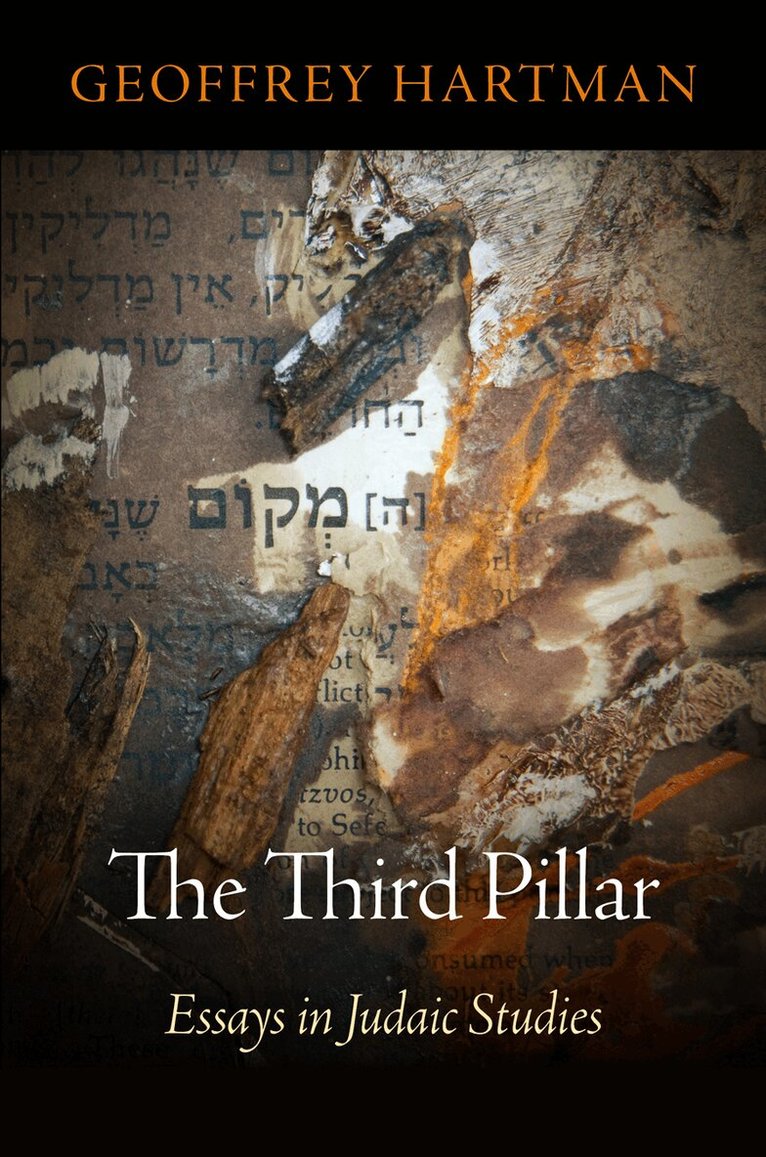
Why should we be excluded from the history and literature of Judaism because the world of our fathers and mothers became a secularized one, Geoffrey Hartman asks, or because religious literacy, whatever our faith or community affiliation, has gone into relative decline? And why, he asks, do those who have no trouble finding pleasure and intellectual profit in the Greek and Roman classics or in the literary and artistic productions of two millennia of Western Christianity not easily find equal resonance and reward in the major texts in the Jewish tradition? For if Christianity and the classical inheritance stand as two pillars of Western civilization, surely the third pillar is the Jewish tradition.In The Third Pillar Hartman, one of the most influential scholars and teachers of English and comparative literature of recent decades, has brought together some of the most important and eloquent essays he has written since the 1980s on the major texts of the Jewish tradition. In three groupings, on Bible, Midrash, and education, Hartman clarifies the relevance of contemporary literary criticism to canonical texts in the tradition, while demonstrating what has been-and what still remains to be-learned from the Midrash to enrich the interpretation of commentary and art, sacred or secular. "The map of the discipline [of Jewish studies] is still being drawn," Hartman writes. "Barely known areas tempt the explorer, and major reinterpretations remain possible. This third pillar of our civilization . . . is only now being fully excavated: we have discovered something but not everything about its structure and upholding function."
328 kr
Skickas inom 7-10 vardagar
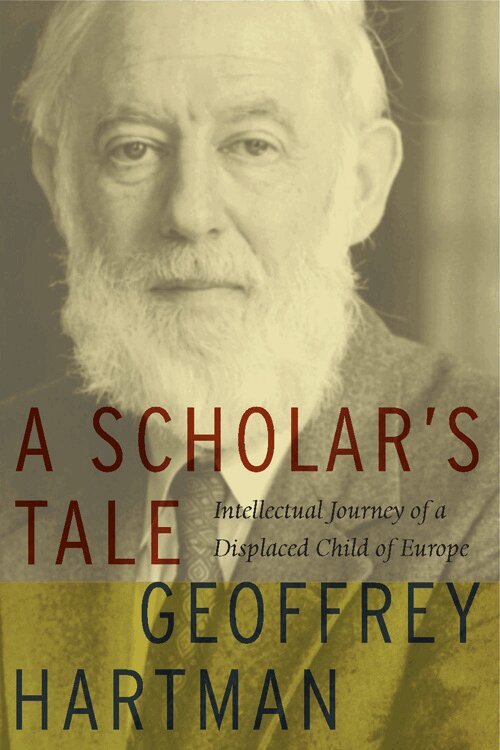
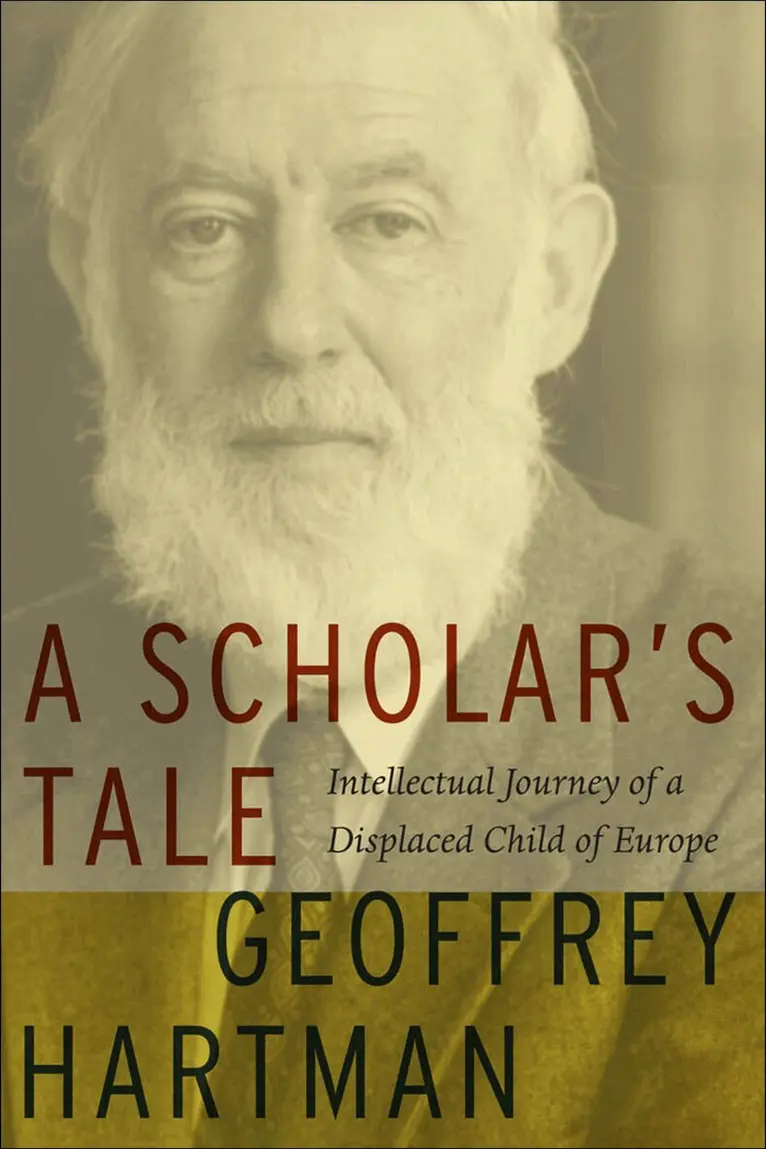
For more than fifty years, Geoffrey Hartman has been a pivotal figure in the humanities. In his first book, in 1954, he helped establish the study of Romanticism as key to the problems of modernity. Later, his writings were crucial to the explosive developments in literary theory in the late seventies, and he was a pioneer in Jewish studies, trauma studies, and studies of the Holocaust. At Yale, he was a founder of its Judaic Studies program, as well as of the first major video archive for Holocaust testimonies.Generations of students have benefited from Hartman's generosity, his penetrating and incisive questioning, the wizardry of his close reading, and his sense that the work of a literary scholar, no less than that of an artist, is a creative act. All these qualities shine forth in this intellectual memoir, which will stand as his autobiography. Hartman describes his early education, uncanny sense of vocation, and development as a literary scholar and cultural critic. He looks back at how his career was influenced by his experience, at the age of nine, of being a refugee from Nazi Germany in the Kindertransport. He spent the next six years at school in England, where he developed his love of English literature and the English countryside, before leaving to join his mother in America.Hartman treats us to a "biobibliography" of his engagements with the major trends in literary criticism. He covers the exciting period at Yale handled so controversially by the media and gives us vivid portraits, in particular, of Harold Bloom, Paul de Man, and Jacques Derrida.All this is set in the context of his gradual self-awareness of what scholarship implies and how his personal displacements strengthened his calling to mediate between European and American literary cultures. Anyone looking for a rich, intelligible account of the last half-century of combative literary studies will want to read Geoffrey Hartman's unapologetic scholar's tale.
275 kr
Skickas inom 3-6 vardagar
1 358 kr
Skickas inom 10-15 vardagar
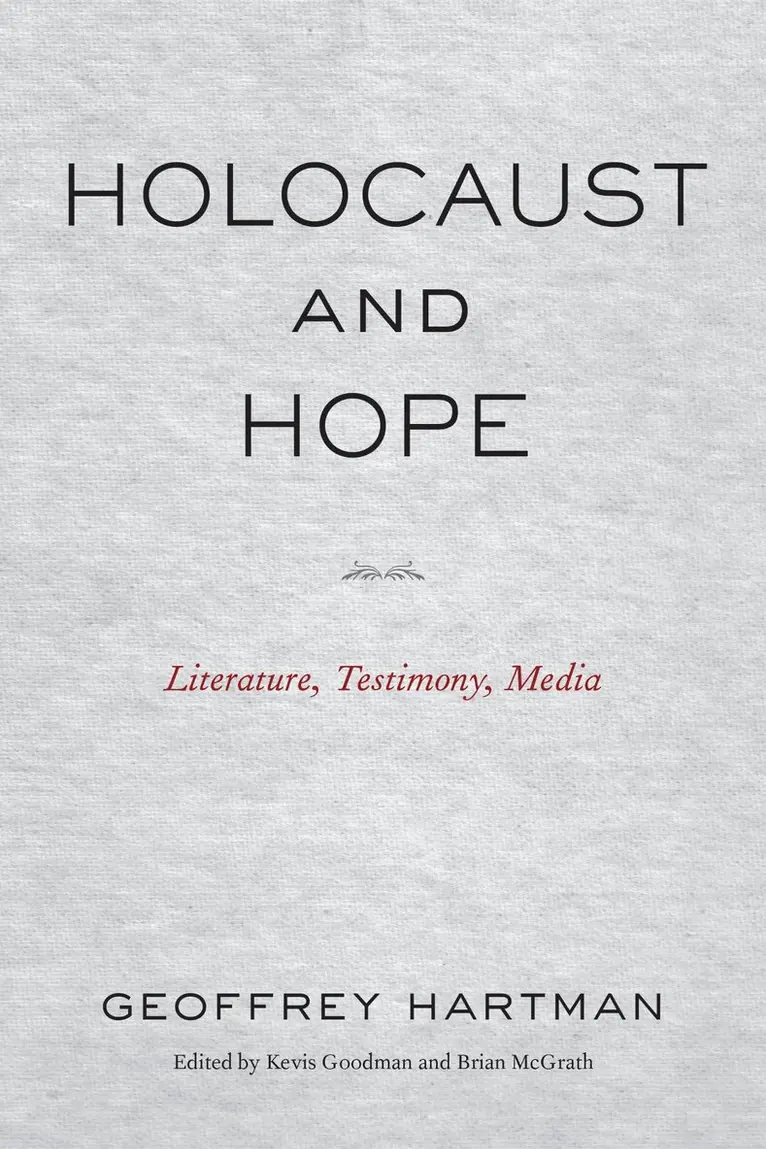
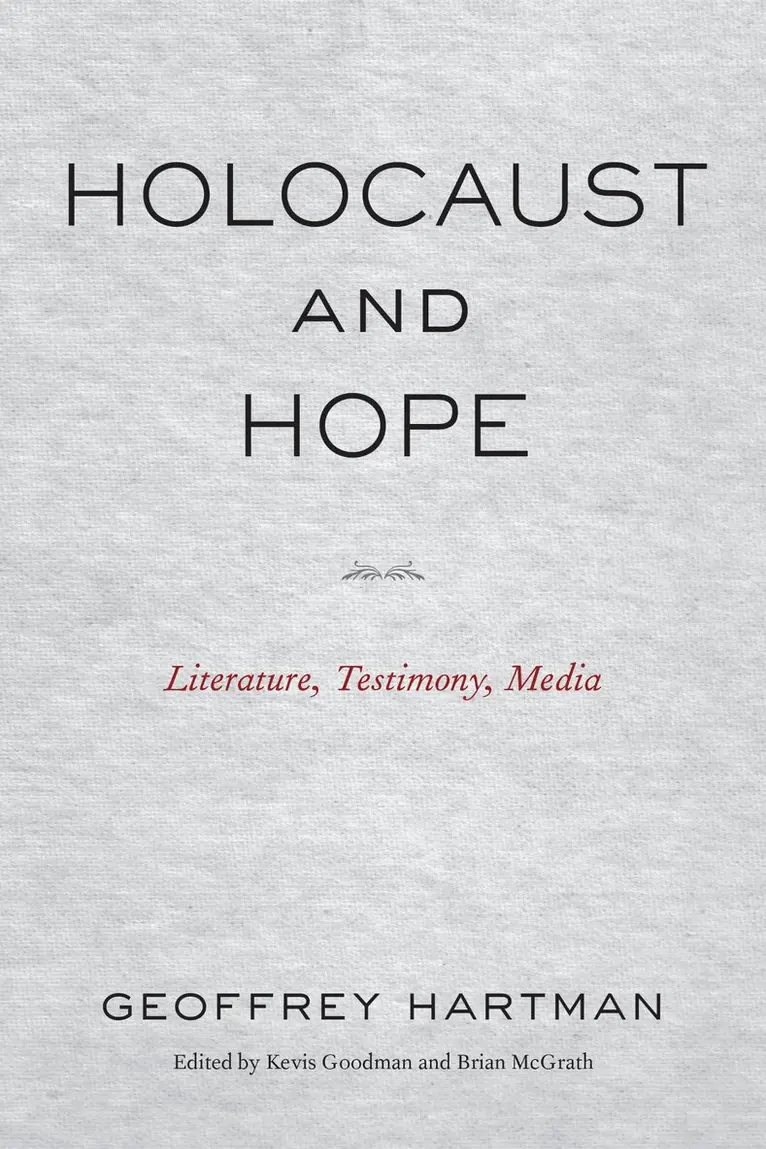
Holocaust and Hope shows one of our preeminent critics grappling with a subject to which he had returned for decades: literary, cultural, political, and historiographical implications of the Holocaust and its aftermath in Europe and America. In his last planned book, Geoffrey Hartman confronts contradictions that pose a challenge for our present and future. The passing of Holocaust survivors and their immediate families makes continued acts of witnessing more necessary even as distance in time makes the identities and acts of future witnessing more complicated. In addition, the particular kinds of amplification that we may be accustomed to or expect from our contemporary media environment can call forth not an intensity of response but rather an inertia, an "unreality effect," that can come unexpectedly from the heightening of the real, or the hyperreality of too much, too fast, too strong.Holocaust and Hope takes seriously the difference between our coming after Auschwitz and our being past it. With characteristic intensity and humanity, Hartman's essays explore the full complexity of how to transmit knowledge of the Holocaust to the future in ways that avoid simplification, the illusion of synthesis, or the aspiration to final closure, on the one hand, or compulsive repetition on the other. A significant part of the answer, for Hartman, requires special attention to the role of literary and audiovisual forms in promoting an active witnessing to extreme suffering that is relevant both for our time and the encroaching future.
370 kr
Skickas
Holocaust and Hope shows one of our preeminent critics grappling with a subject to which he had returned for decades: literary, cultural, political, and historiographical implications of the Holocaust and its aftermath in Europe and America. In his last planned book, Geoffrey Hartman confronts contradictions that pose a challenge for our present and future. The passing of Holocaust survivors and their immediate families makes continued acts of witnessing more necessary even as distance in time makes the identities and acts of future witnessing more complicated. In addition, the particular kinds of amplification that we may be accustomed to or expect from our contemporary media environment can call forth not an intensity of response but rather an inertia, an "unreality effect," that can come unexpectedly from the heightening of the real, or the hyperreality of too much, too fast, too strong.Holocaust and Hope takes seriously the difference between our coming after Auschwitz and our being past it. With characteristic intensity and humanity, Hartman's essays explore the full complexity of how to transmit knowledge of the Holocaust to the future in ways that avoid simplification, the illusion of synthesis, or the aspiration to final closure, on the one hand, or compulsive repetition on the other. A significant part of the answer, for Hartman, requires special attention to the role of literary and audiovisual forms in promoting an active witnessing to extreme suffering that is relevant both for our time and the encroaching future.
518 kr
Skickas inom 7-10 vardagar
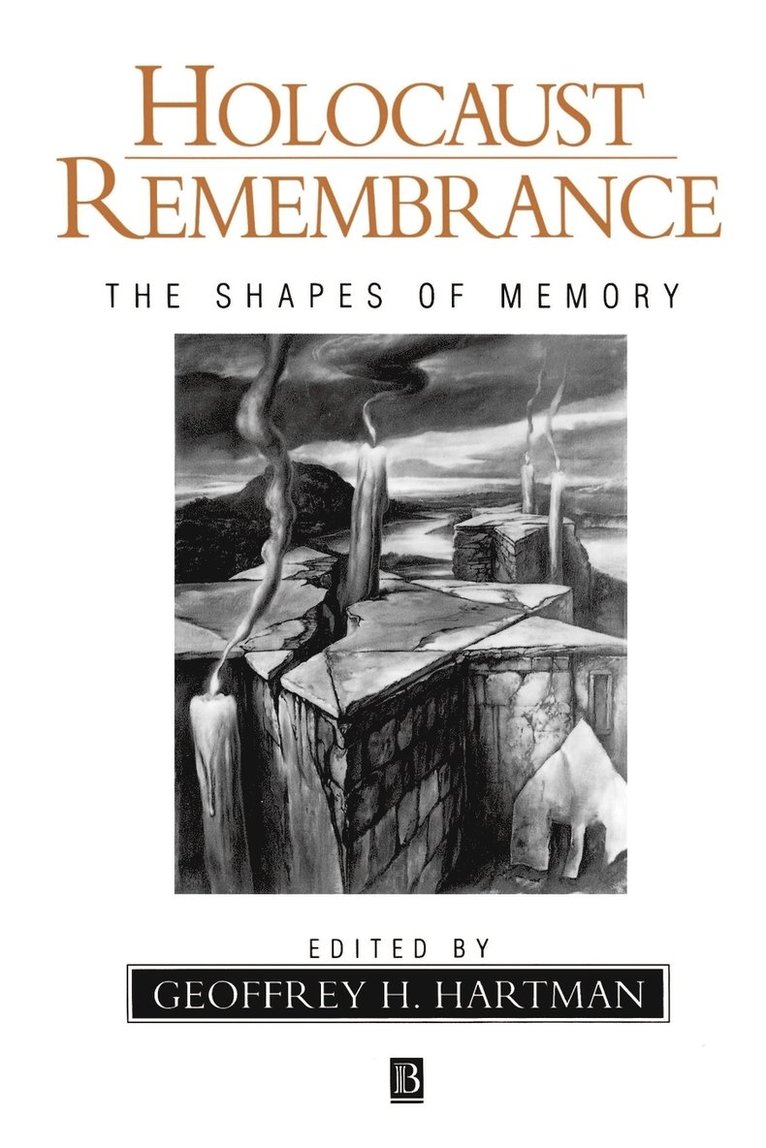
The recording, explanation and the inescapable task of judging great wrongs in the past presents historians with their most difficult assignment. For those who have either lived through such injustice or have been in some way responsible for it the impositions of memory are both painful and unavoidable. Memory shapes the future, and the recollections of past suffering haunt and may overwhelm generations long after.In 1938 the National Socialist Party in Germany began the final preparations for the systematic genocide of the Jews throughout Europe. For the Jews, whose national loyalties had long exceeded any ties of ethnicity, the programme of extermination was an act not merely of monstrous cruelty but of humiliation and treachery.In Holocaust Remembrance scholars, artists and writers consider the ways in which the events of 1938-1945 have been, might be, and will be remembered. The records of the Holocaust are vast and various, ranging from the museum at Auschwitz to the cartoons of Art Spiegelman, from the dark paintings of R. B. Kitaj to the elegaic stories of Primo Levi, from the filmed testimonies of the death camp survivors to revisionist historians who usurp the name of scholar in the pursuit of denial and evasion.The perspectives brought to bear here are rich and various - impassioned, objective, personal, poetical, historical and philosophical. They are united by an awareness of the dangers both of respectful silence and overwhelming information, and that only in remembering can an understanding of the past be sought and human kind redeemed from the forces of humiliation and guilt.