Georg Grote - Böcker
Visar alla böcker från författaren Georg Grote. Handla med fri frakt och snabb leverans.
8 produkter
8 produkter
Del 75 - Studies in German Literature Linguistics and Culture
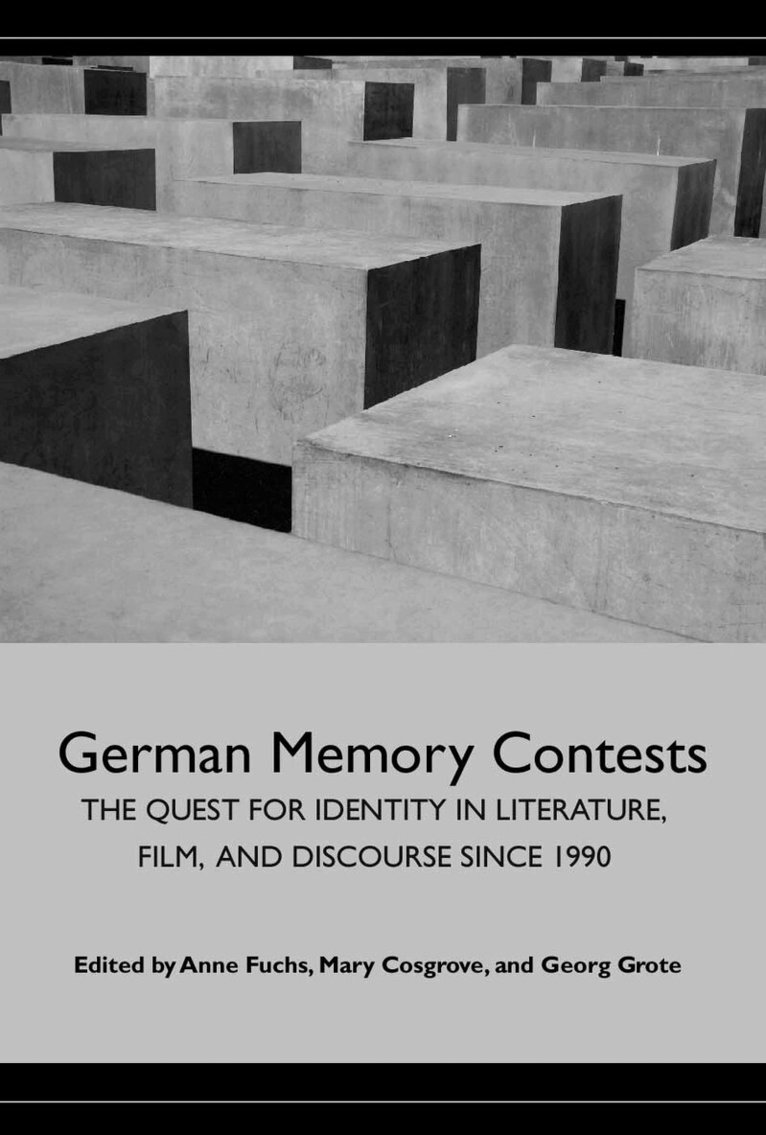
German Memory Contests
The Quest for Identity in Literature, Film, and Discourse since 1990
Häftad, Engelska, 2010
389 kr
Skickas inom 10-15 vardagar
Essays shedding light on the increasingly open cultural debate on the German past.Since unification in 1990, Germany has seen a boom in the confrontation with memory, evident in a sharp increase in novels, films, autobiographies, and other forms of public discourse that engage with the long-term effects of National Socialism across generations. Taking issue with the concept of "Vergangenheitsbewältigung," or coming to terms with the Nazi past, which after 1945 guided nearly all debate on the topic, the contributors to this volume view contemporary German culture through the more dynamic concept of "memory contests," which sees all forms of memory, public or private, as ongoing processes of negotiating identity in the present. Touching on gender, generations, memory and postmemory, trauma theory, ethnicity, historiography, and family narrative, the contributions offer a comprehensive picture of current German memory debates, in so doing shedding light on the struggle to construct a Germanidentity mindful of but not wholly defined by the horrors of National Socialism and the Holocaust. Contributors: Peter Fritzsche, Anne Fuchs, Elizabeth Boa, Stefan Willer, Chloe E. M. Paver, Matthias Fiedler, J. J. Long, Dagmar C. G. Lorenz, Cathy S. Gelbin, Jennifer E. Michaels, Mary Cosgrove, Andrew Plowman, Roger Woods.Anne Fuchs is Professor of Modern German literature and Georg Grote is Lecturer in German history, both at University College Dublin. Mary Cosgrove is Lecturer in German at the University of Edinburgh.
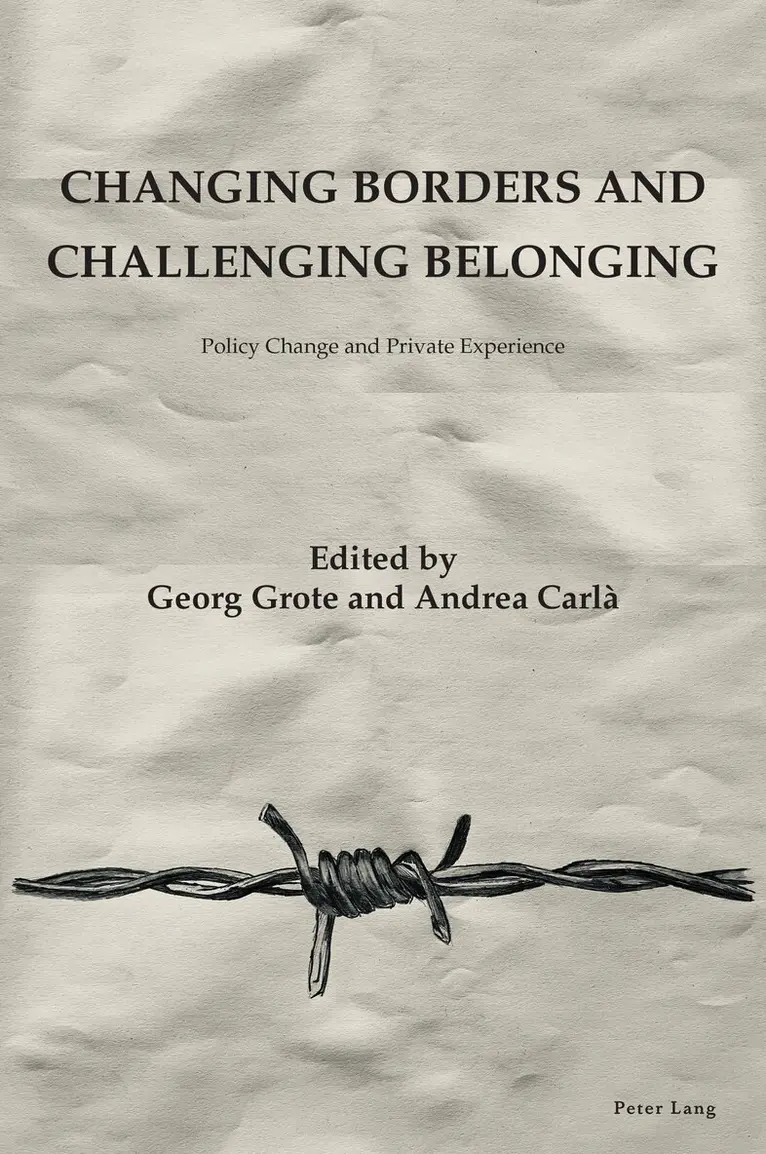
Changing Borders and Challenging Belonging
Policy Change and Private Experience
Häftad, Engelska, 2023
665 kr
Skickas inom 5-8 vardagar
«This timely and important book provides a critical look at borders and belonging. It illuminates the tensions and contradictions that often exist within the logic of legal and political mechanisms that define regional and national boundaries and the reality of the lives lived within these constructions. The resulting essays are instructive, thought-provoking and sometimes very moving explorations of the making and meaning of historical and contemporary borderlands.»(Roisín Higgins, Professor of History, National University of Ireland Maynooth)«This volume is a masterful combination of analyses of feelings of belonging and identities following from changing state and cultural borders in the past and present and their challenges for living together. Its chapters analyse the intersections of people, territory, institutions and law from theoretical perspectives as well as through reflexive individual experience of social identity formation from below, often with a focus on their contestation in (re-)territorialized sub-state regions.»(Josef Marko, Professor of Comparative Public Law and Political Sciences, University of Graz)Both the Brexit process and the Covid pandemic have challenged the idealistic concept that borders in Europe and elsewhere were becoming ever more permeable. The idea that the world was becoming a global village has been seriously eroded. Meanwhile, the war in Ukraine has once again highlighted how power politics draws borders and shapes belongings. This has necessitated analyses of the nature of human-made borders and boundaries and the consequences for individuals and collectives who experience inclusion or exclusion on their feelings of belonging and their identities. Similarly, governmental policies within states have created majorities and minorities and have caused grave implications for those groups at the receiving end of legislation and state actions.This multidisciplinary volume comprises essays from researchers and academics, located in Europe and beyond, who investigate the effects of border creation, social and legal inclusivity and exclusion on individuals and collective identities in the past and today. Combining «from above» and «from below» perspectives, the volume explores macro-political processes affecting borders and senses of belonging as well as their intersections at the microlevel, including private views and individual responses to such types of processes.
1 225 kr
Skickas inom 5-8 vardagar
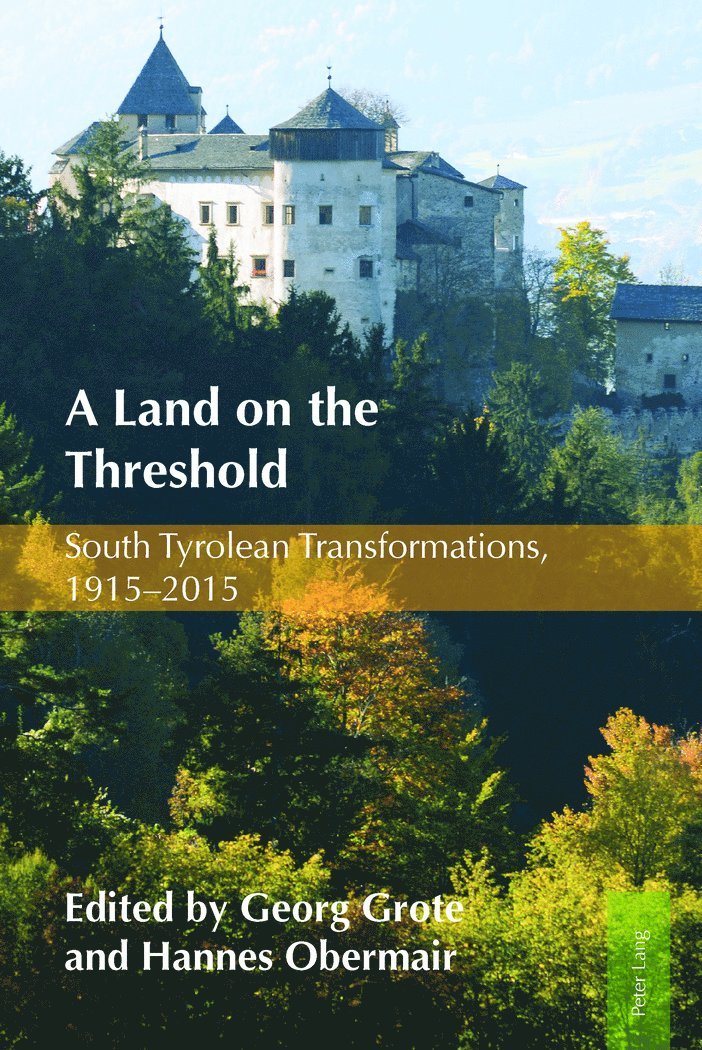
Among the many commemorations of World War I, little was made of the 100th anniversary of the secret Treaty of London between Italy and the Western War Allies in April 1915, which sealed the fate of South Tyrol for the duration of the twentieth century by passing it from Austria to Italy. In May 2015, a symposium was held in the medieval Prösels Castle in the Italian Dolomites to mark this historical moment. Contributors set out to explore the political, social and cultural impact of South Tyrol’s existence «on the threshold» during the twentieth century.Individually and collectively, the essays in this volume challenge the simplistic reading of South Tyrol as merely a geographic region torn between Germanic and Italian cultures; instead, they explore the dynamic effects of its geographical, political and cultural history since 1915. South Tyrol, as a modern regional state in Europe, faces many of the same problems as other European regions, be they individual states or sub-state regions. Most of the contributions in this volume are from academics and intellectuals within the Province of Bolzano/Bozen who negotiate and discuss these issues through their native languages: German, Italian and Ladin. By making their research accessible through English translations and abstracts, this volume seeks to bring their work on historical and contemporary developments in South Tyrol to a wider European and global audience.
Del 10 - Cultural Identity Studies
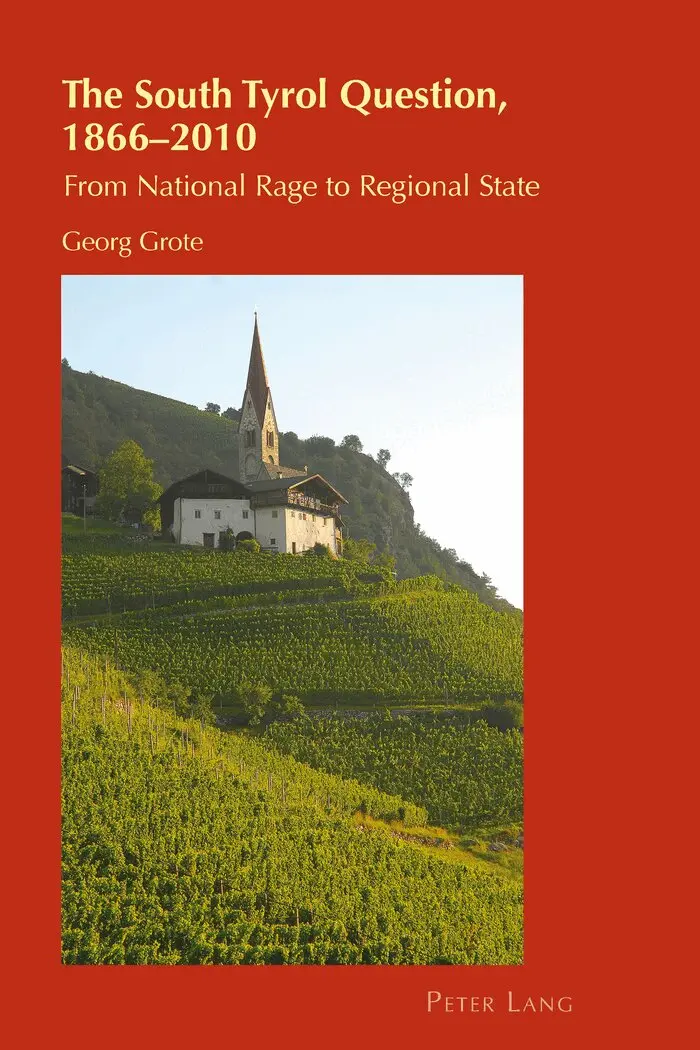
South Tyrol Question, 1866–2010
From National Rage to Regional State
Häftad, Engelska, 2012
786 kr
Skickas inom 5-8 vardagar
South Tyrol is a small, mountainous area located in the central Alps. Despite its modest geographical size, it has come to represent a success story in the protection of ethnic minorities in Europe. When Austrian South Tyrol was given to Italy in 1919, about 200,000 German and Ladin speakers became Italian citizens overnight. Despite Italy’s attempts to Italianize the South Tyroleans, especially during the Fascist era from 1922 to 1943, they sought to maintain their traditions and language, culminating in violence in the 1960s. In 1972 South Tyrol finally gained geographical and cultural autonomy from Italy, leading to the ‘regional state’ of 2010.This book, drawing on the latest research in Italian and German, provides a fresh analysis of this dynamic and turbulent period of South Tyrolean and European history. The author provides new insights into the political and cultural evolution of the understanding of the region and the definition of its role within the European framework. In a broader sense, the study also analyses the shift in paradigms from historical nationalism to modern regionalism against the backdrop of European, global, national and local historical developments as well as the shaping of the distinct identities of its multilingual and multi-ethnic population.
392 kr
Skickas inom 3-6 vardagar
483 kr
Skickas inom 3-6 vardagar
326 kr
Skickas inom 3-6 vardagar
446 kr
Skickas inom 3-6 vardagar