George C Edwards III – författare
Visar alla böcker från författaren George C Edwards III. Handla med fri frakt och snabb leverans.
23 produkter
23 produkter
Inbunden, Engelska, 2007
931 kr
Skickas inom 3-6 vardagar
This collection examines the foreign and domestic policies of President George W Bush's administration. The analysis begins with an account of how highly polarized - in terms of public opinion and electoral patterns - this presidency has proved to be (in a chapter by the editors). This is followed by chapters on the use of unilateral executive powers (by Louis Fisher and William Howell) and pre-rogative powers (by Richard Pious). Because the policy choices of the Bush presidency have had such fundamental effects both in domestic policy and in US foreign policy, three contributors (Thomas Langston, John Burke, James Pfiffner) then address the processes of decision making especially in respect to the war against Iraq. How the administration governs by a recurring process of campaigning is examined in chapters on public opinion and war (by Gary Jacobson), the promotional presidency (by Larry Jacobs), mobilizing congressional support for war (by Scott Blinder) and the White House communications system (by Martha Kumar). Finally the way in which the Bush White House relates to congress and the process of building congressional coalitions to enact laws is the subject of chapters on 'executive style' of this administration (by Charles O Jones) and the failure to reform social security (by Fiona Ross). It will be essential reading for anyone wishing to understand one of the most controversial administrations in recent years.
Häftad, Engelska, 2011
624 kr
Skickas inom 5-8 vardagar
As the central feature on the American political landscape, it is only natural that scholars and commentators focus on the presidency. So much is written about the subject, in fact, that it is often difficult to know where we stand in our understanding of it. The Oxford Handbook of the American Presidency will help scholars assess the state of scholarship on the presidency and the directions in which it needs to move. Never before has the academic literature on the American presidency received such an extended treatment. Nearly three dozen chapters critically assess both the major contributions to a literature on a dimension of the presidency and the ways in which the literature has developed. The authors of each chapter seek to identify weaknesses in the existing literature- be they logical flaws, methodological errors, oversights, or some combination therein-and to offer their views about especially productive lines of future inquiry. Equally important, the authors also identify areas of research that are unlikely to bear additional fruits. These chapters offer a distinctive point of view, an argument about the successes and failures of past scholarship, and a set of recommendations about how future work ought to develop. Thus, this volume will help set the agenda for research on the presidency for the next decade.The Oxford Handbooks of American Politics are a set of reference books offering authoritative and engaging critical overviews of the state of scholarship on American politics. Each volume focuses on a particular aspect of the field. The project is under the General Editorship of George C. Edwards III, and distinguished specialists in their respective fields edit each volume. The Handbooks aim not just to report on the discipline, but also to shape it as scholars critically assess the scholarship on a topic and propose directions in which it needs to move. The series is an indispensable reference for anyone working in American politics. General Editor for The Oxford Handbooks of American Politics: George C. Edwards III.
Inbunden, Engelska, 2021
1 034 kr
Skickas inom 5-8 vardagar
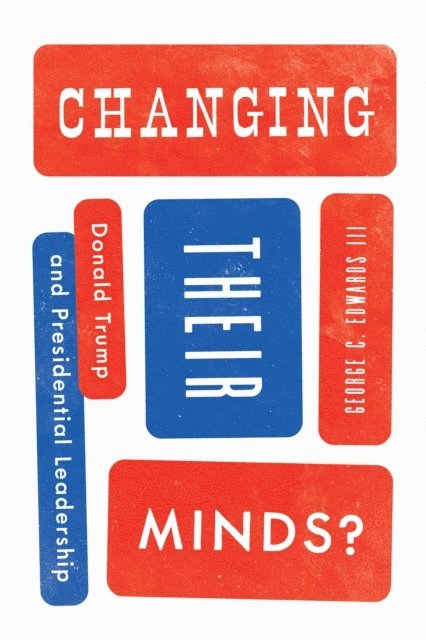
Despite popular perceptions, presidents rarely succeed in persuading either the public or members of Congress to change their minds and move from opposition to particular policies to support of them. As a result, the White House is not able to alter the political landscape and create opportunities for change. Instead, successful presidents recognize and skillfully exploit the opportunities already found in their political environments. If they fail to understand their strategic positions, they are likely to overreach and experience political disaster. Donald Trump has been a distinctive president, and his arrival in the Oval Office brought new questions. Could someone with his decades of experience as a self-promoter connect with the public and win its support? Could a president who is an experienced negotiator obtain the support in Congress needed to pass his legislative programs? Would we need to adjust the theory of presidential leadership to accommodate a president with unique persuasive skills? Building on decades of research and employing extensive new data, George C. Edwards III addresses these questions. He finds that President Trump has been no different than other presidents in being constrained by his environment. He moved neither the public nor Congress. Even for an experienced salesman and dealmaker, presidential power is still not the power to persuade. Equally important was the fact that, as Edwards shows, Trump was not able to exploit the opportunities he had. In fact, we learn here that the patterns of the president’s rhetoric and communications and his approach to dealing with Congress ultimately lessened his chances of success. President Trump, it turns out, was often his own agenda’s undoing.
Häftad, Engelska, 2021
239 kr
Skickas
Despite popular perceptions, presidents rarely succeed in persuading either the public or members of Congress to change their minds and move from opposition to particular policies to support of them. As a result, the White House is not able to alter the political landscape and create opportunities for change. Instead, successful presidents recognize and skillfully exploit the opportunities already found in their political environments. If they fail to understand their strategic positions, they are likely to overreach and experience political disaster. Donald Trump has been a distinctive president, and his arrival in the Oval Office brought new questions. Could someone with his decades of experience as a self-promoter connect with the public and win its support? Could a president who is an experienced negotiator obtain the support in Congress needed to pass his legislative programs? Would we need to adjust the theory of presidential leadership to accommodate a president with unique persuasive skills? Building on decades of research and employing extensive new data, George C. Edwards III addresses these questions. He finds that President Trump has been no different than other presidents in being constrained by his environment. He moved neither the public nor Congress. Even for an experienced salesman and dealmaker, presidential power is still not the power to persuade. Equally important was the fact that, as Edwards shows, Trump was not able to exploit the opportunities he had. In fact, we learn here that the patterns of the president’s rhetoric and communications and his approach to dealing with Congress ultimately lessened his chances of success. President Trump, it turns out, was often his own agenda’s undoing.
Inbunden, Engelska, 2022
821 kr
Skickas inom 5-8 vardagar
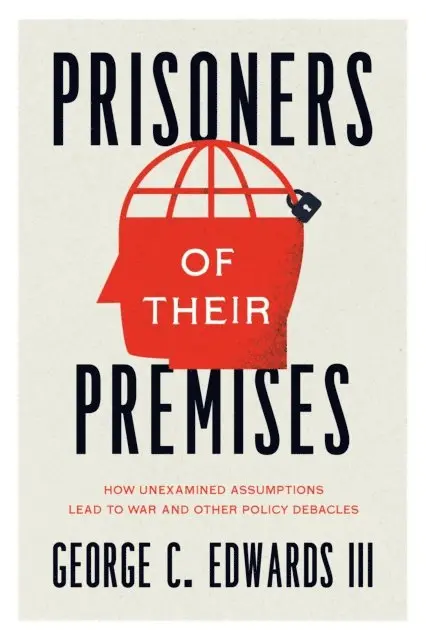
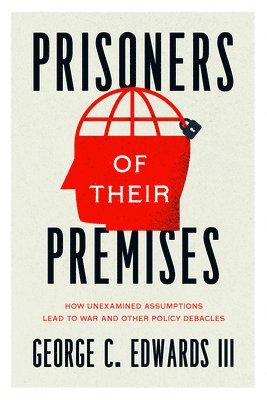
A timely look at the real costs of leaders not examining their assumptions. Why do accomplished and stable leaders frequently make calamitous decisions with devastating consequences for their countries—and other nations? We debate debacles such as the American involvement in Vietnam, seeking to understand why leaders pursued disastrous policies. In Prisoners of Their Premises, George C. Edwards III argues that the failure of leaders to examine their premises—the assumptions they make about the world and situation they are dealing with—cause them to ignore real problems or pursue policies that, in costly ways, deal with problems that are different than they think or simply don’t exist. Edwards looks at the role of premises in identifying (or ignoring) a problem in a series of case studies that range from strategic decisions in World War I and the Korean War to the wars in Vietnam and Iraq. Too often, unexamined premises color initial decisions to pursue a policy and shape the strategies leaders employ to achieve their goals, with grave consequences for their countries, organizations, and potentially the world. Timely and important, Prisoners of Their Premises demonstrates the real costs leaders incur by failing to question their assumptions.
Häftad, Engelska, 2022
204 kr
Skickas inom 5-8 vardagar
A timely look at the real costs of leaders not examining their assumptions. Why do accomplished and stable leaders frequently make calamitous decisions with devastating consequences for their countries—and other nations? We debate debacles such as the American involvement in Vietnam, seeking to understand why leaders pursued disastrous policies. In Prisoners of Their Premises, George C. Edwards III argues that the failure of leaders to examine their premises—the assumptions they make about the world and situation they are dealing with—cause them to ignore real problems or pursue policies that, in costly ways, deal with problems that are different than they think or simply don’t exist. Edwards looks at the role of premises in identifying (or ignoring) a problem in a series of case studies that range from strategic decisions in World War I and the Korean War to the wars in Vietnam and Iraq. Too often, unexamined premises color initial decisions to pursue a policy and shape the strategies leaders employ to achieve their goals, with grave consequences for their countries, organizations, and potentially the world. Timely and important, Prisoners of Their Premises demonstrates the real costs leaders incur by failing to question their assumptions.
Häftad, Engelska, 1990
427 kr
Skickas inom 5-8 vardagar
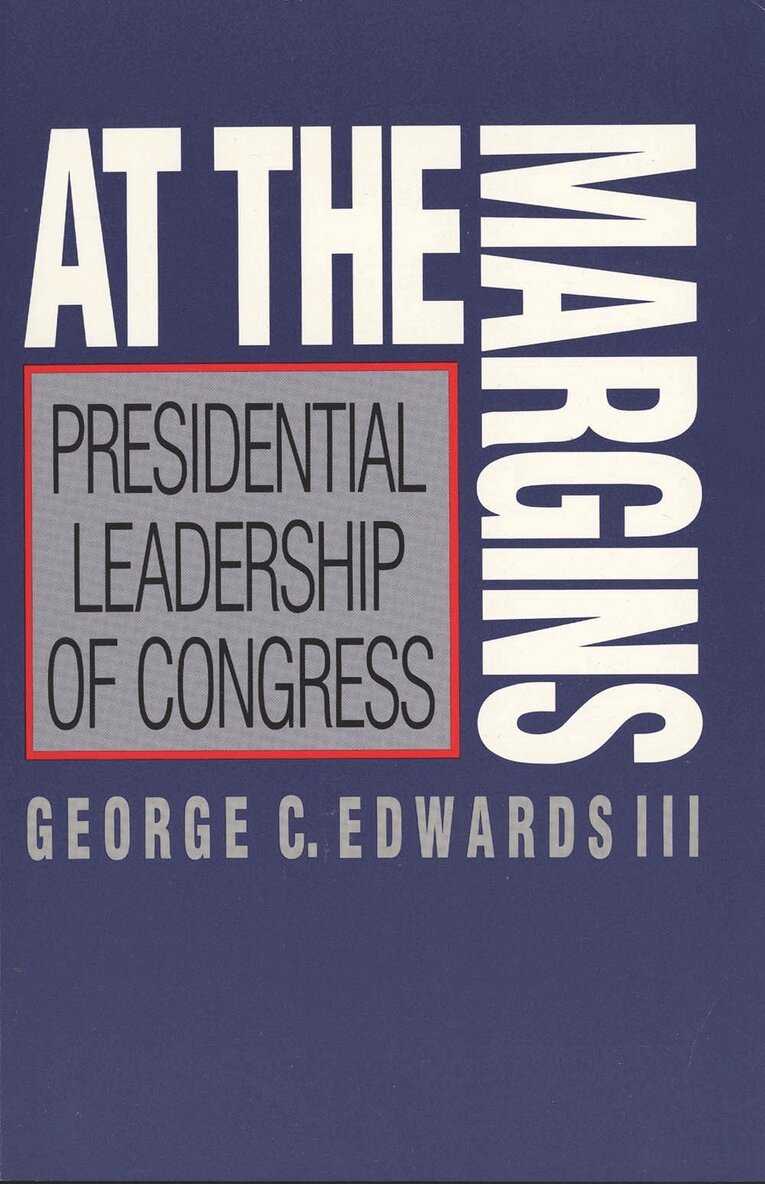
In this book George Edwards seeks a deeper understanding of the relationship between the president and Congress, exploring how and under what conditions presidents lead Congress, what we can reasonably expect of them, and how we should evaluate their performance. He makes a persuasive case for his thesis that presidential leadership of Congress is typically at the margins, not the core, of policymaking. Edwards focuses on three important resources for presidential leadership: party, public opinion, and legislative skills. For each source of influence he analyzes the president's strategic position, the theoretical potential of the resource as an instrument of leadership. He then examines presidents' attempts to employ each resource to obtain support in Congress, showing that they are rarely able to expand their resource base or manipulate their resources reliably. Integrating quantitative analysis with documentary and historical research, Edwards argues that the effective leader is not the dominant chief executive of political folklore who restructures the contours of the political landscape to pave the way for change but is rather a facilitator who works at the margins of coalition building to exploit opportunities presented by a favorable configuration of political forces in his environment. Presidents are not by themselves going to bring about major changes in public policy, says Edwards, and we must adjust accordingly our expectations of their leadership. The implications of his book are broad, and his findings are an important corrective for those who personalize politics and attribute more influence to a single person or strategy than is usually merited.
Inbunden, Engelska, 2012
363 kr
Skickas inom 5-8 vardagar
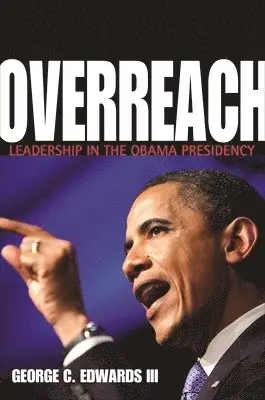
When Barack Obama became president, many Americans embraced him as a transformational leader who would fundamentally change the politics and policy of the country. Yet, two years into his administration, the public resisted his calls for support and Congress was deadlocked over many of his major policy proposals. How could this capable new president have difficulty attaining his goals? Did he lack tactical skills? In Overreach, respected presidential scholar George Edwards argues that the problem was strategic, not tactical. He finds that in President Obama's first two years in office, Obama governed on the premise that he could create opportunities for change by persuading the public and some congressional Republicans to support his major initiatives. As a result, he proposed a large, expensive, and polarizing agenda in the middle of a severe economic crisis. The president's proposals alienated many Americans and led to a severe electoral defeat for the Democrats in the 2010 midterm elections, undermining his ability to govern in the remainder of his term.Edwards shows that the president's frustrations were predictable and the inevitable result of misunderstanding the nature of presidential power. The author demonstrates that the essence of successful presidential leadership is recognizing and exploiting existing opportunities, not in creating them through persuasion. When Obama succeeded in passing important policies, it was by mobilizing Democrats who were already predisposed to back him. Thus, to avoid overreaching, presidents should be alert to the limitations of their power to persuade and rigorously assess the possibilities for obtaining public and congressional support in their environments.
Häftad, Engelska, 2012
553 kr
Skickas inom 3-6 vardagar
How do presidents lead? If presidential power is the power to persuade, why is there a lack of evidence of presidential persuasion? George Edwards, one of the leading scholars of the American presidency, skillfully uses this contradiction as a springboard to examine--and ultimately challenge--the dominant paradigm of presidential leadership. The Strategic President contends that presidents cannot create opportunities for change by persuading others to support their policies. Instead, successful presidents facilitate change by recognizing opportunities and fashioning strategies and tactics to exploit them. Edwards considers three extraordinary presidents--Abraham Lincoln, Franklin D. Roosevelt, and Ronald Reagan--and shows that despite their considerable rhetorical skills, the public was unresponsive to their appeals for support. To achieve change, these leaders capitalized on existing public opinion. Edwards then explores the prospects for other presidents to do the same to advance their policies.Turning to Congress, he focuses first on the productive legislative periods of FDR, Lyndon Johnson, and Reagan, and finds that these presidents recognized especially favorable conditions for passing their agendas and effectively exploited these circumstances while they lasted. Edwards looks at presidents governing in less auspicious circumstances, and reveals that whatever successes these presidents enjoyed also resulted from the interplay of conditions and the presidents' skills at understanding and exploiting them. The Strategic President revises the common assumptions of presidential scholarship and presents significant lessons for presidents' basic strategies of governance.
Häftad, Engelska, 2015
206 kr
Skickas inom 5-8 vardagar
When Barack Obama became president, many Americans embraced him as a transformational leader who would fundamentally change the politics and policy of the country. Yet, two years into his administration, the public resisted his calls for support and Congress was deadlocked over many of his major policy proposals. How could this capable new president have difficulty attaining his goals? Did he lack tactical skills? In Overreach, respected presidential scholar George Edwards argues that the problem was strategic, not tactical. He finds that in President Obama's first two years in office, Obama governed on the premise that he could create opportunities for change by persuading the public and some congressional Republicans to support his major initiatives. As a result, he proposed a large, expensive, and polarizing agenda in the middle of a severe economic crisis. The president's proposals alienated many Americans and led to a severe electoral defeat for the Democrats in the 2010 midterm elections, undermining his ability to govern in the remainder of his term.Edwards shows that the president's frustrations were predictable and the inevitable result of misunderstanding the nature of presidential power. The author demonstrates that the essence of successful presidential leadership is recognizing and exploiting existing opportunities, not in creating them through persuasion. When Obama succeeded in passing important policies, it was by mobilizing Democrats who were already predisposed to back him. Thus, to avoid overreaching, presidents should be alert to the limitations of their power to persuade and rigorously assess the possibilities for obtaining public and congressional support in their environments.
Inbunden, Engelska, 2016
934 kr
Skickas inom 5-8 vardagar
Millions of Americans--including many experienced politicians--viewed Barack Obama through a prism of high expectations, based on a belief in the power of presidential persuasion. Yet many who were inspired by candidate Obama were disappointed in what he was able to accomplish once in the White House. They could not understand why he often was unable to leverage his position and political skills to move the public and Congress to support his initiatives. Predicting the Presidency explains why Obama had such difficulty bringing about the change he promised, and challenges the conventional wisdom about presidential leadership. In this incisive book, George Edwards shows how we can ask a few fundamental questions about the context of a presidency--the president's strategic position or opportunity structure--and use the answers to predict a president's success in winning support for his initiatives. If presidential success is largely determined by a president's strategic position, what role does persuasion play? Almost every president finds that a significant segment of the public and his fellow partisans in Congress are predisposed to follow his lead.Others may support the White House out of self-interest. Edwards explores the possibilities of the president exploiting such support, providing a more realistic view of the potential of presidential persuasion. Written by a leading presidential scholar, Predicting the Presidency sheds new light on the limitations and opportunities of presidential leadership.
Häftad, Engelska, 2016
305 kr
Skickas inom 5-8 vardagar
Millions of Americans--including many experienced politicians--viewed Barack Obama through a prism of high expectations, based on a belief in the power of presidential persuasion. Yet many who were inspired by candidate Obama were disappointed in what he was able to accomplish once in the White House. They could not understand why he often was unable to leverage his position and political skills to move the public and Congress to support his initiatives. Predicting the Presidency explains why Obama had such difficulty bringing about the change he promised, and challenges the conventional wisdom about presidential leadership. In this incisive book, George Edwards shows how we can ask a few fundamental questions about the context of a presidency--the president's strategic position or opportunity structure--and use the answers to predict a president's success in winning support for his initiatives. If presidential success is largely determined by a president's strategic position, what role does persuasion play? Almost every president finds that a significant segment of the public and his fellow partisans in Congress are predisposed to follow his lead.Others may support the White House out of self-interest. Edwards explores the possibilities of the president exploiting such support, providing a more realistic view of the potential of presidential persuasion. Written by a leading presidential scholar, Predicting the Presidency sheds new light on the limitations and opportunities of presidential leadership.
Inbunden, Engelska, 2023
890 kr
Skickas inom 7-10 vardagar
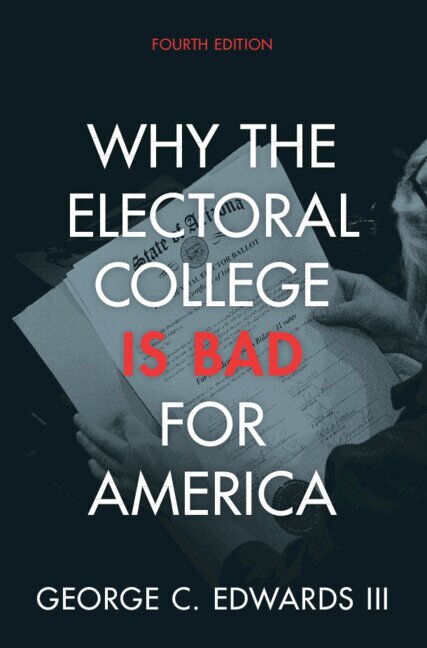
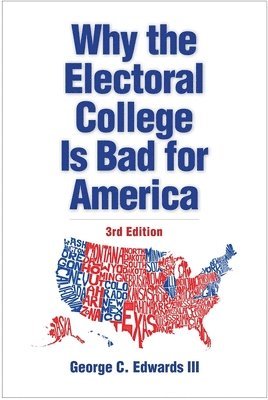
The electoral college is the extraordinarily complex mechanism by which Americans choose their president. Is there any justification for such a system, which may elect the candidate who does not receive the most votes? Today, with two of the last five presidential elections having gone to the popular vote loser and the debacle following the 2020 election, the electoral college's flaws are more apparent than ever. In this fourth edition of the definitive book on the electoral college, George Edwards employs rigorous analysis and systemic data to show how the system violates core democratic principles and does not provide the benefits its advocates claim. With a new chapter focusing on the 2020 election, Edwards addresses justifications for the electoral college that were popular among Trump supporters following the 2016 and 2020 elections. Edwards concludes by offering a straightforward approach to selecting the president that maximizes political equality.
Häftad, Engelska, 2023
269 kr
Skickas inom 7-10 vardagar
The electoral college is the extraordinarily complex mechanism by which Americans choose their president. Is there any justification for such a system, which may elect the candidate who does not receive the most votes? Today, with two of the last five presidential elections having gone to the popular vote loser and the debacle following the 2020 election, the electoral college's flaws are more apparent than ever. In this fourth edition of the definitive book on the electoral college, George Edwards employs rigorous analysis and systemic data to show how the system violates core democratic principles and does not provide the benefits its advocates claim. With a new chapter focusing on the 2020 election, Edwards addresses justifications for the electoral college that were popular among Trump supporters following the 2016 and 2020 elections. Edwards concludes by offering a straightforward approach to selecting the president that maximizes political equality.
Häftad, Engelska, 2010
338 kr
Skickas inom 3-6 vardagar
Häftad, Engelska, 2010
338 kr
Skickas inom 3-6 vardagar
Häftad, Engelska, 2010
338 kr
Skickas inom 3-6 vardagar
Häftad, Engelska, 2008
398 kr
Skickas inom 3-6 vardagar
Inbunden, Engelska, 2024
2 185 kr
Skickas inom 10-15 vardagar
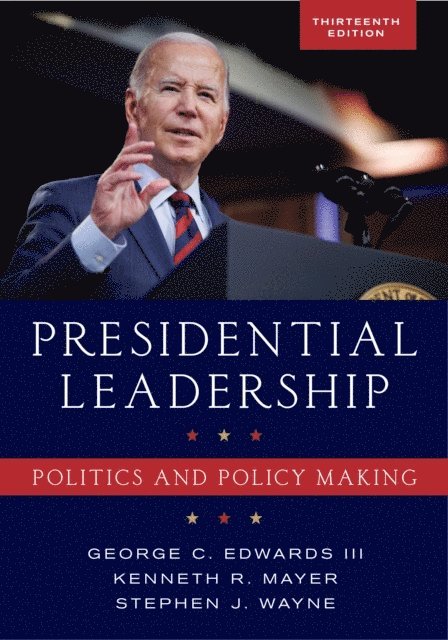
This classic text on the American presidency analyzes the institution and the presidents who hold the office through the key lens of leadership. Edwards, Mayer, and Wayne explain the leadership dilemma presidents face and their institutional, political, and personal capacities to meet it. Two models of presidential leadership help us understand the institution: one in which a strong president dominates the political environment as a director of change, and another in which the president performs a more limited role as facilitator of change. Each model provides an insightful perspectives to better understand leadership in the modern presidency and to evaluate the performance of individual presidents.With no simple formula for presidential success, and no partisan perspective driving the analysis, the authors help us understand that presidents and citizens alike must understand the nature of presidential leadership in a pluralistic system in which separate institutions share powers.This fully revised thirteenth edition is fully updated through the Biden administration, with recent policy developments, the 2022 midterm elections, changes to the media environment, and the latest data.
Häftad, Engelska, 2024
960 kr
Skickas inom 10-15 vardagar
This classic text on the American presidency analyzes the institution and the presidents who hold the office through the key lens of leadership. Edwards, Mayer, and Wayne explain the leadership dilemma presidents face and their institutional, political, and personal capacities to meet it. Two models of presidential leadership help us understand the institution: one in which a strong president dominates the political environment as a director of change, and another in which the president performs a more limited role as facilitator of change. Each model provides an insightful perspectives to better understand leadership in the modern presidency and to evaluate the performance of individual presidents.With no simple formula for presidential success, and no partisan perspective driving the analysis, the authors help us understand that presidents and citizens alike must understand the nature of presidential leadership in a pluralistic system in which separate institutions share powers.This fully revised thirteenth edition is fully updated through the Biden administration, with recent policy developments, the 2022 midterm elections, changes to the media environment, and the latest data.
Inbunden, Engelska, 2026
293 kr
Kommande
In this book, George C. Edwards III dispels many popular misconceptions about American politics and public policy, challenging what many people hold to be self-evident. Edwards starts by outlining common, often prevailing understandings of crucial issues--such as who pays taxes, how much we spend on foreign aid, or how free speech actually is--then shows readers how these views are inaccurate and harmful. Appealing to the widespread fascination with debunking myths, this engaging book arms readers with important information on key issues in American political life that will last them a lifetime.
Häftad, Engelska, 2026
874 kr
Skickas
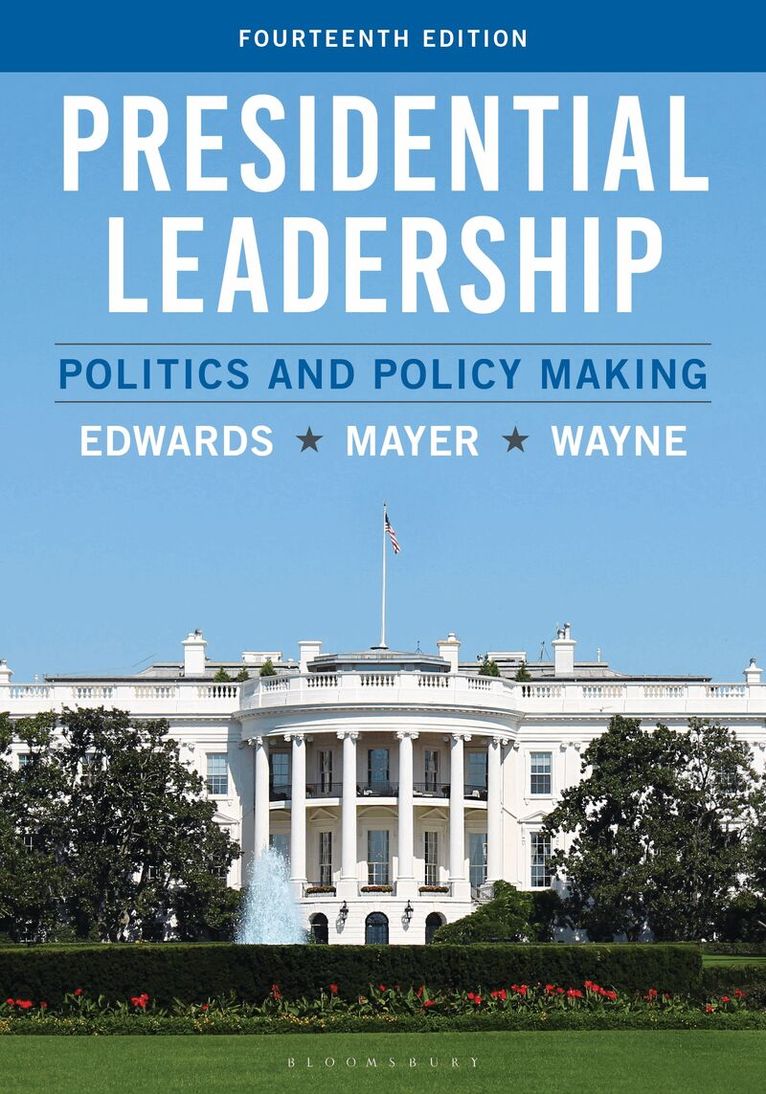
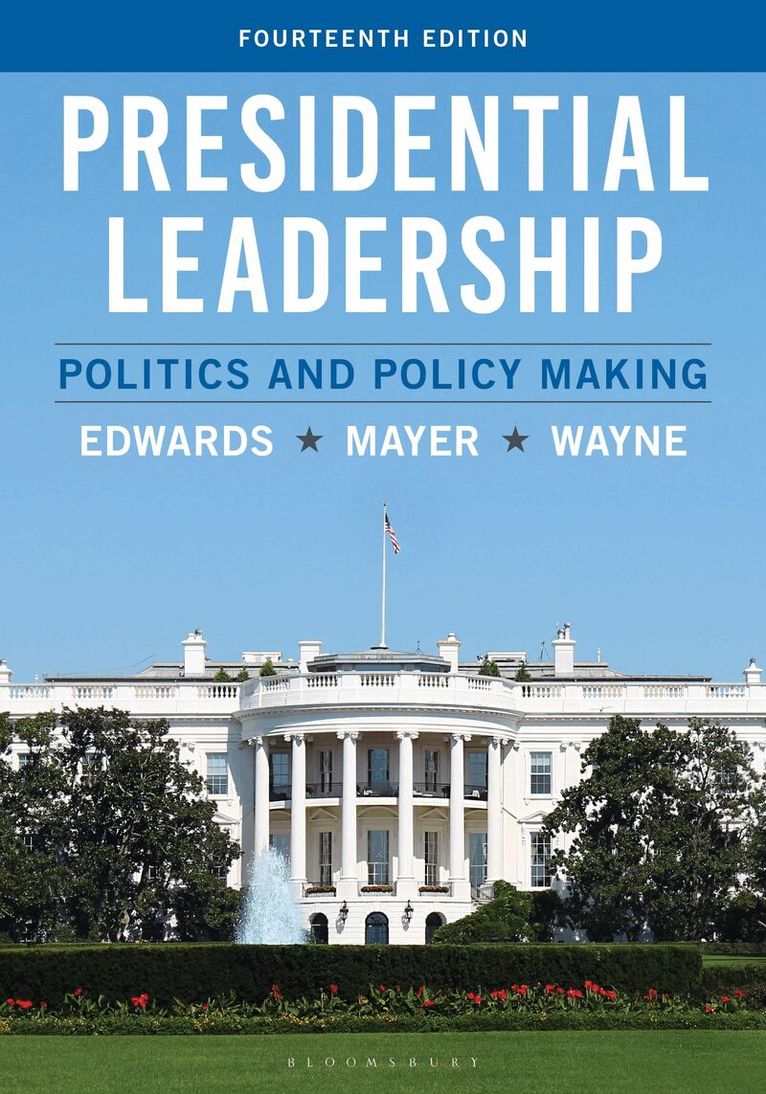
Long established as a leading introduction to the American presidency, Presidential Leadership, Fourteenth Edition, provides students with a comprehensive survey that addresses the capacity of chief executives to fulfill their tasks, exercise their powers, and utilize their organizational structures to affect the output of government. The authors examine all aspects of the presidency in rich detail, including presidential powers, presidential history, and the institution of the presidency.Edwards, Mayer, and Wayne analyze the institution and the presidents who hold the office through the key lens of leadership. The authors explain the leadership dilemma presidents face and their institutional, political, and personal capacities to meet it. Two models of presidential leadership help students understand the institution: one in which a strong president dominates the political environment as a director of change, and another in which the president performs a more limited role as facilitator of change. Each model provides an insightful perspectives to better understand leadership in the modern presidency and to evaluate the performance of individual presidents. With no simple formula for presidential success, and no partisan perspective driving the analysis, the authors help us understand that presidents and citizens alike must understand the nature of presidential leadership in a pluralistic system in which separate institutions share powers.The fourteenth edition is fully updated through the start of Trump’s second administration, with recent policy developments, the 2024 elections, changes to the media environment, and the latest data. In addition, material from the prior edition’s chapter on domestic and economic policy has been incorporated into other chapters for an overall briefer text.
Inbunden, Engelska, 2026
2 011 kr
Skickas
Long established as a leading introduction to the American presidency, Presidential Leadership, Fourteenth Edition, provides students with a comprehensive survey that addresses the capacity of chief executives to fulfill their tasks, exercise their powers, and utilize their organizational structures to affect the output of government. The authors examine all aspects of the presidency in rich detail, including presidential powers, presidential history, and the institution of the presidency.Edwards, Mayer, and Wayne analyze the institution and the presidents who hold the office through the key lens of leadership. The authors explain the leadership dilemma presidents face and their institutional, political, and personal capacities to meet it. Two models of presidential leadership help students understand the institution: one in which a strong president dominates the political environment as a director of change, and another in which the president performs a more limited role as facilitator of change. Each model provides an insightful perspectives to better understand leadership in the modern presidency and to evaluate the performance of individual presidents. With no simple formula for presidential success, and no partisan perspective driving the analysis, the authors help us understand that presidents and citizens alike must understand the nature of presidential leadership in a pluralistic system in which separate institutions share powers.The fourteenth edition is fully updated through the start of Trump’s second administration, with recent policy developments, the 2024 elections, changes to the media environment, and the latest data. In addition, material from the prior edition’s chapter on domestic and economic policy has been incorporated into other chapters for an overall briefer text.