William G. Howell - Böcker
Visar alla böcker från författaren William G. Howell. Handla med fri frakt och snabb leverans.
13 produkter
13 produkter
633 kr
Skickas inom 5-8 vardagar
As the central feature on the American political landscape, it is only natural that scholars and commentators focus on the presidency. So much is written about the subject, in fact, that it is often difficult to know where we stand in our understanding of it. The Oxford Handbook of the American Presidency will help scholars assess the state of scholarship on the presidency and the directions in which it needs to move. Never before has the academic literature on the American presidency received such an extended treatment. Nearly three dozen chapters critically assess both the major contributions to a literature on a dimension of the presidency and the ways in which the literature has developed. The authors of each chapter seek to identify weaknesses in the existing literature- be they logical flaws, methodological errors, oversights, or some combination therein-and to offer their views about especially productive lines of future inquiry. Equally important, the authors also identify areas of research that are unlikely to bear additional fruits. These chapters offer a distinctive point of view, an argument about the successes and failures of past scholarship, and a set of recommendations about how future work ought to develop. Thus, this volume will help set the agenda for research on the presidency for the next decade.The Oxford Handbooks of American Politics are a set of reference books offering authoritative and engaging critical overviews of the state of scholarship on American politics. Each volume focuses on a particular aspect of the field. The project is under the General Editorship of George C. Edwards III, and distinguished specialists in their respective fields edit each volume. The Handbooks aim not just to report on the discipline, but also to shape it as scholars critically assess the scholarship on a topic and propose directions in which it needs to move. The series is an indispensable reference for anyone working in American politics. General Editor for The Oxford Handbooks of American Politics: George C. Edwards III.
274 kr
Skickas inom 7-10 vardagar
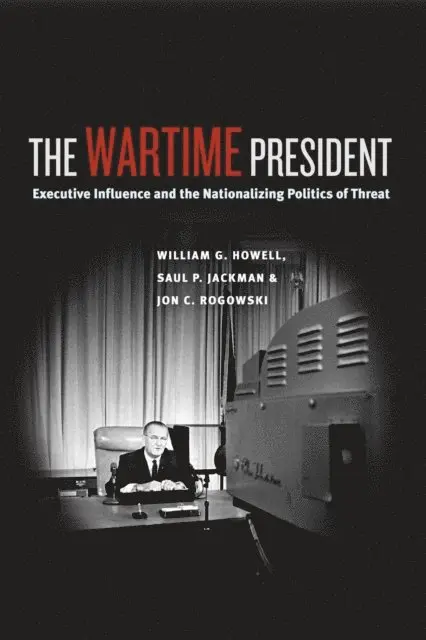
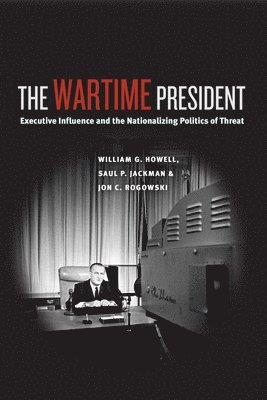
"It is the nature of war to increase the executive at the expense of the legislative authority," wrote Alexander Hamilton in the Federalist Papers. The balance of power between Congress and the president has been a powerful thread throughout American political thought since the time of the Founding Fathers. And yet, for all that has been written on the topic, we still lack a solid empirical or theoretical justification for Hamilton's proposition. For the first time, William G. Howell, Saul P. Jackman, and Jon C. Rogowski systematically analyze the question. Congress, they show, is more likely to defer to the president's policy preferences when political debates center on national rather than local considerations. Thus, World War II and the post-9/11 wars in Afghanistan and Iraq significantly augmented presidential power, allowing the president to enact foreign and domestic policies that would have been unattainable in times of peace. But, contrary to popular belief, there are also times when war has little effect on a president's influence in Congress.The Vietnam and Gulf Wars, for instance, did not nationalize our politics nearly so much, and presidential influence expanded only moderately. Built on groundbreaking research, The Wartime President offers one of the most significant works ever written on the wartime powers presidents wield at home.
816 kr
Skickas inom 7-10 vardagar
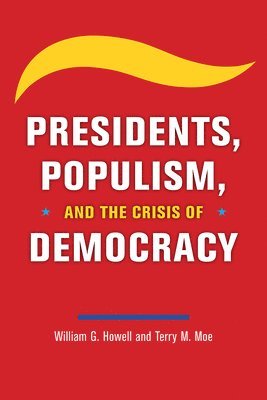
Has American democracy's long, ambitious run come to an end? Possibly yes. As William G. Howell and Terry M. Moe argue in this trenchant new analysis of modern politics, the United States faces a historic crisis that threatens our system of self-government--and if democracy is to be saved, the causes of the crisis must be understood and defused. The most visible cause is Donald Trump, who has used his presidency to attack the nation's institutions and violate its democratic norms. Yet Trump is but a symptom of causes that run much deeper: social forces like globalization, automation, and immigration that for decades have generated economic harms and cultural anxieties that our government has been wholly ineffective at addressing. Millions of Americans have grown angry and disaffected, and populist appeals have found a receptive audience. These are the drivers of Trump's dangerous presidency. And after he leaves office, they will still be there for other populists to weaponize. What can be done to safeguard American democracy? The disruptive forces of modernity cannot be stopped. The solution lies, instead, in having a government that can deal with them--which calls for aggressive new policies, but also for institutional reforms that enhance its capacity for effective action. The path to progress is filled with political obstacles, including an increasingly populist, anti-government Republican Party. It is hard to be optimistic. But if the challenge is to be met, we need reforms of the presidency itself--reforms that harness the promise of presidential power for effective government, but firmly protect against the fear that it may be put to anti-democratic ends.
148 kr
Skickas inom 7-10 vardagar
Has American democracy's long, ambitious run come to an end? Possibly yes. As William G. Howell and Terry M. Moe argue in this trenchant new analysis of modern politics, the United States faces a historic crisis that threatens our system of self-government--and if democracy is to be saved, the causes of the crisis must be understood and defused. The most visible cause is Donald Trump, who has used his presidency to attack the nation's institutions and violate its democratic norms. Yet Trump is but a symptom of causes that run much deeper: social forces like globalization, automation, and immigration that for decades have generated economic harms and cultural anxieties that our government has been wholly ineffective at addressing. Millions of Americans have grown angry and disaffected, and populist appeals have found a receptive audience. These are the drivers of Trump's dangerous presidency. And after he leaves office, they will still be there for other populists to weaponize. What can be done to safeguard American democracy? The disruptive forces of modernity cannot be stopped. The solution lies, instead, in having a government that can deal with them--which calls for aggressive new policies, but also for institutional reforms that enhance its capacity for effective action. The path to progress is filled with political obstacles, including an increasingly populist, anti-government Republican Party. It is hard to be optimistic. But if the challenge is to be met, we need reforms of the presidency itself--reforms that harness the promise of presidential power for effective government, but firmly protect against the fear that it may be put to anti-democratic ends.
870 kr
Skickas inom 3-6 vardagar
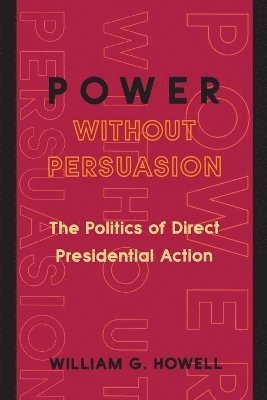
Since the early 1960s, scholarly thinking on the power of U.S. presidents has rested on these words: "Presidential power is the power to persuade." Power, in this formulation, is strictly about bargaining and convincing other political actors to do things the president cannot accomplish alone. Power without Persuasion argues otherwise. Focusing on presidents' ability to act unilaterally, William Howell provides the most theoretically substantial and far-reaching reevaluation of presidential power in many years. He argues that presidents regularly set public policies over vocal objections by Congress, interest groups, and the bureaucracy. Throughout U.S. history, going back to the Louisiana Purchase and the Emancipation Proclamation, presidents have set landmark policies on their own. More recently, Roosevelt interned Japanese Americans during World War II, Kennedy established the Peace Corps, Johnson got affirmative action underway, Reagan greatly expanded the president's powers of regulatory review, and Clinton extended protections to millions of acres of public lands.Since September 11, Bush has created a new cabinet post and constructed a parallel judicial system to try suspected terrorists. Howell not only presents numerous new empirical findings but goes well beyond the theoretical scope of previous studies. Drawing richly on game theory and the new institutionalism, he examines the political conditions under which presidents can change policy without congressional or judicial consent. Clearly written, Power without Persuasion asserts a compelling new formulation of presidential power, one whose implications will resound.
478 kr
Skickas inom 7-10 vardagar
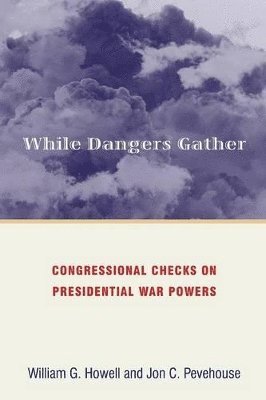
Nearly five hundred times in the past century, American presidents have deployed the nation's military abroad, on missions ranging from embassy evacuations to full-scale wars. The question of whether Congress has effectively limited the president's power to do so has generally met with a resounding "no." In While Dangers Gather, William Howell and Jon Pevehouse reach a very different conclusion. The authors--one an American politics scholar, the other an international relations scholar--provide the most comprehensive and compelling evidence to date on Congress's influence on presidential war powers. Their findings have profound implications for contemporary debates about war, presidential power, and Congress's constitutional obligations. While devoting special attention to the 2003 invasion of Iraq, this book systematically analyzes the last half-century of U.S. military policy. Among its conclusions: Presidents are systematically less likely to exercise military force when their partisan opponents retain control of Congress.The partisan composition of Congress, however, matters most for proposed deployments that are larger in size and directed at less strategically important locales. Moreover, congressional influence is often achieved not through bold legislative action but through public posturing--engaging the media, raising public concerns, and stirring domestic and international doubt about the United States' resolve to see a fight through to the end.
376 kr
Skickas inom 7-10 vardagar
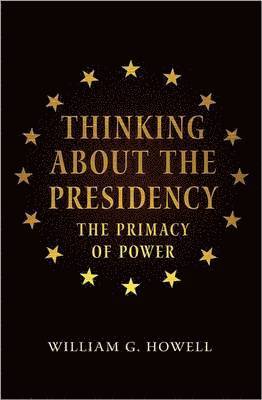
All American presidents, past and present, have cared deeply about power--acquiring, protecting, and expanding it. While individual presidents obviously have other concerns, such as shaping policy or building a legacy, the primacy of power considerations--exacerbated by expectations of the presidency and the inadequacy of explicit powers in the Constitution--sets presidents apart from other political actors. Thinking about the Presidency explores presidents' preoccupation with power. Distinguished presidential scholar William Howell looks at the key aspects of executive power--political and constitutional origins, philosophical underpinnings, manifestations in contemporary political life, implications for political reform, and looming influences over the standards to which we hold those individuals elected to America's highest office. Howell shows that an appetite for power may not inform the original motivations of those who seek to become president. Rather, this need is built into the office of the presidency itself--and quickly takes hold of whoever bears the title of Chief Executive.In order to understand the modern presidency, and the degrees to which a president succeeds or fails, the acquisition, protection, and expansion of power in a president's political life must be recognized--in policy tools and legislative strategies, the posture taken before the American public, and the disregard shown to those who would counsel modesty and deference within the White House. Thinking about the Presidency assesses how the search for and defense of presidential powers informs nearly every decision made by the leader of the nation.
172 kr
Skickas inom 7-10 vardagar
All American presidents, past and present, have cared deeply about power--acquiring, protecting, and expanding it. While individual presidents obviously have other concerns, such as shaping policy or building a legacy, the primacy of power considerations--exacerbated by expectations of the presidency and the inadequacy of explicit powers in the Constitution--sets presidents apart from other political actors. Thinking about the Presidency explores presidents' preoccupation with power. Distinguished presidential scholar William Howell looks at the key aspects of executive power--political and constitutional origins, philosophical underpinnings, manifestations in contemporary political life, implications for political reform, and looming influences over the standards to which we hold those individuals elected to America's highest office. Howell shows that an appetite for power may not inform the original motivations of those who seek to become president. Rather, this need is built into the office of the presidency itself--and quickly takes hold of whoever bears the title of Chief Executive.In order to understand the modern presidency, and the degrees to which a president succeeds or fails, the acquisition, protection, and expansion of power in a president's political life must be recognized--in policy tools and legislative strategies, the posture taken before the American public, and the disregard shown to those who would counsel modesty and deference within the White House. Thinking about the Presidency assesses how the search for and defense of presidential powers informs nearly every decision made by the leader of the nation. In a new preface, Howell reflects on presidential power during the presidency of Barack Obama.
471 kr
Skickas
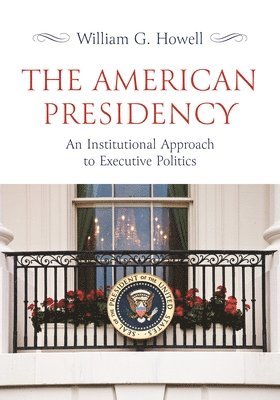
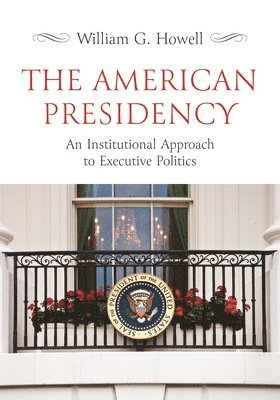
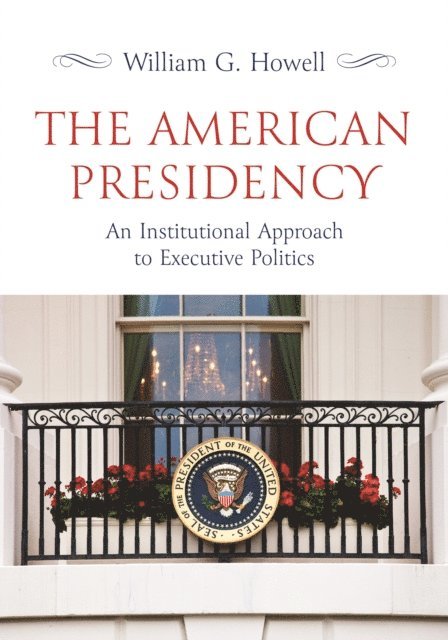
How institutions shape the American presidencyThis incisive undergraduate textbook emphasizes the institutional sources of presidential power and executive governance, enabling students to think more clearly and systematically about the American presidency at a time when media coverage of the White House is awash in anecdotes and personalities. William Howell offers unparalleled perspective on the world’s most powerful office, from its original design in the Constitution to its historical growth over time; its elections and transitions to governance; its interactions with Congress, the courts, and the federal bureaucracy; and its persistent efforts to shape public policy. Comprehensive in scope and rooted in the latest scholarship, The American Presidency is the perfect guide for studying the presidency at a time of acute partisan polarization and popular anxiety about the health and well-being of the republic.Focuses on the institutional structures that presidents must navigate, the incentives and opportunities that drive them, and the constraints they routinely confrontShows how legislators, judges, bureaucrats, the media, and the broader public shape the contours and limits of presidential powerEncourages students to view the institutional presidency as not just an object of study but a way of thinking about executive politicsHighlights the lasting effects of important historical moments on the institutional presidencyEnables students to grapple with enduring themes of power, rules, norms, and organization that undergird democracy
792 kr
Skickas inom 7-10 vardagar
How institutions shape the American presidencyThis incisive undergraduate textbook emphasizes the institutional sources of presidential power and executive governance, enabling students to think more clearly and systematically about the American presidency at a time when media coverage of the White House is awash in anecdotes and personalities. William Howell offers unparalleled perspective on the world’s most powerful office, from its original design in the Constitution to its historical growth over time; its elections and transitions to governance; its interactions with Congress, the courts, and the federal bureaucracy; and its persistent efforts to shape public policy. Comprehensive in scope and rooted in the latest scholarship, The American Presidency is the perfect guide for studying the presidency at a time of acute partisan polarization and popular anxiety about the health and well-being of the republic.Focuses on the institutional structures that presidents must navigate, the incentives and opportunities that drive them, and the constraints they routinely confrontShows how legislators, judges, bureaucrats, the media, and the broader public shape the contours and limits of presidential powerEncourages students to view the institutional presidency as not just an object of study but a way of thinking about executive politicsHighlights the lasting effects of important historical moments on the institutional presidencyEnables students to grapple with enduring themes of power, rules, norms, and organization that undergird democracy
282 kr
Skickas inom 7-10 vardagar
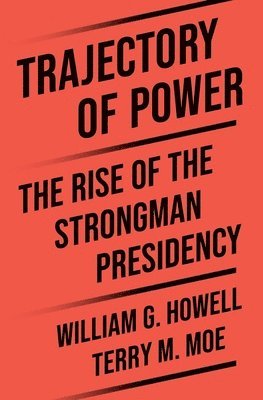
A penetrating account of how, over many decades, conservative backlash to the administrative state led to the rise of a strongman presidency that threatens American democracyIn Trajectory of Power, leading political scientists William Howell and Terry Moe provide a sweeping account of the historical rise of presidential power, arguing that it has now grown to the point where, in the wrong hands, it threatens to subvert American democracy and replace it with a de facto system of strongman rule, whether led by Donald Trump or someone else.The book shows that, for much of the twentieth century, Republican and Democratic presidents pursued power in very similar ways and almost always within democratic bounds. But Republican presidents since Ronald Reagan, in a transformation that has grown increasingly extreme over time, have gone beyond the “normal” incentives that have traditionally shaped presidential behavior—and still shape the behavior of Democratic presidents—to pursue a presidency of such expansive unilateral power, and with such disregard for basic democratic requirements, that it puts democracy at serious risk.Trajectory of Power traces this divergence in approach to the backlash of conservatives against the administrative state, and to their epiphany that a war on big government could only be waged through a presidency of extraordinary power. With this vision in mind, Reagan’s Justice Department pioneered the Unitary Executive Theory, which justified vast expansions of unilateral presidential power and was further radicalized over the decades as the Republican Party became more ideologically extreme, more populist, more anti-system, and ultimately more supportive of a strongman presidency.Timely, urgent, and original, Trajectory of Power reveals how the presidency has been profoundly transformed during the modern era—and why it now puts our democracy in imminent danger.
344 kr
Skickas inom 10-15 vardagar
School boards are fighting for their survival. Almost everything that they do is subject to regulations handed down from city councils, state boards of education, legislatures, and courts. As recent mayoral and state takeovers in such cities as Baltimore, Chicago, and New York make abundantly clear, school boards that do not fulfill the expectations of other political players may be stripped of what few independent powers they still retain. Teachers unions exert growing influence over board decision-making processes. And with the passage of the No Child Left Behind Act, the federal government has aggressively inserted itself into matters of local education governance. B esieged is the first full-length volume in many years to systematically examine the politics that surround school boards. A group of highly renowned scholars, relying on both careful case studies and quantitative analyses, examine how school boards fare when they interact with their political superiors, teachers unions, and the public. For the most part, the picture that emerges is sobering: while school boards perform certain administrative functions quite well, the political pressures they face undermine their capacity to institute the wide-ranging school reforms that many voters and local leaders are currently demanding.
279 kr
Skickas inom 10-15 vardagar
The voucher debate has been both intense and ideologically polarizing, in good part because so little is known about how voucher programs operate in practice. In The Education Gap, William Howell and Paul Peterson report new findings drawn from the most comprehensive study on vouchers conducted to date. Added to the paperback edition of this groundbreaking volume are the authors' insights into the latest school choice developments in American education, including new voucher initiatives, charter school expansion, and public-school choice under No Child Left Behind. The authors review the significance of state and federal court decisions as well as recent scholarly debates over choice impacts on student performance. In addition, the authors present new findings on which parents choose private schools and the consequences the decision has for their children's education. Updated and expanded, The Education Gap remains an indispensable source of original research on school vouchers. ""This is the most important book ever written on the subject of vouchers.""John E. Brandl, dean, Hubert H. Humphrey Institute of Public Affairs, University of Minnesota ""The Education Gap will provide an important intellectual battleground for the debate over vouchers for years to come.""Alan B. Krueger, Princeton University ""Must reading for anyone interested in the battle over vouchers in America.""John Witte, University of Wisconsin