Kenneth R Mayer - Böcker
Visar alla böcker från författaren Kenneth R Mayer. Handla med fri frakt och snabb leverans.
8 produkter
8 produkter
2 103 kr
Skickas inom 10-15 vardagar
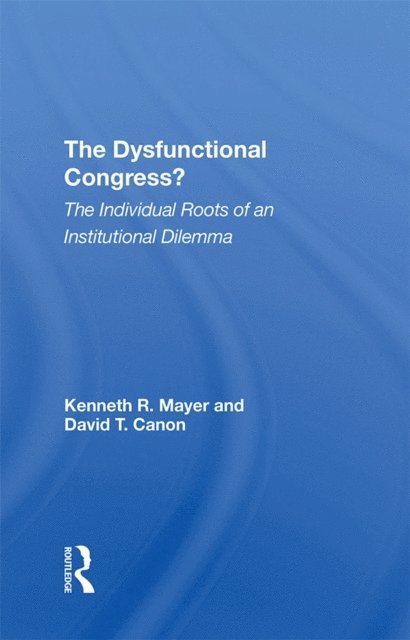
This book introduces students to an argument using rational choice theories to explain what happens when individuals come together to make collective decisions, emphasising on the collective dilemma concept that provides a framework for thinking about how reform proposals would affect Congress.
621 kr
Skickas inom 10-15 vardagar
This book introduces students to an argument using rational choice theories to explain what happens when individuals come together to make collective decisions, emphasising on the collective dilemma concept that provides a framework for thinking about how reform proposals would affect Congress.
400 kr
Skickas inom 7-10 vardagar
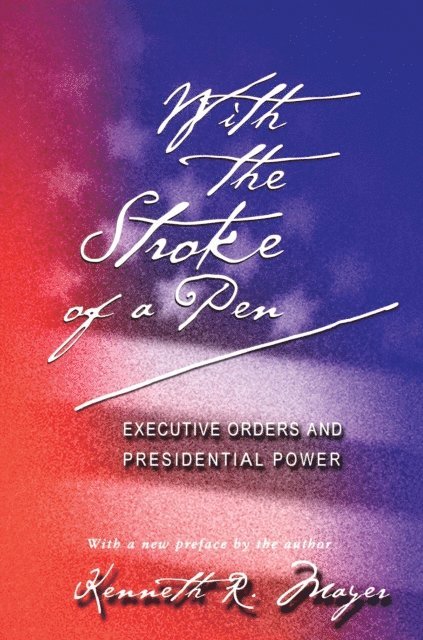
The conventional wisdom holds that the president of the United States is weak, hobbled by the separation of powers and the short reach of his formal legal authority. In this first-ever in-depth study of executive orders, Kenneth Mayer deals a strong blow to this view. Taking civil rights and foreign policy as examples, he shows how presidents have used a key tool of executive power to wield their inherent legal authority and pursue policy without congressional interference. Throughout the nation's life, executive orders have allowed presidents to make momentous, unilateral policy choices: creating and abolishing executive branch agencies, reorganizing administrative and regulatory processes, handling emergencies, and determining how legislation is implemented.From the Louisiana Purchase to the Emancipation Proclamation, from Franklin Roosevelt's establishment of the Executive Office of the President to Bill Clinton's authorization of loan guarantees for Mexico, from Harry Truman's integration of the armed forces to Ronald Reagan's seizures of regulatory control, American presidents have used executive orders (or their equivalents) to legislate in ways that extend far beyond administrative activity. By analyzing the pattern of presidents' use of executive orders and the relationship of those orders to the presidency as an institution, Mayer describes an office much more powerful and active than the one depicted in the bulk of the political science literature. This distinguished work of scholarship shows that the U.S. presidency has a great deal more than the oft-cited "power to persuade."
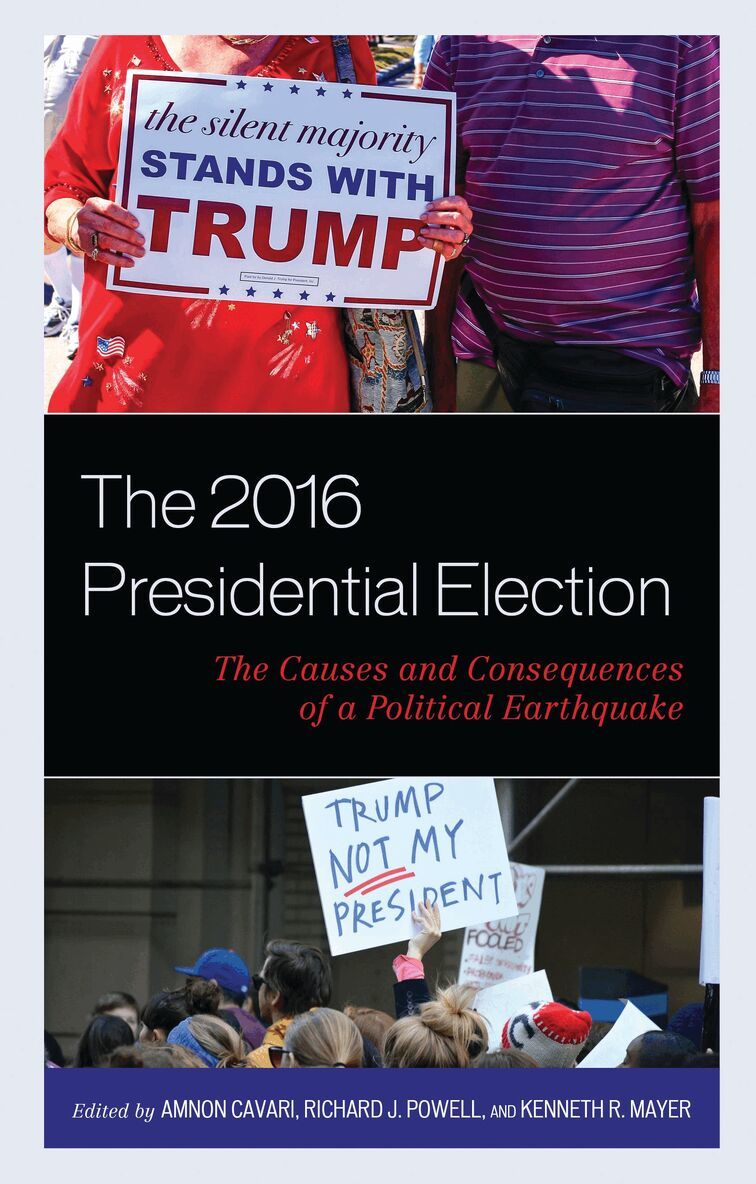
2016 Presidential Election
The Causes and Consequences of a Political Earthquake
Häftad, Engelska, 2019
541 kr
Skickas inom 10-15 vardagar
The 2016 Presidential Election: The Causes and Consequences of a Political Earthquake critically analyzes the 2016 presidential election. The chapters in this book identify key factors behind the election of Donald J. Trump, explore the unconventional campaign, analyze the unexpected election result, evaluate the forecasting models, and speculate on the effect of the election outcome on politics and governance in the Trump Administration.
2 094 kr
Skickas inom 10-15 vardagar
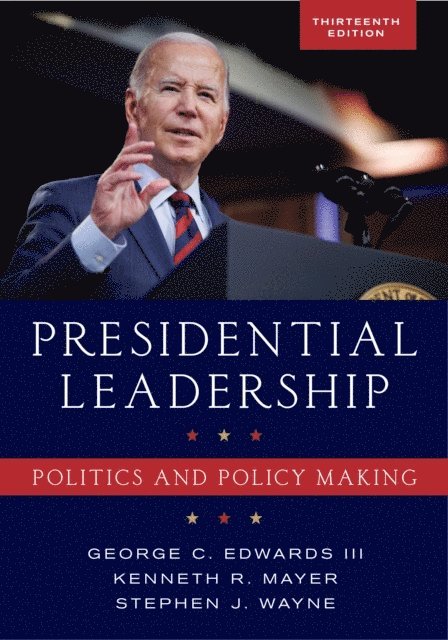
This classic text on the American presidency analyzes the institution and the presidents who hold the office through the key lens of leadership. Edwards, Mayer, and Wayne explain the leadership dilemma presidents face and their institutional, political, and personal capacities to meet it. Two models of presidential leadership help us understand the institution: one in which a strong president dominates the political environment as a director of change, and another in which the president performs a more limited role as facilitator of change. Each model provides an insightful perspectives to better understand leadership in the modern presidency and to evaluate the performance of individual presidents.With no simple formula for presidential success, and no partisan perspective driving the analysis, the authors help us understand that presidents and citizens alike must understand the nature of presidential leadership in a pluralistic system in which separate institutions share powers.This fully revised thirteenth edition is fully updated through the Biden administration, with recent policy developments, the 2022 midterm elections, changes to the media environment, and the latest data.
942 kr
Skickas inom 10-15 vardagar
This classic text on the American presidency analyzes the institution and the presidents who hold the office through the key lens of leadership. Edwards, Mayer, and Wayne explain the leadership dilemma presidents face and their institutional, political, and personal capacities to meet it. Two models of presidential leadership help us understand the institution: one in which a strong president dominates the political environment as a director of change, and another in which the president performs a more limited role as facilitator of change. Each model provides an insightful perspectives to better understand leadership in the modern presidency and to evaluate the performance of individual presidents.With no simple formula for presidential success, and no partisan perspective driving the analysis, the authors help us understand that presidents and citizens alike must understand the nature of presidential leadership in a pluralistic system in which separate institutions share powers.This fully revised thirteenth edition is fully updated through the Biden administration, with recent policy developments, the 2022 midterm elections, changes to the media environment, and the latest data.
825 kr
Kommande
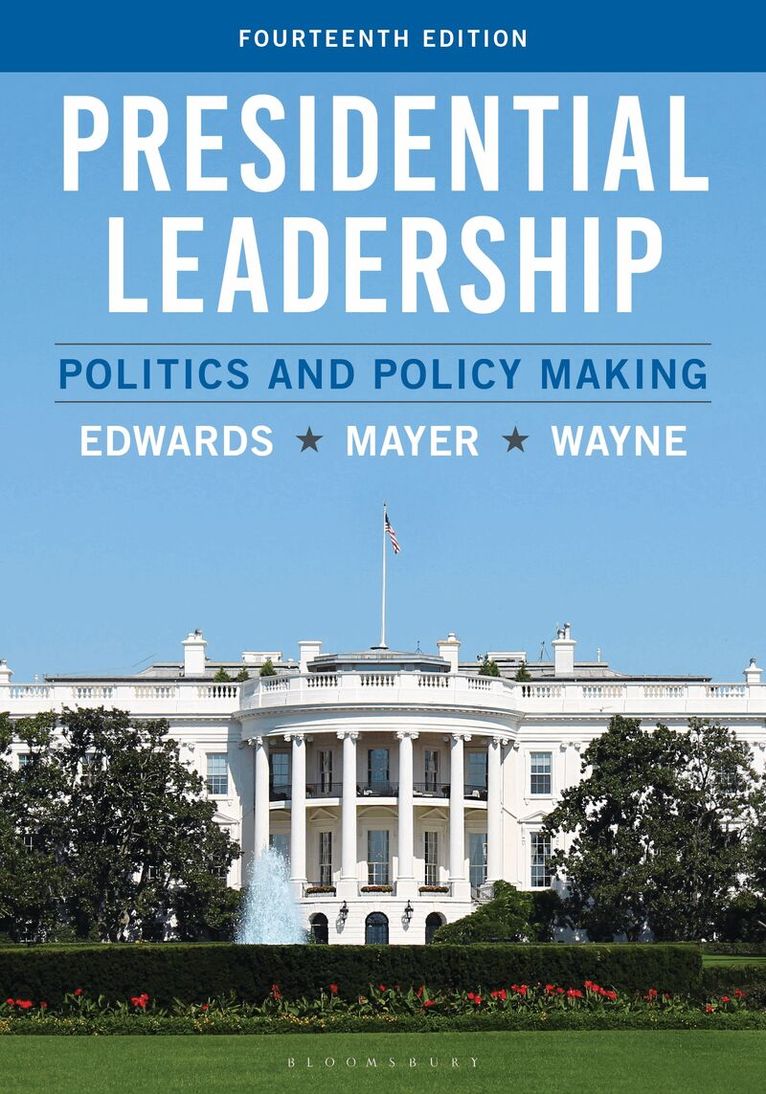
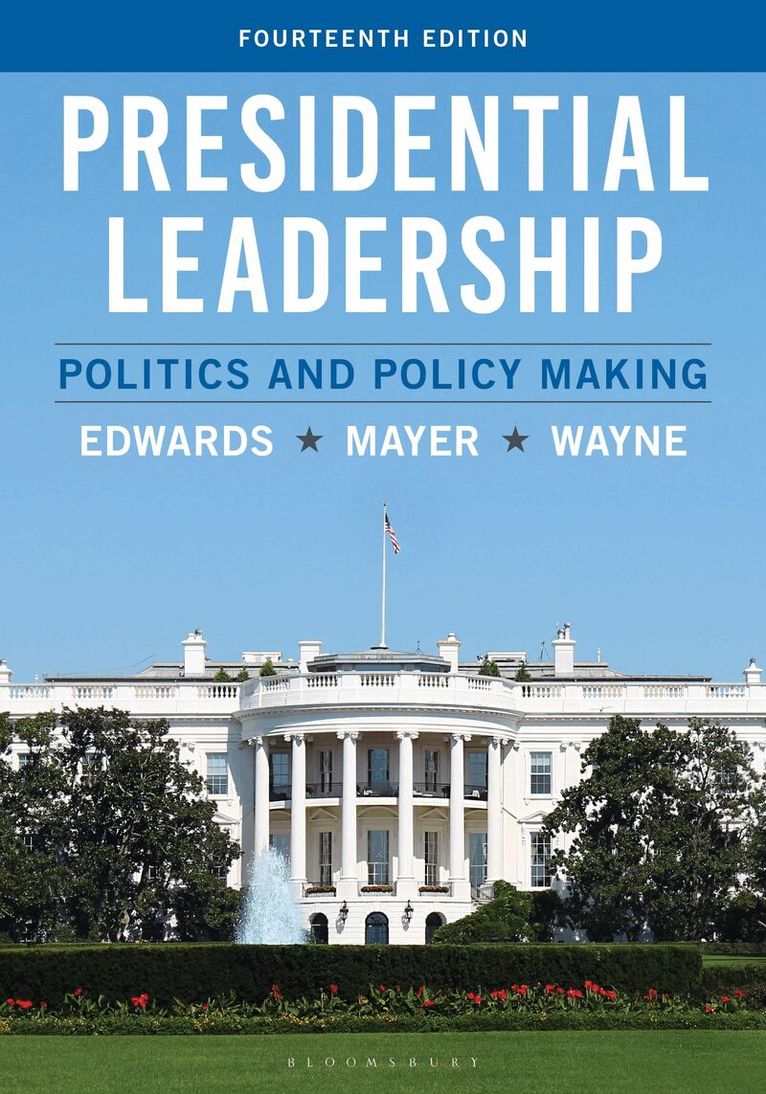
Long established as a leading introduction to the American presidency, Presidential Leadership, Fourteenth Edition, provides students with a comprehensive survey that addresses the capacity of chief executives to fulfill their tasks, exercise their powers, and utilize their organizational structures to affect the output of government. The authors examine all aspects of the presidency in rich detail, including presidential powers, presidential history, and the institution of the presidency.Edwards, Mayer, and Wayne analyze the institution and the presidents who hold the office through the key lens of leadership. The authors explain the leadership dilemma presidents face and their institutional, political, and personal capacities to meet it. Two models of presidential leadership help students understand the institution: one in which a strong president dominates the political environment as a director of change, and another in which the president performs a more limited role as facilitator of change. Each model provides an insightful perspectives to better understand leadership in the modern presidency and to evaluate the performance of individual presidents. With no simple formula for presidential success, and no partisan perspective driving the analysis, the authors help us understand that presidents and citizens alike must understand the nature of presidential leadership in a pluralistic system in which separate institutions share powers.The fourteenth edition is fully updated through the start of Trump’s second administration, with recent policy developments, the 2024 elections, changes to the media environment, and the latest data. In addition, material from the prior edition’s chapter on domestic and economic policy has been incorporated into other chapters for an overall briefer text.
2 048 kr
Skickas inom 5-8 vardagar
Long established as a leading introduction to the American presidency, Presidential Leadership, Fourteenth Edition, provides students with a comprehensive survey that addresses the capacity of chief executives to fulfill their tasks, exercise their powers, and utilize their organizational structures to affect the output of government. The authors examine all aspects of the presidency in rich detail, including presidential powers, presidential history, and the institution of the presidency.Edwards, Mayer, and Wayne analyze the institution and the presidents who hold the office through the key lens of leadership. The authors explain the leadership dilemma presidents face and their institutional, political, and personal capacities to meet it. Two models of presidential leadership help students understand the institution: one in which a strong president dominates the political environment as a director of change, and another in which the president performs a more limited role as facilitator of change. Each model provides an insightful perspectives to better understand leadership in the modern presidency and to evaluate the performance of individual presidents. With no simple formula for presidential success, and no partisan perspective driving the analysis, the authors help us understand that presidents and citizens alike must understand the nature of presidential leadership in a pluralistic system in which separate institutions share powers.The fourteenth edition is fully updated through the start of Trump’s second administration, with recent policy developments, the 2024 elections, changes to the media environment, and the latest data. In addition, material from the prior edition’s chapter on domestic and economic policy has been incorporated into other chapters for an overall briefer text.