George E. Smith – författare
Visar alla böcker från författaren George E. Smith. Handla med fri frakt och snabb leverans.
13 produkter
13 produkter
Inbunden, Engelska, 2020
1 474 kr
Skickas inom 5-8 vardagar
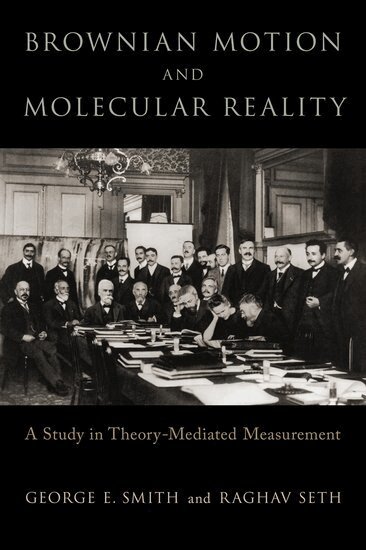
Between 1905 and 1913, French physicist Jean Perrin's experiments on Brownian motion ostensibly put a definitive end to the long debate regarding the real existence of molecules, proving the atomic theory of matter. While Perrin's results had a significant impact at the time, later examination of his experiments questioned whether he really gained experimental access to the molecular realm. The experiments were successful in determining the mean kinetic energy of the granules of Brownian motion; however, the values for molecular magnitudes Perrin inferred from them simply presupposed that the granule mean kinetic energy was the same as the mean molecular kinetic energy in the fluid in which the granules move. This stipulation became increasingly questionable in the years between 1908 and 1913, as significantly lower values for these magnitudes were obtained from other experimental results like alpha-particle emissions, ionization, and Planck's blackbody radiation equation.In this case study in the history and philosophy of science, George E. Smith and Raghav Seth here argue that despite doubts, Perrin's measurements were nevertheless exemplars of theory-mediated measurement-the practice of obtaining values for an inaccessible quantity by inferring them from an accessible proxy via theoretical relationships between them. They argue that it was actually Perrin more than any of his contemporaries who championed this approach during the years in question. The practice of theory-mediated measurement in physics had a long history before 1900, but the concerted efforts of Perrin, Rutherford, Millikan, Planck, and their colleagues led to the central role this form of evidence has had in microphysical research ever since. Seth and Smith's study thus replaces an untenable legend with an account that is not only tenable, but more instructive about what the evidence did and did not show.
E-bok
PDF, Engelska, 20201 139 kr
Läs direkt efter köp
Between 1905 and 1913, French physicist Jean Perrin''s experiments on Brownian motion ostensibly put a definitive end to the long debate regarding the real existence of molecules, proving the atomic theory of matter. While Perrin''s results had a significant impact at the time, later examination of his experiments questioned whether he really gained experimental access to the molecular realm. The experiments were successful in determining the mean kinetic energy of the granules of Brownian motion; however, the values for molecular magnitudes Perrin inferred from them simply presupposed that the granule mean kinetic energy was the same as the mean molecular kinetic energy in the fluid in which the granules move. This stipulation became increasingly questionable in the years between 1908 and 1913, as significantly lower values for these magnitudes were obtained from other experimental results like alpha-particle emissions, ionization, and Planck''s blackbody radiation equation.In this case study in the history and philosophy of science, George E. Smith and Raghav Seth here argue that despite doubts, Perrin''s measurements were nevertheless exemplars of theory-mediated measurement-the practice of obtaining values for an inaccessible quantity by inferring them from an accessible proxy via theoretical relationships between them. They argue that it was actually Perrin more than any of his contemporaries who championed this approach during the years in question. The practice of theory-mediated measurement in physics had a long history before 1900, but the concerted efforts of Perrin, Rutherford, Millikan, Planck, and their colleagues led to the central role this form of evidence has had in microphysical research ever since. Seth and Smith''s study thus replaces an untenable legend with an account that is not only tenable, but more instructive about what the evidence did and did not show.
E-bok
Engelska, 20201 139 kr
Läs direkt efter köp
Between 1905 and 1913, French physicist Jean Perrin''s experiments on Brownian motion ostensibly put a definitive end to the long debate regarding the real existence of molecules, proving the atomic theory of matter. While Perrin''s results had a significant impact at the time, later examination of his experiments questioned whether he really gained experimental access to the molecular realm. The experiments were successful in determining the mean kinetic energy of the granules of Brownian motion; however, the values for molecular magnitudes Perrin inferred from them simply presupposed that the granule mean kinetic energy was the same as the mean molecular kinetic energy in the fluid in which the granules move. This stipulation became increasingly questionable in the years between 1908 and 1913, as significantly lower values for these magnitudes were obtained from other experimental results like alpha-particle emissions, ionization, and Planck''s blackbody radiation equation.In this case study in the history and philosophy of science, George E. Smith and Raghav Seth here argue that despite doubts, Perrin''s measurements were nevertheless exemplars of theory-mediated measurement-the practice of obtaining values for an inaccessible quantity by inferring them from an accessible proxy via theoretical relationships between them. They argue that it was actually Perrin more than any of his contemporaries who championed this approach during the years in question. The practice of theory-mediated measurement in physics had a long history before 1900, but the concerted efforts of Perrin, Rutherford, Millikan, Planck, and their colleagues led to the central role this form of evidence has had in microphysical research ever since. Seth and Smith''s study thus replaces an untenable legend with an account that is not only tenable, but more instructive about what the evidence did and did not show.
E-bok
PDF, Engelska, 2002475 kr
Läs direkt efter köp
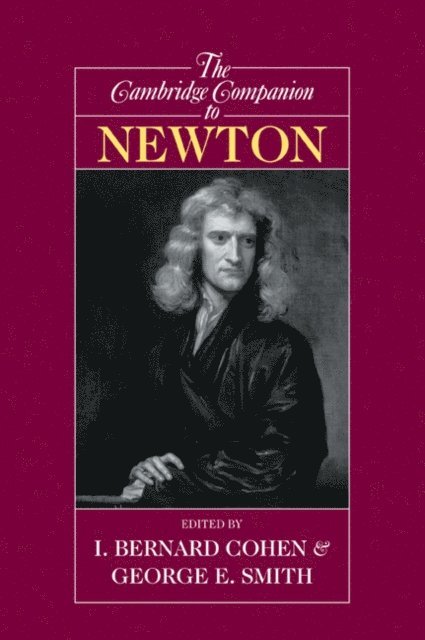
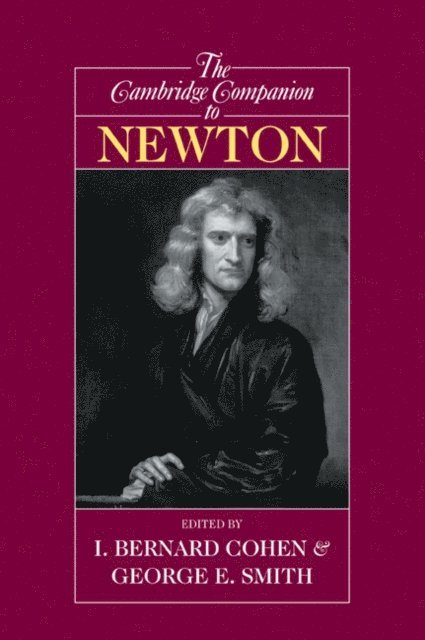
Sir Isaac Newton (1642–1727) was one of the greatest scientists of all time, a thinker of extraordinary range and creativity who has left enduring legacies in mathematics and the natural sciences. In this volume a team of distinguished contributors examine all the main aspects of Newton''s thought, including not only his approach to space, time, mechanics, and universal gravity in his Principia, his research in optics, and his contributions to mathematics, but also his more clandestine investigations into alchemy, theology, and prophecy, which have sometimes been overshadowed by his mathematical and scientific interests.
Häftad, Engelska, 2007
92 kr
Skickas inom 5-8 vardagar
Inbunden, Engelska, 2007
160 kr
Skickas inom 5-8 vardagar
Inbunden, Engelska, 2016
1 607 kr
Skickas inom 7-10 vardagar
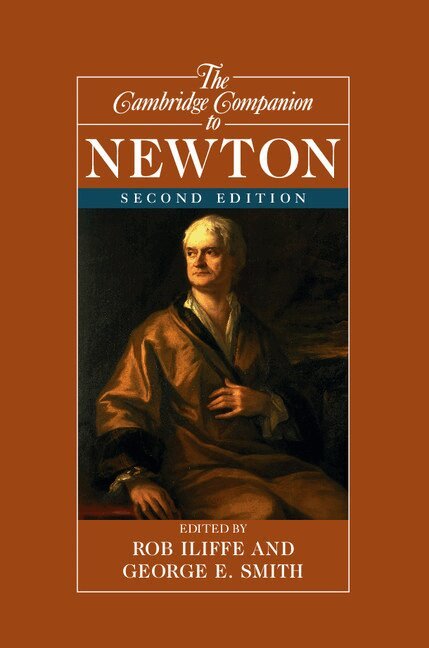
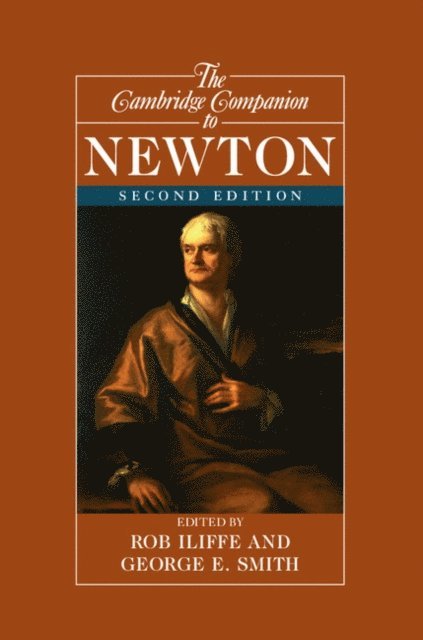
Sir Isaac Newton (1642-1727) was one of the greatest scientists of all time, a thinker of extraordinary range and creativity who has left enduring legacies in mathematics and physics. While most famous for his Principia, his work on light and colour, and his discovery of the calculus, Newton devoted much more time to research in chemistry and alchemy, and to studying prophecy, church history and ancient chronology. This new edition of The Cambridge Companion to Newton provides authoritative introductions to these further dimensions of his endeavours as well as to many aspects of his physics. It includes a revised bibliography, a new introduction and six new chapters: three updating previous chapters on Newton's mathematics, his chemistry and alchemy and the reception of his religious views; and three entirely new, on his religion, his ancient chronology and the treatment of continuous and discontinuous forces in his second law of motion.
Häftad, Engelska, 2016
470 kr
Skickas inom 7-10 vardagar
Sir Isaac Newton (1642-1727) was one of the greatest scientists of all time, a thinker of extraordinary range and creativity who has left enduring legacies in mathematics and physics. While most famous for his Principia, his work on light and colour, and his discovery of the calculus, Newton devoted much more time to research in chemistry and alchemy, and to studying prophecy, church history and ancient chronology. This new edition of The Cambridge Companion to Newton provides authoritative introductions to these further dimensions of his endeavours as well as to many aspects of his physics. It includes a revised bibliography, a new introduction and six new chapters: three updating previous chapters on Newton's mathematics, his chemistry and alchemy and the reception of his religious views; and three entirely new, on his religion, his ancient chronology and the treatment of continuous and discontinuous forces in his second law of motion.
E-bok
Engelska, 2002475 kr
Läs direkt efter köp
Sir Isaac Newton (1642–1727) was one of the greatest scientists of all time, a thinker of extraordinary range and creativity who has left enduring legacies in mathematics and the natural sciences. In this volume a team of distinguished contributors examine all the main aspects of Newton''s thought, including not only his approach to space, time, mechanics, and universal gravity in his Principia, his research in optics, and his contributions to mathematics, but also his more clandestine investigations into alchemy, theology, and prophecy, which have sometimes been overshadowed by his mathematical and scientific interests.
E-bok
Engelska33 kr
Läs direkt efter köp
E-bok
Engelska, 2016570 kr
Läs direkt efter köp
Sir Isaac Newton (1642–1727) was one of the greatest scientists of all time, a thinker of extraordinary range and creativity who has left enduring legacies in mathematics and physics. While most famous for his Principia, his work on light and colour, and his discovery of the calculus, Newton devoted much more time to research in chemistry and alchemy, and to studying prophecy, church history and ancient chronology. This new edition of The Cambridge Companion to Newton provides authoritative introductions to these further dimensions of his endeavours as well as to many aspects of his physics. It includes a revised bibliography, a new introduction and six new chapters: three updating previous chapters on Newton''s mathematics, his chemistry and alchemy and the reception of his religious views; and three entirely new, on his religion, his ancient chronology and the treatment of continuous and discontinuous forces in his second law of motion.
E-bok
PDF, Engelska, 2016570 kr
Läs direkt efter köp
Sir Isaac Newton (1642–1727) was one of the greatest scientists of all time, a thinker of extraordinary range and creativity who has left enduring legacies in mathematics and physics. While most famous for his Principia, his work on light and colour, and his discovery of the calculus, Newton devoted much more time to research in chemistry and alchemy, and to studying prophecy, church history and ancient chronology. This new edition of The Cambridge Companion to Newton provides authoritative introductions to these further dimensions of his endeavours as well as to many aspects of his physics. It includes a revised bibliography, a new introduction and six new chapters: three updating previous chapters on Newton''s mathematics, his chemistry and alchemy and the reception of his religious views; and three entirely new, on his religion, his ancient chronology and the treatment of continuous and discontinuous forces in his second law of motion.
Inbunden, Engelska, 2026
1 995 kr
Kommande
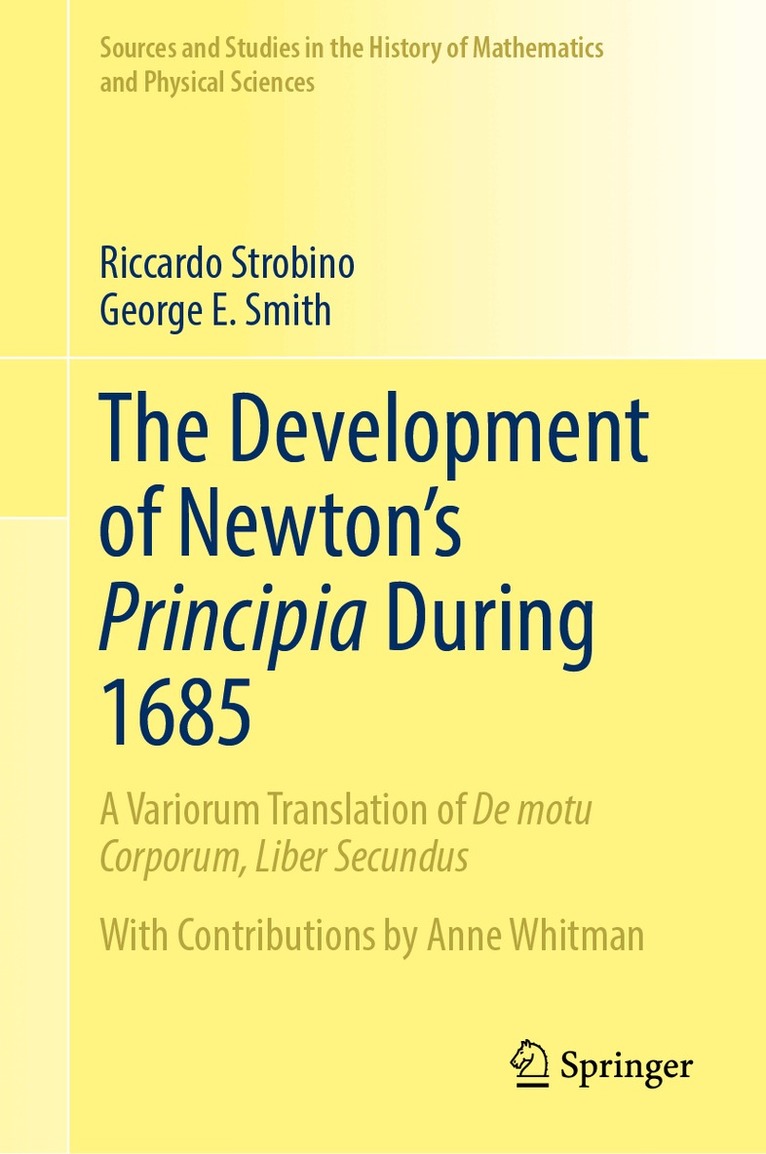
This book provides the first variorum translation into English of Isaac Newton’s De motu corporum in gyrum, from the 1685 manuscript at Cambridge University Library (UCL Add. 3990).It offers a unique perspective on the development of Newton’s views on a number of critical issues before the publication of the first edition of the Principia in 1687.The book fills a critical gap in Newton scholarship. The translation deliberately reflects the vocabulary and syntax of Newton’s Latin as closely as possible, enabling the reader to track the text in the manuscript almost word-by-word, including the ubiquitous inserts and deletions that show where and how Newton changes his mind or struggles with the formulation of a point.