Riccardo Strobino - Böcker
Visar alla böcker från författaren Riccardo Strobino. Handla med fri frakt och snabb leverans.
2 produkter
2 produkter
Del 4 - Berkeley Series in Postclassical Islamic Scholarship
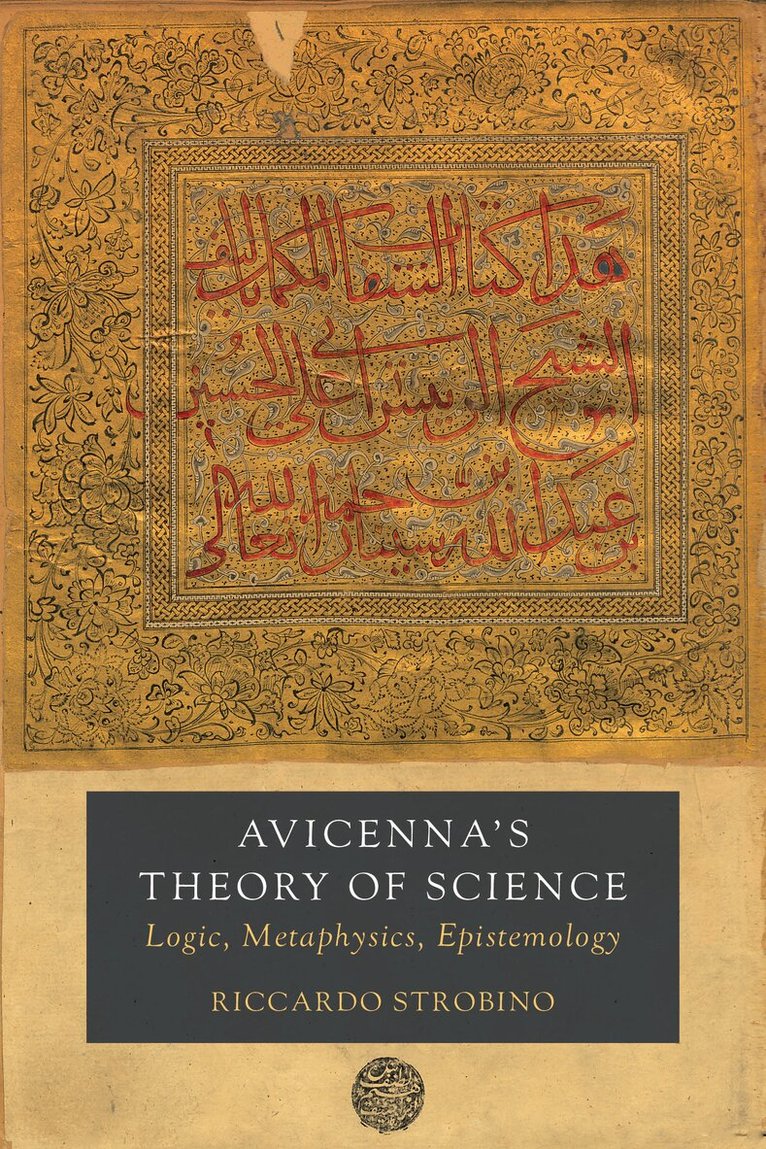
Avicenna's Theory of Science
Logic, Metaphysics, Epistemology
Inbunden, Engelska, 2021
753 kr
Skickas inom 7-10 vardagar
Avicenna is the most influential figure in the intellectual history of the Islamic world. This book is the first comprehensive study of his theory of science, which profoundly shaped his philosophical method and indirectly influenced philosophers and theologians not only in the Islamic world but also throughout Christian Europe and the medieval Jewish tradition. A sophisticated interpreter of Aristotle’s Posterior Analytics, Avicenna took on the ambitious task of reorganizing Aristotelian philosophy of science into an applicable model of scientific reasoning, striving to identify conditions of certainty for scientific assertions and conditions of adequacy for real definitions. Riccardo Strobino combines philosophical and textual analysis to explore the scope and nature of Avicenna’s contributions to the logic of scientific reasoning in his effort to recalibrate Aristotle’s model and overcome some of its internal limitations. Focusing on a broad array of philosophical innovations at the intersection of logic, metaphysics, and epistemology, this book casts light on an essential aspect of the thought of the preeminent philosopher and physician of the Islamic world.
Development of Newton's Principia During 1685
A Variorum Translation of De motu Corporum, Liber Secundus
Inbunden, Engelska, 2026
1 953 kr
Skickas inom 11-20 vardagar
This book provides the first variorum translation into English of Isaac Newton’s De Motu Corporum in Gyrum, from the 1685 manuscript at Cambridge University Library (UCL Add. 3990).It offers a unique perspective on the development of Newton’s views on a number of critical issues before the publication of the first edition of the Principia in 1687.The book fills a critical gap in Newton scholarship. The translation deliberately reflects the vocabulary and syntax of Newton’s Latin as closely as possible, enabling the reader to track the text in the manuscript almost word-by-word, including the ubiquitous inserts and deletions that show where and how Newton changes his mind or struggles with the formulation of a point.