George González - Böcker
Visar alla böcker från författaren George González. Handla med fri frakt och snabb leverans.
5 produkter
5 produkter
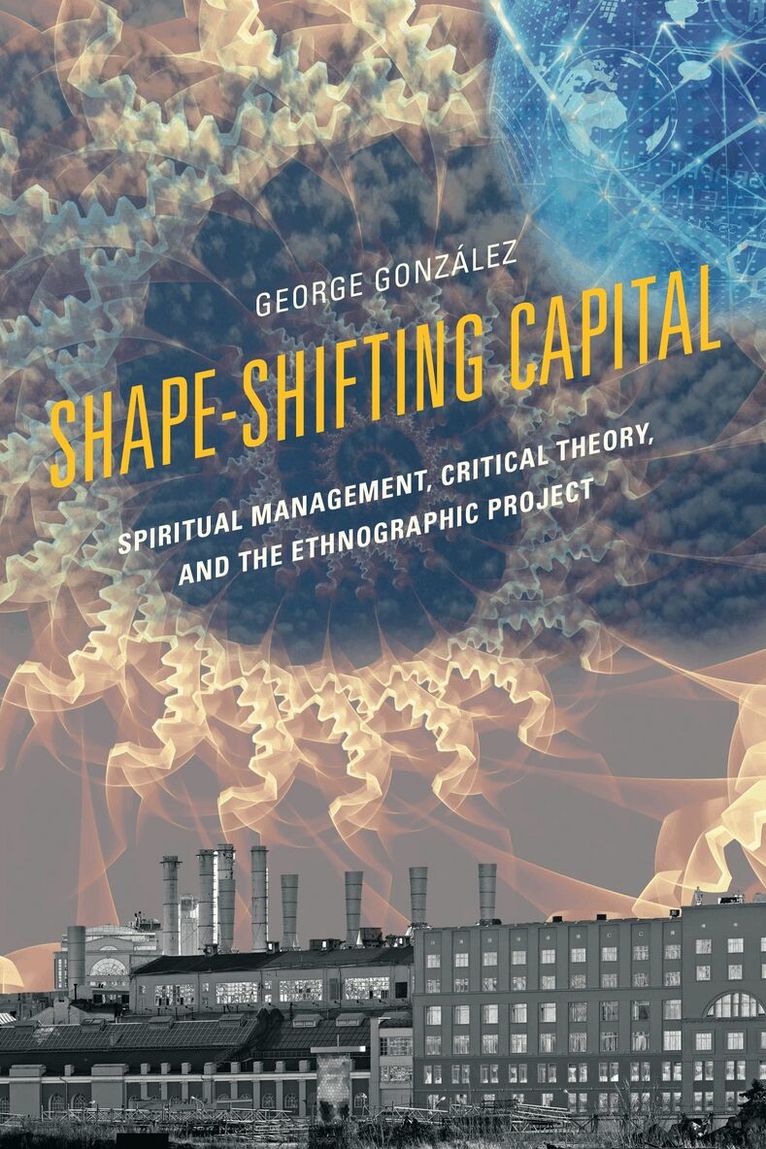
Shape-Shifting Capital
Spiritual Management, Critical Theory, and the Ethnographic Project
Inbunden, Engelska, 2015
1 572 kr
Skickas inom 10-15 vardagar
Shape-Shifting Capital: Spiritual Management, Critical Theory, and the Ethnographic Project is positioned at the intersection of anthropology, critical theory, and philosophy of religion. First, González explores the phenomena of “workplace spirituality” in a language that is accessible to a general readership. Taking contemporary trends in organizational management as a case study, he argues, by way of a detailed ethnographic study of practitioners of workplace spirituality, that the conceptual and institutional boundaries between religion, science, and capitalism are being redrawn by theologized management appropriations of tropes borrowed from creativity theory and quantum mechanics. Second, González makes a case for a critical anthropology of religion that combines existential concerns for biography and intentionality with poststructuralist concerns for power, arguing that the ways in which the personalization of metaphor bridges personal and social histories also helps bring about broader epistemic shifts in society. Finally, in a postsecular age in which capitalism itself is explicitly and confidently “spiritual,” González suggests that it is imperative to reorient our critical energies towards a present day evaluation of postmodern capitalism’s boundary-blurring. González further argues that the kind of “existential deconstruction” performed by what he calls “existential archeology” can serve the needs of any social criticism of neoliberal “religion” and corporate spirituality.
Star Trek and Popular Culture
Television at the Frontier of Social and Political Change in the 1960s
Inbunden, Engelska, 2021
919 kr
Skickas inom 5-8 vardagar
The 1960s (a.k.a. the 60s) remains a terrain of contemporary politics—with the values of the period embraced or rejected, as well as differently interpreted. Popular culture (movies, television) is an important means to understand and analyze the political issues and controversies surrounding the 60s—egalitarianism, equality (civil rights, feminism), as well as anti-communism (including the American war in Vietnam). In important and key instances popular culture (especially Star Trek [1966-1969]) was at the forefront of the progressive politics of the 60s. This book engages and analyzes the ongoing 60s through popular culture. The 60s is a pivotal period in American and world history—as the United States during this time turned away from white supremacy as official ideology. Also, the American public decidedly soured on U.S. military adventurism—as evidenced by broad public opposition to a military draft. Additionally, women (as a result of the feminism of the era) gained greater access to the public sphere and increased personal autonomy—non-discrimination (and anti-harassment) rules, abortion rights, and no fault divorce. Popular culture is philosophically significant because it allows people to cogitate reasons in the world—especially in the social, political realm. The creators of popular culture will often seek to offer the public authentic art, and much of the public seeks out authentic art. This makes American popular culture (in its finer forms) a viable source material about reason in the world. In this book the author doesn’t seek to deconstruct popular culture; instead, he seeks to identify and analyze the reasons in the world depicted in it.
421 kr
Skickas inom 5-8 vardagar
In Star Trek and Star Wars: The Enlightenment versus the Anti-Enlightenment, George A. Gonzalez shows that these two behemoths of popular culture put the Enlightenment and anti-Enlightenment before the viewing public. Star Trek is arguably the popular culture vehicle most reflective of the Enlightenment: a belief in political and social progress, leading to a society that is modern, classless, and totally free of gender and ethnic biases. The Star Wars franchise, meanwhile, is seemingly the artistic embodiment of the anti-Enlightenment: societal progress (to the extent that it occurs) is solely a function of technology and not a perfecting of justice and fairness. Gonzalez shows that this reflects the pessimism and demoralization underlying the Trump phenomenon and the rise of anti-democratic, virulent nationalism.
Church of Stop Shopping and Religious Activism
Combatting Consumerism and Climate Change Through Performance
Inbunden, Engelska, 2024
1 058 kr
Skickas inom 10-15 vardagar
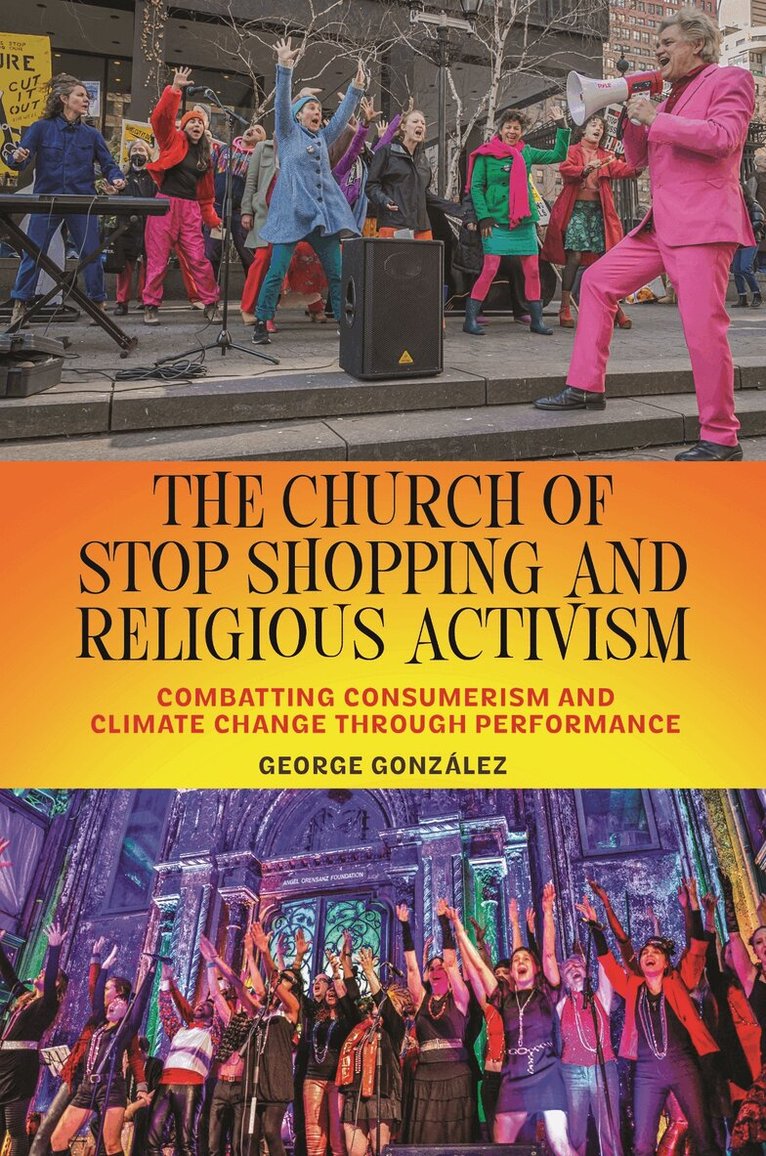
Explores the religious activism of the Stop Shopping Church performance groupSince the dawn of the new millennium, the grassroots performance activist group the Stop Shopping Church has advanced a sophisticated anti-capitalist critique in what they call "Earth Justice." Led by co-founders, Reverend Billy and Savitri D, the Church of Stop Shopping have sung with Joan Baez and toured with Pussy Riot and Neil Young. They performed at festivals around the world, and been the subject of the nationally released documentary, What Would Jesus Buy? They opposed the forces of consumerism on the global stage, and taken on the corporate practices of Disney, Starbucks, J.P. Morgan Chase Bank, Walmart, Amazon, and many others. While the Church maintains an anti-consumerism stance at its core–through performances, street actions, and social activism–the community also prioritizes work for racial justice, queer liberation, justice and sanctuary for immigrants, First Amendment issues, the reclaiming of public space, and in an increasingly central way, environmental justice. In The Church of Stop Shopping and Religious Activism, George González draws on interviews, participant observation, and digital ethnography to offer insight into the Church, its make up, its activities, and in particular, how it has shifted over time from parody to a deep and serious engagement with religion. Reverend Billy and the Church of Stop Shopping maintain that corporations and their celebrity spokespeople operate in much the same way churches do. González uses the group's performance activism to showcase the links between religion, the culture of capitalist consumerism, and climate catastrophe and to analyze the ways in which consumers are ritualized into accepting capitalism and its consequences. He argues that the members and organizers of the Church of Stop Shopping are serious theorizers and users of religion in their own right, and that they offer keen insights into our understanding of ritualistic consumerism and its indelible link to the rising sea levels that threaten to engulf us all.
Church of Stop Shopping and Religious Activism
Combatting Consumerism and Climate Change Through Performance
Häftad, Engelska, 2024
359 kr
Skickas
Explores the religious activism of the Stop Shopping Church performance groupSince the dawn of the new millennium, the grassroots performance activist group the Stop Shopping Church has advanced a sophisticated anti-capitalist critique in what they call "Earth Justice." Led by co-founders, Reverend Billy and Savitri D, the Church of Stop Shopping have sung with Joan Baez and toured with Pussy Riot and Neil Young. They performed at festivals around the world, and been the subject of the nationally released documentary, What Would Jesus Buy? They opposed the forces of consumerism on the global stage, and taken on the corporate practices of Disney, Starbucks, J.P. Morgan Chase Bank, Walmart, Amazon, and many others. While the Church maintains an anti-consumerism stance at its core–through performances, street actions, and social activism–the community also prioritizes work for racial justice, queer liberation, justice and sanctuary for immigrants, First Amendment issues, the reclaiming of public space, and in an increasingly central way, environmental justice. In The Church of Stop Shopping and Religious Activism, George González draws on interviews, participant observation, and digital ethnography to offer insight into the Church, its make up, its activities, and in particular, how it has shifted over time from parody to a deep and serious engagement with religion. Reverend Billy and the Church of Stop Shopping maintain that corporations and their celebrity spokespeople operate in much the same way churches do. González uses the group's performance activism to showcase the links between religion, the culture of capitalist consumerism, and climate catastrophe and to analyze the ways in which consumers are ritualized into accepting capitalism and its consequences. He argues that the members and organizers of the Church of Stop Shopping are serious theorizers and users of religion in their own right, and that they offer keen insights into our understanding of ritualistic consumerism and its indelible link to the rising sea levels that threaten to engulf us all.