George Letsas - Böcker
Visar alla böcker från författaren George Letsas. Handla med fri frakt och snabb leverans.
5 produkter
5 produkter
2 338 kr
Skickas inom 5-8 vardagar
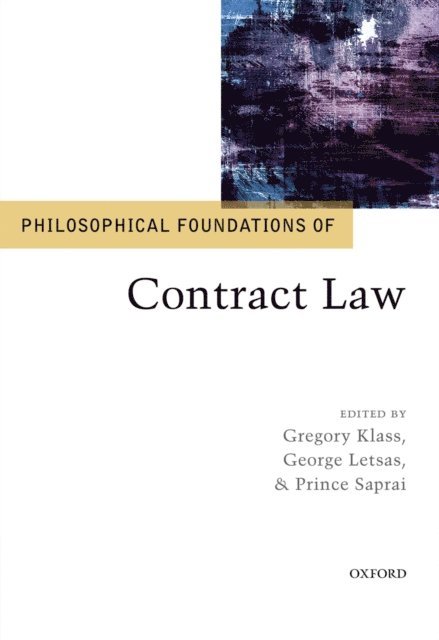
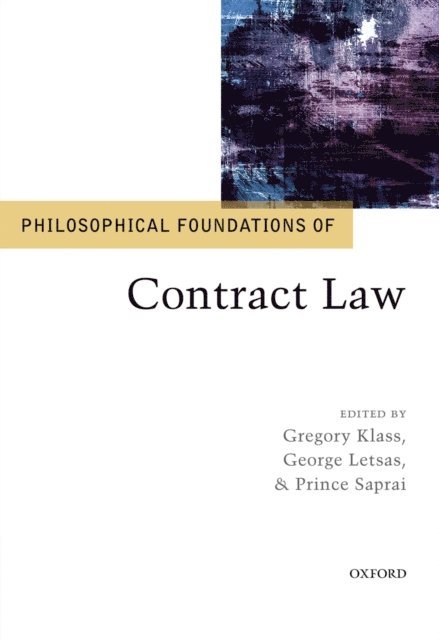
In recent years there has been a revival of interest in the philosophical study of contract law. In 1981 Charles Fried claimed that contract law is based on the philosophy of promise and this has generated what is today known as 'the contract and promise debate'. Cutting to the heart of contemporary discussions, this volume brings together leading philosophers, legal theorists, and contract lawyers to debate the philosophical foundations of this area of law.Divided into two parts, the first explores general themes in the contract theory literature, including the philosophy of promising, the nature of contractual obligation, economic accounts of contract law, and the relationship between contract law and moral values such as personal autonomy and distributive justice. The second part uses these philosophical ideas to make progress in doctrinal debates, relating for example to contract interpretation, unfair terms, good faith, vitiating factors, and remedies. Together, the essays provide a picture of the current state of research in this revitalized area of law, and pave the way for future study and debate.
809 kr
Skickas
In recent years there has been a revival of interest in the philosophical study of contract law. In 1981 Charles Fried claimed that contract law is based on the philosophy of promise and this has generated what is today known as 'the contract and promise debate'. Cutting to the heart of contemporary discussions, this volume brings together leading philosophers, legal theorists, and contract lawyers to debate the philosophical foundations of this area of law. Divided into two parts, the first explores general themes in the contract theory literature, including the philosophy of promising, the nature of contractual obligation, economic accounts of contract law, and the relationship between contract law and moral values such as personal autonomy and distributive justice. The second part uses these philosophical ideas to make progress in doctrinal debates, relating for example to contract interpretation, unfair terms, good faith, vitiating factors, and remedies. Together, the essays provide a picture of the current state of research in this revitalized area of law, and pave the way for future study and debate.
1 430 kr
Kommande
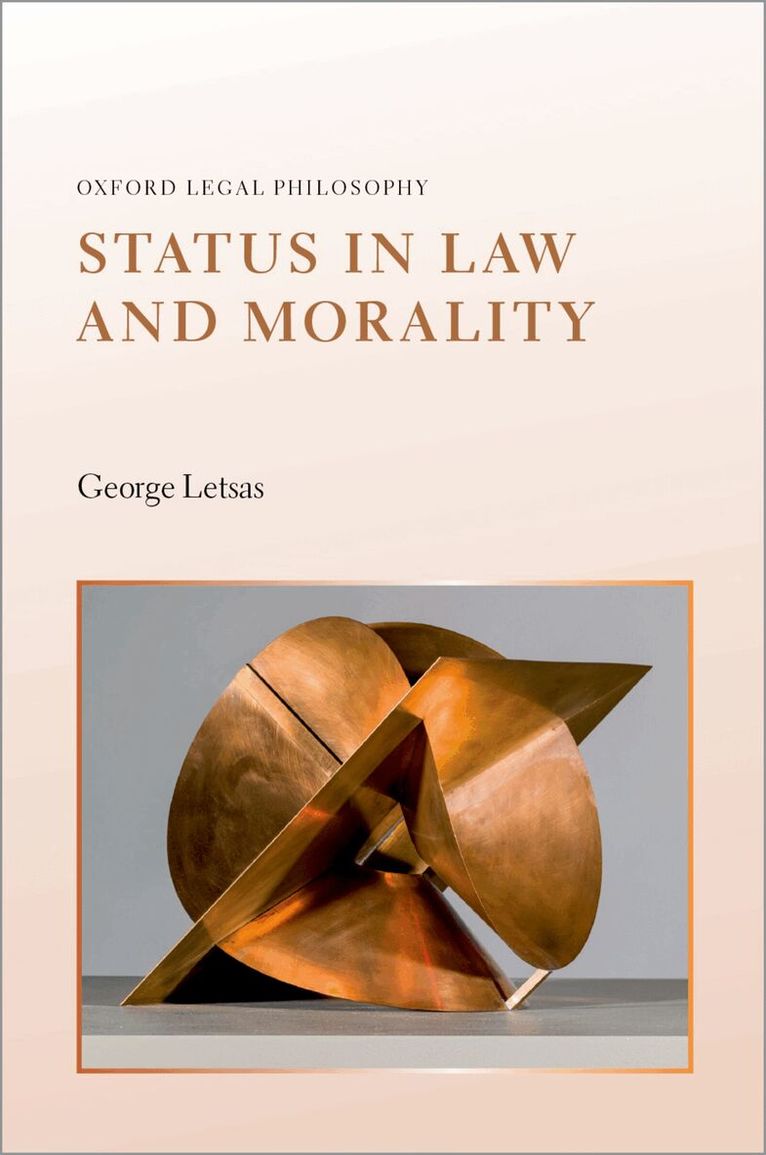
The idea of status has long puzzled philosophers. Some people have higher social status than others, and some have distinct legal statuses, such as being an employee, a tenant, or a refugee. But why should that be the case? Why should some enjoy more esteem than others? And why should law pick out a class of persons, give it a label, and treat it differently?Status in Law and Morality provides a philosophical account of status, arguing that it is a moral, and not just a legal or social, idea. The point of status is to protect the weaker party in social relations - the employee, or the tenant - through social recognition of their role as well as through legal regulation. Tracing the origins of the idea of status in law and in moral philosophy, this book challenges the commonly held view that status is an inherently inegalitarian idea that should have no place in modern law. It instead distinguishes between 'rank' and 'role' based statuses and argues that law ought to boost the self-esteem of those who hold vulnerable social roles.Thought-provoking and pioneering, this book aims to revive the progressive character of status to work towards regulating unequal social relations and protecting vulnerable groups.
1 344 kr
Skickas inom 5-8 vardagar
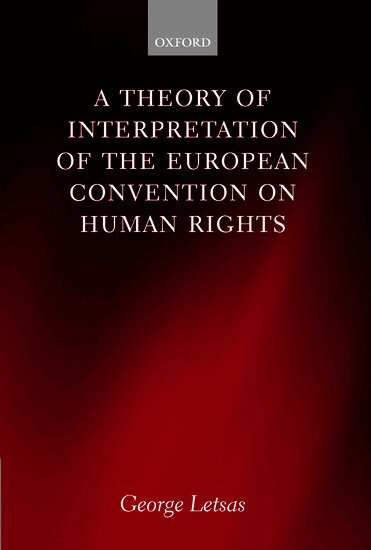
Does the right to life under article 2 ECHR include the right to terminate one's life? Does the right to private life under article 8 ECHR include the right to sleep at night free from airplane noise? Does the right to property under article 1 Protocol 1 ECHR entitle the former King of Greece to claim compensation for the expropriation of royal property, following a referendum? Do homosexual couples have a right to adopt under article 8 ECHR? This book looks at both how the European Convention on Human Rights has, and ought to, be interpreted. Unlike a purely doctrinal approach, it aims at proposing an evaluative theory of interpretation for the European Convention on Human Rights. And, unlike a purely normative account, it seeks to locate interpretive values within the history of the ECHR by surveying and analysing all the relevant judgements of the European Court of Human Rights. Consequently, the book discusses cases as much as it discusses philosophical theories, striking an appropriate balance between the two.Examining how law should be interpreted and what legal rights individuals have, this book raises important questions of political morality that are both capable - and in need of - principled justification. George Letsas argues that evolutive interpretation does not refer to how most European member States now understand their obligations under the Convention but to how they should understand them given the egalitarian values that they share. He defends the idea of an emerging consensus combined with a theory of autonomous concepts as a way to provide the appropriate authority for the Court to adopt an egalitarian theory of human rights.A Theory of Interpretation of the European Convention on Human Rights provides a philosophically informed study of the methods of interpretation used by the European Court of Human Rights in Strasbourg. By drawing on Anglo-Americal legal, political and moral philosophy, the book also aims to provide a normative theory of the foundations of the ECHR rights.
535 kr
Skickas inom 5-8 vardagar
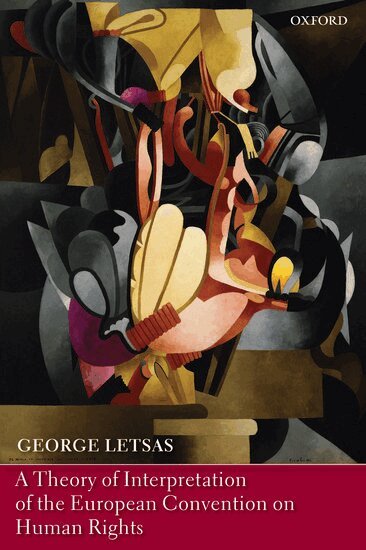
This book looks at both how the European Convention on Human Rights has been interpreted and how it ought to be interpreted. Unlike a purely doctrinal approach, it aims at proposing an evaluative theory of interpretation for the European Convention on Human Rights. And unlike a purely normative account, it seeks to locate interpretive values within the history of the ECHR by surveying and analysing all the relevant judgements of the European Court of Human Rights. Consequently, the book discusses cases as much as it discusses philosophical theories, seeking to strike the appropriate balance between the two. Recent developments have raised mportant jurisprudential issues in relation to the interpretation of the ECHR which point to the relationship between the two foundational principles of a supranational human rights system: state sovereignty on one hand and the universality of human rights on the other. This book analyses the idea that creative interpretation and choice in interpretation amounts, by default, to illegitimate discretion and is used to wave the flag of judicial self-restraint. It balances this against the inconsistency or lack of clarity in the methods used by the Court, most notably the margin of appreciation doctrine, and looks at the criticism often levelled at the Court that its use of the doctrine masks the real basis for its decisions. The cases that have been coming before the European Court of Human Rights in recent years pose serious interpretive challenges. Does the right to life under art. 2 ECHR include the right to terminate one's life? Does the right to private life under article 8 ECHR include the right to sleep at night free from airplane noise? Does the right to property under art. 1 Protocol 1 ECHR entitle the former King of Greece to claim compensation for the expropriation of royal property, following a referendum? Do homosexual couples have a right to adopt under art. 8 ECHR? This book argues that how law should be interpreted, and what legal rights individuals have, are important questions of political morality that are both capable, and in need of, principled justification. Finally, the book argues that evolutive interpretation does not refer to how most European member states now understand their obligations under the Convention but to how they should understand them given the egalitarian values that they share, and defents the idea of an emerging consensus combined with a theory of autonomous concepts as a way to provide the appropriate authority for the Court to adopt an egalitarian theory of human rights.