George M. Wilson – författare
Visar alla böcker från författaren George M. Wilson. Handla med fri frakt och snabb leverans.
4 produkter
4 produkter
997 kr
Skickas inom 7-10 vardagar
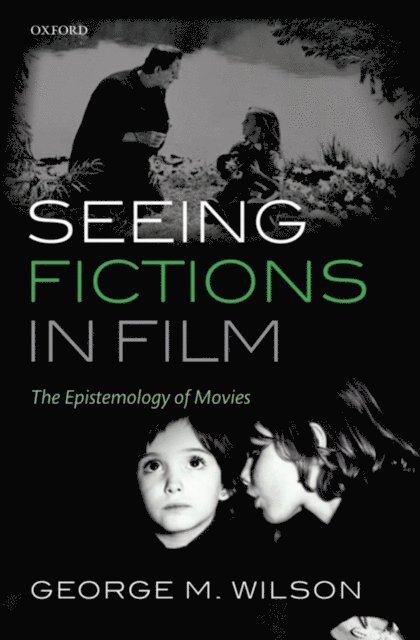
In works of literary fiction, it is a part of the fiction that the words of the text are being recounted by some work-internal 'voice': the literary narrator. One can ask similarly whether the story in movies is told in sights and sounds by a work-internal subjectivity that orchestrates them: a cinematic narrator. George M. Wilson argues that movies do involve a fictional recounting (an audio-visual narration) in terms of the movie's sound and image track. Viewers are usually prompted to imagine seeing the items and events in the movie's fictional world and to imagine hearing the associated fictional sounds. However, it is much less clear that the cinematic narration must be imagined as the product of some kind of 'narrator' - of a work-internal agent of the narration. Wilson goes on to examine the further question whether viewers imagine seeing the fictional world face-to-face or whether they imagine seeing it through some kind of work-internal mediation. It is a key contention of this book that only the second of these alternatives allows one to give a coherent account of what we do and do not imagine about what we are seeing on the screen. Having provided a partial account of the foundations of film narration, the final chapters explore the ways in which certain complex strategies of cinematic narration are executed in three exemplary films: David Fincher's Fight Club, von Sternberg's The Scarlet Empress, and the Coen brothers' The Man Who Wasn't There.
589 kr
Skickas inom 7-10 vardagar
In works of literary fiction, it is a part of the fiction that the words of the text are being recounted by some work-internal 'voice': the literary narrator. One can ask similarly whether the story in movies is told in sights and sounds by a work-internal subjectivity that orchestrates them: a cinematic narrator. George M. Wilson argues that movies do involve a fictional recounting (an audio-visual narration) in terms of the movie's sound and image track. Viewers are usually prompted to imagine seeing the items and events in the movie's fictional world and to imagine hearing the associated fictional sounds. However, it is much less clear that the cinematic narration must be imagined as the product of some kind of 'narrator' - of a work-internal agent of the narration. Wilson goes on to examine the further question whether viewers imagine seeing the fictional world face-to-face or whether they imagine seeing it through some kind of work-internal mediation. It is a key contention of this book that only the second of these alternatives allows one to give a coherent account of what we do and do not imagine about what we are seeing on the screen. Having provided a partial account of the foundations of film narration, the final chapters explore the ways in which certain complex strategies of cinematic narration are executed in three exemplary films: David Fincher's Fight Club, von Sternberg's The Scarlet Empress, and the Coen brothers' The Man Who Wasn't There.
284 kr
Skickas inom 7-10 vardagar
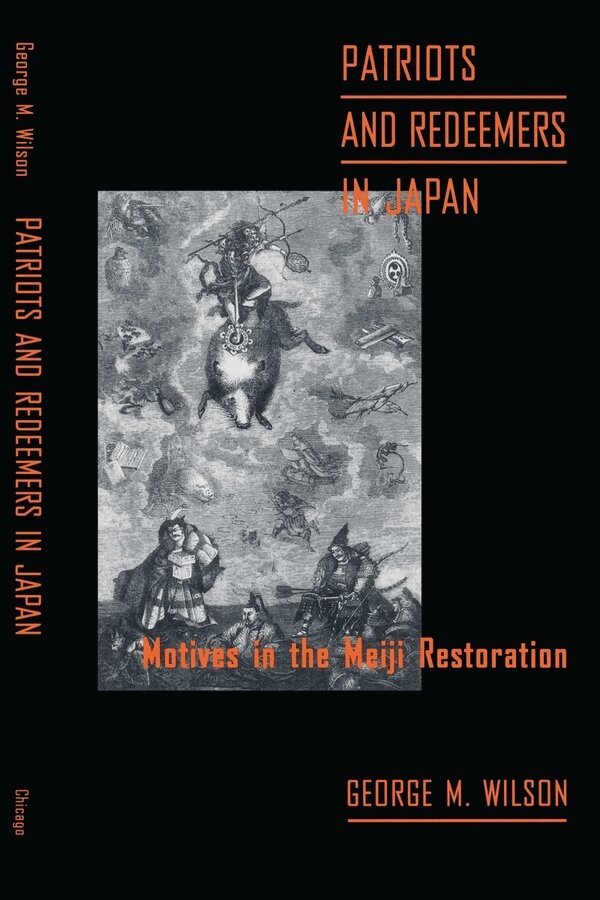
In this concise but ambitious historiographical essay, Wilson argues for an approach to the Meiji Restoration that emphasizes multiple lines of motive and action. "By bringing some very interesting critical theory to his reading, Wilson has produced a book that will shift the terms of discussion on this event."--Harry D. Harootunian
468 kr
Skickas inom 5-8 vardagar
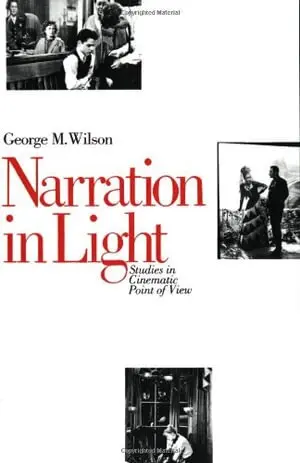
A full understanding and appreciation of narrative film, George Wilson argues, requires a concept of point of view necessarily distinct from, yet comparable to, contemporary theories of point of view in prose fiction. Now available in paperback, Narration in Light lays the foundations for a new account of cinematic point of view. Focusing on the special ways in which a film controls the access of its viewers to the events that constitute its narrative, Wilson offers close viewings of five classic Hollywood movies: You Only Live Once, North by Northwest, Letter from an Unknown Woman, The Devil Is a Woman, and Rebel without a Cause. His enlightening and entertaining interpretations reveal surprising power and complexity in popular, major-studio films. Their point-of-view strategies allow them to present both obvious and oblique perspectives on their subjects, providing subtle critiques of ideology within conventional drama and narrative.