George Pantelopoulos - Böcker
Visar alla böcker från författaren George Pantelopoulos. Handla med fri frakt och snabb leverans.
3 produkter
3 produkter
1 095 kr
Skickas inom 10-15 vardagar
Payments and financial market infrastructures are vital components of modern economies, yet they have often been overlooked by economists. However, any economic exchange, including financial market transactions, is matched by a payment leg, and the safety, efficiency, and immediacy of the payment, and the problem of linking the two legs of the transaction (“delivery-vs-payment”), remain universal challenges. The consequences of inefficiencies or interruptions in payment and settlement systems have immediate and significant impacts on the real economy. Moreover, payments and financial market infrastructures are also a matter of strategic importance for nation-states, and being excessively dependent on foreign providers has been proven to be a significant risk, as they can be “weaponized."This book provides a concise yet thorough introduction to payments and financial market infrastructures, exploring various types of risks, retail payments, payment systems, cross-border payments, central counterparties, FX operations, and central securities depositories. The final chapter investigates payment innovations, including unbacked crypto-assets (e.g. Bitcoin), stablecoins, and central bank digital currencies. The text outlines key activities and risk management frameworks, as well as examining the operational mechanics of different payment systems. The book emphasizes the importance of understanding the nature of transfer of financial claims and liabilities through the process of payment and settlement, providing financial account representations of payments wherever useful. The book concludes that the payment and financial market infrastructure space has been shaken by recent innovations, which are expected to lead to seismic shifts in payment technology, practices, and market structures.
769 kr
Skickas inom 10-15 vardagar
Payments and financial market infrastructures are vital components of modern economies, yet they have often been overlooked by economists. However, any economic exchange, including financial market transactions, is matched by a payment leg, and the safety, efficiency, and immediacy of the payment, and the problem of linking the two legs of the transaction (“delivery-vs-payment”), remain universal challenges. The consequences of inefficiencies or interruptions in payment and settlement systems have immediate and significant impacts on the real economy. Moreover, payments and financial market infrastructures are also a matter of strategic importance for nation-states, and being excessively dependent on foreign providers has been proven to be a significant risk, as they can be “weaponized."This book provides a concise yet thorough introduction to payments and financial market infrastructures, exploring various types of risks, retail payments, payment systems, cross-border payments, central counterparties, FX operations, and central securities depositories. The final chapter investigates payment innovations, including unbacked crypto-assets (e.g. Bitcoin), stablecoins, and central bank digital currencies. The text outlines key activities and risk management frameworks, as well as examining the operational mechanics of different payment systems. The book emphasizes the importance of understanding the nature of transfer of financial claims and liabilities through the process of payment and settlement, providing financial account representations of payments wherever useful. The book concludes that the payment and financial market infrastructure space has been shaken by recent innovations, which are expected to lead to seismic shifts in payment technology, practices, and market structures.
1 422 kr
Skickas inom 10-15 vardagar
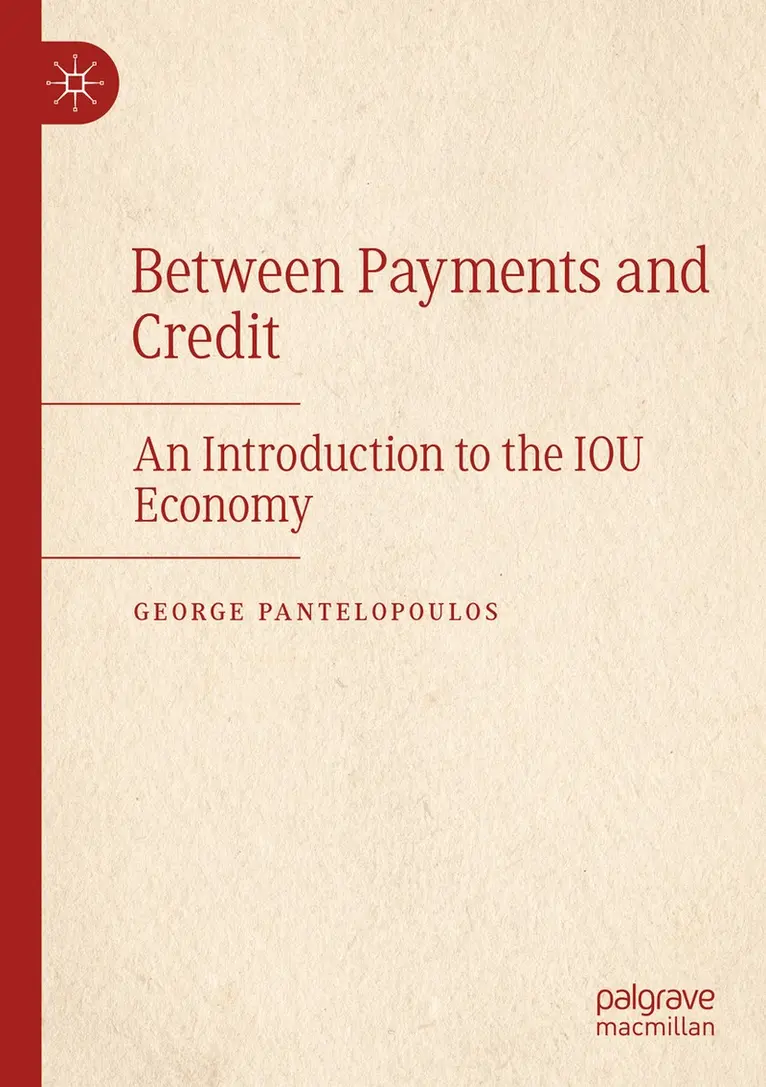
In unpacking credit relationships and payments over the past 1000 years in addition to how technological innovations are shifting the credit relationships/payments landscape – from barter, commodity money, single layered to dual-layered financial money systems and from CBDC to stablecoins – this book systematically explores the various techniques that have been introduced in an attempt to improve the organisation, efficiency and stability of the IOU economy as a way to mitigate or prevent the universal challenge of the IOU economy from binding.In doing so, the book first unpacks how credit relationships, payments and economic life have developed throughout history, and sheds light on how the adoption of various techniques have led to greater efficiencies in payments across time. In addition, the book also explores how technological innovations are shifting the credit relationships/payments landscape. Subsequently, the book demonstrates how the adoption of five major techniques have to a large extent mitigated (but not eliminated) the threat of the universal challenge of the IOU economy from arising. With this, the book also envisages that the adoption of systems of financial accounts provides a didactic framework for those who are interested in studying topics in credit relationships and payments at an intermediate/advanced level (e.g. masters level university students, academics etc.).