
George Saumarez Smith - Böcker
Visar alla böcker från författaren George Saumarez Smith. Handla med fri frakt och snabb leverans.
2 produkter
2 produkter
651 kr
Kommande
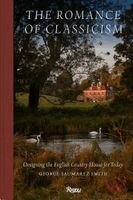
Each project demonstrates Saumarez Smith s ability to unite the best of traditional architecture with the needs of twenty-first-century living, creating residences that feel both timeless and thoroughly contemporary. Part explanatory treatise and part visual journey, the book explores the evolution of the country house of today as a valued architectural form one capable of adapting gracefully over time. Seeking to create buildings of lasting worth, Saumarez Smith designs houses that are versatile in plan, that weather gently, and that rely on natural materials, classical proportions, and a traditional architectural language. The result is a body of work that appeals equally to dedicated classicists and to design-forward homeowners. The houses presented here speak directly to the concerns of our age: the preference for long-lasting construction over the temporary, the natural over the synthetic, and craft over industrial uniformity. This patient design philosophy embraces endurance rather than trend. While the English country house tradition often calls to mind vast historic estates, the dwellings featured in this book are more modest in scale farmhouses, villas, and rural retreats and represent a new chapter in the genre. These compact, classically inspired residences reflect the rhythms of modern life and stand as exemplary models of classicism for today s world.
566 kr
Skickas
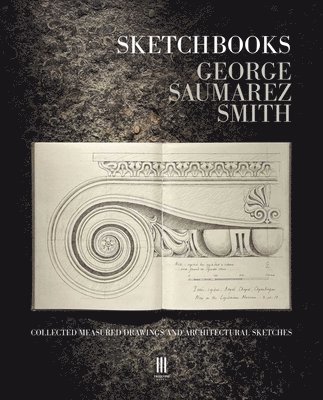
George Saumarez Smith, a director of ADAM Architecture, is celebrated for the elegance of his work as one of Britain's foremost classical architects. As a student at Edinburgh University, he belonged to the last year group to be taught the skill of measured drawing as part of the core syllabus and it would become a passion for him. Sketchbooks: Collected Measured Drawings and Architectural Sketches presents a selection of the drawings that he has made in the last twenty-five years in a series of sketchbooks each of which is named after one of the Roman emperors. The drawings display a supreme mastery that goes beyond technique and assumes the status of art. They constitute a series of concentrated observations on buildings from different parts of the world which unlock the secrets of their design and give insight into the minds of their creators. Simply by applying pencil to paper, aided only by a tape measure and ruler to measure the building in front of him, George pursues an adventure in the world of built form whose aesthetic beauty will both amaze and delight.