George W. M. Harrison - Böcker
Visar alla böcker från författaren George W. M. Harrison. Handla med fri frakt och snabb leverans.
3 produkter
3 produkter
1 255 kr
Skickas inom 10-15 vardagar
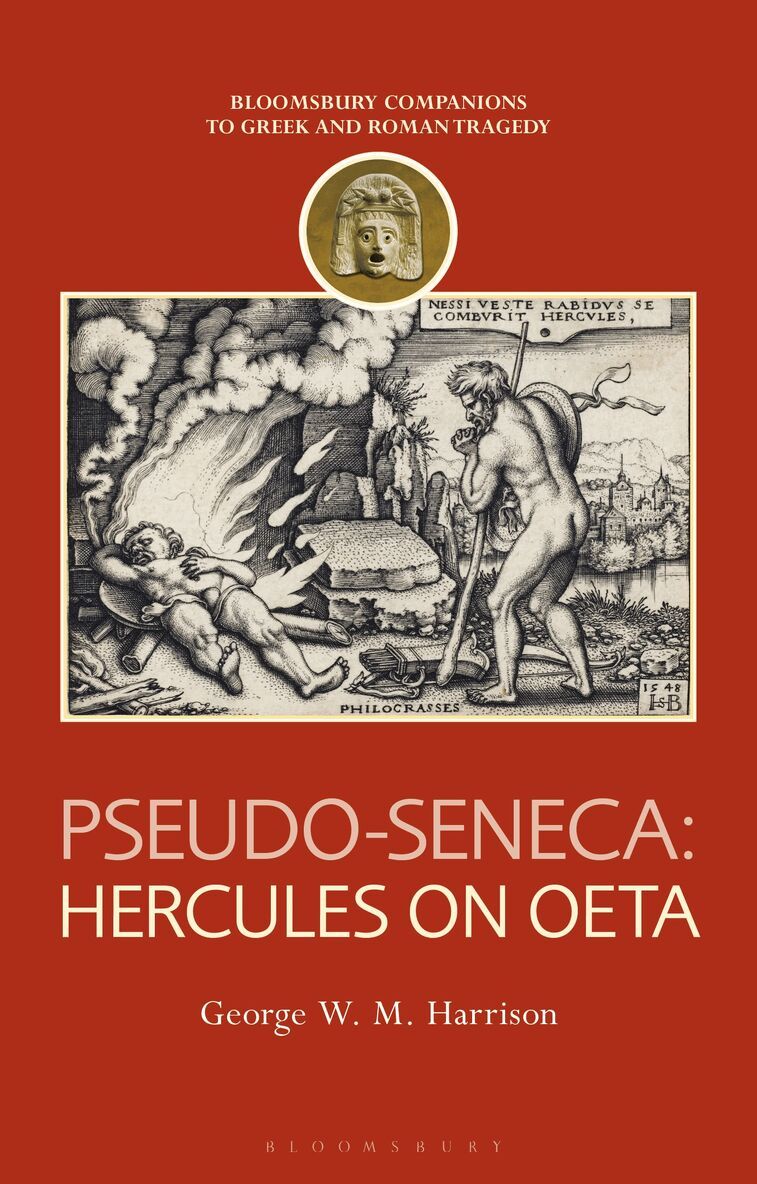
A Roman tragedy widely considered to be post-Senecan and of unknown authorship, Hercules on Oeta is the longest play to survive from antiquity. This accessible volume offers a concise yet thorough introduction for readers coming to the play for the first time, exploring issues of authorship, date and performance alongside chapters on its literary antecedents, historical context, main characters and key themes, and reception in antiquity and beyond. Hercules on Oeta demonstrates that Hercules' death and deification was at least as important in art and myth as his twelve labours. The first half of the play is devoted to probing the humiliation he inflicted on his wife by returning with a pregnant, unwilling mistress, whose family he destroyed. Infected with a flesh-eating virus, the torment of Hercules became so great that he built a pyre for self-immolation: he appears again to his mother at the play’s end, now deified. As a study of the frictions between loyalty, fidelity and personal responsibility, the play raises the central question of whether one should be forgiven bad deeds by virtue of having also performed good deeds. There is more than one Hercules, and all his aspects are represented in this play: glutton, sexual opportunist, quick to violence and lacking in compassion, he was endearing but deeply flawed, tottering between pathos and parody, and very much a figure of our own time.
985 kr
Skickas inom 7-10 vardagar
The esteem in which satyr drama was held in antiquity still arouses curiosity and controversy. Twelve new papers, generated in North America by a distinguished cast of scholars, explore questions central to the genre. How did satyr drama relate to comedy and tragedy; how closely was it tied to its tragic trilogy? How did the Athenians react to pro-satyric drama, such as the Alcestis? How far did satyr plays reflect contemporary political life? Fresh conclusions are adduced from the fragments, particularly those of Aeschylus, and there is special study of Euripides' Cyclops, not least for its possible reflection of the fifth-century sophists.
2 654 kr
Skickas inom 5-8 vardagar
The origins of satyr drama, and particularly the reliability of the account in Aristotle, remains contested, and several of this volume’s contributions try to make sense of the early relationship of satyr drama to dithyramb and attempt to place satyr drama in the pre-Classical performance space and traditions. What is not contested is the relationship of satyr drama to tragedy as a required cap to the Attic trilogy. Here, however, how Aeschylus, Sophocles, and Euripides (to whom one complete play and the preponderance of the surviving fragments belong) envisioned the relationship of satyr drama to tragedy in plot, structure, setting, stage action and language is a complex subject tackled by several contributors. The playful satyr chorus and the drunken senility of Silenos have always suggested some links to comedy and later to Atellan farce and phlyax. Those links are best examined through language, passages in later Greek and Roman writers, and in art. The purpose of this volume is probe as many themes and connections of satyr drama with other literary genres, as well as other art forms, putting satyr drama on stage from the sixth century BC through the second century AD. The editors and contributors suggest solutions to some of the controversies, but the volume shows as much that the field of study is vibrant and deserves fuller attention.