Georgia Frank - Böcker
Visar alla böcker från författaren Georgia Frank. Handla med fri frakt och snabb leverans.
3 produkter
3 produkter
Del 30 - Transformation of the Classical Heritage
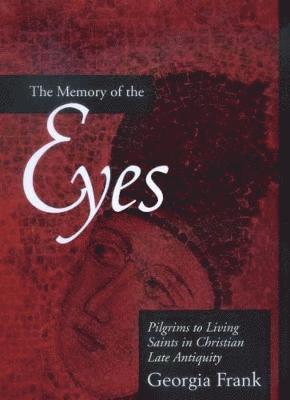
Memory of the Eyes
Pilgrims to Living Saints in Christian Late Antiquity
Inbunden, Engelska, 2000
1 002 kr
Skickas inom 3-6 vardagar
Pilgrims in the deserts of Egypt and the holy land during the fourth and fifth centuries A.D. often reported visiting holy people as part of their tours of holy places. This is the first comprehensive study of pilgrimage to these famous ascetics of late antique Christianity. Through an original analysis of pilgrim writings of this period, Georgia Frank discovers a literary imagination at work, one that both recorded and shaped the experience of pilgrimage to living saints. Taking an important new approach to these texts, Frank finds in them a record of the writers' and readers' spiritual expectations and uses these fresh insights to add substantially to our understanding of the purposes and practices of pilgrimage. Frank focuses in particular on two important and well-known early texts--The History of the Monks in Egypt (ca. 400) and Palladius's The Lausiac History (ca. 420), situating these narratives in their literary, historical, and spiritual contexts. She compares these narratives to exotic travel writing and to tales of otherworldly journeys.Bringing in contemporary theory, she demonstrates the importance of sight as a means of spiritual progress and explores the relation between the function of sight in these narratives and in other expressions of visual piety in late antiquity Christianity, such as the veneration of relics and, eventually, icons. With its unique focus on the sensory dimensions of pilgrimage--especially visuality--this absorbing book widens our understanding of early Christian pilgrims and those who read their accounts. At the same time, it also sheds new light on the relation between religious experience and the senses, on literary representations of visual experience, and on the literature of pious travel.
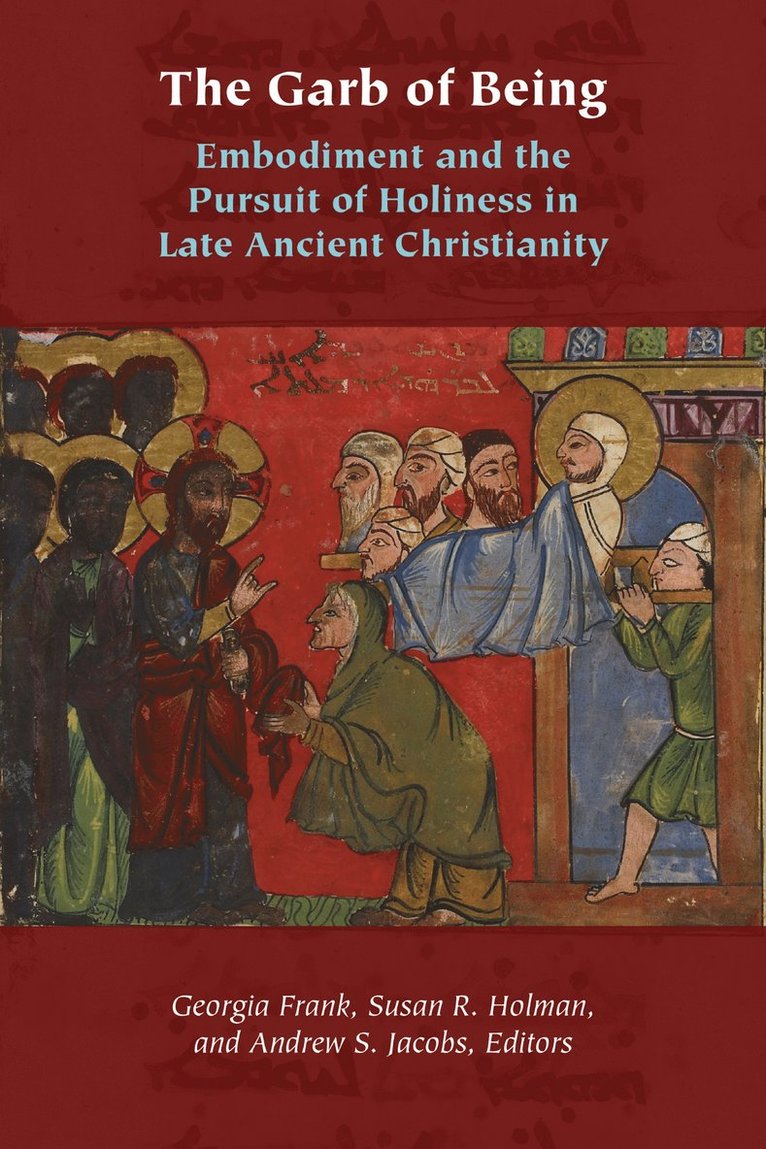
Garb of Being
Embodiment and the Pursuit of Holiness in Late Ancient Christianity
Inbunden, Engelska, 2019
782 kr
Skickas inom 10-15 vardagar
This collection explores how the body became a touchstone for late antique religious practice and imagination. When we read the stories and testimonies of late ancient Christians, what different types of bodies stand before us? How do we understand the range of bodily experiences—solitary and social, private and public—that clothed ancient Christians? How can bodily experience help us explore matters of gender, religious identity, class, and ethnicity? The Garb of Being investigates these questions through stories from the Eastern Christian world of antiquity: monks and martyrs, families and congregations, and textual bodies.Contributors include S. Abrams Rebillard, T. Arentzen, S. P. Brock, R. S. Falcasantos , C. M. Furey, S. H. Griffith, R. Krawiec, B. McNary-Zak, J.-N. Mellon Saint-Laurent, C. T. Schroeder, A. P. Urbano, F. M. Young
640 kr
Skickas inom 7-10 vardagar
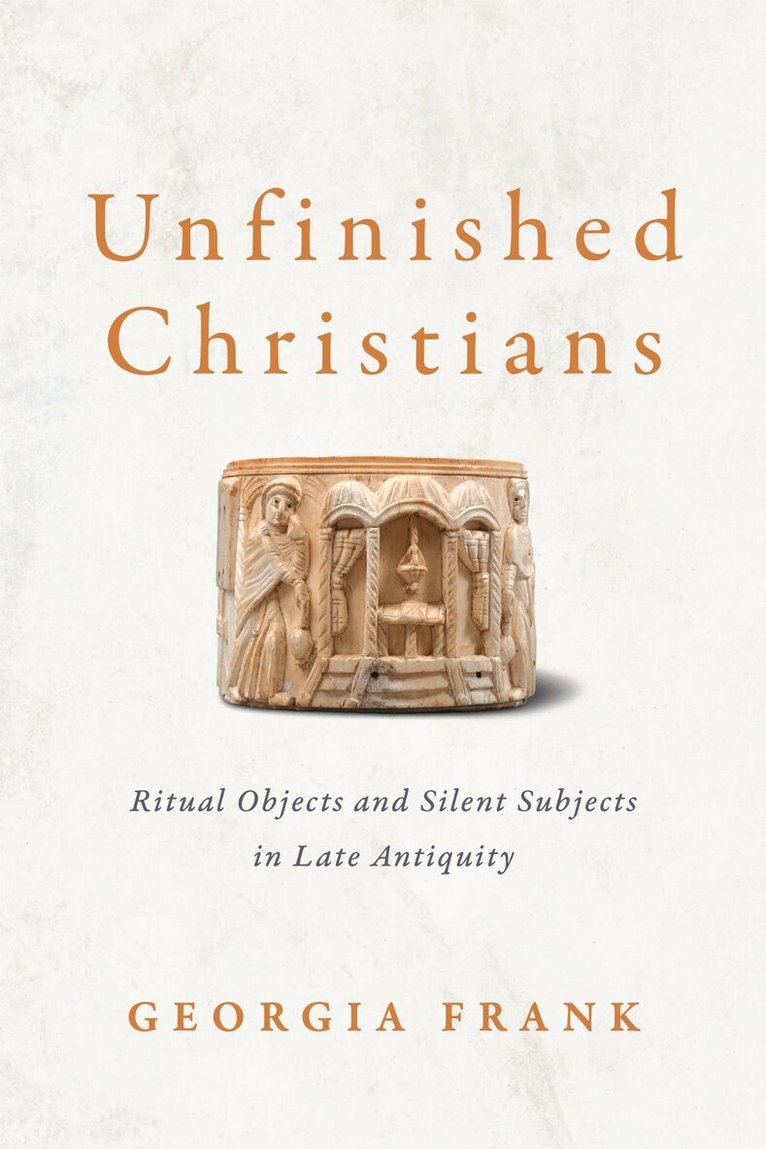
What can we know about the everyday experiences of Christians during the fourth, fifth, and sixth centuries? How did non-elite men and women, enslaved, freed, and free persons, who did not renounce sex or choose voluntary poverty become Christian? They neither led a religious community nor did they live in entirely Christian settings. In this period, an age marked by "extraordinary" Christians—wonderworking saints, household ascetics, hermits, monks, nuns, pious aristocrats, pilgrims, and bishops—ordinary Christians went about their daily lives, in various occupations, raising families, sharing households, kitchens, and baths in religiously diverse cities. Occasionally they attended church liturgies, sought out local healers, and visited martyrs' shrines. Barely and rarely mentioned in ancient texts, common Christians remain nameless and undifferentiated.Unfinished Christians explores the sensory and affective dimensions of ordinary Christians who assembled for rituals. With precious few first-person accounts by common Christians, it relies on written sources not typically associated with lived religion: sermons, liturgical instruction books, and festal hymns. All three genres of writing are composed by clergy for use in ritual settings. Yet they may also provide glimpses of everyday Christians' lives and experiences. This book investigates the habits, objects, behaviors, and movements of ordinary Christians by mining festal preaching by John Chrysostom, Cyril of Jerusalem, Gregory of Nyssa, and Romanos the Melodist, among others. It also mines liturgical instructions to explore the psalms and other songs performed on various feast days. "Unfinished," then, connotes the creativity and agency of unremarkable Christians who engaged in making religious experiences: the "Christian-in-progress" who learns to work with material and bring something into being; the artisans who attended sermons; and, more widely, the bearers of embodied knowing.