Geraldine Muhlmann - Böcker
Visar alla böcker från författaren Geraldine Muhlmann. Handla med fri frakt och snabb leverans.
6 produkter
6 produkter
737 kr
Skickas inom 7-10 vardagar
In this new important book, Geraldine Muhlmann provides a comparative history of the rise of modern journalism, from the revolution of the late nineteenth century, with its new concern for facts, through to the present day. Her account is structured around the tension between what she calls the unifying and decentring tendencies in modern journalism - that is, the concern to give readers a truth that is acceptable to all, on the one hand, and the concern to resist dominant representations and give voice to alternative views, on the other. She illustrates her account with a wide range of case studies, from Sverine, who covered the trial of Dreyfus in late nineteenth-century France, to the great Vietnam War reporters, Seymour M. Hersh and Michael Herr. In between are fascinating new readings of famous figures like George Orwell and Norman Mailer as well as some less well-known writers, such as the great American muckraker, Lincoln Steffens, and the French crusading journalist, Albert Londres.This historical and comparative account of the rise of modern journalism will be an ideal text for courses in journalism, political communication and media history. Written by an author who believes that journalism is crucial to our modern democracies and that it deserves to be studied with knowledge and care, the book raises serious questions about the role of the reporter and about the sorts of journalism that are possible in the twenty-first century.
334 kr
Skickas inom 5-8 vardagar
In this new important book, Geraldine Muhlmann provides a comparative history of the rise of modern journalism, from the revolution of the late nineteenth century, with its new concern for facts, through to the present day. Her account is structured around the tension between what she calls the unifying and decentring tendencies in modern journalism - that is, the concern to give readers a truth that is acceptable to all, on the one hand, and the concern to resist dominant representations and give voice to alternative views, on the other. She illustrates her account with a wide range of case studies, from Sverine, who covered the trial of Dreyfus in late nineteenth-century France, to the great Vietnam War reporters, Seymour M. Hersh and Michael Herr. In between are fascinating new readings of famous figures like George Orwell and Norman Mailer as well as some less well-known writers, such as the great American muckraker, Lincoln Steffens, and the French crusading journalist, Albert Londres.This historical and comparative account of the rise of modern journalism will be an ideal text for courses in journalism, political communication and media history. Written by an author who believes that journalism is crucial to our modern democracies and that it deserves to be studied with knowledge and care, the book raises serious questions about the role of the reporter and about the sorts of journalism that are possible in the twenty-first century.
244 kr
Skickas inom 7-10 vardagar
Journalists are commonly denounced from all sides – a shameful, deceitful trade, a profession sold out to the powerful which gives a biased and misleading picture of the world. Behind the condemnation one can often detect a desire for reform, a feeling that good journalism is too important for the health of democracy to be left to languish among the tabloids. Yet the discussion rarely gets beyond the well-worn formulas of free speech and the Fourth Estate. The question of the political significance of journalism is never seriously addressed, and the question of what journalism should be is rarely posed. This important new book by Géraldine Muhlmann addresses these gaps in our understanding and goes a long way to filling them. Putting aside the hasty diatribes against journalism, Muhlmann asks the fundamental questions: what should journalism be? What ideals should it serve? What do seeing and showing the world mean today? What direction should journalism take in order to emerge from its current crisis?Drawing on a rich tradition of philosophical thought, Muhlmann breathes new life into the old debate about journalism and its role today. Avoiding the twin pitfalls of destructive criticism and naive celebration, she sees a double task for a reinvigorated journalism: to allow space for conflict but also to foster unity within the political community. In the practice of journalism we see the enigma of democracy itself: the coexistence of two stages, one of action and one of representations, the latter offering a symbolic resolution to the conflicts that animate the former.
793 kr
Kommande
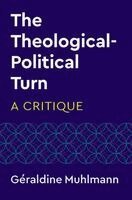
In recent years numerous authors have claimed that underneath everything political there lies something religious – an underground religious substance, as it were. These religious elements, it is said, are the essence of political phenomena and the driving force of their history. Even in our modern "secularized" politics, the heart of the matter, it is alleged, is religious, just as it was in the past. This fashion for the theological-political can be observed in the most varied trends in contemporary philosophy, from the work of Giorgio Agamben and Charles Taylor to that of Richard Rorty and Jürgen Habermas.In Géraldine Muhlmann's view, this "theological-political" idea is a sham. It sheds no light on the factors that underlie key political developments, such as the crisis of liberal democracies and the rise of authoritarianism. It has nothing to say about the concrete ways in which religious points of reference, when they do exist, are used to wage war or to make politics. It contributes nothing to reflection on political matters and it leads us astray by failing to attend to their specific, complex and intertwined logics.So what accounts for the rise of theological-political thought? Muhlmann argues that its popularity has less to do with a genuine attempt to understand politics and more to do with a desire by philosophers to demonstrate their ability to grasp the substantial basis of politics and the true direction of political history. In other words, the triumph of the theological-political is a philosophical hubris – and a dangerous one at that.This ambitious inquiry into the rise of a troubling philosophical zeitgeist will be of great interest to students and scholars in philosophy, political theory and religious studies and to anyone interested in the ideas that are shaping our world today.
289 kr
Kommande
In recent years numerous authors have claimed that underneath everything political there lies something religious – an underground religious substance, as it were. These religious elements, it is said, are the essence of political phenomena and the driving force of their history. Even in our modern "secularized" politics, the heart of the matter, it is alleged, is religious, just as it was in the past. This fashion for the theological-political can be observed in the most varied trends in contemporary philosophy, from the work of Giorgio Agamben and Charles Taylor to that of Richard Rorty and Jürgen Habermas.In Géraldine Muhlmann's view, this "theological-political" idea is a sham. It sheds no light on the factors that underlie key political developments, such as the crisis of liberal democracies and the rise of authoritarianism. It has nothing to say about the concrete ways in which religious points of reference, when they do exist, are used to wage war or to make politics. It contributes nothing to reflection on political matters and it leads us astray by failing to attend to their specific, complex and intertwined logics.So what accounts for the rise of theological-political thought? Muhlmann argues that its popularity has less to do with a genuine attempt to understand politics and more to do with a desire by philosophers to demonstrate their ability to grasp the substantial basis of politics and the true direction of political history. In other words, the triumph of the theological-political is a philosophical hubris – and a dangerous one at that.This ambitious inquiry into the rise of a troubling philosophical zeitgeist will be of great interest to students and scholars in philosophy, political theory and religious studies and to anyone interested in the ideas that are shaping our world today.
299 kr
Skickas inom 3-6 vardagar