Gerard A. Hauser - Böcker
Visar alla böcker från författaren Gerard A. Hauser. Handla med fri frakt och snabb leverans.
3 produkter
3 produkter
1 234 kr
Skickas inom 10-15 vardagar
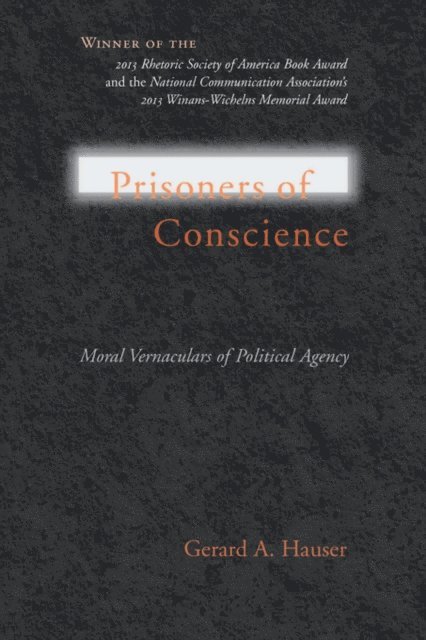
An examination of the discourse of political prisoners as a form of vernacular rhetoricPrisoners of Conscience continues the work begun by Gerard A. Hauser in Vernacular Voices: The Rhetoric of Publics and Public Spheres, winner of the National Communication Association's Hochmuth Nichols Award. In his new book, Hauser examines the discourse of political prisoners, specifically the discourse of prisoners of conscience, as a form of rhetoric in which the vernacular is the main source of available appeals and the foundation for political agency. Hauser explores how modes of resistance employed by these prisoners constitute what he deems a ""thick moral vernacular"" rhetoric of human rights. Hauser's work considers in part how these prisoners convert universal commitments to human dignity, agency, and voice into the moral vernacular of the society and culture to which their rhetoric is addressed. Hauser grounds his study through a series of case studies, each centred on a different rhetorical mechanism brought to bear in the act of resistance. Through a transnational rhetorical analysis of resistance within political prisons, Hauser brings to bear his skills as a rhetorical theorist and critic to illuminate the rhetorical power of resistance as tied to core questions in contemporary humanistic scholarship and public concern.
421 kr
Skickas inom 10-15 vardagar
Prisoners of Conscience continues the work begun by Gerard A. Hauser in Vernacular Voices: The Rhetoric of Publics and Public Spheres, winner of the National Communication Association's Hochmuth Nichols Award. In his new book, Hauser examines the discourse of political prisoners, specifically the discourse of prisoners of conscience, as a form of rhetoric in which the vernacular is the main source of available appeals and the foundation for political agency. Hauser explores how modes of resistance employed by these prisoners constitute what he deems a ""thick moral vernacular"" rhetoric of human rights. Hauser's work considers in part how these prisoners convert universal commitments to human dignity, agency, and voice into the moral vernacular of the society and culture to which their rhetoric is addressed. Hauser grounds his study through a series of case studies, each centred on a different rhetorical mechanism brought to bear in the act of resistance. Through a transnational rhetorical analysis of resistance within political prisons, Hauser brings to bear his skills as a rhetorical theorist and critic to illuminate the rhetorical power of resistance as tied to core questions in contemporary humanistic scholarship and public concern. 2013 Rhetoric Society of America Book Award
340 kr
Skickas inom 10-15 vardagar
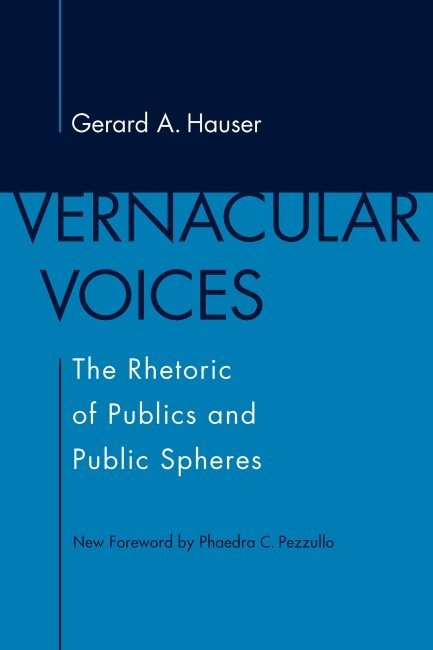
A foundational text of twenty-first-century rhetorical studies, Vernacular Voices addresses the role of citizen voices in steering a democracy through an examination of the rhetoric of publics. Gerard A. Hauser maintains that the interaction between everyday and official discourse discloses how active members of a complex society discover and clarify their shared interests and engage in exchanges that shape their opinions on issues of common interest.In the two decades since Vernacular Voices was first published, much has changed: in the aftermath of the 9/11 terrorist attacks, US presidents have increasingly taken unilateral power to act; the internet and new media have blossomed; and globalization has raised challenges to the autonomy of nation states. In a new preface, Hauser shows how, in an era of shared, global crises, we understand publics, how public spheres form and function, and the possibilities for vernacular expressions of public opinion lie at the core of lived democracy.A foreword is provided by Phaedra C. Pezzullo, associate professor of communication at the University of Colorado Boulder.