
Gérard Duménil – författare
Visar alla böcker från författaren Gérard Duménil. Handla med fri frakt och snabb leverans.
6 produkter
6 produkter
822 kr
Skickas inom 5-8 vardagar
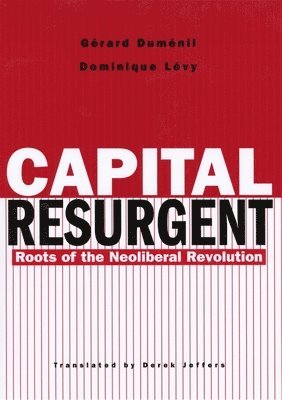
The advent of economic neoliberalism in the 1980s triggered a shift in the world economy. In the three decades following World War II, now considered a golden age of capitalism, economic growth was high and income inequality decreasing. But in the mid-1970s this social compact was broken as the world economy entered the stagflation crisis, following a decline in the profitability of capital. This crisis opened a new phase of stagnating growth and wages, and unemployment. Interest rates as well as dividend flows rose, and income inequality widened. Economists Gérard Duménil and Dominique Lévy show that, despite free market platitudes, neoliberalism was a planned effort by financial interests against the postwar Keynesian compromise. The cluster of neoliberal policies--including privatization, liberalization of world trade, and reduction in state welfare benefits--is an expression of the power of finance in the world economy.The sequence of events initiated by neoliberalism was not unprecedented. In the late nineteenth century, when economic conditions were similar to those of the 1970s, a structural crisis led to the first financial hegemony culminating in the speculative boom of the late 1920s. The authors argue persuasively for stabilizing the world economy before we run headlong into another economic disaster.
268 kr
Skickas inom 5-8 vardagar
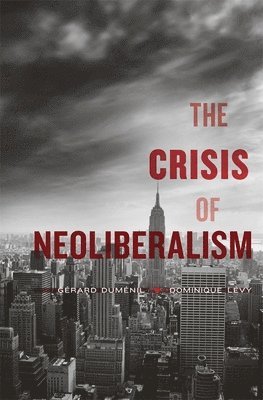
This book examines “the great contraction” of 2007–2010 within the context of the neoliberal globalization that began in the early 1980s. This new phase of capitalism greatly enriched the top 5 percent of Americans, including capitalists and financial managers, but at a significant cost to the country as a whole. Declining domestic investment in manufacturing, unsustainable household debt, rising dependence on imports and financing, and the growth of a fragile and unwieldy global financial structure threaten the strength of the dollar. Unless these trends are reversed, the authors predict, the U.S. economy will face sharp decline.Summarizing a large amount of troubling data, the authors show that manufacturing has declined from 40 percent of GDP to under 10 percent in thirty years. Since consumption drives the American economy and since manufactured goods comprise the largest share of consumer purchases, clearly we will not be able to sustain the accumulating trade deficits.Rather than blame individuals, such as Greenspan or Bernanke, the authors focus on larger forces. Repairing the breach in our economy will require limits on free trade and the free international movement of capital; policies aimed at improving education, research, and infrastructure; reindustrialization; and the taxation of higher incomes.
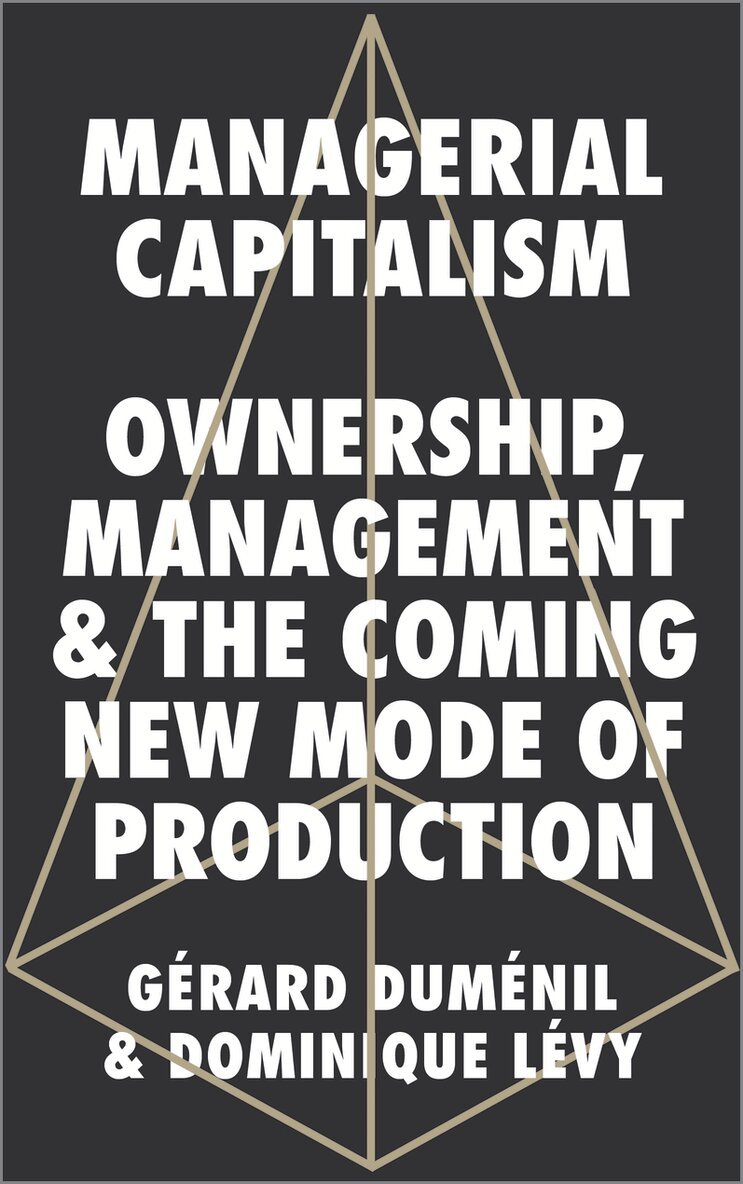
Managerial Capitalism
Ownership, Management and the Coming New Mode of Production
Häftad, Engelska, 2018
248 kr
Skickas inom 5-8 vardagar
The debate around growing inequality is raging amongst economists, and Marxists are finding new ways to map-out the modern economy. Managerial Capitalism introduces a new way of understanding the changing structure of our economy through the emergence and behaviour of a new class – managers. In the post war years as social democracy reigned, managers tended to form compromises with workers. However, under neoliberalism, allegiances have shifted. Today, a new alliance is forming between managers and capitalist owners, changing the nature of the hierarchy of power under capitalism. Additionally, the authors argue, this is happening much faster and universally than was previously thought.By applying Marx's basic concepts to the reality of the system today, through the use of extensive data sets as well as firmly rooting the argument in its historical context, Managerial Capitalism updates Marxism for the twenty-first century, through showing how the modes of production today are shaped by a new class, that must be understood if it is to be challenged.
Managerial Capitalism
Ownership, Management and the Coming New Mode of Production
Inbunden, Engelska, 2018
1 324 kr
Skickas inom 5-8 vardagar
The debate around growing inequality is raging amongst economists, and Marxists are finding new ways to map-out the modern economy. Managerial Capitalism introduces a new way of understanding the changing structure of our economy through the emergence and behaviour of a new class – managers. In the post war years as social democracy reigned, managers tended to form compromises with workers. However, under neoliberalism, allegiances have shifted. Today, a new alliance is forming between managers and capitalist owners, changing the nature of the hierarchy of power under capitalism. Additionally, the authors argue, this is happening much faster and universally than was previously thought.By applying Marx's basic concepts to the reality of the system today, through the use of extensive data sets as well as firmly rooting the argument in its historical context, Managerial Capitalism updates Marxism for the twenty-first century, through showing how the modes of production today are shaped by a new class, that must be understood if it is to be challenged.
2 325 kr
Kommande
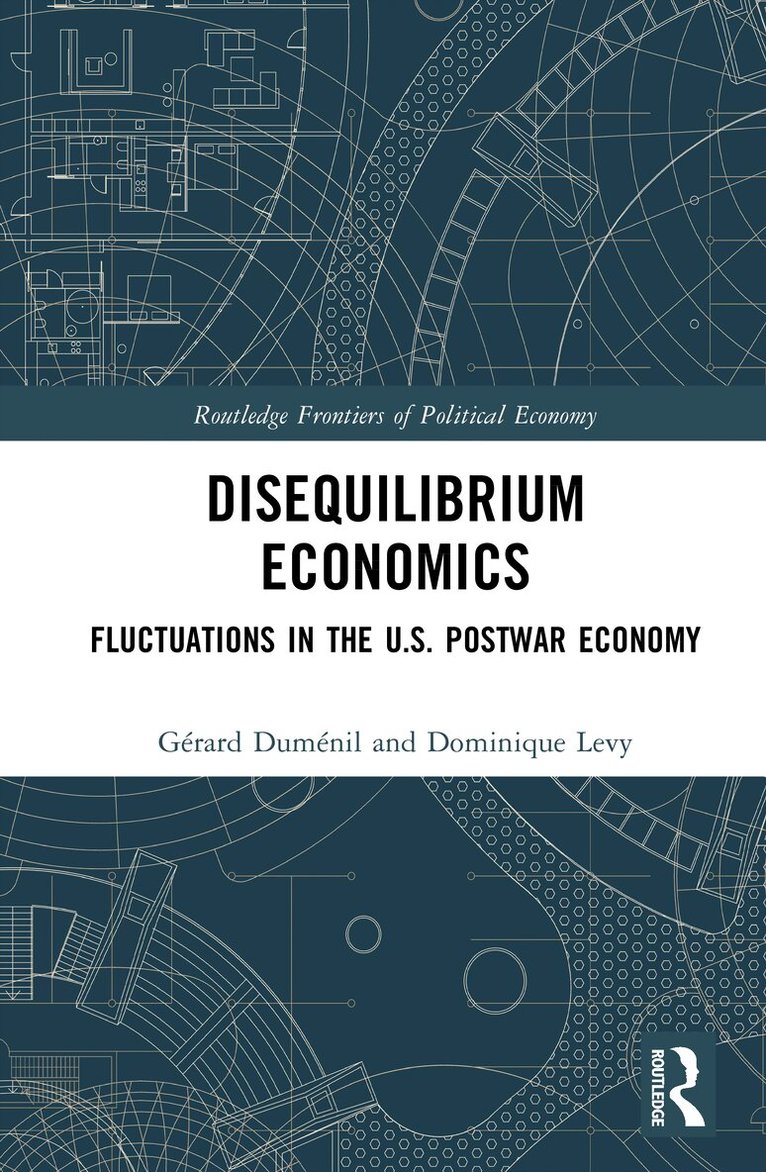
This book is about macroeconomics as a major field of economic theory. The reference to "alternative macroeconomic theory" emphasizes the distance from mainstream and Keynesian economics. There are important groundings in this book, notably in Marxian, Keynesian, Schumpeterian, and Minskian approaches, but no strict adhesion to a particular train of thought.The frontal treatment of "disequilibrium" is the key idiosyncratic feature. Disequilibrium is understood in the strict sense, and equilibria approached as outcomes of actual dynamic processes. The stability and instability of these dynamics are placed on equal footings. Credit mechanisms are a pivotal component of the funding of firms’ investment, brewing the destabilizing potential inherent in disequilibrium dynamics. Instability would be the general rule if procedures built in institutions and regulations did not see to it. A special attention is placed on the historical establishment of these mechanisms and their contemporary institutional settings such as the Basel Accords and unconventional macro policies, emphasizing their efficiency. The satisfaction of stability conditions remains, however, conditional, and their recurrent violation is the pivotal component of our analysis of business cycles.The theory here presented is applied to the empirical study of the U.S. from World War II, but with deep roots in the 19th century surrounded by the broader consideration of social relations: there is no a-historical or a-social macroeconomics.This book, along with its sister volume, Instability Cycles, Distribution, and Inflation, is essential reading for all macroeconomists and economic theorists, especially those who are open to alternative approaches.

ECONOMICS OF THE PROFIT RATE
Competition, Crises and Historical Tendencies in Capitalism
Inbunden, Engelska, 1993
2 352 kr
Skickas inom 5-8 vardagar
In this important book, Gerard Dumenil and Dominique Levy assess the impact of the profit rate on modern economies, its role in the allocation of resources among industries, its influence on business fluctuations, and its relation to accumulation, technological change and wages.The Economics of the Profit Rate presents a broad synthesis of recent work and builds on classical theory, using the tools of modern economics, to suggest alternative approaches to conventional microeconomics and macroeconomics. In sharp contrast to the general equilibrium theory, the emphasis is placed on dynamics and the reaction of individual agents to disequilibrium. This impressive book includes an assessment of the history of the US economy in which theoretical and empirical analyses are consistently combined.