Gerardo Ceballos - Böcker
Visar alla böcker från författaren Gerardo Ceballos. Handla med fri frakt och snabb leverans.
5 produkter
5 produkter
1 837 kr
Skickas inom 7-10 vardagar
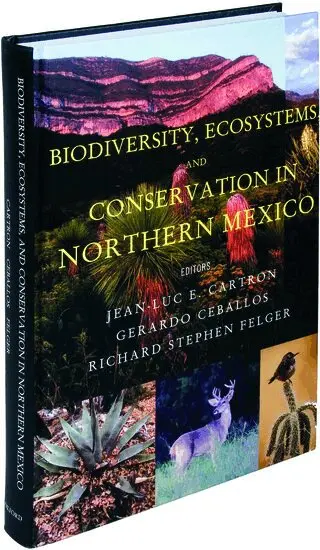
This book describes the biodiversity and biogeography of nothern Mexico, documents the biological importance of regional ecosystems and the impacts of human land use on the conservation status of plants and wildlife. It should become the standard source document for the conservation status of species and ecosystems in this region, which is of unusual biological interest because of its high biodiversity and highly varied landscape and biological zonation.
1 455 kr
Tillfälligt slut
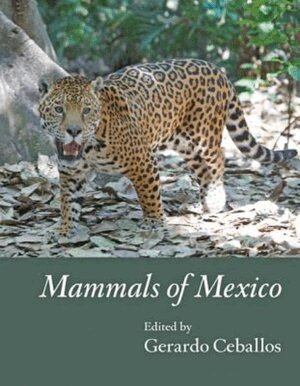
Mammals of Mexico is the first reference book in English on the more than 500 types of mammal species found in the diverse Mexican habitats, which range from the Sonoran Desert to the Chiapas cloud forests. The authoritative species accounts are written by a Who's Who of experts compiled by famed mammalogist and conservationist Gerardo Ceballos. Ten years in the making, Mammals of Mexico covers everything from obscure rodents to whales, bats, primates, and wolves. It is thoroughly illustrated with color photographs and meticulous artistic renderings, as well as range maps for each species. Introductory chapters discuss biogeography, conservation, and evolution. The final section of the book illustrates the skulls, jaws, and tracks of Mexico's mammals. This unparalleled collection of scientific information on, and photographs of, Mexican wildlife belongs on the shelf of every mammalogist, in public and academic libraries, and in the hands of anyone curious about Mexico and its wildlife.
293 kr
Tillfälligt slut
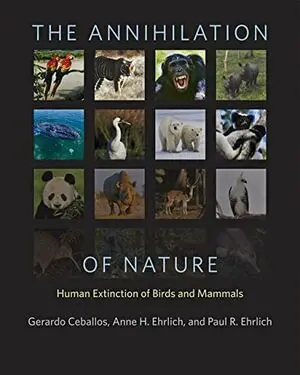
Gerardo Ceballos, Anne H. Ehrlich, and Paul R. Ehrlich serve as witnesses in this trial of human neglect, where the charge is the massive and escalating assault on living things. Nature is being annihilated, not only because of the human population explosion, but also as a result of massive commercial endeavors and public apathy. Despite the well-intentioned work of conservation organizations and governments, the authors warn us that not enough is being done and time is short for the most vulnerable of the world's wild birds and mammals. Thousands of populations have already disappeared, other populations are dwindling daily, and soon our descendants may live in a world containing but a minuscule fraction of the birds and mammals we know today. The Annihilation of Nature is a clarion call for engagement and action. These outspoken scientists urge everyone who cares about nature to become personally connected to the victims of our inadequate conservation efforts and demand that restoration replace destruction. Only then will we have any hope of preventing the worst-case scenario of the sixth mass extinction.
298 kr
Skickas inom 7-10 vardagar
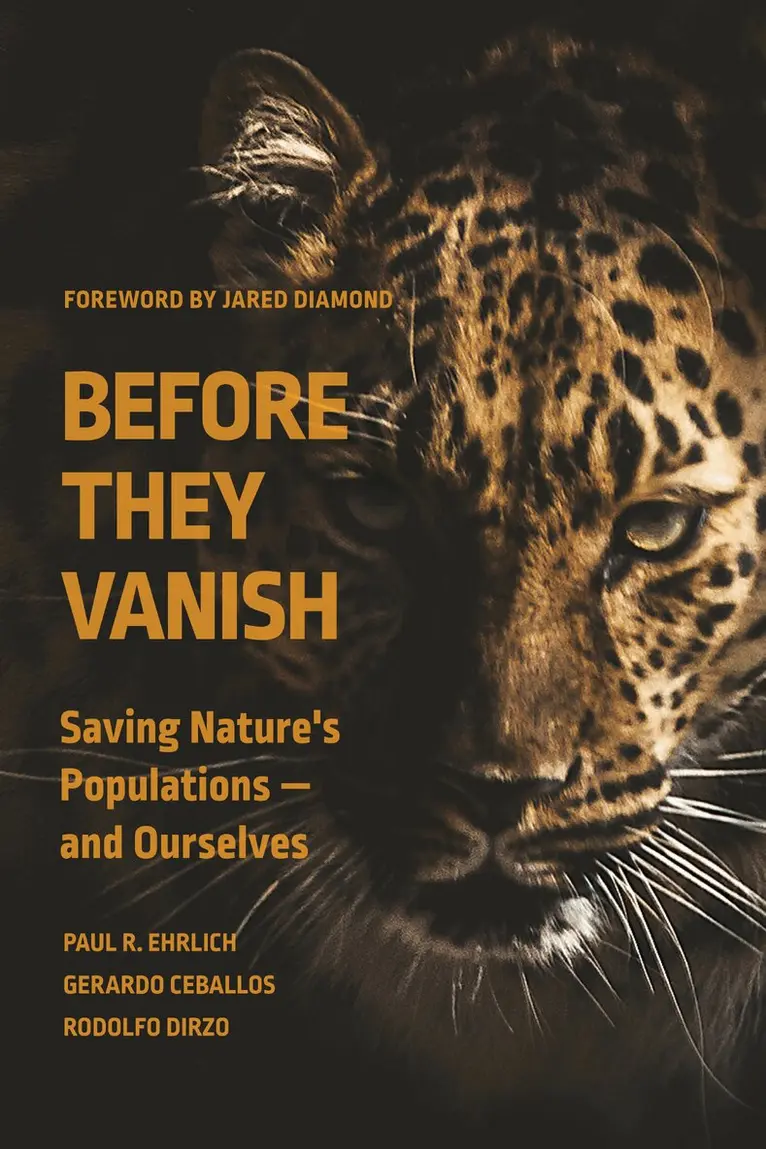
Legendary conservationists show us that we still have the power to prevent critical consequences of the sixth extinction in this game-changing book.Can we save threatened animals and ecosystems in the midst of a mass extinction? The answer is a resounding yes! Before They Vanish shows us how. In this wise and impassioned book, renowned conservation scientists Paul R. Ehrlich, Gerardo Ceballos, and Rodolfo Dirzo urge us to shift our thinking rather than succumb to grief over the losses that humanity faces. This comprehensive look at a crucial but often overlooked aspect of conservation—population extinction, or the loss of a species within a specific geographic location—guides us onto a new, hopeful path. The authors argue that conservationists have placed too much emphasis on the extinction of entire species, which occurs gradually enough that we only detect it in the direst of cases. By that time, meaningful action may be impossible. By shifting our focus to identifying extinction threats at the more localized population level, we can intervene more rapidly and effectively to prevent broader declines before it's too late. This change in perspective represents a critical step in saving these vanishing species; early detection and intervention may be our last, best hope for stemming the tide of this global crisis. Using examples from the worlds of vertebrates, invertebrates, plants, fungi, and microorganisms, the authors explain the concept of population extinction, its causes and consequences, and how to prevent the mass destruction of the amazing and unique creatures with whom we share our planet. This call to action is a must-read for anyone concerned with saving endangered and threatened species, our natural world—and ourselves.
582 kr
Skickas inom 11-20 vardagar
Though seasonally dry tropical forests are equally as important to global biodiversity as tropical rainforests, and are one of the most representative and highly endangered ecosystems in Latin America, knowledge about them remains limited because of the relative paucity of attention paid to them by scientists and researchers and a lack of published information on the subject. "Seasonally Dry Tropical Forests" seeks to address this shortcoming by bringing together a range of experts in diverse fields including biology, ecology, biogeography, and biogeochemistry, to review, synthesize, and explain the current state of our collective knowledge on the ecology and conservation of seasonally dry tropical forests. The book offers a synthetic and cross-disciplinary review of recent work with an expansive scope, including sections on distribution, diversity, ecosystem function, and human impacts. Throughout, contributors emphasise conservation issues, particularly emerging threats and promising solutions, with key chapters on climate change, fragmentation, restoration, ecosystem services, and sustainable use.Seasonally dry tropical forests are extremely rich in biodiversity, and are seriously threatened. They represent scientific terrain that is poorly explored, and there is an urgent need for increased understanding of the system's basic ecology. "Seasonally Dry Tropical Forests" represents an important step in bringing together the most current scientific information about this vital ecosystem and disseminating it to the scientific and conservation communities.