Gerd-Rainer Horn - Böcker
Visar alla böcker från författaren Gerd-Rainer Horn. Handla med fri frakt och snabb leverans.
10 produkter
10 produkter
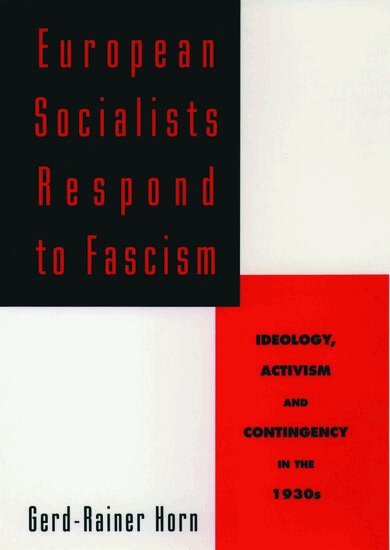
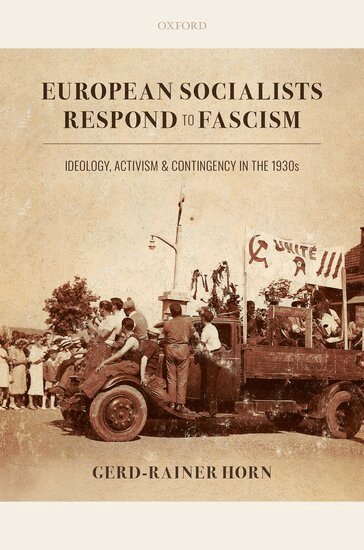
European Socialists Respond to Fascism
Ideology, Activism and Contingency in the 1930s
Inbunden, Engelska, 1997
2 124 kr
Skickas inom 5-8 vardagar
Based on documents collected in six European countries, European Socialists Respond to Fascism: Ideology, Activism and Contingency in the 1930s is a transnational study of largely parallel developments in Austria, Belgium, France, Germany, and Spain in the years 1933-1936.Triggered into action by the shock effect of the Nazi rise to power in Germany, socialists throughout Western Europe entered an unusually active period of practicalreorientation and debate over political strategy which helped determine the contours of European politics up to the outbreak of World War II and beyond. Stressing the transnational dimension of this process whilesimultaneously integrating local, regional, and national factors, this work finds that it was social democracy, rather than communism, that acted as the primary vehicle for radical change among European marxists during the 1930s.Following major figures within the European left and the significant events that made up the inter-war period, Gerd-Rainer Horn demonstrates the interconnectedness of Europe's interwar socialists. Finally, Horn manages to relate these findings to the ongoinginterdisciplinary debate on structure, agency, and contingency in the historical process.
644 kr
Skickas inom 7-10 vardagar
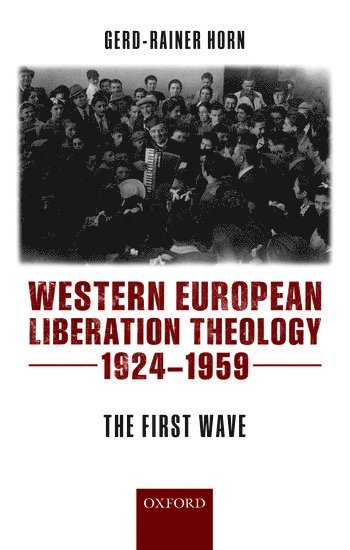
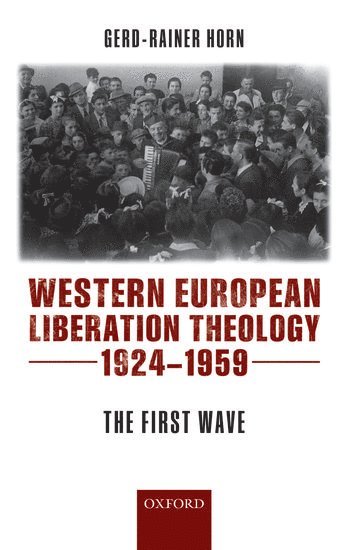
Western European Liberation Theology is the first comprehensive survey of the development of a distinct, progressive variant of Catholicism in twentieth-century Western Europe. This Left Catholicism served to lay the basis for the subsequent events and evolutions associated with Vatican II. Initially emerging within the boundaries of Catholic Action, fuelled by the growing power and self-confidence of the Catholic laity, a series of challenges to received wisdom and an array of novel experiments were launched in various corners of Western Europe. The moment of liberation from Nazi occupation and world war in 1944/45 turned out to be the highpoint of these optimistic paradigm shifts. Concentrating on interrelated developments in theology, Catholic politics and apostolic social action, Gerd-Rainer Horn integrates evidence from Italian, French and Belgian national contexts. Drawing on his research in over twenty archives between Leuven and Rome, he highlights the role of organisations, social movements, and intellectual trends. The pivotal contributions of key individuals are assessed, from theologians such as Jacques Maritain and Emmanuel Mounier, to the millenarian activist priests, Don Zeno Saltini and Don Primo Mazzolari. In conclusion Horn suggests that first-wave Western European Left Catholicism served as an inspiration - and constituted a prototype - for subsequent Third World Liberation Theology.
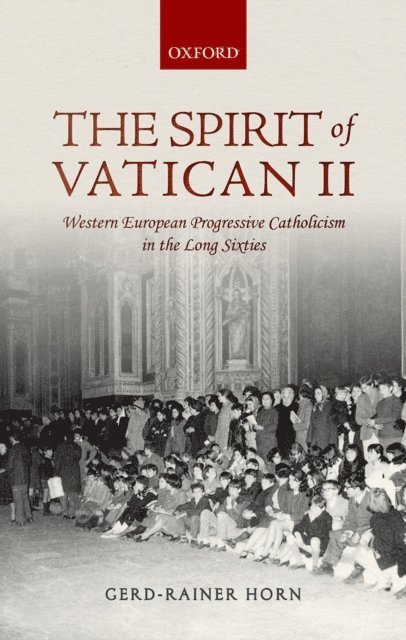
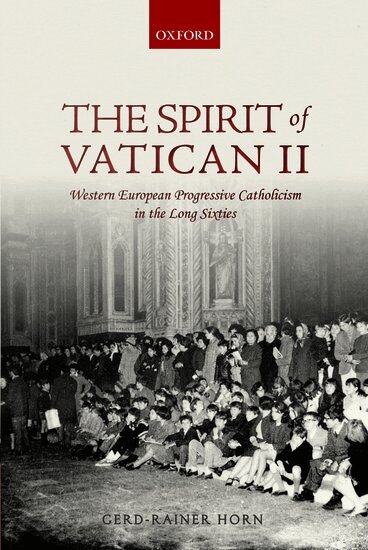
The Spirit of Vatican II
Western European Progressive Catholicism in the Long Sixties
Häftad, Engelska, 2019
608 kr
Skickas inom 3-6 vardagar
Vatican II profoundly changed the outlook and the message of the Catholic Church. After decades, if not centuries, in which Catholic public opinion appeared to be primarily oriented towards the distant past and bygone societal models, suddenly the Catholic Church embraced the world as it was, and it joined in the struggle to create a radiant future.The Sixties were a time of great socio-cultural and political ferment in Europe as a whole. Especially the second half of the 1960s and the first half of the 1970s witnessed an astounding range of 'new' and 'old' social movements reaching for the sky. Catholic activists provided fuel to the fire in more ways than one. Catholics had embarked on the quest for new horizons for some years prior to the sudden growth of secular activism in and around the magic year of 1968. When secular radicals joined up with Catholic activists, a seemingly unstoppable dynamic was unleashed.This book covers five crucial contributions by Catholic communities to the burgeoning atmosphere of those turbulent years: a) the theological innovations of Vatican II, which made such an unprecedented engagement of Catholics possible in the first place, but also post-conciliar theological developments; b) the resurgence of the worker priest experiment, and the first-ever creation of autonomous organisations of radical parish priests; c) the simultaneous creation of grassroots organisations - base communities - by (mostly) lay activists across the continent; d) the crucial roles of Catholic students in the multiform student movements shaping Europe in these years; e) the indispensable contributions of Catholic workers who helped shape - and often initiated - the wave of militant contestations shaking up labour relations after 1968.
European Socialists Respond to Fascism
Ideology, Activism and Contingency in the 1930s
Häftad, Engelska, 2020
412 kr
Skickas inom 5-8 vardagar
Based on documents collected in six European countries, European Socialists Respond to Fascism: Ideology, Activism and Contingency in the 1930s is a transnational study of largely parallel developments in Austria, Belgium, France, Germany, and Spain in the years 1933-1936.Triggered into action by the shock effect of the Nazi rise to power in Germany, socialists throughout Western Europe entered an unusually active period of practical reorientation and debate over political strategy which helped determine the contours of European politics up to the outbreak of World War II and beyond. Stressing the transnational dimension of this process while simultaneously integrating local, regional, and national factors, this work finds that it was social democracy, rather than communism, that acted as the primary vehicle for radical change among European marxists during the 1930s.Following major figures within the European left and the significant events that made up the inter-war period, Gerd-Rainer Horn demonstrates the interconnectedness of Europe's interwar socialists. Finally, Horn manages to relate these findings to the ongoing interdisciplinary debate on structure, agency, and contingency in the historical process.
2 447 kr
Skickas inom 7-10 vardagar
Western European Liberation Theology is the first comprehensive survey of the development of a distinct, progressive variant of Catholicism in twentieth-century Western Europe. This Left Catholicism served to lay the basis for the subsequent events and evolutions associated with Vatican II. Initially emerging within the boundaries of Catholic Action, fuelled by the growing power and self-confidence of the Catholic laity, a series of challenges to received wisdom and an array of novel experiments were launched in various corners of Western Europe. The moment of liberation from Nazi occupation and world war in 1944/45 turned out to be the highpoint of these optimistic paradigm shifts. Concentrating on interrelated developments in theology, Catholic politics and apostolic social action, Gerd-Rainer Horn integrates evidence from Italian, French and Belgian national contexts. Drawing on his research in over twenty archives between Leuven and Rome, he highlights the role of organisations, social movements, and intellectual trends. The pivotal contributions of key individuals are assessed, from theologians such as Jacques Maritain and Emmanuel Mounier, to the millenarian activist priests, Don Zeno Saltini and Don Primo Mazzolari. In conclusion Horn suggests that first-wave Western European Left Catholicism served as an inspiration - and constituted a prototype - for subsequent Third World Liberation Theology.
1 451 kr
Skickas inom 5-8 vardagar
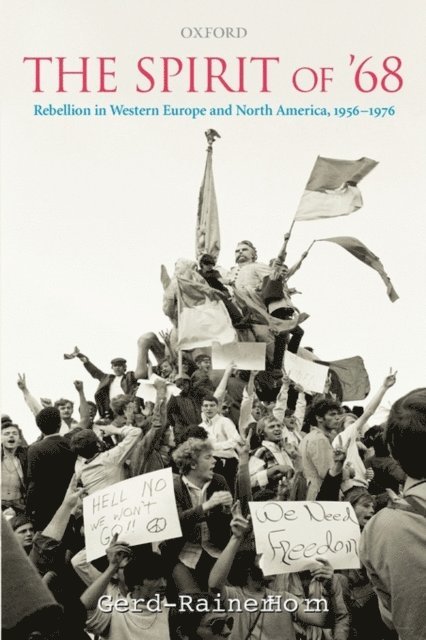
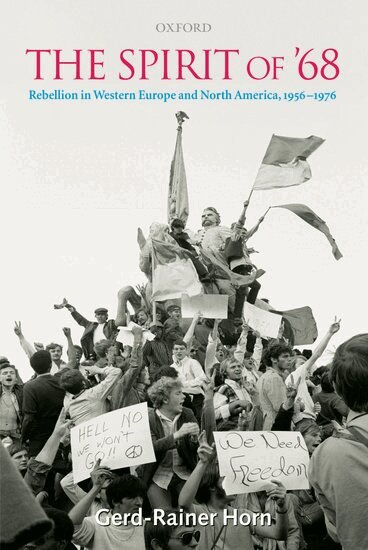
In virtually all corners of the Western world, 1968 witnessed a highly unusual sequence of popular rebellions. In Italy, France, Spain, Vietnam, the United States, West Germany, Czechoslovakia, Mexico, and elsewhere, millions of individuals took matters into their own hands to counter imperialism, capitalism, autocracy, bureaucracy, and all forms of hierarchical thinking. Recent reinterpretations have sought to play down any real challenge to the socio-political status quo in these events, but Gerd-Rainer Horn's book offers a spirited counterblast. 1968, he argues, opened up the possibility that economic and political elites on both sides of the Iron Curtain could be toppled from their position of unnatural superiority to make way for a new society where everyday people could, for the first time, become masters of their own destiny. Furthermore, Horn contends, the moment of crisis and opportunity culminating in 1968 must be seen as part of a larger period of experimentation and revolt. The ten years between 1956 and 1966, characterised above all by the flourishing of iconoclastic cultural rebellions, can be regarded as a preparatory period which set the stage for the non-conformist cum political revolts of the subsequent 'red' decade (1966-1976).Horn's geographic centres of attention are Western Europe, including the first full examination of Mediterranean revolts, and North America. He placed particular emphasis on cultural nonconformity, the student movement, working class rebellions, the changing contours of the Left, and the meaning of participatory democracy. His book will make fascinating reading for anyone interested in this turbulent period and the fundamental changes that were wrought upon societies either side of the Atlantic.
706 kr
Skickas inom 5-8 vardagar
In virtually all corners of the Western world, 1968 witnessed a highly unusual sequence of popular rebellions. In Italy, France, Spain, Vietnam, the United States, West Germany, Czechoslovakia, Mexico, and elsewhere, millions of individuals took matters into their own hands to counter imperialism, capitalism, autocracy, bureaucracy, and all forms of hierarchical thinking. Recent reinterpretations have sought to play down any real challenge to the socio-political status quo in these events, but Gerd-Rainer Horn's book offers a spirited counterblast. 1968, he argues, opened up the possibility that economic and political elites on both sides of the Iron Curtain could be toppled from their position of unnatural superiority to make way for a new society where everyday people could, for the first time, become masters of their own destiny. Furthermore, Horn contends, the moment of crisis and opportunity culminating in 1968 must be seen as part of a larger period of experimentation and revolt. The ten years between 1956 and 1966, characterised above all by the flourishing of iconoclastic cultural rebellions, can be regarded as a preparatory period which set the stage for the non-conformist cum political revolts of the subsequent 'red' decade (1966-1976).Horn's geographic centres of attention are Western Europe, including the first full examination of Mediterranean revolts, and North America. He placed particular emphasis on cultural nonconformity, the student movement, working class rebellions, the changing contours of the Left, and the meaning of participatory democracy. His book will make fascinating reading for anyone interested in this turbulent period and the fundamental changes that were wrought upon societies either side of the Atlantic.
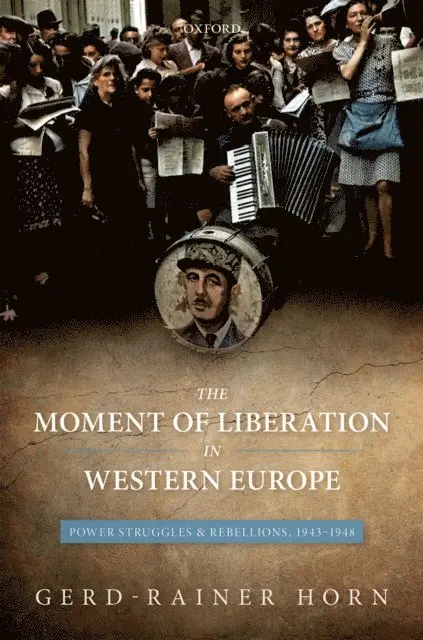
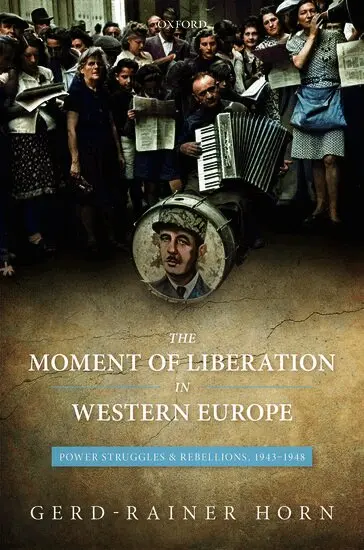
The Moment of Liberation in Western Europe
Power Struggles and Rebellions, 1943-1948
Inbunden, Engelska, 2020
1 375 kr
Skickas inom 5-8 vardagar
The Moment of Liberation in Western Europe, 1943-1948, regards the final two years of World War II and the immediate post-liberation period as a moment in twentieth century history, when the shape and contours of postwar Western Europe appeared highly uncertain and various alternatives and conflicting visions were up for grabs. After close to six years of total war, Nazi terror, and brutal occupation policies, a growing number of Europeans were no longer content solely to fight for national liberation from fascist control. Having staked their lives in military and civilian resistance to Nazism and Italian fascism across the continent, surviving activists were aiming to ensure that such a political and social catastrophe would never befall Europe again.In the closing moments of World War II, hundreds of thousands of antifascist activists had begun to identify with the famous quote penned by the exiled German social theorists, Max Horkheimer, who had boldly proclaimed in early September 1939: 'Whoever is not prepared to talk about capitalism should also remain silent about fascism.' The economic and political elites in prewar societies were increasingly regarded as co-responsible for war, fascism, and occupation policies, from which many had benefited significantly and often enthusiastically. There were extensive popular social movements at work in almost every single state which aimed to construct postwar societies in which grassroots democracy and the free association of rank-and-file activists would replace the profit principle and the top-down Jacobin orientation by traditional elites. This study for the first time reconstructs the parameters of this contest over the shape of postwar Western Europe from a consistently transnational perspective.
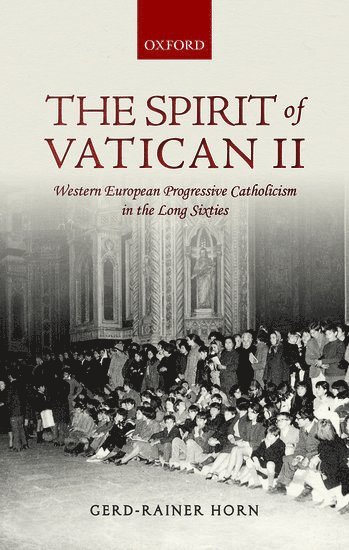
The Spirit of Vatican II
Western European Progressive Catholicism in the Long Sixties
Inbunden, Engelska, 2015
1 633 kr
Skickas inom 7-10 vardagar
Vatican II profoundly changed the outlook and the message of the Catholic Church. After decades, if not centuries, in which Catholic public opinion appeared to be primarily oriented towards the distant past and bygone societal models, suddenly the Catholic Church embraced the world as it was, and it joined in the struggle to create a radiant future.The Sixties were a time of great socio-cultural and political ferment in Europe as a whole. Especially the second half of the 1960s and the first half of the 1970s witnessed an astounding range of 'new' and 'old' social movements reaching for the sky. Catholic activists provided fuel to the fire in more ways than one. Catholics had embarked on the quest for new horizons for some years prior to the sudden growth of secular activism in and around the magic year of 1968. When secular radicals joined up with Catholic activists, a seemingly unstoppable dynamic was unleashed.This book covers five crucial contributions by Catholic communities to the burgeoning atmosphere of those turbulent years: a) the theological innovations of Vatican II, which made such an unprecedented engagement of Catholics possible in the first place, but also post-conciliar theological developments; b) the resurgence of the worker priest experiment, and the first-ever creation of autonomous organisations of radical parish priests; c) the simultaneous creation of grassroots organisations - base communities - by (mostly) lay activists across the continent; d) the crucial roles of Catholic students in the multiform student movements shaping Europe in these years; e) the indispensable contributions of Catholic workers who helped shape - and often initiated - the wave of militant contestations shaking up labour relations after 1968.
752 kr
Skickas inom 7-10 vardagar
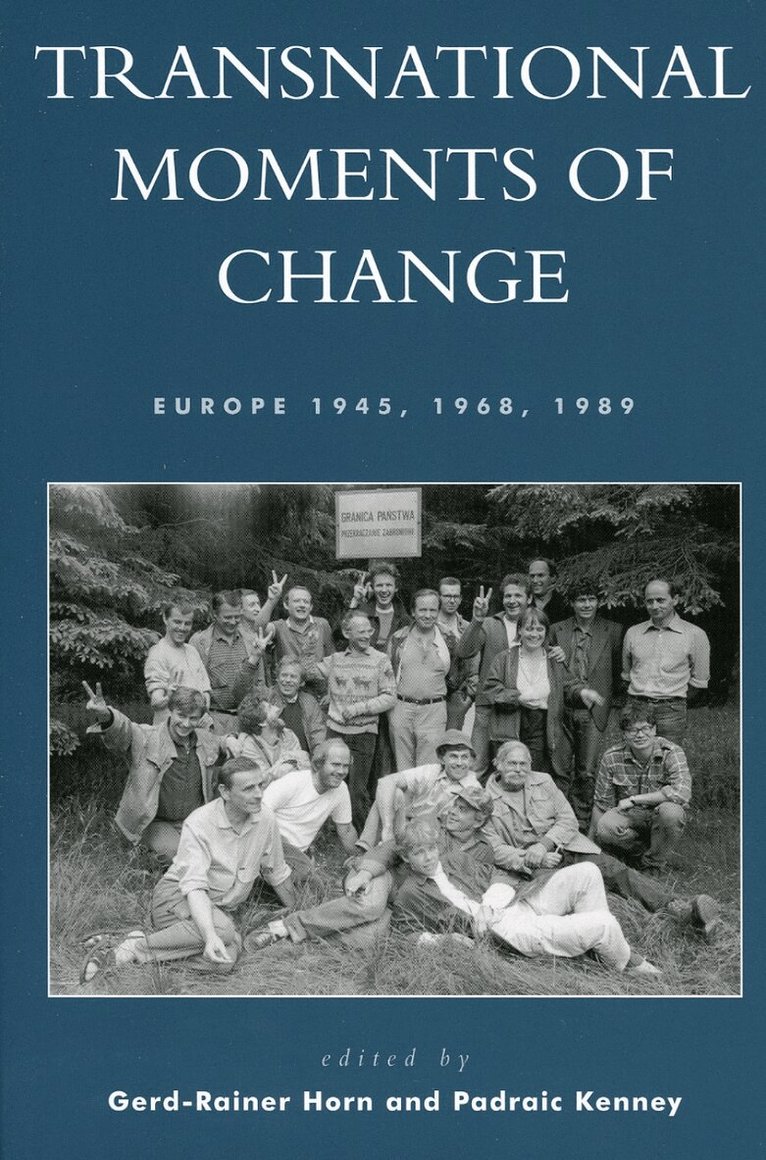
Transnational Moments of Change offers a broad introduction to the methodology and practice of transnational history. To demonstrate the value of this approach, the work focuses on Europe since World War II, a period whose study particularly benefits from a transnational vantage point. Twelve distinguished contributors from around the globe offer a range of transnational approaches to three continent-wide moments of change. The work begins with a look at the close of World War Two, when liberation from Nazi occupation offered the opportunity for social and political experiment. Next, essays explore the late 1960s as generational change and political dissatisfaction rocked urban centers from Paris to Prague. Finally, the book turns to the fall of communism, a moment of revolutionary change that not only spread rapidly from country to country, but even affected and interacted with protest movements in Western Europe and elsewhere. Together, the essays provide both a new perspective on postwar Europe and a range of models for the historian interested in using the transnational approach.