Gertrude Himmelfarb - Böcker
Visar alla böcker från författaren Gertrude Himmelfarb. Handla med fri frakt och snabb leverans.
15 produkter
15 produkter
116 kr
Skickas
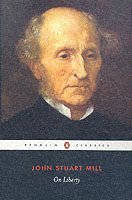
'Over himself, over his own body and mind, the individual is sovereign.' To this 'one very simple principle' the whole of Mill's essay On Liberty is dedicated. While many of his immediate predecessors and contemporaries, from Adam Smith to Godwin and Thoreau, had celebrated liberty, it was Mill who organized the idea into a philosophy, and put it into the form in which it is generally known today. The editor of this essay, Gertrude Himmelfarb records responses to Mill's books and comments on his fear of 'the tyranny of the majority'. Dr Himmelfarb concludes that the same inconsistencies which underlie On Liberty continue to complicate the moral and political stance of liberals today.
618 kr
Skickas inom 5-8 vardagar
A wide-ranging collection of Victorian writings by John Stuart Mill, Charles Dickens, Oscar Wilde, and other leading lights of the eraNone of the stereotypes of Victorian England—narrow-minded, inhibited, moralistic, complacent—prepares us for the vitality, variety, and above all extraordinary quality of intellectual life displayed in this volume of essays. Selected and annotated by Gertrude Himmelfarb, a distinguished historian of Victorian thought, the writings address a wide range of subjects—religion, politics, history, science, art, socialism, and feminism—by eminent figures of the era, including Carlyle, Mill, Macaulay, Dickens, Eliot, Thackeray, Newman, Arnold, and Wilde. The selections reflect what Himmelfarb terms “the spirit of the age”—contentious as well as earnest, given to high aspirations and convictions, and at the same time subject to deep anxieties and doubts.The Victorians, undisputed masters of the long, serious essay, found the genre congenial to the expression of their most compelling and provocative views. This volume offers a representative sampling of essays from the early, middle, and late Victorian periods, each accompanied by an introductory note. Himmelfarb also introduces the volume with two enlightening essays, one on the evolving spirit of the age, and the other on the essay as a genre and on the important periodicals that attracted such a large and engaged audience.
351 kr
Skickas inom 10-15 vardagar
For this updated edition of her acclaimed work on historians and the writing of history, Gertrude Himmelfarb adds four insightful and provocative essays dealing with changes in the discipline over the past twenty years.In examining the effects of postmodernism, the illusions of cosmopolitanism, A. J. P. Taylor and revisionism, and Francis Fukuyama’s “end of history,” Himmelfarb enriches her illuminating exploration of the myriad ways—new and old—in which historians make sense of the past.
230 kr
Skickas inom 5-8 vardagar
240 kr
Skickas inom 3-6 vardagar
277 kr
Skickas inom 3-6 vardagar
258 kr
Skickas inom 3-6 vardagar
568 kr
Skickas inom 10-15 vardagar
In The Moral Imagination, Gertrude Himmelfarb, one of America's most distinguished intellectual historians, explores the minds and lives of some of the most brilliant and provocative thinkers of modern times. In their distinctive ways, she argues, they exemplify what Burke two centuries ago and Trilling most recently have called the “moral imagination.” Himmelfarb describes how each of these thinkers, coming from different traditions, responding to different concerns, and writing in different genres, shared a moral passion that permeated their work. It is this passion that makes their reflections—on politics and literature, religion and society, marriage and sex—sometimes unpredictable, often controversial, always exciting, and as illuminating and pertinent today as they were then. The second edition includes a revised introduction and three new essays on Adam Smith, Lord Acton, and Alfred Marshall.
261 kr
Skickas inom 10-15 vardagar
In her enduring study of the impact of Darwinism on the intellectual climate of the nineteenth century, Gertrude Himmelfarb brings massive documentation to bear in challenging the conventional view of Darwin's greatness. Touching on biography, history, and philosophy, she traces the origins and development of Darwin's views against the opinions of his time; assesses the influences on him; and shows what he intended his theory to mean, what his readers took it to mean, and what it has in fact meant. By such a route Ms. Himmelfarb recaptures "a sense of how a scientist, with the most innocent of intentions and the best of faith, can give birth to a theory that has an ancestry and a posterity of which he may be ignorant and a life of its own over which he has no control. "A thorough and masterly book punctuated with a delicate sense of humor.... Until he has read, marked, learnt and inwardly digested this authoritative volume, no one should presume henceforth to speak on Darwin and Darwinism." Times Literary Supplement "An illuminating contribution...a dramatic story."—Yale Review "Absorbing, well written, and splendidly organized."—I. Bernard Cohen
207 kr
Skickas inom 10-15 vardagar
In these brilliant essays, Gertrude Himmelfarb, one of America’s most respected scholars of Victorian thought and culture, explores the many facets, public and private, of the Victorian idea of morality. Incisively and provocatively she illuminates the "moral imagination" of the Victorians, "the imagination that treasured the complexity of the heart and mind and that sought, by aesthetic means as well as ethical, to adorn and enhance rather than destroy the 'decent drapery of life.'" The conventional view of Victorianism—a Family Shakespeare purged of indelicacies, piano legs sheathed in pantaloons, and the works of male and female authors chastely residing on separate shelves—gives way to the subtle and sympathetic analysis of an ethos that combined a profound sense of social and moral responsibility with a remarkable tolerance for idiosyncrasy and individuality. Marriage and Morals Among the Victorians invites us to reconsider the complex and colorful panorama of ideas and attitudes, beliefs and behavior, that goes under the name of Victorianism—and it reconsiders well our own relation to that much abused and misunderstood culture. "An important book that deserves a wide readership. It deserves to be read for the critical quality of Miss Himmelfarb’s mind and the constant questioning of fashionable attitudes. One does not have to agree with her to enjoy the characteristic sharpness of her writing, or the characteristic breadth of her reading."—New York Times Book Review. "A collection of extraordinarily intelligent essays, held together not by a single thread of argument but by the sustained moral imagination of an acute student of nineteenth-century life and thought....Miss Himmelfarb’s essays make clear that there was nothing wrong with either the Victorians’ morality or their imaginations."—National Review.
224 kr
Tillfälligt slut
Milton Himmelfarb, perhaps best known for his quip that Jews earned like Episcopalians but voted like Puerto Ricans, was one of the most unfairly neglected essayists of his time. Now his sister, the distinguished historian Gertrude Himmelfarb, brings together the essential core of his social, political, and theological essays in this wide-ranging collection. From Leo Strauss and Spinoza to Hitler, Israel, and the place of religion in the public square, the sixteen essays in Jews and Gentiles offer readers a feast that is a literary delight as well as an intellectual revelation and a political education.
250 kr
Tillfälligt slut
It is one of the curiosities of history that the most remarkable novel about Jews and Judaism, predicting the establishment of the Jewish state, should have been written in 1876 by a non-Jew -- a Victorian woman and a formidable intellectual, who is generally regarded as one of the greatest of English novelists. And it is still more curious that Daniel Deronda, George Eliot's last novel, should have been dismissed, by many of her admirers at the time and by some critics since, as something of an anomaly, an inexplicable and unfortunate turn in her life and work. Yet Eliot herself was passionately committed to that novel, having prepared herself for it by an extraordinary feat of scholarly research in five languages (including Hebrew), exploring the ancient, medieval, and modern sources of Jewish history. Three years later, to reenforce that commitment, she wrote an essay, the very last of her writing, reaffirming the heritage of the Jewish "nation" and the desirability of a Jewish state -- this well before the founders of Zionism had conceived of that mission.Why did this Victorian novelist, born a Christian and an early convert to agnosticism, write a book so respectful of Judaism and so prescient about Zionism? And why at a time when there were no pogroms or persecutions to provoke her? What was the general conception of the "Jewish question," and how did Eliot reinterpret that "question," for her time as well as ours? Gertrude Himmelfarb, a leading Victorian scholar, has undertaken to unravel the mysteries of Daniel Deronda. And the mysteries of Eliot herself: a novelist who deliberately wrote a book she knew would bewilder many of her readers, a distinguished woman who opposed the enfranchisement of women, a moralist who flouted the most venerable of marital conventions -- above all, the author of a novel that is still an inspiration or provocation to readers and critics alike.
202 kr
Tillfälligt slut
The history of Judaism has for too long been dominated by the theme of antisemitism, reducing Judaism to the recurrent saga of persecution and the struggle for survival. The history of philosemitism provides a corrective to that abysmal view, a reminder of the venerable religion and people that have been an inspiration for non-Jews as well as Jews. There is a poetic justice -- or historic justice -- in the fact that England, the first country to expel the Jews in medieval times, has produced the richest literature of philosemitism in modern times. From Cromwell supporting the readmission of the Jews in the 17th century, to Macaulay arguing for the admission of Jews as Members of Parliament in the 19th century, to Churchill urging the recognition of the state of Israel in the 20th, some of England's most eminent writers and statesmen have paid tribute to Jews and Judaism. Their speeches and writing are powerfully resonant today. As are novels by Walter Scott, Disraeli, and George Eliot, which anticipate Zionism well before the emergence of that movement and look forward to the state of Israel, not as a refuge for the persecuted, but as a "homeland" rooted in Jewish history.A recent history of antisemitism in England regretfully observes that English philosemitism is "a past glory." This book may recall England -- and not only England -- to that past glory and inspire other countries to emulate it. It may also reaffirm Jews in their own faith and aspirations.
164 kr
Tillfälligt slut
It is one of the curiosities of history that the most remarkable novel about Jews and Judaism, predicting the establishment of the Jewish state, should have been written in 1876 by a non-Jew -- a Victorian woman and a formidable intellectual, who is generally regarded as one of the greatest of English novelists. And it is still more curious that Daniel Deronda, George Eliot's last novel, should have been dismissed, by many of her admirers at the time and by some critics since, as something of an anomaly, an inexplicable and unfortunate turn in her life and work. Yet Eliot herself was passionately committed to that novel, having prepared herself for it by an extraordinary feat of scholarly research in five languages (including Hebrew), exploring the ancient, medieval, and modern sources of Jewish history. Three years later, to reenforce that commitment, she wrote an essay, the very last of her writing, reaffirming the heritage of the Jewish "nation" and the desirability of a Jewish state -- this well before the founders of Zionism had conceived of that mission.Why did this Victorian novelist, born a Christian and an early convert to agnosticism, write a book so respectful of Judaism and so prescient about Zionism? And why at a time when there were no pogroms or persecutions to provoke her? What was the general conception of the "Jewish question," and how did Eliot reinterpret that "question," for her time as well as ours? Gertrude Himmelfarb, a leading Victorian scholar, has undertaken to unravel the mysteries of Daniel Deronda. And the mysteries of Eliot herself: a novelist who deliberately wrote a book she knew would bewilder many of her readers, a distinguished woman who opposed the enfranchisement of women, a moralist who flouted the most venerable of marital conventions -- above all, the author of a novel that is still an inspiration or provocation to readers and critics alike.
Past and Present
The Challenges of Modernity, from the Pre-Victorians to the Postmodernists
Inbunden, Engelska, 2017
206 kr
Tillfälligt slut