Gian Giacomo Fusco – författare
Visar alla böcker från författaren Gian Giacomo Fusco. Handla med fri frakt och snabb leverans.
17 produkter
States of Exception
Law, History, Theory
Av Cosmin Cercel, Gian Giacomo Fusco m. fl.
Inbunden, 2020
1962 kr
Lägg i varukorg
This book addresses the relevance of the state of exception for the analysis of law, while reflecting on the deeper symbolic and jurisprudential significance of the coalescence between law and force.The concept of the state of exception has become a central topos in political and legal philosophy …
States of Exception
Law, History, Theory
Av Cosmin Cercel, Gian Giacomo Fusco m. fl.
Häftad, 2022
663 kr
Lägg i varukorg
This book addresses the relevance of the state of exception for the analysis of law, while reflecting on the deeper symbolic and jurisprudential significance of the coalescence between law and force.The concept of the state of exception has become a central topos in political and legal philosophy …
States of Exception
Law, History, Theory
Av Simon Lavis, Gian Giacomo Fusco m. fl.
E-bok, 2020
855 kr
Lägg i varukorg
This book addresses the relevance of the state of exception for the analysis of law, while reflecting on the deeper symbolic and jurisprudential significance of the coalescence between law and force. The concept of the state of exception has become a central topos in political and legal philosophy …
States of Exception
Law, History, Theory
Av Simon Lavis, Gian Giacomo Fusco m. fl.
E-bok, 2020
874 kr
Lägg i varukorg
This book addresses the relevance of the state of exception for the analysis of law, while reflecting on the deeper symbolic and jurisprudential significance of the coalescence between law and force. The concept of the state of exception has become a central topos in political and legal philosophy …
Legal Form
Pashukanis and the Marxist Critique of Law
Av Cosmin Cercel, Gian-Giacomo Fusco m. fl.
Inbunden, 2024
2311 kr
Lägg i varukorg
A century after the publication of Evgeny Pashukanis’ pivotal book General Theory of Law and Marxism, this collection presents a comprehensive account and analysis of his key concept of legal form.Evgeny Pashukanis’ General Theory, born amidst the fervour of the first socialist revolution, remains …
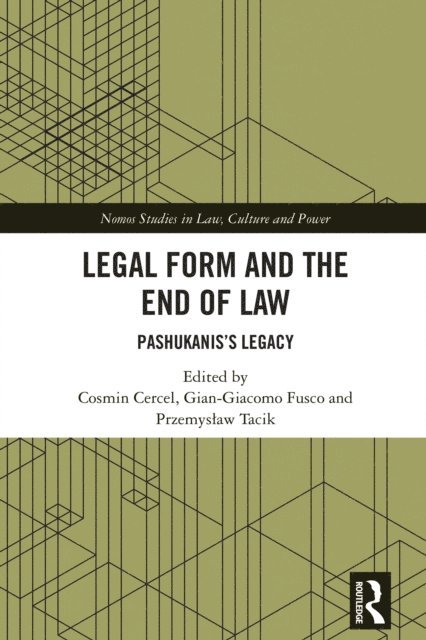
Legal Form and the End of Law
Pashukanis's Legacy
Av Cosmin Cercel, Gian-Giacomo Fusco m. fl.
Inbunden, 2024
2586 kr
Lägg i varukorg
Following the 100th anniversary of Pashukanis’ General Theory of Law and Marxism (1924), this volume aims to breathe new life into the main category of Pashukanian legacy, the concept of legal form. This book offers new, deeper and more general, ways in which the concept of legal form can be used …
Legal Form
Pashukanis and the Marxist Critique of Law
Av Cosmin Cercel, Gian-Giacomo Fusco m. fl.
Häftad, 2026
649 kr
Lägg i varukorg
A century after the publication of Evgeny Pashukanis’ pivotal book General Theory of Law and Marxism, this collection presents a comprehensive account and analysis of his key concept of legal form.Evgeny Pashukanis’ General Theory, born amidst the fervour of the first socialist revolution, remains …
Legal Form and the End of Law
Pashukanis's Legacy
Av Cosmin Cercel, Gian-Giacomo Fusco m. fl.
Häftad, 2026
649 kr
Lägg i varukorg
Following the 100th anniversary of Pashukanis’ General Theory of Law and Marxism (1924), this volume aims to breathe new life into the main category of Pashukanian legacy, the concept of legal form. This book offers new, deeper and more general, ways in which the concept of legal form can be used …
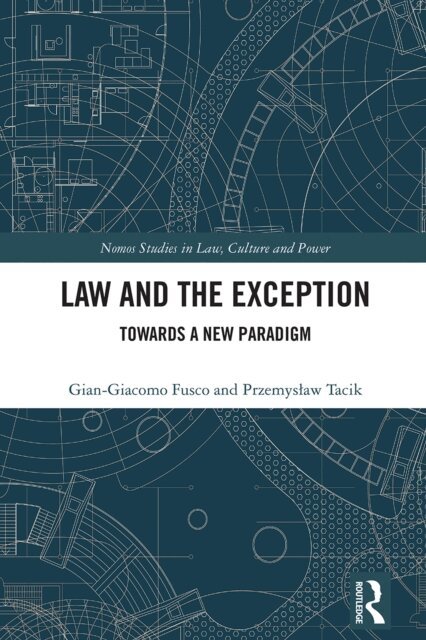
Law and the Exception
Towards a New Paradigm
Av Gian-Giacomo Fusco, Przemysław Tacik
Inbunden, 2025
2512 kr
Lägg i varukorg
This book proposes a paradigm shift in the way that ‘the state of exception’–as it is usually named in legal and political theory–is to be understood. Building on the assumption that the exception is a heuristic idea that is still a relevant category for a critical deconstruction of law, this book …
Legal Form
Pashukanis and the Marxist Critique of Law
Av Przemyslaw Tacik, Gian-Giacomo Fusco m. fl.
E-bok, 2024
765 kr
Lägg i varukorg
A century after the publication of Evgeny Pashukanis’ pivotal book General Theory of Law and Marxism , this collection presents a comprehensive account and analysis of his key concept of legal form. Evgeny Pashukanis’ General Theory , born amidst the fervour of the first socialist revolution, …
Legal Form
Pashukanis and the Marxist Critique of Law
Av Przemyslaw Tacik, Gian-Giacomo Fusco m. fl.
E-bok, 2024
765 kr
Lägg i varukorg
A century after the publication of Evgeny Pashukanis’ pivotal book General Theory of Law and Marxism , this collection presents a comprehensive account and analysis of his key concept of legal form. Evgeny Pashukanis’ General Theory , born amidst the fervour of the first socialist revolution, …
Legal Form and the End of Law
Pashukanis''s Legacy
Av Przemyslaw Tacik, Gian-Giacomo Fusco m. fl.
E-bok, 2024
765 kr
Lägg i varukorg
Following the 100th anniversary of Pashukanis’ General Theory of Law and Marxism (1924), this volume aims to breathe new life into the main category of Pashukanian legacy, the concept of legal form. This book offers new, deeper and more general, ways in which the concept of legal form can be used …
Legal Form and the End of Law
Pashukanis''s Legacy
Av Przemyslaw Tacik, Gian-Giacomo Fusco m. fl.
E-bok, 2024
765 kr
Lägg i varukorg
Following the 100th anniversary of Pashukanis’ General Theory of Law and Marxism (1924), this volume aims to breathe new life into the main category of Pashukanian legacy, the concept of legal form. This book offers new, deeper and more general, ways in which the concept of legal form can be used …
Law and the Exception
Towards a New Paradigm
Av Przemyslaw Tacik, Gian-Giacomo Fusco
E-bok, 2025
765 kr
Lägg i varukorg
This book proposes a paradigm shift in the way that 'the state of exception'-as it is usually named in legal and political theory-is to be understood. Building on the assumption that the exception is a heuristic idea that is still a relevant category for a critical deconstruction of law, this book …
Law and the Exception
Towards a New Paradigm
Av Przemyslaw Tacik, Gian-Giacomo Fusco
E-bok, 2025
765 kr
Lägg i varukorg
This book proposes a paradigm shift in the way that 'the state of exception'-as it is usually named in legal and political theory-is to be understood. Building on the assumption that the exception is a heuristic idea that is still a relevant category for a critical deconstruction of law, this book …
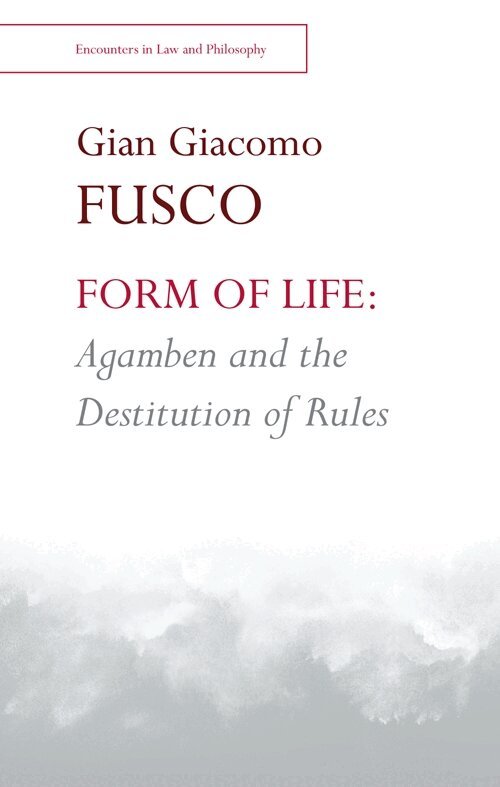
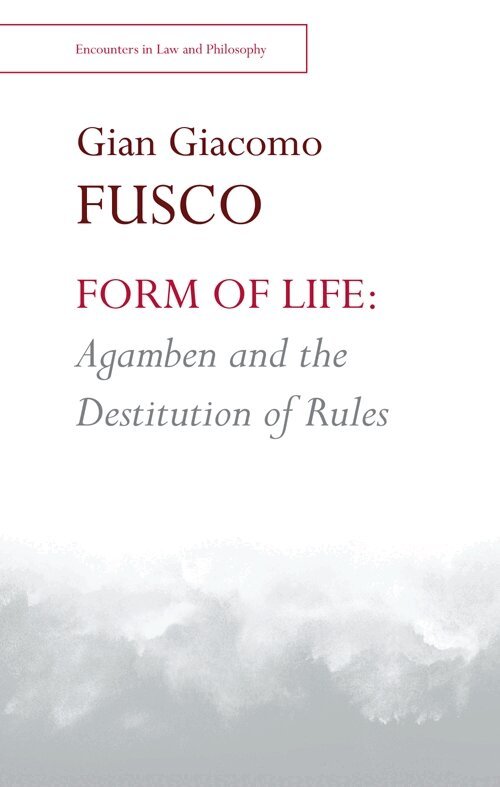
Form of Life: Agamben and the Destitution of Rules
Inbunden, 2022
1168 kr
Lägg i varukorg
A rigorous reading of Agamben's concept of form-of-lifeDiscusses Agamben's political thought and the question of anarchyRe-evaluates Agamben's thought in light of his later works and the recent completion of the Homo Sacer seriesConsiders Agamben's related works on use, praxis, inoperativity, and …
Form of Life: Agamben and the Destitution of Rules
Häftad, 2024
434 kr
Lägg i varukorg
The notion of form-of-life refers to a living dimension that has overthrown the structures of power in which humans are supposedly destined to live, disclosing the possibility of a new understanding of political and legal life. By placing the 'form-of-life' in the context of contemporary …