Przemyslaw Tacik – författare
Visar alla böcker från författaren Przemyslaw Tacik. Handla med fri frakt och snabb leverans.
20 produkter
Law, Populism, and the Political in Central and Eastern Europe
Av Cosmin Cercel, Przemyslaw Tacik m. fl.
E-bok, 2023
765 kr
Lägg i varukorg
This book addresses the variety of right-wing illiberal populism which has emerged in Central and Eastern Europe (CEE). Against the backdrop of weak institutional traditions, frequent and profound transformations, and deep historical traumas affecting the law, politics, economy and society in the …
Law, Populism, and the Political in Central and Eastern Europe
Av Cosmin Cercel, Przemyslaw Tacik m. fl.
E-bok, 2023
765 kr
Lägg i varukorg
This book addresses the variety of right-wing illiberal populism which has emerged in Central and Eastern Europe (CEE). Against the backdrop of weak institutional traditions, frequent and profound transformations, and deep historical traumas affecting the law, politics, economy and society in the …
Law, Populism, and the Political in Central and Eastern Europe
Av Rafał Mańko, Adam Sulikowski m. fl.
Inbunden, 2023
2311 kr
Lägg i varukorg
This book addresses the variety of right-wing illiberal populism which has emerged in Central and Eastern Europe (CEE).Against the backdrop of weak institutional traditions, frequent and profound transformations, and deep historical traumas affecting the law, politics, economy and society in the …
Law, Populism, and the Political in Central and Eastern Europe
Av Rafał Mańko, Adam Sulikowski m. fl.
Häftad, 2025
649 kr
Lägg i varukorg
This book addresses the variety of right-wing illiberal populism which has emerged in Central and Eastern Europe (CEE).Against the backdrop of weak institutional traditions, frequent and profound transformations, and deep historical traumas affecting the law, politics, economy and society in the …
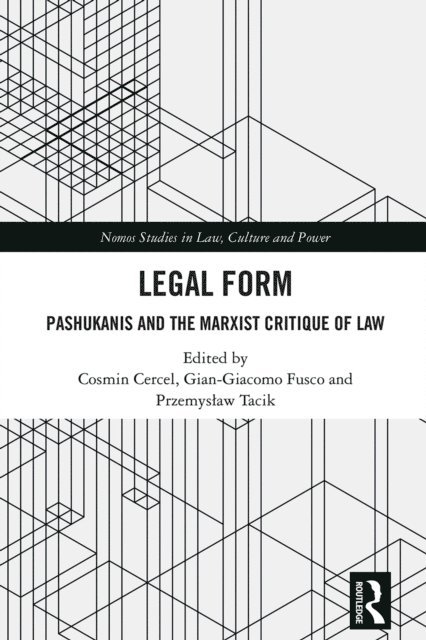
Legal Form
Pashukanis and the Marxist Critique of Law
Av Cosmin Cercel, Gian-Giacomo Fusco m. fl.
Inbunden, 2024
2311 kr
Lägg i varukorg
A century after the publication of Evgeny Pashukanis’ pivotal book General Theory of Law and Marxism, this collection presents a comprehensive account and analysis of his key concept of legal form.Evgeny Pashukanis’ General Theory, born amidst the fervour of the first socialist revolution, remains …
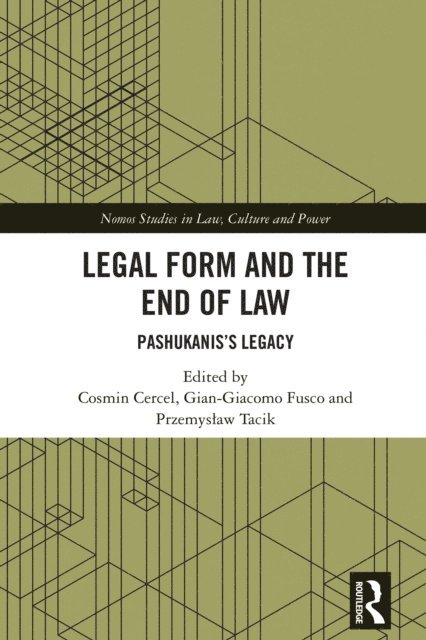
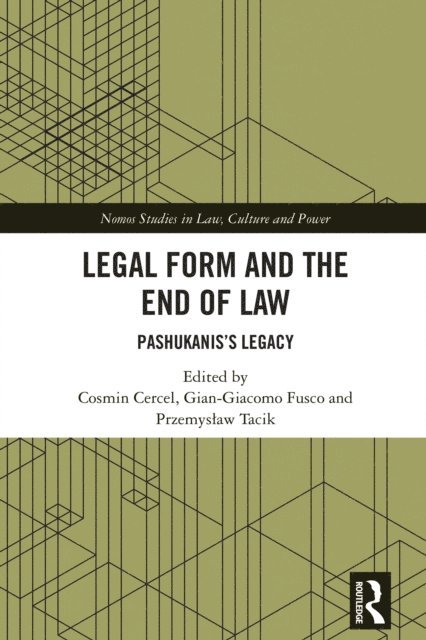
Legal Form and the End of Law
Pashukanis's Legacy
Av Cosmin Cercel, Gian-Giacomo Fusco m. fl.
Inbunden, 2024
2586 kr
Lägg i varukorg
Following the 100th anniversary of Pashukanis’ General Theory of Law and Marxism (1924), this volume aims to breathe new life into the main category of Pashukanian legacy, the concept of legal form. This book offers new, deeper and more general, ways in which the concept of legal form can be used …
Legal Form
Pashukanis and the Marxist Critique of Law
Av Cosmin Cercel, Gian-Giacomo Fusco m. fl.
Häftad, 2026
649 kr
Lägg i varukorg
A century after the publication of Evgeny Pashukanis’ pivotal book General Theory of Law and Marxism, this collection presents a comprehensive account and analysis of his key concept of legal form.Evgeny Pashukanis’ General Theory, born amidst the fervour of the first socialist revolution, remains …
Legal Form and the End of Law
Pashukanis's Legacy
Av Cosmin Cercel, Gian-Giacomo Fusco m. fl.
Häftad, 2026
649 kr
Lägg i varukorg
Following the 100th anniversary of Pashukanis’ General Theory of Law and Marxism (1924), this volume aims to breathe new life into the main category of Pashukanian legacy, the concept of legal form. This book offers new, deeper and more general, ways in which the concept of legal form can be used …
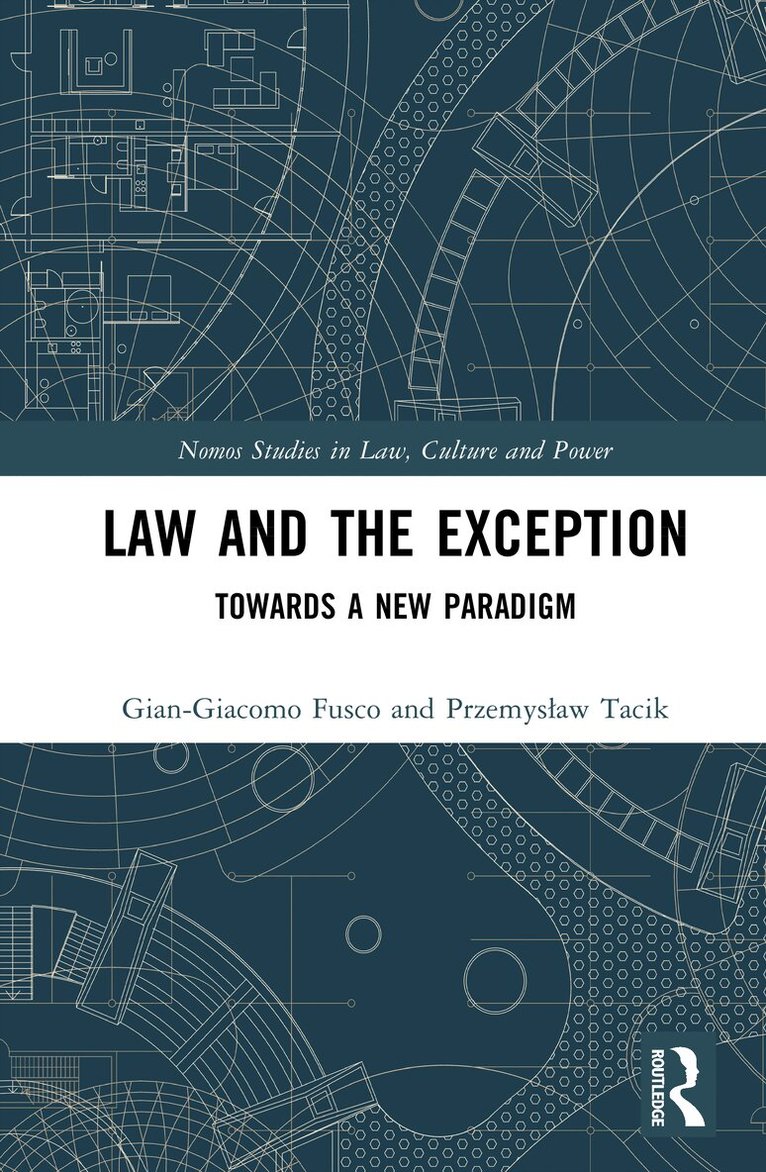
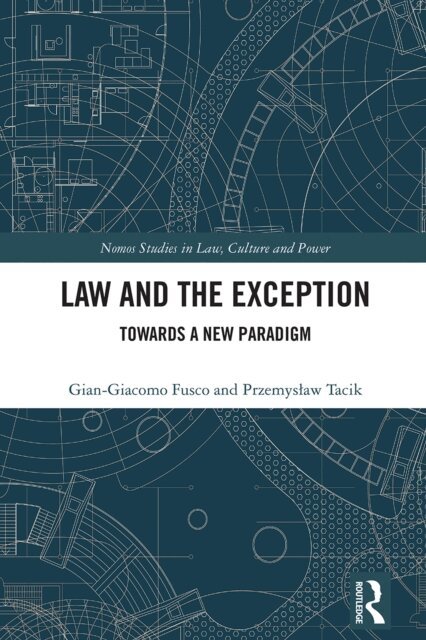
Law and the Exception
Towards a New Paradigm
Av Gian-Giacomo Fusco, Przemysław Tacik
Inbunden, 2025
2512 kr
Lägg i varukorg
This book proposes a paradigm shift in the way that ‘the state of exception’–as it is usually named in legal and political theory–is to be understood. Building on the assumption that the exception is a heuristic idea that is still a relevant category for a critical deconstruction of law, this book …
Legal Form
Pashukanis and the Marxist Critique of Law
Av Przemyslaw Tacik, Gian-Giacomo Fusco m. fl.
E-bok, 2024
765 kr
Lägg i varukorg
A century after the publication of Evgeny Pashukanis’ pivotal book General Theory of Law and Marxism , this collection presents a comprehensive account and analysis of his key concept of legal form. Evgeny Pashukanis’ General Theory , born amidst the fervour of the first socialist revolution, …
Legal Form
Pashukanis and the Marxist Critique of Law
Av Przemyslaw Tacik, Gian-Giacomo Fusco m. fl.
E-bok, 2024
765 kr
Lägg i varukorg
A century after the publication of Evgeny Pashukanis’ pivotal book General Theory of Law and Marxism , this collection presents a comprehensive account and analysis of his key concept of legal form. Evgeny Pashukanis’ General Theory , born amidst the fervour of the first socialist revolution, …
Legal Form and the End of Law
Pashukanis''s Legacy
Av Przemyslaw Tacik, Gian-Giacomo Fusco m. fl.
E-bok, 2024
765 kr
Lägg i varukorg
Following the 100th anniversary of Pashukanis’ General Theory of Law and Marxism (1924), this volume aims to breathe new life into the main category of Pashukanian legacy, the concept of legal form. This book offers new, deeper and more general, ways in which the concept of legal form can be used …
Legal Form and the End of Law
Pashukanis''s Legacy
Av Przemyslaw Tacik, Gian-Giacomo Fusco m. fl.
E-bok, 2024
765 kr
Lägg i varukorg
Following the 100th anniversary of Pashukanis’ General Theory of Law and Marxism (1924), this volume aims to breathe new life into the main category of Pashukanian legacy, the concept of legal form. This book offers new, deeper and more general, ways in which the concept of legal form can be used …
Law and the Exception
Towards a New Paradigm
Av Przemyslaw Tacik, Gian-Giacomo Fusco
E-bok, 2025
765 kr
Lägg i varukorg
This book proposes a paradigm shift in the way that 'the state of exception'-as it is usually named in legal and political theory-is to be understood. Building on the assumption that the exception is a heuristic idea that is still a relevant category for a critical deconstruction of law, this book …
Law and the Exception
Towards a New Paradigm
Av Przemyslaw Tacik, Gian-Giacomo Fusco
E-bok, 2025
765 kr
Lägg i varukorg
This book proposes a paradigm shift in the way that 'the state of exception'-as it is usually named in legal and political theory-is to be understood. Building on the assumption that the exception is a heuristic idea that is still a relevant category for a critical deconstruction of law, this book …
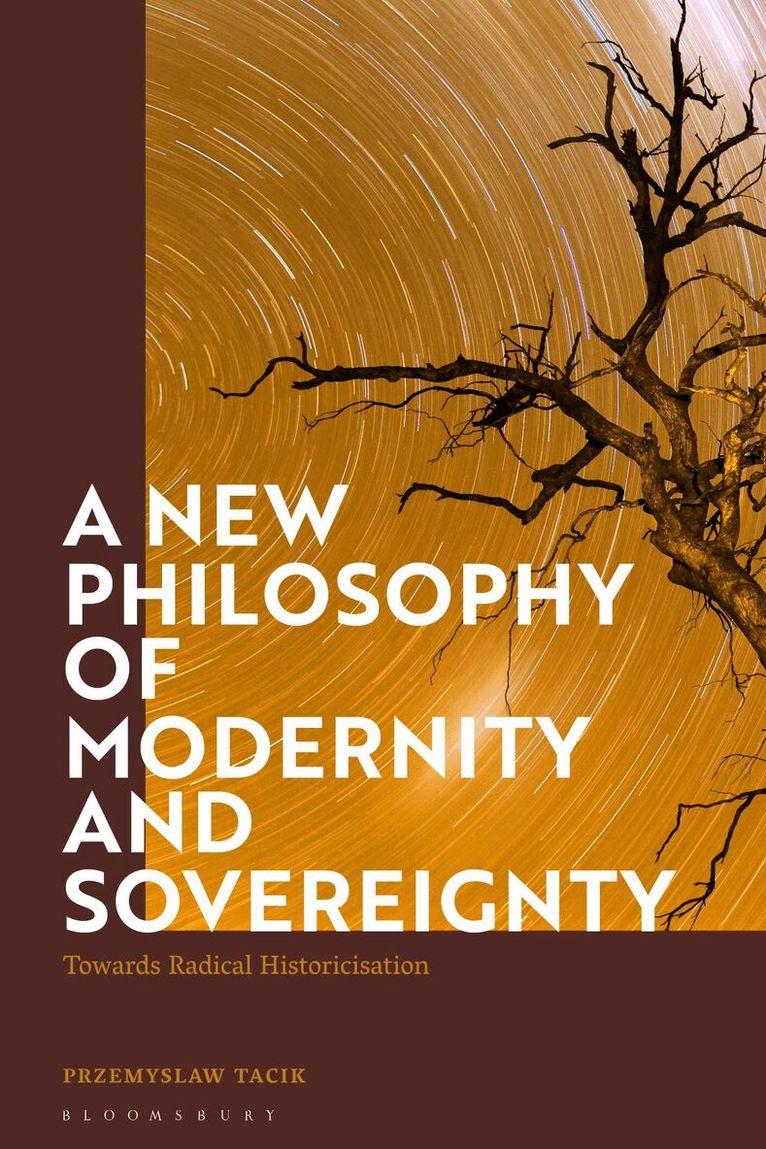
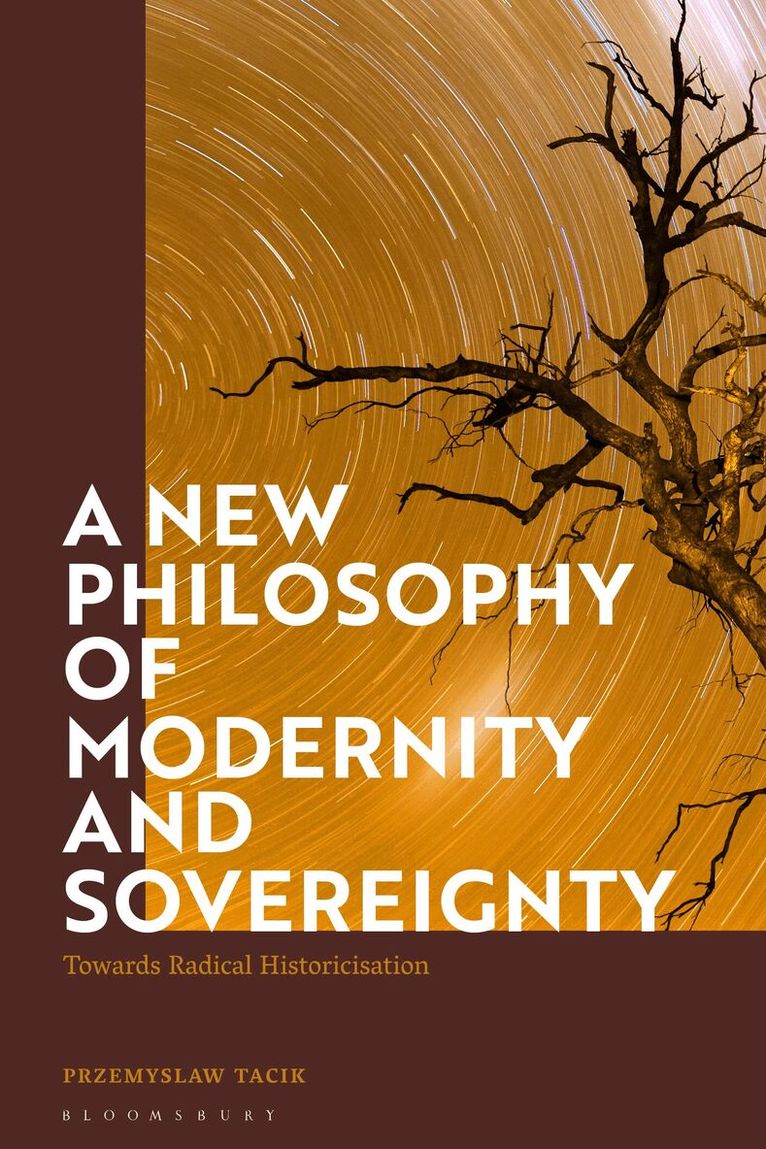
New Philosophy of Modernity and Sovereignty
Towards Radical Historicisation
Inbunden, 2021
1424 kr
Lägg i varukorg
Tackling important philosophical questions on modernity – what it is, where it begins and when it ends – Przemyslaw Tacik challenges the idea that modernity marks a particular epoch, and historicises its conception to offer a radical critique of it. His deconstruction-informed critique collects and …
New Philosophy of Modernity and Sovereignty
Towards Radical Historicisation
E-bok, 2021
468 kr
Lägg i varukorg
Tackling important philosophical questions on modernity – what it is, where it begins and when it ends – Przemyslaw Tacik challenges the idea that modernity marks a particular epoch, and historicises its conception to offer a radical critique of it. His deconstruction-informed critique collects and …
New Philosophy of Modernity and Sovereignty
Towards Radical Historicisation
E-bok, 2021
458 kr
Lägg i varukorg
Tackling important philosophical questions on modernity – what it is, where it begins and when it ends – Przemyslaw Tacik challenges the idea that modernity marks a particular epoch, and historicises its conception to offer a radical critique of it. His deconstruction-informed critique collects and …
New Philosophy of Modernity and Sovereignty
Towards Radical Historicisation
Häftad, 2023
432 kr
Lägg i varukorg
Tackling important philosophical questions on modernity – what it is, where it begins and when it ends – Przemyslaw Tacik challenges the idea that modernity marks a particular epoch, and historicises its conception to offer a radical critique of it. His deconstruction-informed critique collects and …
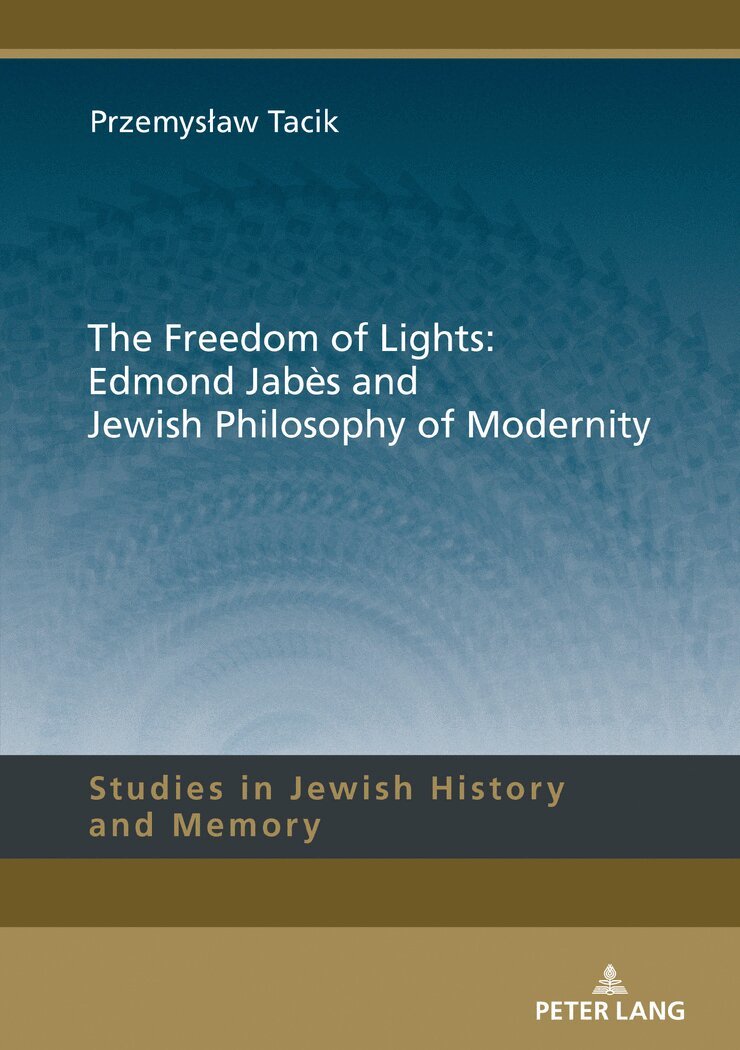
Freedom of Lights: Edmond Jabès and Jewish Philosophy of Modernity
Av Przemysław Tacik, Lucyna Aleksandrovicz-Pedich
Inbunden, 2019
790 kr
Lägg i varukorg
Edmond Jabès was one of the most intriguing Jewish thinkers of the 20th century – a poet for the public and a Kabbalist for those who read his work more closely. This book turns his writings into a ground-breaking philosophical achievement: thinking which is manifestly indebted to the Kabbalah, but …