Gianluca Mori – författare
Visar alla böcker från författaren Gianluca Mori. Handla med fri frakt och snabb leverans.
3 produkter
3 produkter
1 558 kr
Skickas inom 7-10 vardagar
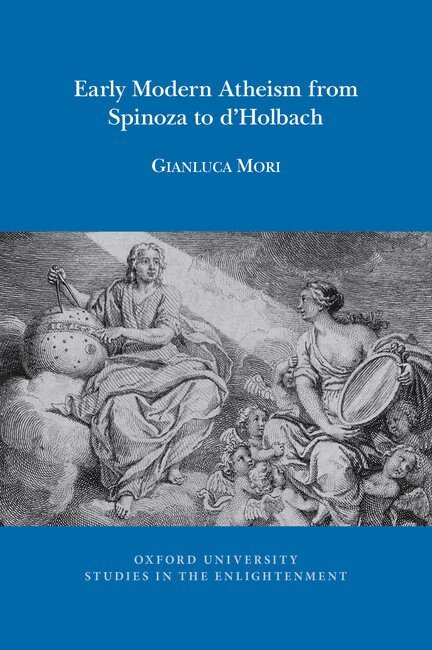
Examining the birth and development of early modern atheism from Spinoza’s Tractatus theologico-politicus (1670) to d’Holbach’s Système de la nature (1770), this study considers Spinoza, Hobbes, Cudworth, Bayle, Meslier, Boulainviller, Du Marsais, Fréret, Toland, Collins, Hume, Diderot, Voltaire, and d’Holbach and positions them in a general interpretive scheme, based on the idea that early modern atheism is itself an unwanted fruit of early modern metaphysics and theology.Breaking with a long-standing tradition, Descartes claimed that it was possible to have a "clear and distinct" idea of God, indeed that the idea of God was the "clearest and most distinct" of all ideas accessible to the human mind. Humans could thus obtain a scientific knowledge of God’s nature and attributes. But as soon as God became an object of science, He also became the object of a thoroughgoing scientific analysis and criticism.The effortlessness with which early modern atheists managed to turn round their adversaries’ arguments to their own favour is a sign that the new doctrines of God which emerged in the seventeenth-century, each based in its own way on principles and dogmas related to the new science of nature, were plunging headfirst towards the precipice under their own steam.
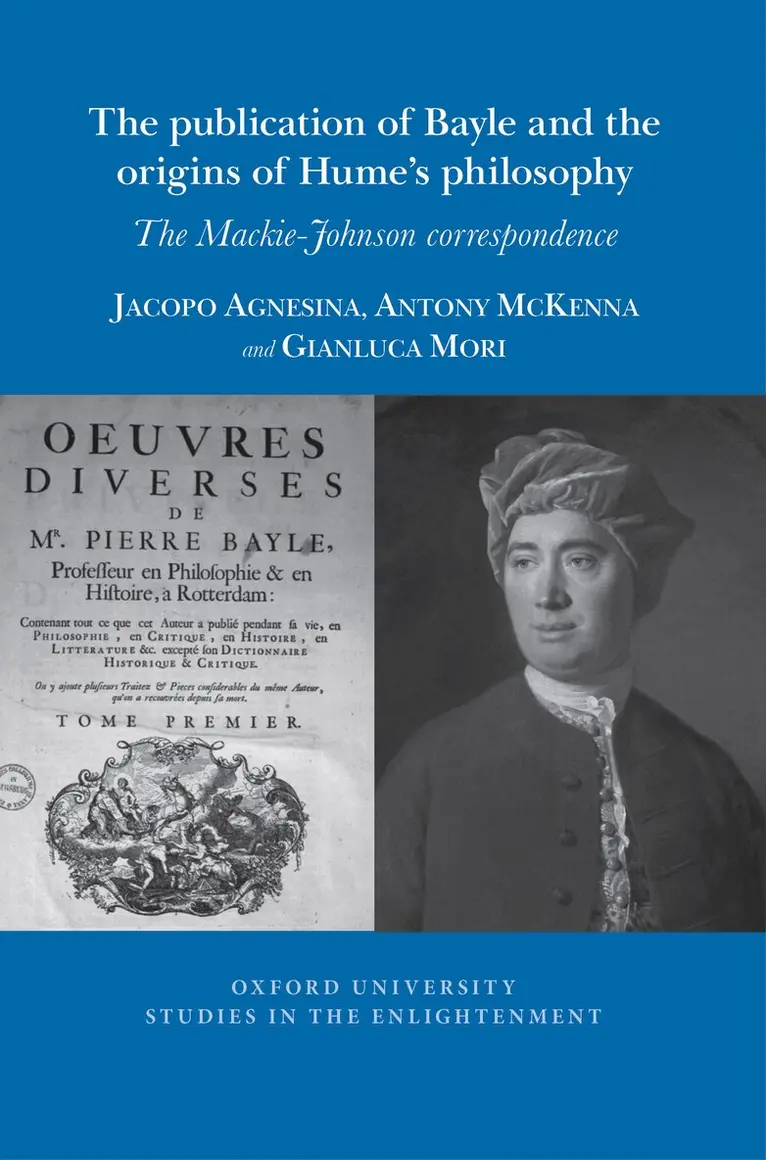
The publication of Bayle and the origins of Hume's philosophy
The Mackie-Johnson correspondence
Häftad, Engelska, 2026
1 610 kr
Kommande
This volume explores the intellectual, cultural, and commercial intersections between Scotland and the Netherlands during the early Enlightenment, centring on the figure of Charles Mackie (1688-1770), first professor of Universal History at the University of Edinburgh. Drawing on a rich selection of primary sources – including unpublished correspondence between Mackie and the expatriate bookseller-publisher Thomas Johnson – Jacopo Agnesina reconstructs a vibrant network of scholarly exchange and transnational book trade that shaped the Scottish Enlightenment.The book situates Mackie within the broader “Republic of Letters”, examining his education in Holland, his ties to Dutch and Scottish booksellers, and his role in disseminating radical Enlightenment literature, especially the works of John Toland, Anthony Collins and Pierre Bayle. A detailed biographical account is given of both Mackie and Johnson, highlighting their respective careers, their collaboration in circumventing censorship and copyright laws, and their joint efforts to introduce continental thought into Scotland. Through meticulous archival research, the study sheds light on Mackie’s influence on Scottish intellectual life, his possible early connections to David Hume, and his participation in key Enlightenment institutions such as the Rankenian Club and the Edinburgh Philosophical Society. The volume includes a critical edition of twenty-one letters, primarily from Johnson to Mackie – along with related correspondence by Des Maizeaux – concerning the publication of Bayle’s Œuvres diverses.This work offers valuable insights into early modern intellectual history, the material culture of books, and the channels through which Enlightenment ideas crossed national and linguistic boundaries.
1 872 kr
Skickas inom 3-6 vardagar