Gilbert Sandler - Böcker
Visar alla böcker från författaren Gilbert Sandler. Handla med fri frakt och snabb leverans.
4 produkter
4 produkter
412 kr
Skickas inom 11-20 vardagar
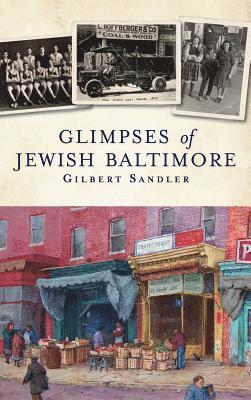
From East Baltimore to Forest Park to Park Heights, from Nates and Leon's deli to Hutzler's department store, Jewish Baltimore tells stories of neighborhoods, people, and landmarks that have been important to Baltimore's Jewish experience. Gilbert Sandler, whose popular columns have appeared in Baltimore's Jewish Times and the Baltimore Sun, offers a wide-ranging history of the region's Jewish community from the 1850s to the present, covering both German Jewish and Russian Jewish communities. Sandler's archival research uncovers new details about important people and events, but the heart of his book lies in its anecdotes and quotations-the reminiscences of those who recall the rich tapestry of days gone by. More than a hundred nostalgic photographs help to bring the memories to life. Many of Sandler's essays invoke famous names in Baltimore history-names like Jack Pollack, the ex-boxer turned politician; Joseph Meyerhoff, who gave his city a symphony hall; Samuel Hecht, founder of the last surviving local department store chain. But just as often, these essays remind us of unsung heros: rabbis, merchants, teachers, and camp counselors.Sandler tells many inspirational stories, including how one young woman, escaping from Germany in 1939 on a ship headed to Bolivia, seized an opportunity when she learned the ship would stop in Baltimore. She sent a cable to her boyfriend in Richmond, Virginia, telling him to meet her at the dock, and the two were married onboard-which eventually allowed her to enter the United States. Sandler always uncovers the "human interest" in his stories. His account of the S.S. President Warfield-refitted as the Exodus to carry food, supplies, and 4,500 European refugees to Palestine in 1947-contains personal recollections from one of the local businessmen who played a key role in the secret operation, and even a statement from someone who, as a young workman, helped to load the ship. Jewish Baltimore also highlights fondly remembered institutions. Hutzler's s department store, for example, was a common meeting place for weekend shoppers; a notebook in Hutzler's balcony allowed friends to trade messages and track each other down in the large store.Hutzler's celebrated return policy stated that "anything could be returned within a reasonable amount of time"-with the word reasonable conveniently left to the customer's discretion. There was also Hendler's ice cream, whose advertisements featured a kewpie doll, proclaiming "Take home a brick!" When a competing chain bragged about producing twenty-eight flavors, Albert Hendler counted fifty flavors in his father's stock-including licorice, eggnog, and tomato aspic (the last flavor produced as a speciality for the Southern Hotel). Focusing on religious education, Sandler tells of the Talmud Torahs, the area's first highly visible, community-wide system committed to providing a Jewish education-two hours of instruction daily, in addition to a Jewish student's other lessons. The Talmud Torahs, dating from 1889, laid the foundation for later Jewish schools, such as the Isaac Davidson Hebrew School. Sandler also visits P.S. 49, a public school remembered for its high concentration of Jewish students. For recreation, the Monument Street "Y" was a popular site, providing a health club, game rooms, six-lane swimming pool, soda fountain, and library.In his essays on summer vacations, Sandler discusses family visits to Eastern Shore beaches and describes the summer camps that were frequented by Jewish children. Sandler has a knack for getting the people he interviews to recall every detail, from the names of favorite teachers or rabbis down to the price of a movie at the Avalon theater and which streetcar line they used to get there. Baltimore has a strong and historically important Jewish presence, and this book engagingly tells the story of that community.
356 kr
Tillfälligt slut
Before Harborplace and the Convention Center, Oriole Park at Camden Yards and the Ravens, shopping malls and multiplex movie theaters, Baltimore was a very different city. Most Baltimoreans would agree that, until recently, living here was like living in a small town. For more than 25 years, Gilbert Sandler chronicled this bygone life of streetcars and cinema palaces in his Evening Sun (and later Sun) column, "Baltimore Glimpses." Now collected, edited, and expanded in Small Town Baltimore, Sandler's delightful sketches of life in Baltimore from the 1920s through the 1970s take readers back to a time when flagpole-sitting was all the rage, when guests at high society weddings and cotillions were fed by the prominent African American business Hughes Catering and chef David Bruce's famous chicken croquettes, and when the salt rubdown at Rowland's Turkish Bath could take all one's troubles away. This "album of memories" introduces the reader to the people and places-neighborhoods, restaurants, department stores, parks, hotels, night clubs, racetracks, and theaters-that once put the charm in Charm City.Sandler recalls the events that shaped life here, from strikes and demonstrations to baseball games and parades. Through interviews and reminiscences, Sandler catches a double feature at the Valencia; visits Howard Street's Arabian Tent Club to listen to Cab Calloway; attends the funeral of Chick Webb-"the greatest jazz drummer in the world"-along with such jazz luminaries as Duke Ellington, Gene Krupa, and Ella Fitzgerald; listens in on Arthur Godfrey's audition in the studios of WFBR; eats knockwurst at Schellhase's, steamed crabs at Bankert's, and Cantonese cuisine at Jimmy Wu's; takes the Chesapeake Restaurant up on its offer to "Eat our steak with a fork, else tear up your check and walk out"; and rides the Charles Street double-decker bus with Ms. Reuben Ross Holloway, who fought to make "The Star-Spangled Banner" our national anthem. Small Town Baltimore shows us how far Baltimore has come and what's been lost in the process.
395 kr
Skickas inom 7-10 vardagar
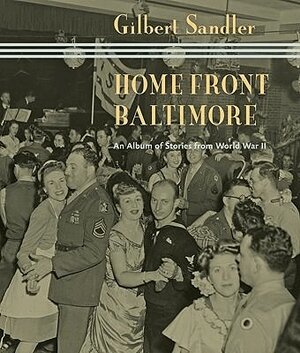
In July 1942, American prisoners of war were performing Julius Caesar on a jury-rigged stage in Burma at about the same time that Tommy Dorsey and his famous orchestra played the Hippodrome Theatre on Eutaw Street. In June 1944, more than 3,000 U.S. Marines died capturing the Mariana Islands in the western Pacific Ocean while fans back in Baltimore were cheering the International League Orioles in their successful bid for a championship. These are just two of the startling juxtapositions that Gilbert Sandler writes about in his account of life on the home front in Baltimore during the Second World War. While poring through the wartime archives of local newspapers, Sandler was struck by the contrast between what was happening over there, in the war, and over here, back home in Baltimore. Some of these contrasts seem ironic; some provide sobering perspective. Together they make up an album of vivid and engaging stories, many told by people who lived through them. Home Front Baltimore struggles, along with the reader, to make sense of these two worlds, thousands of miles apart, and gives readers a deeper understanding of what the city was really like during the war.Rarely seen photographs from the Baltimore Sun, the News-American, and the Afro-American bring to life the rich, personal anecdotes of wartime Baltimoreans and transport readers back to an indelible era of Baltimore history.
352 kr
Skickas inom 3-6 vardagar