Gillian Cookson - Böcker
Visar alla böcker från författaren Gillian Cookson. Handla med fri frakt och snabb leverans.
13 produkter
13 produkter
189 kr
Tillfälligt slut
461 kr
Skickas inom 5-8 vardagar
350 kr
Skickas inom 5-8 vardagar
447 kr
Skickas inom 5-8 vardagar
336 kr
Skickas inom 5-8 vardagar
Victorian Scientist and Engineer
Fleeming Jenkin and the Birth of Electrical Engineering
Häftad, Engelska, 2019
482 kr
Skickas inom 10-15 vardagar
This title was first published in 2000: In a life of only 52 years, Fleeming Jenkin established his reputation as a pioneer in the new world of electrical engineering, known for his work on undersea telegraphs and later on the electrical transportation system known as telpherage. Equally at ease in the realms of theory and practice, from 1850 until his death in 1885 Jenkin engaged in every field of Victorian engineering. As a young adult he worked on intercontinental submarine telegraphy, the cutting edge technology of its day which was inextricably bound to the new science of electricity. Jenkin was both a scientist and an engineer, a prototype of the modern experimental research engineer. He was also a distinguished academic, professor of engineering in the University of Edinburgh, admired as an inspired and innovative teacher, and for his interest in the philosophical tenets underpinning his subject. Yet in spite of his influence as an early electrical engineer and his other intellectual achievements, despite the celebrity of his associates - Robert Louis Stevenson, Mrs Gaskell and leading engineers of the day were among his close friends - and the way that submarine telegraphs seized the Victorian popular imagination, Jenkin himself has remained an obscure figure. He deserves to be better known. The story of Jenkin is of a life lived to the full. It illuminates many aspects of Victorian intellectual society, and of the organisation of science and engineering in his time. The central purpose of this biography is to show Jenkin’s achievements in engineering and in other fields, and to judge his significance in these diverse activities.
Victorian Scientist and Engineer
Fleeming Jenkin and the Birth of Electrical Engineering
Inbunden, Engelska, 2017
1 179 kr
Skickas inom 10-15 vardagar
This title was first published in 2000: In a life of only 52 years, Fleeming Jenkin established his reputation as a pioneer in the new world of electrical engineering, known for his work on undersea telegraphs and later on the electrical transportation system known as telpherage. Equally at ease in the realms of theory and practice, from 1850 until his death in 1885 Jenkin engaged in every field of Victorian engineering. As a young adult he worked on intercontinental submarine telegraphy, the cutting edge technology of its day which was inextricably bound to the new science of electricity. Jenkin was both a scientist and an engineer, a prototype of the modern experimental research engineer. He was also a distinguished academic, professor of engineering in the University of Edinburgh, admired as an inspired and innovative teacher, and for his interest in the philosophical tenets underpinning his subject. Yet in spite of his influence as an early electrical engineer and his other intellectual achievements, despite the celebrity of his associates - Robert Louis Stevenson, Mrs Gaskell and leading engineers of the day were among his close friends - and the way that submarine telegraphs seized the Victorian popular imagination, Jenkin himself has remained an obscure figure. He deserves to be better known. The story of Jenkin is of a life lived to the full. It illuminates many aspects of Victorian intellectual society, and of the organisation of science and engineering in his time. The central purpose of this biography is to show Jenkin’s achievements in engineering and in other fields, and to judge his significance in these diverse activities.
Del 12 - People, Markets, Goods: Economies and Societies in History
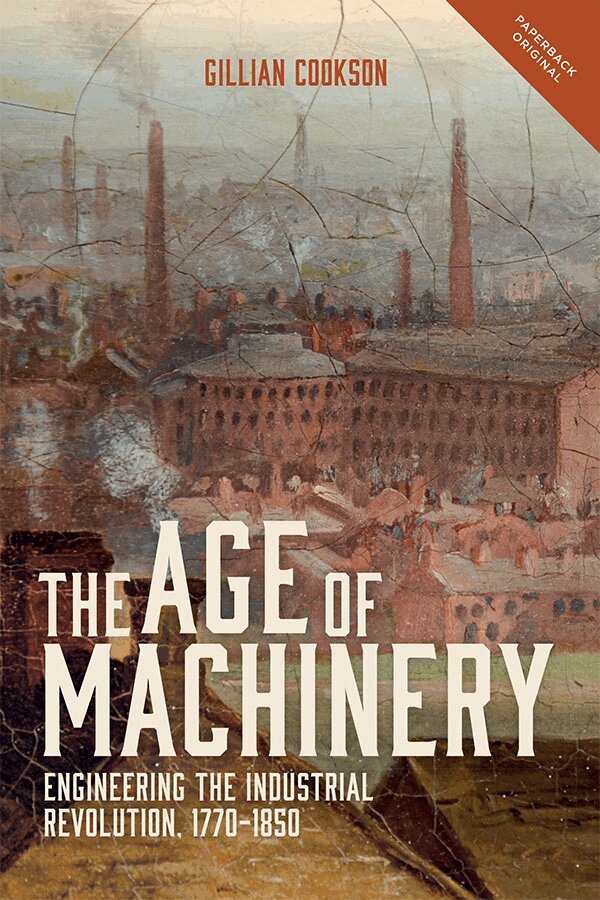
Age of Machinery
Engineering the Industrial Revolution, 1770-1850
Häftad, Engelska, 2018
330 kr
Skickas
An engagingly written account of textile engineering in its key northern centres, rich with historical narrative and analysis.The engineers who built the first generations of modern textile machines, between 1770 and 1850, pushed at the boundaries of possibility. This book investigates these pioneering machine-makers, almost all working within textile communities in northern England, and the industry they created. It probes their origins and skills, the sources of their inspiration and impetus, and how it was possible to develop a high-tech, factory-centred, world-leading marketin textile machinery virtually from scratch. The story of textile engineering defies classical assumptions about the driving forces behind the Industrial Revolution. The circumstances of its birth, and the personal affiliationsat work during periods of exceptional creativity, suggest that the potential to accelerate economic growth could be found within social assets and craft skills. Appreciating textile engineering within its own time and context challenges views inherited from Victorian thinkers, who tended to ascribe to it features of the fully fledged industry they saw before them. The Age of Machinery is an engagingly written account of the trade in its key northern centres, devoid of jargon and yet tightly argued, equally rich with historical narrative and analysis. It will be invaluable not only to students and scholars of British economic history and the Industrial Revolution but also tosocial scientists looking at human agency and its contribution to economic growth and innovation. GILLIAN COOKSON holds a DPhil in economic history and has been employed since 1995 in academic research and consultancy,including as county editor, Victoria County History of Durham.
344 kr
Skickas inom 7-10 vardagar
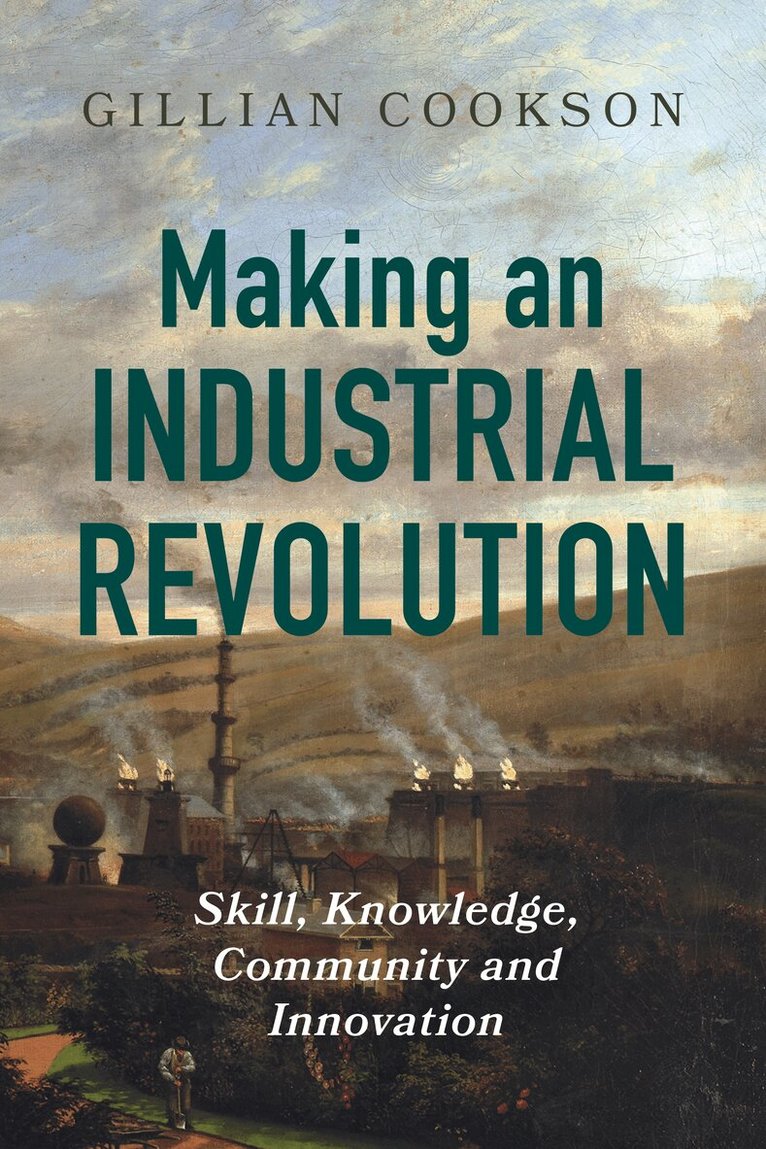
A new look at Britain's industrial revolution showing how communities of shared skill, knowledge and experience drove industrial innovation.Making an Industrial Revolution presents a fresh perspective on British industrialization. Advances in technology, commerce and science played their part, but - as this book argues - above all it was communities of shared skill, knowledge and experience which drove industrial innovation in the eighteenth century.Connections and relationships in key sectors - iron, textiles and engineering - produced transformative forces that revolutionized industrial life in Britain. Including new insights into Scotland's unique contribution, the book explores industrial change across the country, highlighting the significance of inter-regional and overseas migration and connection. It considers how social status enabled or limited individuals. It questions how exactly eighteenth-century science linked with emerging industrial technologies; and the importance of science, relative to skills and experience, in shaping innovation.
1 192 kr
Skickas inom 7-10 vardagar
A new look at Britain's industrial revolution showing how communities of shared skill, knowledge and experience drove industrial innovation.Making an Industrial Revolution presents a fresh perspective on British industrialization. Advances in technology, commerce and science played their part, but - as this book argues - above all it was communities of shared skill, knowledge and experience which drove industrial innovation in the eighteenth century.Connections and relationships in key sectors - iron, textiles and engineering - produced transformative forces that revolutionized industrial life in Britain. Including new insights into Scotland's unique contribution, the book explores industrial change across the country, highlighting the significance of inter-regional and overseas migration and connection. It considers how social status enabled or limited individuals. It questions how exactly eighteenth-century science linked with emerging industrial technologies; and the importance of science, relative to skills and experience, in shaping innovation.
319 kr
Skickas inom 7-10 vardagar
Darlington from Anglo-Saxon settlement to thriving town, via the middle ages and the coming of the railway.It is exactly a thousand years since Darlington first appeared in written records. During the following millennium, the small Anglo-Saxon settlement grew into today's thriving town, its history now generally linked in the public mind with entrepreneurial Quakers and the birth of railways. But as this book shows, Darlington's history encompasses many more diverse aspects in the change from medieval village to modern town. Through a survey of its physical development, the book describes how the town flourished in the middle ages; was largely destroyed by fire in 1585; and grew again in the seventeenth and eighteenth centuries, before the coming of the railway in the mid-1800s reinforced its prosperity. Its story is taken up to the present day, showing how Darlington is characterised by residential suburbs, with a town centre where Victorian and eighteenth-century buildings populate the original medieval streets. Dr GILL COOKSON is the County Editor for the Victoria County History of Durham.
1 192 kr
Skickas inom 7-10 vardagar
Tracing the history of Darlington from its beginnings as a small Anglo-Saxon settlement right up to the present, this volume marks the rebirth of the Victoria County History of Durham.This latest volume in the Victoria Country History of Durham (the first for over eighty years) presents a study of the township of Darlington, part of the parish of the same name. It traces the history of Darlington from the earliest times: a small Anglo-Saxon settlement becoming a flourishing bishop's borough in the middle ages; its growth as an important staging post on the Great North Road during the seventeenth and eighteenth centuries; and the town'sprosperity during the nineteenth century, reinforced by its situation on the railway network. The story is taken up to the present time, with accounts of Darlington's social, political, topographical and economic history. The latter includes thorough accounts of major industries, including iron and engineering, leather, and the little-known but highly significant worsted and linen manufacturing industries.GILLIAN COOKSON is County Editor, VictoriaCounty History of Durham.
1 192 kr
Skickas inom 7-10 vardagar
Full and authoritative history of Sunderland, from its origins to the present day.Famed across Europe during Bede's time and the heyday of Wearmouth monastery, Sunderland found a less celebrated renown in the twentieth century with the distress of its heavy industries between the wars, and their final extinction in the 1980s. Between those very contrasting eras, its story is one of re-invention and of a growing industrial and commercial might. The coal trade transformed the town during the seventeenth and eighteenth centuries; shipbuilding came to the fore in the nineteenth, and Wearside became the nation's, and the world's, greatest shipbuilder. Though it lacked formal local government before 1835, this was a wealthy and relatively sophisticated town, with a great and spectacular early iron bridge (1796).This volume covers the history of Sunderland from the earliest times and into the twenty-first century, including its landscape and buildings, government, trade and industry, politics and social institutions.