Gilya Gerda Schmidt - Böcker
Visar alla böcker från författaren Gilya Gerda Schmidt. Handla med fri frakt och snabb leverans.
3 produkter
3 produkter
319 kr
Skickas inom 7-10 vardagar
822 kr
Skickas inom 7-10 vardagar
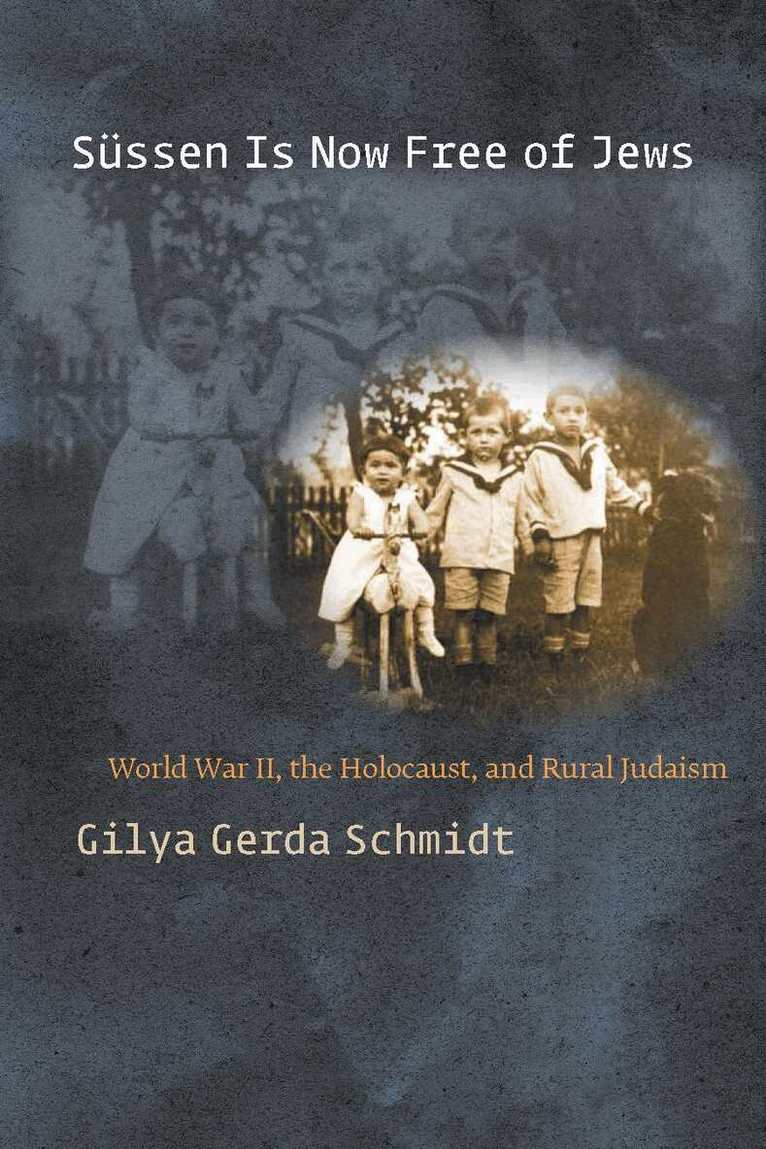
Süssen Is Now Free of Jews offers a close look at the legacy of a few Jewish families from Süssen—a village in the District of Göppingen, which is located in the state of Baden Württemberg in southern Germany. The author, Gilya Gerda Schmidt, looks at this rural region through the lens of two Jewish families—the Langs and the Ottenheimers—who settled there in the early twentieth century. As a child, she shared with the Langs the same living space for just a few months. She remembers her mother's telling her of the Jews who lived in Süssen until the Holocaust. More than thirty years later, in a used bookstore in Knoxville, Tennessee, the author accidentally found documentation verifying the Jewish presence in a book about the surviving Jews of Württemberg. In it, she found confirmation that there had been Jews living in Süssen until the Holocaust. For the first time, she had the proof she needed to look into the reality behind this lingering mystery. Here began her detective-like journey to find out what happened to the Jews of Süssen.A decade of research into local and regional archives ensued, and this very penetrating study is the result. In it, the author attempts to shed light on not just the original question of what happened to the two families during the Holocaust but also on a host of other questions: What was it like to be Jewish in rural southern Germany a century ago? What were the Jewish traditions of this region? What were the relations between Jews and Christians before the Holocaust? And where did those family members who were able to escape or who survived the concentration camps go when they left Süssen or Göppingen? Few witnesses came forward, yet the documents in the archives spoke volumes. This micro-history records the not-so-romantic journey of two Jewish families who lived in the Fils Valley. The study also addresses issues of being an American prisoner of war; of resuming life after the Holocaust; of the bureaucratic nightmare of requisitions, restitution, and reparations; and of life in America.This unique book will be of interest to a general readership and is an important book for scholars in German and Holocaust studies.
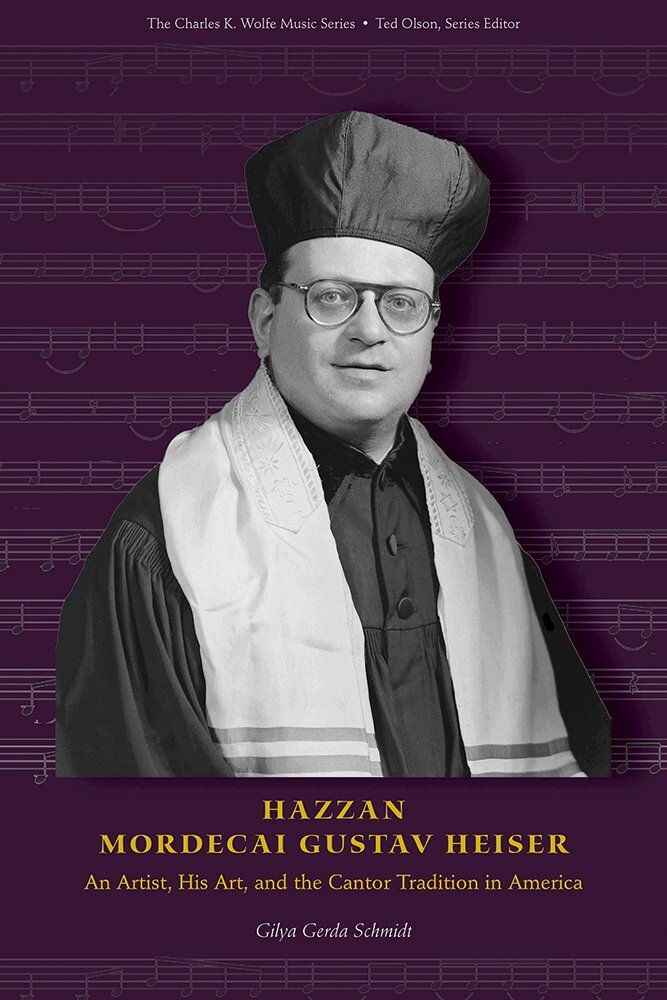
Hazzan Mordecai Gustav Heiser
An Artist, His Art, and the Cantor Tradition in America
Inbunden, Engelska, 2024
518 kr
Skickas inom 10-15 vardagar
When Gilya Gerda Schmidt met him in 1986, Cantor Heiser had spent forty-six of his eighty-one years as a US citizen and was well-acquainted with mourning. Heiser had assumed the cantorate at Congregation B’nai Israel in the East End of Pittsburgh, Pennsylvania, in 1942. A master of the cantor’s art, he was renowned for his style, elegant choir and service arrangements, and rich, dolesome voice, which seemed to pass effortlessly into hearers’ hearts.But this book is more than a memorial to Heiser. Schmidt melds decades of archival research, conservation efforts, family interviews, and trips to Jerusalem and Berlin into a critical reconstruction of the life and vision of Hazzan Mordecai Gustav Heiser in the multiple contexts that shaped him. Coming of age in Berlin in the afterglow of the Second German Empire meant that young Gustav had tasted European Jewish culture in a rare state of refinement and modernity. But by January 30, 1940, when he reached New York with his wife, Elly, and two-and-a-half-year-old daughter, Judith, Cantor Heiser had lost nearly all of his living family relations to the extermination programs of the German Reich, after narrowly surviving a brief incarceration at Sachsenhausen.While Cantor Heiser’s art was steeped in nineteenth-century tradition, Schmidt contends that Heiser’s music was a powerful affirmation of Jewish life in the twentieth century. In a final chapter, Schmidt describes his influence on the American cantorate and American culture and society.