Gina, Caison - Böcker
Visar alla böcker från författaren Gina, Caison. Handla med fri frakt och snabb leverans.
8 produkter
8 produkter
967 kr
Skickas inom 10-15 vardagar
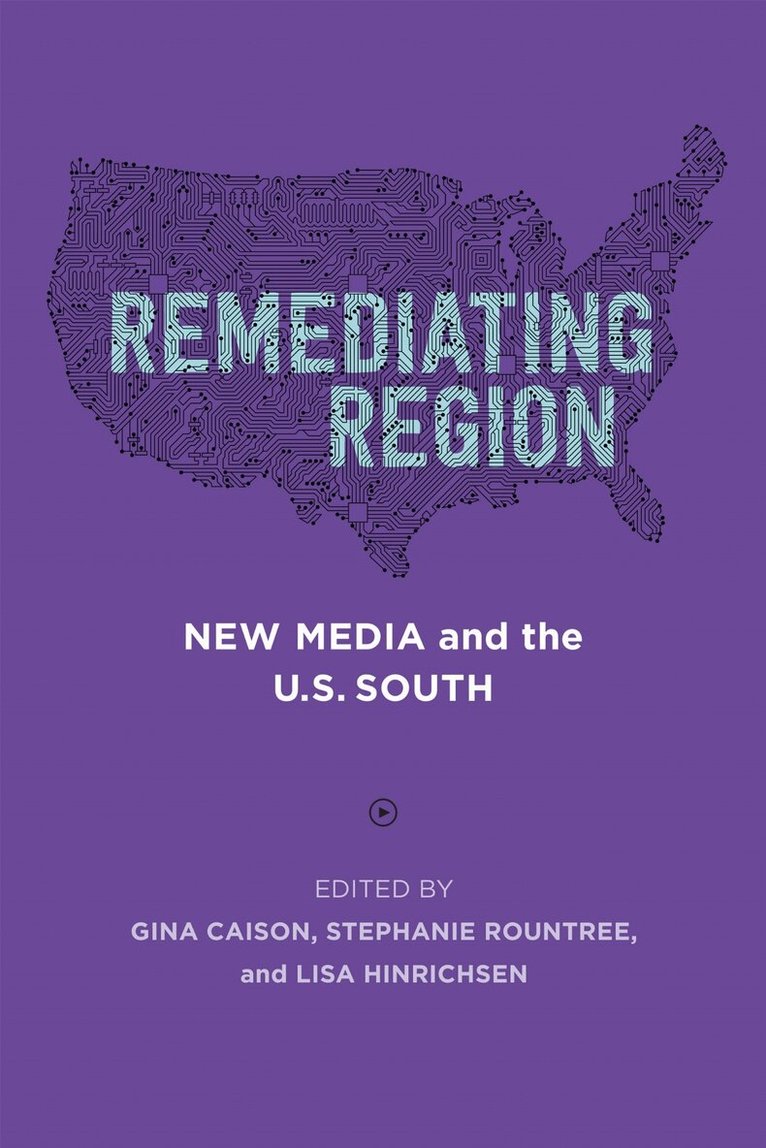
Rather than a media history of the region or a history of southern media, Remediating Region: New Media and the U.S. South formulates a critical methodology for studying the continuous reinventions of regional space across media platforms. This innovative collection demonstrates that structures of media undergird American regionalism through the representation of a given geography's peoples, places, and ideologies. It also outlines how the region answers back to the national media by circulating ever-shifting ideas of place via new platforms that allow for self-representation outside previously sanctioned media forms.Remediating Region recognizes that all media was once new media. In examining how changes in information and media modify concepts of region, it both articulates the virtual realities of the twenty-first-century U.S. South and historicizes the impact of "new" media on a region that has long been mediated. Eleven essays examine media moments ranging from the nineteenth century to the present day, among them Frederick Douglass's utilization of early photography, video game representations of a late capitalist landscape, rural queer communities' engagement with social media platforms, and contemporary technologies focused on revitalizing Indigenous cultural practices.Interdisciplinary in scope and execution, Remediating Region argues that on an increasingly networked planet, concerns over the mediated region continue to inform how audiences and participants understand their entrée into a global world through local space.
420 kr
Skickas inom 10-15 vardagar
Rather than a media history of the region or a history of southern media, Remediating Region: New Media and the U.S. South formulates a critical methodology for studying the continuous reinventions of regional space across media platforms. This innovative collection demonstrates that structures of media undergird American regionalism through the representation of a given geography's peoples, places, and ideologies. It also outlines how the region answers back to the national media by circulating ever-shifting ideas of place via new platforms that allow for self-representation outside previously sanctioned media forms.Remediating Region recognizes that all media was once new media. In examining how changes in information and media modify concepts of region, it both articulates the virtual realities of the twenty-first-century U.S. South and historicizes the impact of "new" media on a region that has long been mediated. Eleven essays examine media moments ranging from the nineteenth century to the present day, among them Frederick Douglass's utilization of early photography, video game representations of a late capitalist landscape, rural queer communities' engagement with social media platforms, and contemporary technologies focused on revitalizing Indigenous cultural practices.Interdisciplinary in scope and execution, Remediating Region argues that on an increasingly networked planet, concerns over the mediated region continue to inform how audiences and participants understand their entrée into a global world through local space.
1 130 kr
Kommande
Grounded in critical theory, southern studies, archival methodologies, and anticolonial thought, Record, Document, Archive illuminates how the U.S. South is made knowable through the acts, objects, and systems that produce records, documents, and archives. Rather than treating "the South" as a fixed geography or predetermined object of study, this innovative, forward-thinking collection reframes region as an ontological and epistemological project shaped by—and resistant to—Eurocentric regimes of documentality. Bringing together activists, archivists, and scholars across disciplines, the essays in Record, Document, Archive trace the extent to which documentality has governed life and death in the U.S. South, from Indigenous Removal, enslavement, and Jim Crow to contemporary regimes of immigration enforcement, border policing, and the legal erasure of queer and undocumented lives. "Record" emphasizes embodied, affective, and more-than-human acts of marking experience. "Document" interrogates the pedagogical, legal, and evidentiary force of documentation, highlighting counter-hegemonic methods that unsettle dominant southern narratives. "Archive" addresses curation, access, and governance, advancing liberatory memory work that confronts archival violence and privilege while imagining new possibilities for justice-oriented futures. By attending to the anticipatory acts that precede narrative and law, Record, Document, Archive opens pathways toward "southern elsewheres"—modes of knowing, remembering, and belonging that resist rigid epistemologies and orient scholarship toward liberation.
457 kr
Kommande
Grounded in critical theory, southern studies, archival methodologies, and anticolonial thought, Record, Document, Archive illuminates how the U.S. South is made knowable through the acts, objects, and systems that produce records, documents, and archives. Rather than treating "the South" as a fixed geography or predetermined object of study, this innovative, forward-thinking collection reframes region as an ontological and epistemological project shaped by—and resistant to—Eurocentric regimes of documentality. Bringing together activists, archivists, and scholars across disciplines, the essays in Record, Document, Archive trace the extent to which documentality has governed life and death in the U.S. South, from Indigenous Removal, enslavement, and Jim Crow to contemporary regimes of immigration enforcement, border policing, and the legal erasure of queer and undocumented lives. "Record" emphasizes embodied, affective, and more-than-human acts of marking experience. "Document" interrogates the pedagogical, legal, and evidentiary force of documentation, highlighting counter-hegemonic methods that unsettle dominant southern narratives. "Archive" addresses curation, access, and governance, advancing liberatory memory work that confronts archival violence and privilege while imagining new possibilities for justice-oriented futures. By attending to the anticipatory acts that precede narrative and law, Record, Document, Archive opens pathways toward "southern elsewheres"—modes of knowing, remembering, and belonging that resist rigid epistemologies and orient scholarship toward liberation.
1 015 kr
Skickas inom 3-6 vardagar
Red States uses a regional focus in order to examine the tenets of white southern nativism and Indigenous resistance to colonialism in the U.S. South. Gina Caison argues that popular misconceptions of Native American identity in the U.S. South can be understood by tracing how non-Native audiences in the region came to imagine indigeneity through the presentation of specious histories presented in regional literary texts, and she examines how Indigenous people work against these narratives to maintain sovereign land claims in their home spaces through their own literary and cultural productions. As Caison demonstrates, these conversations in the U.S. South have consequences for how present-day conservative political discourses resonate across the United States.Assembling a newly constituted archive that includes regional theatrical and musical performances, pre-Civil War literatures, and contemporary novels, Caison illuminates the U.S. South’s continued investment in settler colonialism and the continued Indigenous resistance to this paradigm. Ultimately, she concludes that the region is indeed made up of red states, but perhaps not in the way readers initially imagine.
682 kr
Skickas inom 3-6 vardagar
Red States uses a regional focus in order to examine the tenets of white southern nativism and Indigenous resistance to colonialism in the U.S. South. Gina Caison argues that popular misconceptions of Native American identity in the U.S. South can be understood by tracing how non-Native audiences in the region came to imagine indigeneity through the presentation of specious histories presented in regional literary texts, and she examines how Indigenous people work against these narratives to maintain sovereign land claims in their home spaces through their own literary and cultural productions. As Caison demonstrates, these conversations in the U.S. South have consequences for how present-day conservative political discourses resonate across the United States.Assembling a newly constituted archive that includes regional theatrical and musical performances, pre-Civil War literatures, and contemporary novels, Caison illuminates the U.S. South’s continued investment in settler colonialism and the continued Indigenous resistance to this paradigm. Ultimately, she concludes that the region is indeed made up of red states, but perhaps not in the way readers initially imagine.
1 278 kr
Skickas inom 7-10 vardagar
In Erosion, Gina Caison traces how American authors and photographers have grappled with soil erosion as a material reality that shapes narratives of identity, belonging, and environment. Examining canonical American texts and photography, including John Steinbeck's The Grapes of Wrath, Octavia Butler’s Parable series, John Audubon’s Louisiana writings, and Dorothea Lange’s Migrant Mother, Caison shows how concerns over erosion reveal anxieties of disappearance that are based in the legacies of settler colonialism. Soil loss not only occupies a complex metaphorical place in the narrative of American identity; it becomes central to preserving the white settler colonial state through Indigenous dispossession and erasure. At the same time, Caison examines how Indigenous texts and art such as Lynn Riggs's play Green Grow the Lilacs, Karenne Wood’s poetry, and Monique Verdin's photography challenge colonial narratives of the continent by outlining the material stakes of soil loss for their own communities. From California to Oklahoma to North Carolina’s Outer Banks, Caison ultimately demonstrates that concerns over erosion reverberate into issues of climate change, land ownership, Indigenous sovereignty, race, and cultural and national identity.
325 kr
Skickas inom 7-10 vardagar
In Erosion, Gina Caison traces how American authors and photographers have grappled with soil erosion as a material reality that shapes narratives of identity, belonging, and environment. Examining canonical American texts and photography, including John Steinbeck's The Grapes of Wrath, Octavia Butler’s Parable series, John Audubon’s Louisiana writings, and Dorothea Lange’s Migrant Mother, Caison shows how concerns over erosion reveal anxieties of disappearance that are based in the legacies of settler colonialism. Soil loss not only occupies a complex metaphorical place in the narrative of American identity; it becomes central to preserving the white settler colonial state through Indigenous dispossession and erasure. At the same time, Caison examines how Indigenous texts and art such as Lynn Riggs's play Green Grow the Lilacs, Karenne Wood’s poetry, and Monique Verdin's photography challenge colonial narratives of the continent by outlining the material stakes of soil loss for their own communities. From California to Oklahoma to North Carolina’s Outer Banks, Caison ultimately demonstrates that concerns over erosion reverberate into issues of climate change, land ownership, Indigenous sovereignty, race, and cultural and national identity.