Giorgio Ausenda - Böcker
Visar alla böcker från författaren Giorgio Ausenda. Handla med fri frakt och snabb leverans.
2 produkter
2 produkter
Del 1 - Studies in Historical Archaeoethnology
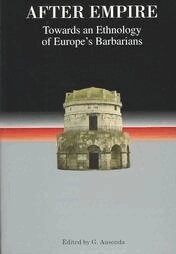
After Empire
Towards an Ethnology of Europe's Barbarians
Häftad, Engelska, 1995
324 kr
Skickas inom 10-15 vardagar
Studies of the customs and beliefs of barbarian peoples who migrated westwards and settled in Western Europe from the close of the Roman empire to the ninth century.The decline of the Roman Empire was compounded by the spread westwards of tribes from Eastern Europe, settling areas from which the indigenous populations had been cleared by the spread of the power of Rome; those populations themselves, notably the Celts, were pushed to the fringes of the former empire. These migrations of barbarian peoples between the fourth and ninth centuries left no historical record in the accepted sense, but it is the recovery of the customs and beliefs of these populations that forms the common purpose of the studies in this book, for during these centuries the traits and attitudes developed which are at the root of present-day Europe: feudalism, the statuslevel achieved by the merchant class, the beginnings of an ideology that led to the separation of church and state, the demise of slavery as an inefficient mode of production, the origin of national identities.The late GIORGIO AUSENDA taught at the Center for Interdisciplinary Research on Social Stress, San Marino.Contributors: GIORGIO AUSENDA, JULIAN D. RICHARDS, JOHN HINES, DAVID TURTON, ROSS BALZARETTI, DENNIS H. GREEN, SVEN SCHÜTTE, DAVID N. DUMVILLE, MORTEM AXBOE, IAN N. WOOD
Del 8 - Studies in Historical Archaeoethnology
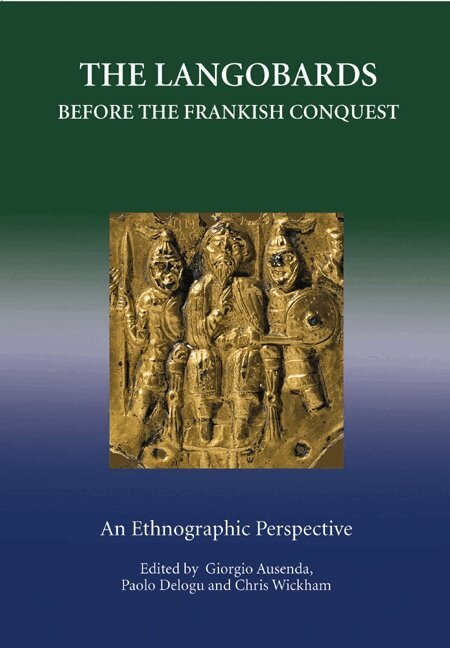
Langobards before the Frankish Conquest
An Ethnographic Perspective
Inbunden, Engelska, 2009
1 445 kr
Skickas inom 7-10 vardagar
Essays examining the Langobards, with important conclusions for early medieval Italy.The Langobards or Lombards were the last Germanic group to invade the Roman Mediterranean, crossing the Alps into Italy in 568-9. They were nonetheless one of the longest-lasting, for their state survived Charlemagne's conquest in774, and was the core of the medieval kingdom of Italy. The incompleteness of their conquest of Italy was also one of the root causes of Italian division for over 1300 years after their arrival. But they present a challenge to the historian, for most of the evidence for them dates to the last half-century of their independence, up to 774, a period in which Langobard Italy was a coherent and apparently tightly-governed state by early medieval standards. How they reached this from the incoherent and disorganised situation visible in late sixth-century Italy is still a matter of debate.The historians and archaeologists who contribute to this volume discuss Langobard archaeologyand material culture both before and after their invasion, Langobard language, political organisation, the church, social structures, family structures, and urban economy. It is thus an important and up to date starting point forfuture research on early medieval Italy.Contributors: G. AUSENDA, S. BARNISH, S. BRATHER, T.S. BROWN, N. CHRISTIE, M. COSTAMBEYS, P. DELOGU, D. GREEN, W. HAUBRICHS, J. HENNING, B. WARD-PERKINS, C. WICKHAM.