Giorgio De Maria - Böcker
Visar alla böcker från författaren Giorgio De Maria. Handla med fri frakt och snabb leverans.
3 produkter
3 produkter
159 kr
Skickas inom 7-10 vardagar
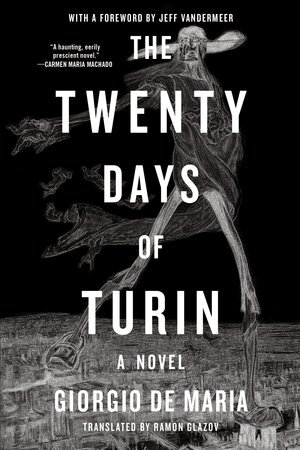
An allegory inspired by the grisly neo-fascist campaigns of its day, The Twenty Days of Turin has enjoyed a cult following in Italy for forty years. Now, in a fretful new age of "lone-wolf" terrorism fuelled by social media, we find uncanny resonances in Giorgio De Maria’s vision of mass fear: a mute, palpitating dread that seeps into every moment of daily existence. With its stunning anticipation of the Internet—and the apocalyptic repercussions of oversharing—this bleak, prescient story is more disturbingly pertinent than ever.Brilliantly translated into English for the first time by Ramon Glazov, The Twenty Days of Turin establishes De Maria’s place among the literary ranks of Italo Calvino and beside classic horror masters. Hauntingly imaginative, with viscerally chilling prose, the novel is an eerily clairvoyant magnum opus.
183 kr
Tillfälligt slut
In the spare wing of a church-run sanatorium, some zealous youths create "the Library," a space where lonely citizens can read one another’s personal diaries and connect with like-minded souls in "dialogues across the ether." But when their scribblings devolve into the ugliest confessions of the macabre, the Library’s users learn too late that a malicious force has consumed their privacy and their sanity. As the city of Turin suffers a twenty-day "phenomenon of collective psychosis" culminating in nightly massacres that hundreds of witnesses cannot explain, the Library is shut down and erased from history. That is, until a lonely salaryman decides to investigate these mysterious events, which the citizenry of Turin fear to mention. Inevitably drawn into the city’s occult netherworld, he unearths the stuff of modern nightmares: what’s shared can never be unshared.An allegory inspired by the grisly neo-fascist campaigns of its day, The Twenty Days of Turin has enjoyed a fervent cult following in Italy for forty years. Now, in a fretful new age of "lone-wolf" terrorism fueled by social media, we can find uncanny resonances in Giorgio De Maria’s vision of mass fear: a mute, palpitating dread that seeps into every moment of daily existence. With its stunning anticipation of the Internet—and the apocalyptic repercussions of oversharing—this bleak, prescient story is more disturbingly pertinent than ever.Brilliantly translated into English for the first time by Ramon Glazov, The Twenty Days of Turin establishes De Maria’s place among the literary ranks of Italo Calvino and beside classic horror masters such as Edgar Allan Poe and H. P. Lovecraft. Hauntingly imaginative, with visceral prose that chills to the marrow, the novel is an eerily clairvoyant magnum opus, long overdue but ever timely.
158 kr
Skickas
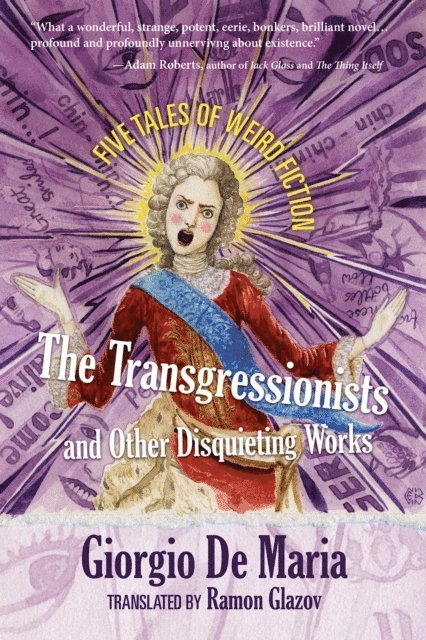
"A disturbing, unsettling novel . . . if it had been published in English soon after its first appearance in Italian (1968), the name of Giorgio De Maria would be well-known, his novels and stories mentioned in the context of J.G. Ballard, Anna Kavan, Shirley Jackson or Robert Aickman."—Lisa Tuttle, Nebula Award winner and author of Gabriel, Windhaven, and The Curious Affair of the Witch at Wayside Cross.Before an untimely mental breakdown cut short his two-decade career, Giorgio De Maria distinguished himself as one of Italy's most unique and eccentric weird fiction masters. With a background in the post-war literary culture of Turin -- Italy's urbane but eerie "city of black magic" -- De Maria drew inspiration from the Turinese underbelly of occultism, secret societies and radical politics. His writing coincided with the decade of terrorist violence known to Italians as the Years of Lead; the outcome was a weird fiction suffused with panic, rage, trauma, paranoia and meditations on antisocial hubris. In 1978, he told an interviewer: "...I think that the dimension of the fantastic, as much as this may seem paradoxical, is the most fitting one to express a reality as complex as ours today." De Maria's debut novel, The Transgressionists (1968) portrays a cell of malicious telepaths who meet in the cafés and jazz clubs of 1960s Turin to plot world domination. After experiencing the worst of their power, an embittered office clerk resolves to join them and prove himself worthy to share in their villainy. He cultivates twisted mindfulness techniques to awaken his inner sociopath. He fights off predatory phantoms that seem maddeningly drawn to him. He prepares for the dangerous "Great Leap" which will make him into a fully-fledged Transgressionist. But could his megalomania strain relations with his fiancee? Will he sacrifice love in his quest for omnipotence?The other works in this volume are no less surreal and startling. The Secret Death of Joseph Dzhugashvili (1976) gives us a nightmarish fantasy Soviet Union, where a dissident poet finds himself trapped in a psychological experiment conducted by Stalin himself. In "The End of Everydayism," a group of futuristic artists begin using corpses as a medium -- with violent, unforeseen results. The antihero of "General Trebisonda" is a possibly insane commander who prepares for a war crime in an eerily deserted fortress. Available in English for the first time, this collection contains two novellas, two short stories and a dystopian teleplay, The Appeal, which the post-cyberpunk novelist Andrea Vaccaro has lauded as "worthy of the best episodes of Black Mirror." Meanwhile, an introduction by translator Ramon Glazov offers a detailed account of De Maria's background, creative context and thoroughly unusual life.