Giovanni Curatola – författare
Visar alla böcker från författaren Giovanni Curatola. Handla med fri frakt och snabb leverans.
3 produkter
3 produkter
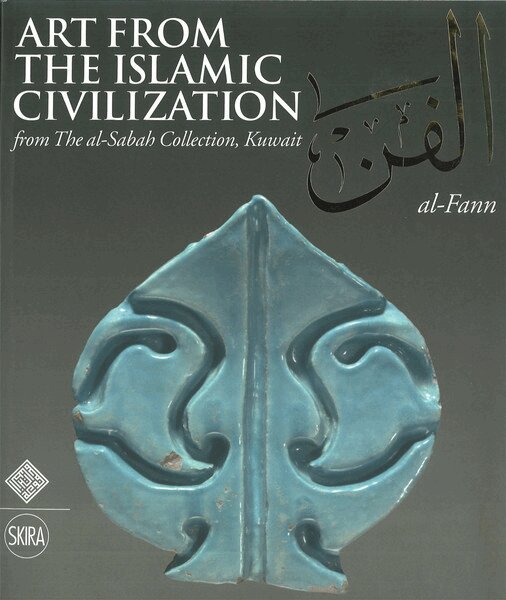
Al-Fann: Art from the Islamic Civilization
From the al-Sabah Collection, Kuwait
Häftad, Engelska, 2012
269 kr
Skickas inom 7-10 vardagar
In July 1975, Sheikh Nasser Sabah Ahmed al-Sabah showed his wife, Sheikha Hussah Sabah al-Salem al-Sabah, a splendid enamelled glass bottle dating from the Mumluk period (Egypt or Syria, 14th century), the first object of Islamic art he had acquired during one of his travels. It marked the start of an extraordinary adventure that mingled intelligence, love, research, curiosity and farsightedness.In eight years of concentrated and passionate work, the couple collected about 20,000 works of art, including masterpieces, many of which are deserving of study for the way they shed new light on techniques and little-known aspects, or intriguing pieces whose provenance has yet to be unravelled.On the occasion of the Kuwait’s National Day in February 1983, Sheikh Nasser and Sheikha Hussah offered their country the inestimable gift of the permanent loan of their collection to the National Museum of Kuwait.This volume illustrates 300 from among the most beautiful objects in the Collection and, for those exploring the Islamic world for the first time, describes its culture and art on a chronological (from the early days to the great 16th-century empires) and thematic basis (calligraphy, geometric decoration, arabesques and figurative art). Lastly, there is a section dedicated to jewels, for which the collection is renowned worldwide.
886 kr
Skickas inom 3-6 vardagar
Illustrated with some 250 attractive and well-chosen colour photographs, Turkish Art and Architecture is fascinating reading for anyone with an interest in Turkey, and an essential reference for any student of Islamic art and architecture.The Anatolian peninsula, one of the oldest seats of civilisation, has been ruled by a succession of great powers, including the Romans and their successors in the East, the Byzantines. Its Islamic era began in 1071, when the Seljuk Turks, nomads from Central Asia who had already taken control of Persia, defeated the Byzantine army at Manzikert and moved west, creating a new sultanate in Anatolia. The Seljuks were eventually succeeded in this region by the Ottoman Turks, who crossed the Bosphorus to conquer an exhausted Constantinople in 1453, and went on to extend their power far beyond the borders of modern Turkey, establishing an empire that endured until the early 20th century.Ruling over a land that had always been at the crossroads of east and west, these Islamic dynasties developed a cosmopolitan art and architecture. As art historian Giovanni Curatola demonstrates in this insightful new book, they combined elements of the prestigious Persian style and memories of their nomadic past with local Mediterranean traditions, and also adopted local building materials, such as stone and wood. Curatola introduces us first to the new types of buildings introduced by the Seljuks - like the caravansary and the türbe, or mausoleum - and then to the sophisticated architectural achievements of the Ottomans, which culminated in the great domed mosques constructed by the master builder Mimar Sinan (d. 1588). He also traces the history of the decorative arts in Turkey, which included lavishly ornamented carpets, manuscripts, armor, and ceramics.
485 kr
Skickas inom 7-10 vardagar
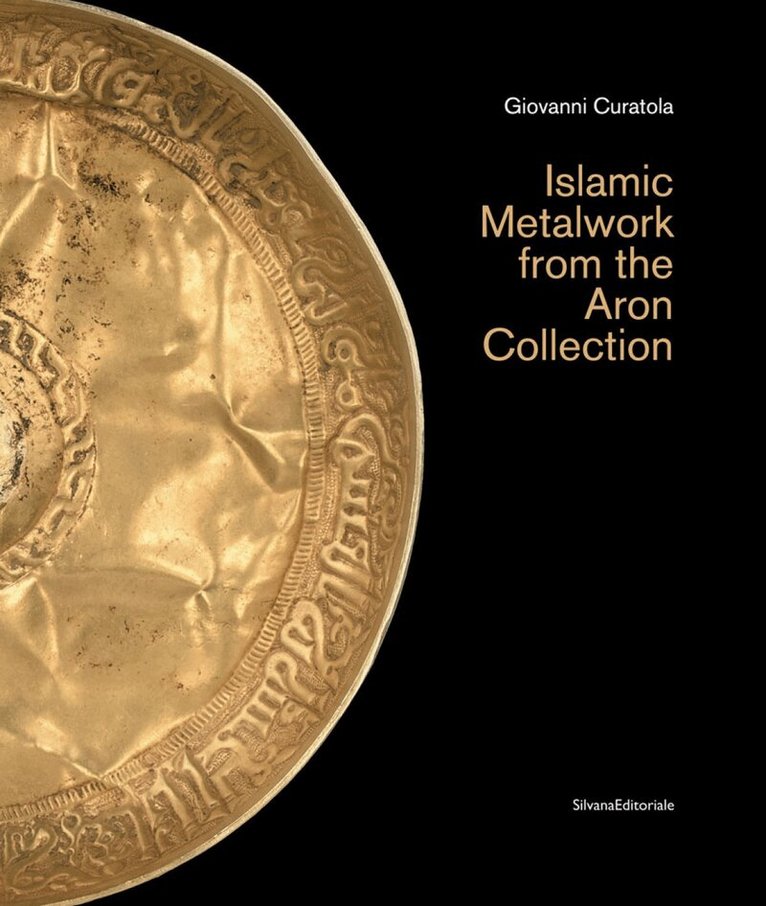
The art of metalworking has been practiced continuously ll over the world. In this, the Islamic world is no exception. But if we look at the objects unearthed at archaeological digs or in the museums and private collections that have patiently collected them over the centuries, one cannot help but be surprised by the almost infinite quantity of materials, shapes and decorations created both by renowned artists and anonymous craftsmen.Metalworking is a highly important and characteristic sector of Islamic art, and the diffusion of these works in contexts other than where they originated is highly significant evidence of this fact. There can be no doubt that these artefacts were produced by a highly-advanced and structured society whose boundaries and remarkable technical expertise we are still unable to place in wider contexts, most notably historical and social. Prof. Giovanni Curatola took the objects in the Aron Collection as a cue for a meticulous comparative study of medieval Islamic metalwork, making this book a fundamental addition to the literature on the subject.