Giulio J. Pertile - Böcker
Visar alla böcker från författaren Giulio J. Pertile. Handla med fri frakt och snabb leverans.
3 produkter
3 produkter
1 382 kr
Skickas inom 7-10 vardagar
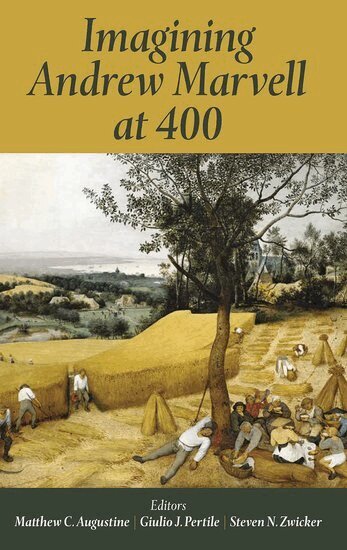
Augustine, Pertile and Zwicker celebrate the work of Andrew Marvell (1621-1678) in the quatercentenary year of his birth, combining the best historical scholarship with a varied and ambitious programme of cognitive, affective, and aesthetic inquiry. The essays have been specially commissioned for the quatercentenary and include the work of a range of scholars from Britain and North America. Acknowledged masterpieces such as the 'Horatian Ode', 'The Garden', and 'Upon Appleton House' are here read in light of historical and material evidence that has emerged in recent decades. At the same time, the volume offers many fresh points of entry into Marvell's work, with particular attention to the poet's lyric economies, Marvell's engagement with popular print, and, not least, the polyglot and transnational dimensions of his writing. The quatercentenary also represents an important anniversary for Marvell studies, marking one hundred years since T. S. Eliot's appreciation of the poet inaugurated modern Marvell criticism. As Imagining Andrew Marvell at 400 reassesses Marvell's writings it also reflects on the profession of English literature, taking stock of the discipline itself, where it has been and where it might be going as scholars continue to map the pleasures and challenges of reading and re-reading Andrew Marvell.
416 kr
Skickas inom 7-10 vardagar
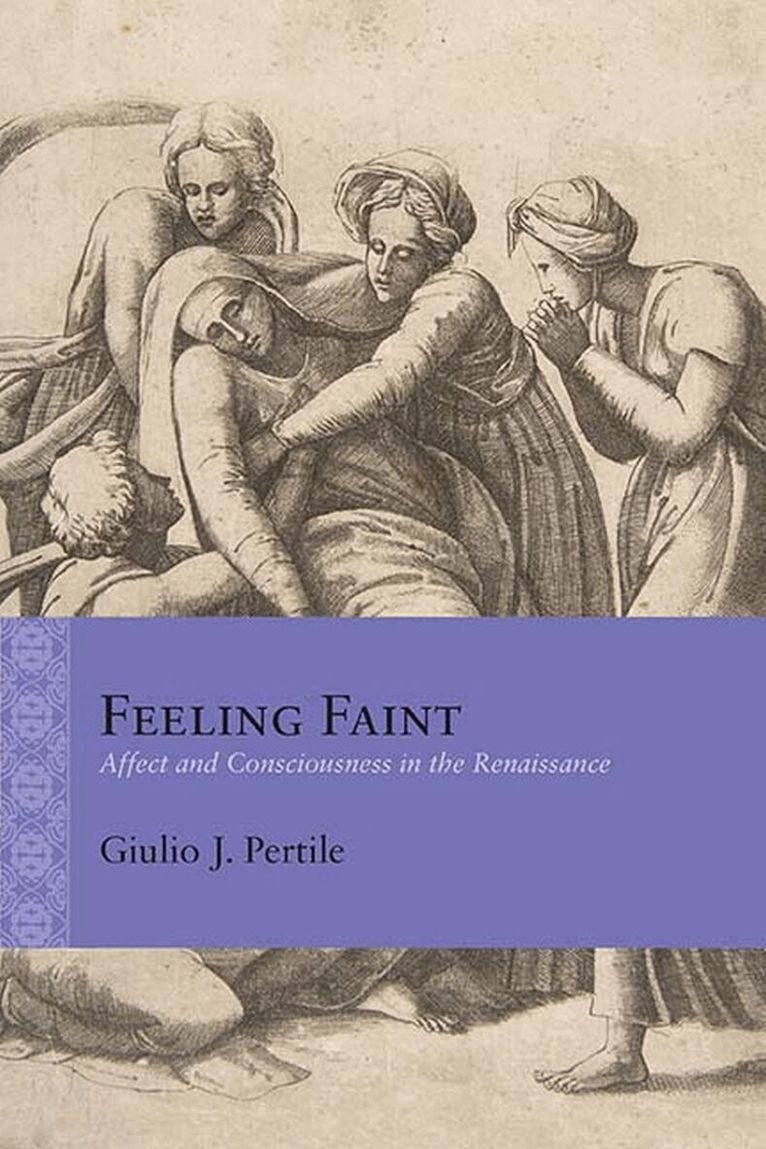
Feeling Faint is a book about human consciousness in its most basic sense: the awareness, at any given moment, that we live and feel. Such awareness, it argues, is distinct from the categories of selfhood to which it is often assimilated, and can only be uncovered at the margins of first-person experience. What would it mean to be conscious without being a first person—to be conscious in the absence of a self? Such a phenomenon, subsequently obscured by the Enlightenment identification of consciousness and personal identity, is what we discover in scenes of swooning from the Renaissance: consciousness without self, consciousness reconceived as what Frederic Jameson calls "a registering apparatus for transformed states of being." Where the early modern period has often been seen in terms of the rise of self-aware subjectivity, Feeling Faint argues that swoons, faints, and trances allow us to conceive of Renaissance subjectivity in a different guise: as the capacity of the senses and passions to experience, regulate, and respond to their own activity without the intervention of first-person awareness. In readings of Renaissance authors ranging from Montaigne to Shakespeare, Pertile shows how self-loss affords embodied consciousness an experience of itself in a moment of intimate vitality which precedes awareness of specific objects or thoughts—an experience with which we are all familiar, and yet which is tantalizingly difficult to pin down.
1 235 kr
Skickas inom 10-15 vardagar
Feeling Faint is a book about human consciousness in its most basic sense: the awareness, at any given moment, that we live and feel. Such awareness, it argues, is distinct from the categories of selfhood to which it is often assimilated, and can only be uncovered at the margins of first-person experience. What would it mean to be conscious without being a first person—to be conscious in the absence of a self? Such a phenomenon, subsequently obscured by the Enlightenment identification of consciousness and personal identity, is what we discover in scenes of swooning from the Renaissance: consciousness without self, consciousness reconceived as what Frederic Jameson calls "a registering apparatus for transformed states of being." Where the early modern period has often been seen in terms of the rise of self-aware subjectivity, Feeling Faint argues that swoons, faints, and trances allow us to conceive of Renaissance subjectivity in a different guise: as the capacity of the senses and passions to experience, regulate, and respond to their own activity without the intervention of first-person awareness. In readings of Renaissance authors ranging from Montaigne to Shakespeare, Pertile shows how self-loss affords embodied consciousness an experience of itself in a moment of intimate vitality which precedes awareness of specific objects or thoughts—an experience with which we are all familiar, and yet which is tantalizingly difficult to pin down.