• Fri frakt över 249 kr
  • •
  • Snabba leveranser
  • •
  • Billiga böcker
Kundservice

Du är på sajten för privatpersoner.

Företag, bibliotek eller offentlig verksamhet?

Du handlar på classic.bokus.com, där alla dina funktioner finns intakta.
Till classic.bokus.com
Bokus logotyp. Gå till startsidan.
  • Erbjudanden
  • Nyheter
  • Student
  • Topplistor
  • Barn & ungdom
  • Bokus Play
  • E-böcker
  • Pocketböcker
  • Spel & pussel

10% rabatt på allt med kod NYSTART10 →

Sidfot

Mina sidor

    Hjälp

    • Kundservice
    • Vanliga frågor och svar
    • Frakt och leverans
    • Retur vid ångerrätt
    • Reklamera vara
    • Betalning
    • Köpvillkor
    • Allmänna villkor
    • Information om webbplatsens tillgänglighet

    Om Bokus

    • Om oss
    • Pressrum
    • För studenter
    • För företag
    • För bibliotek och offentlig verksamhet
    • För leverantörer
    • Hållbarhet

    Populärt

    • Aktuella erbjudanden
    • Presentkort
    • Studentlitteratur
    • Nya böcker
    • Topplistor
    • Signerade böcker
    • Engelska böcker

    Inspiration

    • Boktips
    • BookTok
    • Populära bokserier
    • Barnbokskaraktärer
    • Populära författare
    Logotyp för Bokus
    Följ oss på Facebook (extern länk)Följ oss på Instagram (extern länk)Följ oss på YouTube (extern länk)Följ oss på TikTok (extern länk)
    bokus @ CookiesAnpassa cookiesIntegritetspolicyKöpvillkor
    Till Citymail hemsida (extern länk)Till Budbee hemsida (extern länk)Till Postnord hemsida (extern länk)Till Schenker hemsida (extern länk)Till Early Bird hemsida (extern länk)Till Walleys hemsida (extern länk)
    1. Skönlitteratur
    2. Litteraturvetenskap
    3. Litteraturvetenskap

    Feeling Faint

    Affect and Consciousness in the Renaissance

    AvGiulio J. Pertile

    Häftad, Engelska, 2019

    Del i serien Rethinking the Early Modern

    433 kr

    Beställningsvara. Skickas inom 5-8 vardagar. Fri frakt över 249 kr.

    Fler format och utgåvor

    Inbunden

    1 286 kr

    Beskrivning

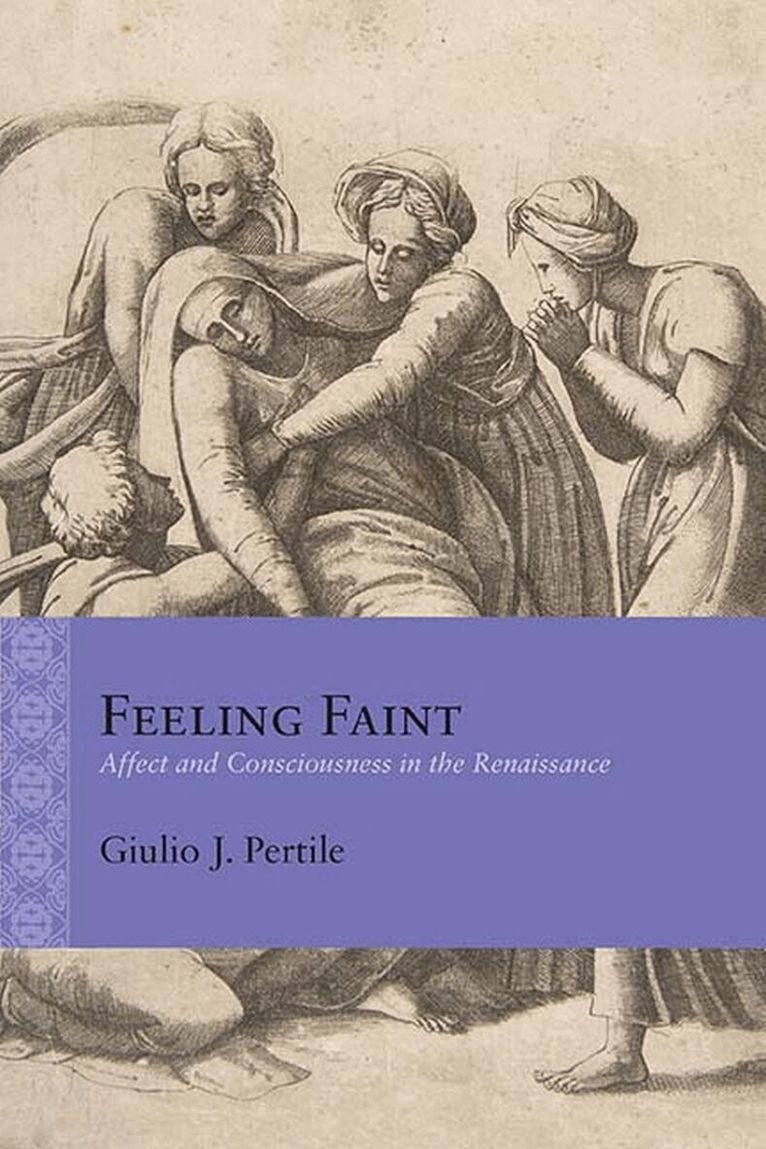
    Feeling Faint is a book about human consciousness in its most basic sense: the awareness, at any given moment, that we live and feel. Such awareness, it argues, is distinct from the categories of selfhood  to which it is often assimilated, and can only be uncovered at the margins of first-person experience. What would it mean to be conscious without being a first person—to be conscious in the absence of a self? Such a phenomenon, subsequently obscured by the Enlightenment identification of consciousness and personal identity, is what we discover in scenes of swooning from the Renaissance: consciousness without self, consciousness reconceived as what Frederic Jameson calls "a registering apparatus for transformed states of being." Where the early modern period has often been seen in terms of the rise of self-aware subjectivity, Feeling Faint argues that swoons, faints, and trances allow us to conceive of Renaissance subjectivity in a different guise: as the capacity of the senses and passions to experience, regulate, and respond to their own activity without the intervention of first-person awareness. In readings of Renaissance authors ranging from Montaigne to Shakespeare, Pertile shows how self-loss affords embodied consciousness an experience of itself in a moment of intimate vitality which precedes awareness of specific objects or thoughts—an experience with which we are all familiar, and yet which is tantalizingly difficult to pin down.

    Produktinformation

    • Utgivningsdatum:2019-02-28
    • Mått:149 x 226 x 15 mm
    • Vikt:280 g
    • Format:Häftad
    • Språk:Engelska
    • Serie:Rethinking the Early Modern
    • Antal sidor:200
    • Förlag:Northwestern University Press
    • ISBN:9780810139183

    Utforska kategorier

    • Litteraturvetenskap inom Skönlitteratur
    • Kognitiv psykologi inom Psykologi och pedagogik

    Mer om författaren

    Giulio J. Pertile is a lecturer in early modern literature at the University of St. Andrews.

    Recensioner i media

    This is important and original work, argued with passion, eloquence, and style, and it will meet an interested audience in the growing group of Renaissance and early modern scholars interested in affects, environments, cognition, and phenomenology."" - Julia Lupton, author of Thinking with Shakespeare: Essays on Politics and Life