Giulio Palermo - Böcker
Visar alla böcker från författaren Giulio Palermo. Handla med fri frakt och snabb leverans.
4 produkter
4 produkter
662 kr
Skickas inom 10-15 vardagar
In the economic debate, power is defined and studied mainly as an interpersonal relation occurring out of perfect competition. This is a consequence of the combination of methodological individualism and the assumption of competition as a natural and everlasting coordinating mechanism, operating without any sort of coercion. This methodology, however, is not adequate to analyze the forms of social coercion that characterize capitalism. Economics and Power criticizes the main theories of power developed in economic literature, analyzing ultraliberal contractualism to radical political economics, and ultimately suggesting a Marxist conception of power and coercion in capitalism. Palermo’s ontological argument is rooted in the philosophy of ‘critical realism’.This unique volume presents his main finding as being that the essential coercive mechanism of capitalism is competition. Capitalist power is not caused by a lack of competition, but by the central role it plays in this mode of production. Following this, the chapters reconstruct a Marxian conception of power where it is analyzed as a social relation and argues that perfect competition does in fact exist under the disguise of capitalist power. This book criticizes the construct of power and the underlying ideas surrounding perfect competition. This book is of interest to those who study political economy, as well as economic theory and philosophy.
1 977 kr
Skickas inom 10-15 vardagar
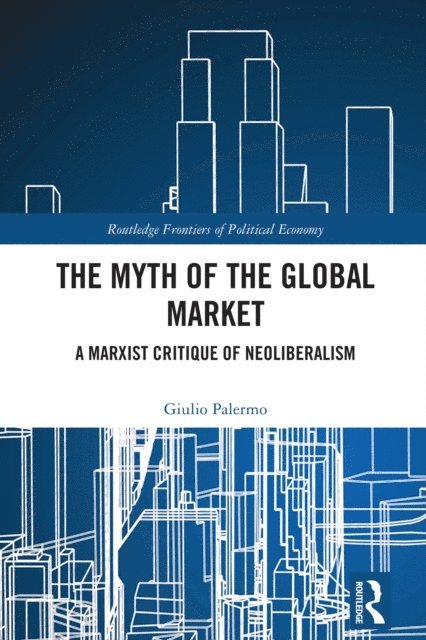
Capitalism is often held to be the best of all possible worlds, or even the only possible world, in which the market is underpinned by the highest principles of rationality, efficiency, and compatibility with democracy. These truths are backed up by economists, a group who present themselves as impartial experts capable of operating independently of ideology or political intrusion.This book questions these “scientific truths”. It discusses the ideological foundations of neoliberalism and the value judgements, often kept implicit, in economic theory. It analyses the claims of the key pillars of neoliberal economics – the neoclassical and Austrian schools of economic thought – and the myths which they propagate about markets. It is shown that there is a deep division between the theoretical market - the fair market, the free market, the market of equal opportunities, the market as producer of wealth, the market as a forum for discovering and sharing information – and the reality. This is not a simple problem of realism. The problem also concerns the perfect market idealized by these theories, which is subjected to criticism through a process of demystification that reveals the true ideological content hidden behind the market myths. There have been various attempts by heterodox schools of economics to move beyond this flawed view of the market. However, these have struggled to gain mainstream attention because of the cultural and political dominance of the neoliberal mindset which is claimed to be objective and neutral. Ultimately, the book argues that neoliberalism needs to be countered with an alternative based on a progressive decommodification of social relations to reduce the real and imagined significance of the market.This book is essential reading for those interested in Marxist political economy, heterodox economics, and critiques of neoliberalism, capitalism and markets.
2 237 kr
Skickas inom 10-15 vardagar
In the economic debate, power is defined and studied mainly as an interpersonal relation occurring out of perfect competition. This is a consequence of the combination of methodological individualism and the assumption of competition as a natural and everlasting coordinating mechanism, operating without any sort of coercion. This methodology, however, is not adequate to analyze the forms of social coercion that characterize capitalism. Economics and Power criticizes the main theories of power developed in economic literature, analyzing ultraliberal contractualism to radical political economics, and ultimately suggesting a Marxist conception of power and coercion in capitalism. Palermo’s ontological argument is rooted in the philosophy of ‘critical realism’.This unique volume presents his main finding as being that the essential coercive mechanism of capitalism is competition. Capitalist power is not caused by a lack of competition, but by the central role it plays in this mode of production. Following this, the chapters reconstruct a Marxian conception of power where it is analyzed as a social relation and argues that perfect competition does in fact exist under the disguise of capitalist power. This book criticizes the construct of power and the underlying ideas surrounding perfect competition. This book is of interest to those who study political economy, as well as economic theory and philosophy.
1 363 kr
Kommande
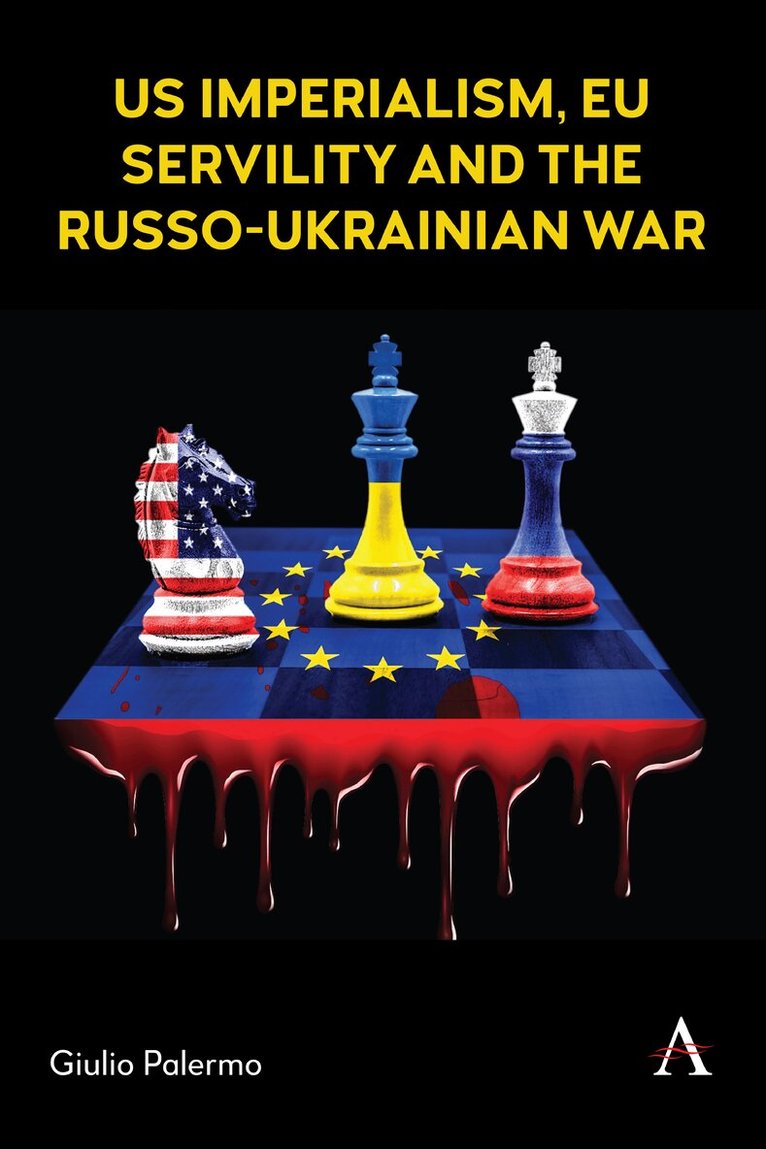
The Russo-Ukrainian conflict has distant roots. The book traces its historical and political origins and focuses on its economic consequences. From the picture that emerges, the conflict has little to do with Russia, or Ukraine, but with U.S. imperialist strategies in Europe and its attempt to detach Europe from Russia and China.The long-term strategy of the United States in Ukraine begins well before the 2014 coup. In fact, it is defined in the aftermath of the dissolution of the Soviet Union. The analysis of this process shows an increasing military pressure of the United States on Russia and explains why Russia eventually had no choice but to respond on a military level. But it is by analysing the dynamics of the war, especially in its economic, before military, aspects, that the real underlying interests become clearer. The economic consequences of the war, absolutely predictable and certainly foreseen by the actors involved (with the exception, apparently, of some European politicians), show that the direction of the operation is in Washington and that the real enemy is not in Moscow but in Brussels. Ukraine is only the instrument to force Russia to intervene and expand the penetration of U.S. capital into the European Union.From the point of view of the United States, moreover, the strategy of expansion in Europe is only one piece of the global strategies governing relations with China, which has turned hot in these very years. In fact, between the Minsk agreements and the Russian intervention, something not exactly minor happened on a global level: the pandemic broke out. From an economic point of view, the pandemic is a unique opportunity to accelerate the process of technological and social transformation in which the United States had invested heavily but which was struggling to develop due to a lack of investments and which, by contrast, was advancing rapidly in China thanks to planning. The critique thus develops by analysing the relationship between the war in Ukraine and the anti-pandemic policies as distinct but joint moments of the U.S. global imperialist strategy.Having lost ground in strictly economic competition with Chinese companies, the United States now defends and develops the role of its own companies in Europe by force, through the economic war on Russia. Of course, in this process, European corporations do not stand idly by but must increasingly link up with U.S. corporations and break ties with U.S. enemies. It is in this process of integration between U.S. and European capitals that the economic, political and military choices of the European Union and its individual member states, at first sight apparently contradictory, instead assume full consistency.