Glenn Feldman - Böcker
Visar alla böcker från författaren Glenn Feldman. Handla med fri frakt och snabb leverans.
7 produkter
7 produkter
326 kr
Skickas inom 10-15 vardagar
Has the South, once the ""Solid South"" of the Democratic Party, truly become an unassailable Republican stronghold? If so, when, where, why, and how did this seismic change occur? Moreover, what are the implications for the U.S. body politic?Painting Dixie Red is the first volume to grapple with these difficult yet critical questions. In this fascinating and timely collection, a distinguished group of scholars engages in an enlightening debate. Some make the case that the South has become Republican, and some contend that it has not. Some outline the region's exceptionalism, and some reject the idea of regional distinctiveness. Some point to white discontent over civil rights as the root of political changes, and some cite color-blind factors. All offer invaluable insights into U.S. politics during these ultra-partisan times.
322 kr
Skickas inom 10-15 vardagar
Nation within a Nation features cutting-edge work by lead scholars in the fields of history, political science, and human geography, who examine the causes--realand perceived--for the South's perpetual state of rebellion, which remains oneof its most defining characteristics.
760 kr
Tillfälligt slut
480 kr
Skickas inom 7-10 vardagar
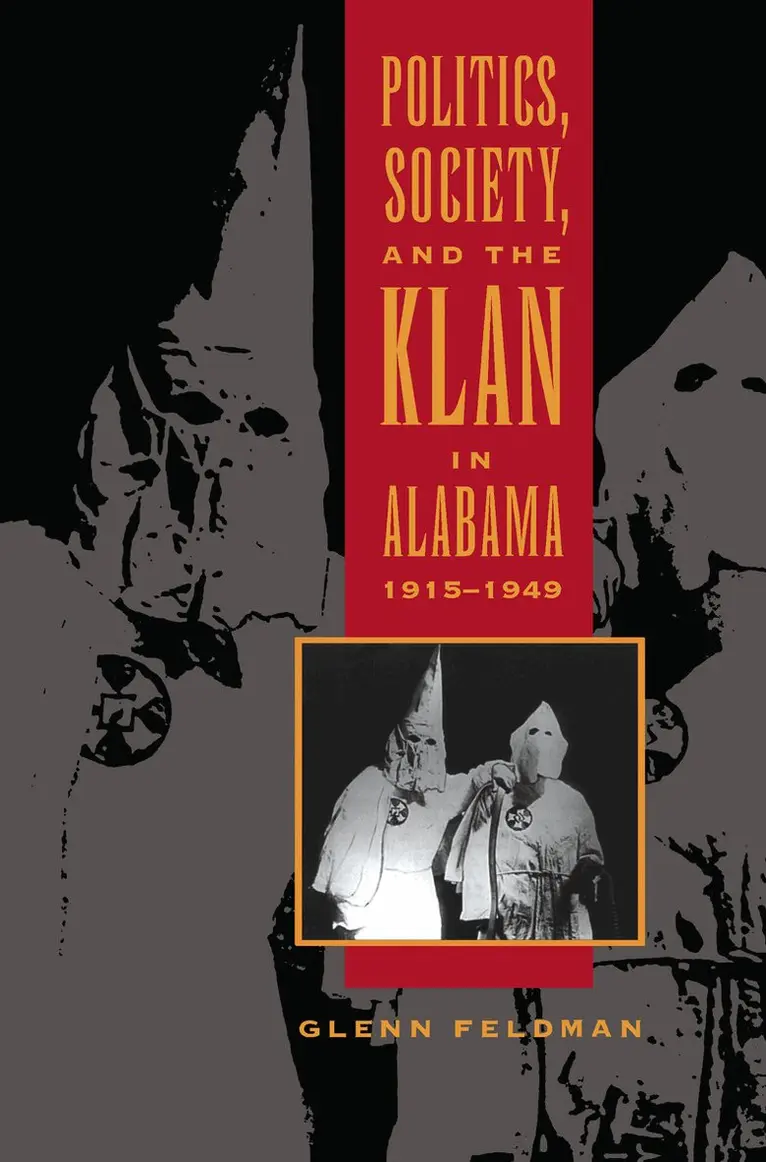
This first book-length examination of the Klan in Alabama represents exhaustive research that challenges traditional interpretations. The Ku Klux Klan has wielded considerable power both as a terrorist group and as a political force. Usually viewed as appearing in distinct incarnations, the Klans of the 20th century are now shown by Glenn Feldman to have a greater degree of continuity than has been previously suspected. Victims of Klan terrorism continued to be aliens, foreigners, or outsiders in Alabama: the freed slave during Reconstruction, the 1920s Catholic or Jew, the 1930s labor organizer or Communist, and the returning black veteran of World War II were all considered a threat to the dominant white culture. Feldman offers new insights into this 'qualified continuity' among Klans of different eras, showing that the group remained active during the 1930s and 1940s when it was presumed dormant, with elements of the 'Reconstruction syndrome' carrying over to the smaller Klan of the civil rights era. In addition, Feldman takes a critical look at opposition to Klan activities by southern elites. He particularly shows how opponents during the Great Depression and war years saw the Klan as an impediment to attracting outside capital and federal relief or as a magnet for federal action that would jeopardize traditional forms of racial and social control. Other critics voiced concerns about negative national publicity, and others deplored the violence and terrorism. This in-depth examination of the Klan in a single state, which features rare photographs, provides a means of understanding the order's development throughout the South. Feldman's book represents definitive research into the history of the Klan and makes a major contribution to our understanding of both that organization and the history of Alabama.
372 kr
Skickas inom 7-10 vardagar
Historian Glenn Feldman gathers together a group of essays that examine the efforts of important scholars to discuss and define the South's distinctiveness. The volume includes 18 chapters on such notable historians as John Hope Franklin, Anne Firor Scott, Frank L. Owsley, W. J. Cash, and C. Vann Woodward, written by 19 different researchers, both senior historians and emerging scholars, including Jacquelyn Dowd Hall, John Shelton Reed, Bruce Clayton, and Ted Ownby. The essays examine the major work or works of each scholar under consideration as well as that scholar's overall contribution to the study of southern history. Reading Southern History will enlighten readers on the more compelling themes currently and traditionally explored by southern historians. It will appeal greatly to professors and students as a valuable multidisciplinary introduction to the study of southern history, since several of the essays are on scholars who are working outside the discipline of history proper, in the fields of political science, sociology, journalism, and economics.Feldman's collection, therefore, sheds light on a broad spectrum of themes important in southern history, including the plight of poor whites, race, debates over race and class, the "reconstruction syndrome," continuity versus discontinuity in relation to blacks and whites, and regional culture and distinctiveness. Reading Southern History will be valuable to students and scholars of women's studies, African American history, working-class history, and ethnic studies, as well as traditional southern history. Most important, the publication makes a significant contribution to the development and ongoing study of the historiography of the South.
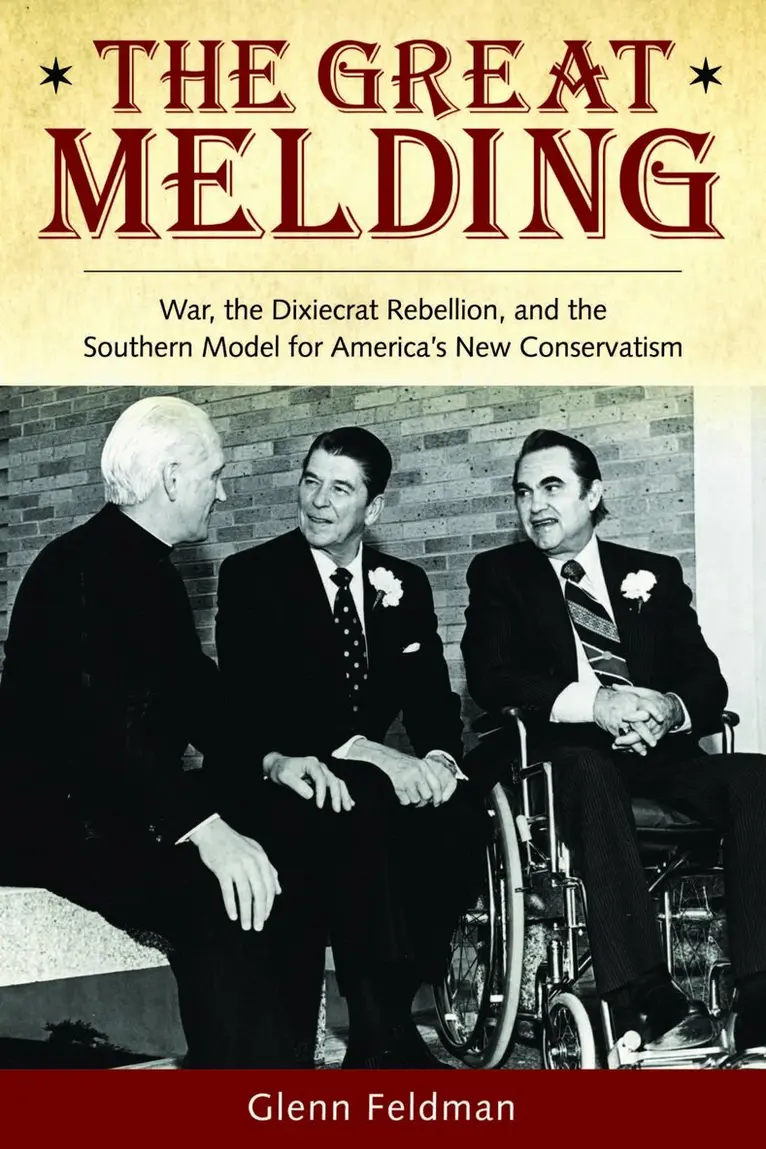
Great Melding
War, the Dixiecrat, Rebellion, and the Southern Model for America's New Conservatism
Inbunden, Engelska, 2015
729 kr
Skickas
The Great Melding: War, the Dixiecrat Rebellion, and the Southern Road to America’s New Conservatism is the second book in Glenn Feldman’s groundbreaking series on how the American South switched its allegiance from the Democratic to the Republican Party in the twentieth century.Audacious in its scope, subtle in its analysis, and persuasive in its arguments, The Great Melding is the second book in Glenn Feldman’s magisterial recounting of the South’s monumental transformation from a Reconstruction-era citadel of Democratic Party inertia to a cauldron of GOP agitation. In this pioneering study, he shows how the transitional years after World War II, the Dixiecrat episode, and the early 1950s formed a pivotal sequence of events that altered America’s political landscape in profound, fundamental, and unexpected ways.Feldman’s landmark The Irony of the Solid South dismantled the myth of the New Deal consensus, proving it to be only a fleeting alliance of fissiparous factions; The Great Melding further examines how the South broke away from that consensus. Exploring the role of race and white supremacy, Feldman documents and explains the roles of economics, religion, and emotive appeals to patriotism in southern voting patterns. His probing and original analysis includes a discussion of the limits of southern liberalism and a fresh examination of the Dixiecrat Revolt of 1948.Feldman convincingly argues that the Dixiecrats—often dismissed as a transitory footnote in American politics—served as a template for the modern conservative movement. Now a predictably conservative stronghold, Alabama at the time was viewed by national political strategists as a battleground and bellwether. Masterfully synthesizing a vast range of sources, Feldman shows that Alabama, far from being predictable, was one of the few states where voters chose between the competing ideologies of the Democrats, Republicans, and Dixiecrats.Writing in his lively and provocative style, Feldman demonstrates that the events he recounts in Alabama between 1942 and Dwight Eisenhower’s 1952 election encapsulate a rare moment of fluidity in American politics, one in which the New Deal consensus shattered and the Democratic and Republican parties fought off a third-party revolt only to find themselves irrevocably altered by their success. The Great Melding will fascinate historians, political scientists, political strategists, and readers of political non-fiction.
502 kr
Skickas inom 5-8 vardagar
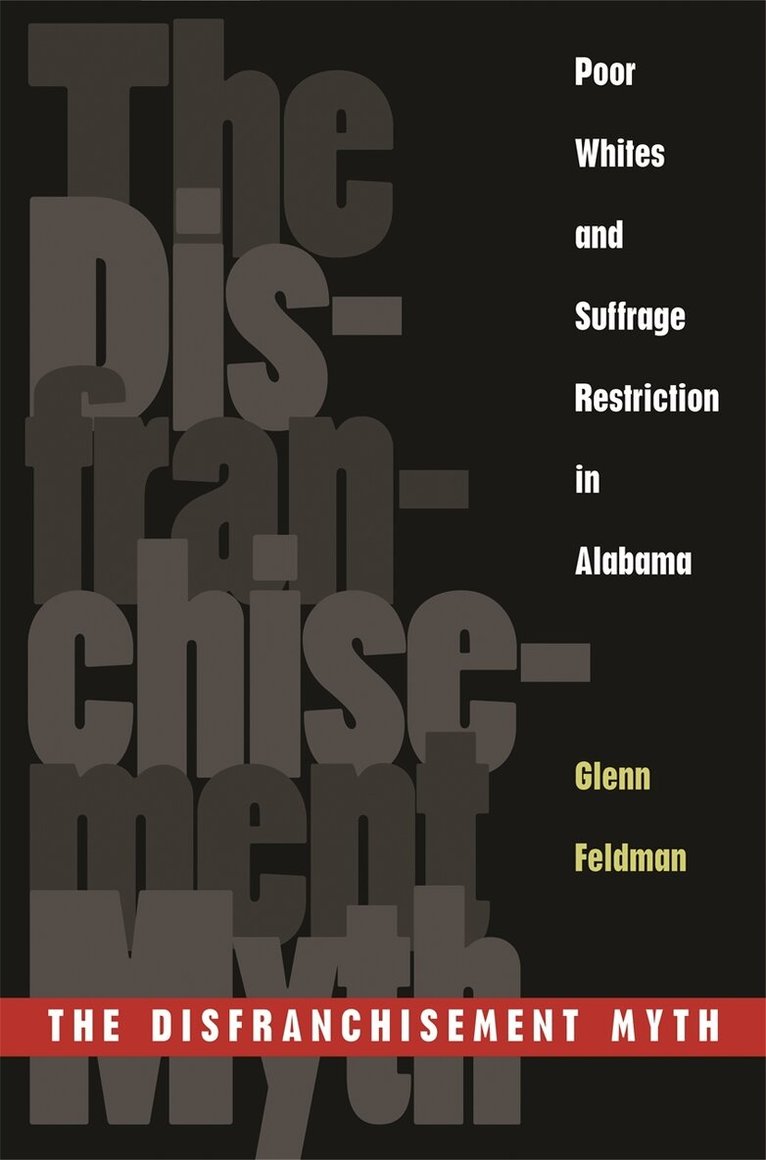
This study challenges decades of scholarship on the roots of disfranchisement in America, arguing that historians have misunderstood the role of race and class in this antidemocratic movement. In 1901 Alabama adopted a new state constitution intended to strip its black citizens of their voting rights. Alabama was not the only state that disfranchised blacks; however, it was the only one where the issue was put to a popular vote by referendum. Glenn Feldman looks anew at the causes and consequences of this landmark event to revise the misleadingly neat view that historians have handed down to us.Drawing on court documents, voting statistics, civil rights and labor records, and many other sources, Feldman shows that the racist appeals of Alabama’s white planters, industrialists, and other conservatives motivated poor whites in far greater numbers and for more complex reasons than received knowledge concedes. The seemingly natural allies of blacks, poor whites constituted most of the white opposition to disfranchisement, says Feldman. Yet the number of poor whites who backed the new constitution was greater. Ultimately, many would be disfranchised by the very measures they had believed were aimed only at blacks. In that sense, says Feldman, poor whites were “more parties to their own demise than the mere victims of circumstance.”Such conclusions run counter to those associated with historians J. Morgan Kousser, C. Vann Woodward, and others. Giving new emphasis to race preoccupations where these scholars had focused on class divisions, Feldman reveals the vitally important role that emotion has played in influencing the political behavior of white southerners—often to their profound political and economic detriment. The Disfranchisement Myth has much to say about the tendency of “plain” people in the South—then and now—to allow prejudice and fear to distract them from the pursuit of their rational political interests.