Gloria Elizabeth Chacón – författare
Visar alla böcker från författaren Gloria Elizabeth Chacón. Handla med fri frakt och snabb leverans.
7 produkter
7 produkter
Inbunden, Engelska, 2018
1 352 kr
Skickas inom 10-15 vardagar
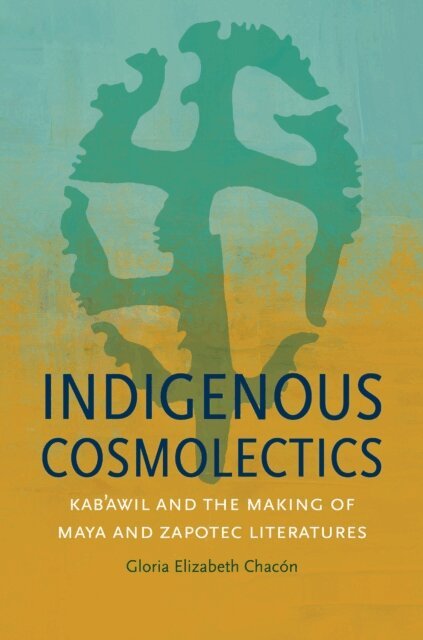
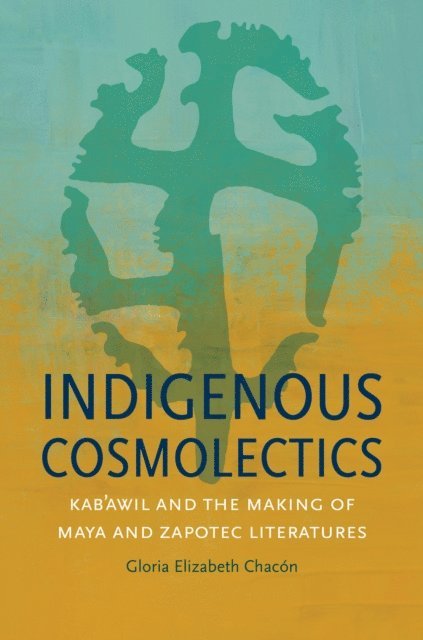
Latin America's Indigenous writers have long labored under the limits of colonialism, but in the late twentieth and twenty-first centuries, they have constructed a literary corpus that moves them beyond those parameters. Gloria E. Chacon considers the growing number of contemporary Indigenous writers who turn to Maya and Zapotec languages alongside Spanish translations of their work to challenge the tyranny of monolingualism and cultural homogeneity. Chacon argues that these Maya and Zapotec authors reconstruct an Indigenous literary tradition rooted in an Indigenous cosmolectics, a philosophy originally grounded in pre-Columbian sacred conceptions of the cosmos, time, and place, and now expressed in creative writings. More specifically, she attends to Maya and Zapotec literary and cultural forms by theorizing kab'awil as an Indigenous philosophy. Tackling the political and literary implications of this work, Chacon argues that Indigenous writers' use of familiar genres alongside Indigenous language, use of oral traditions, and new representations of selfhood and nation all create space for expressions of cultural and political autonomy. Chacon recognizes that Indigenous writers draw from universal literary strategies but nevertheless argues that this literature is a vital center for reflecting on Indigenous ways of knowing and as a key artistic expression of decolonization.
Häftad, Engelska, 2018
472 kr
Skickas inom 10-15 vardagar
Latin America's Indigenous writers have long labored under the limits of colonialism, but in the late twentieth and twenty-first centuries, they have constructed a literary corpus that moves them beyond those parameters. Gloria E. Chacon considers the growing number of contemporary Indigenous writers who turn to Maya and Zapotec languages alongside Spanish translations of their work to challenge the tyranny of monolingualism and cultural homogeneity. Chacon argues that these Maya and Zapotec authors reconstruct an Indigenous literary tradition rooted in an Indigenous cosmolectics, a philosophy originally grounded in pre-Columbian sacred conceptions of the cosmos, time, and place, and now expressed in creative writings. More specifically, she attends to Maya and Zapotec literary and cultural forms by theorizing kab'awil as an Indigenous philosophy. Tackling the political and literary implications of this work, Chacon argues that Indigenous writers' use of familiar genres alongside Indigenous language, use of oral traditions, and new representations of selfhood and nation all create space for expressions of cultural and political autonomy. Chacon recognizes that Indigenous writers draw from universal literary strategies but nevertheless argues that this literature is a vital center for reflecting on Indigenous ways of knowing and as a key artistic expression of decolonization.
1 991 kr
Läs direkt efter köp
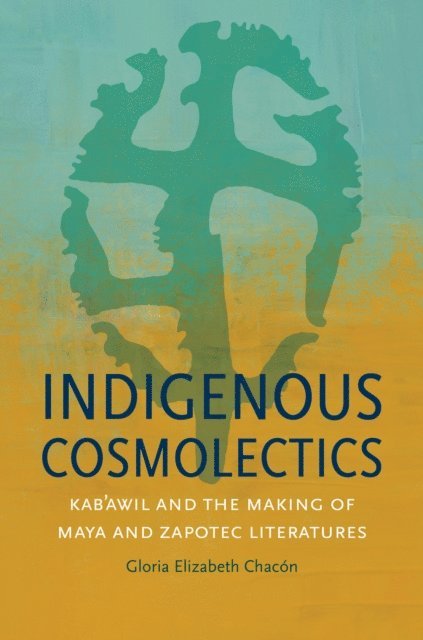
Latin America’s Indigenous writers have long labored under the limits of colonialism, but in the late twentieth and twenty-first centuries, they have constructed a literary corpus that moves them beyond those parameters. Gloria E. Chacón considers the growing number of contemporary Indigenous writers who turn to Maya and Zapotec languages alongside Spanish translations of their work to challenge the tyranny of monolingualism and cultural homogeneity. Chacón argues that these Maya and Zapotec authors reconstruct an Indigenous literary tradition rooted in an Indigenous cosmolectics, a philosophy originally grounded in pre-Columbian sacred conceptions of the cosmos, time, and place, and now expressed in creative writings. More specifically, she attends to Maya and Zapotec literary and cultural forms by theorizing kab''awil as an Indigenous philosophy. Tackling the political and literary implications of this work, Chacón argues that Indigenous writers'' use of familiar genres alongside Indigenous language, use of oral traditions, and new representations of selfhood and nation all create space for expressions of cultural and political autonomy.Chacón recognizes that Indigenous writers draw from universal literary strategies but nevertheless argues that this literature is a vital center for reflecting on Indigenous ways of knowing and is a key artistic expression of decolonization.
Inbunden, Engelska, 2022
1 270 kr
Skickas inom 5-8 vardagar
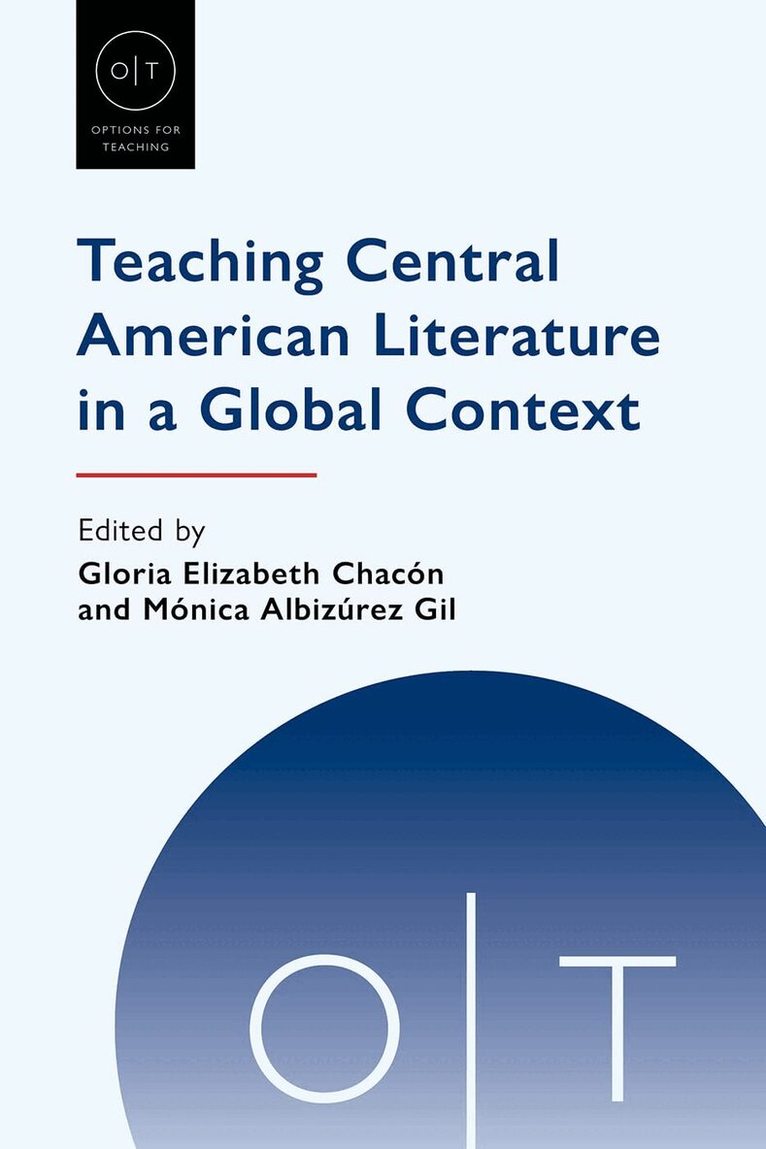
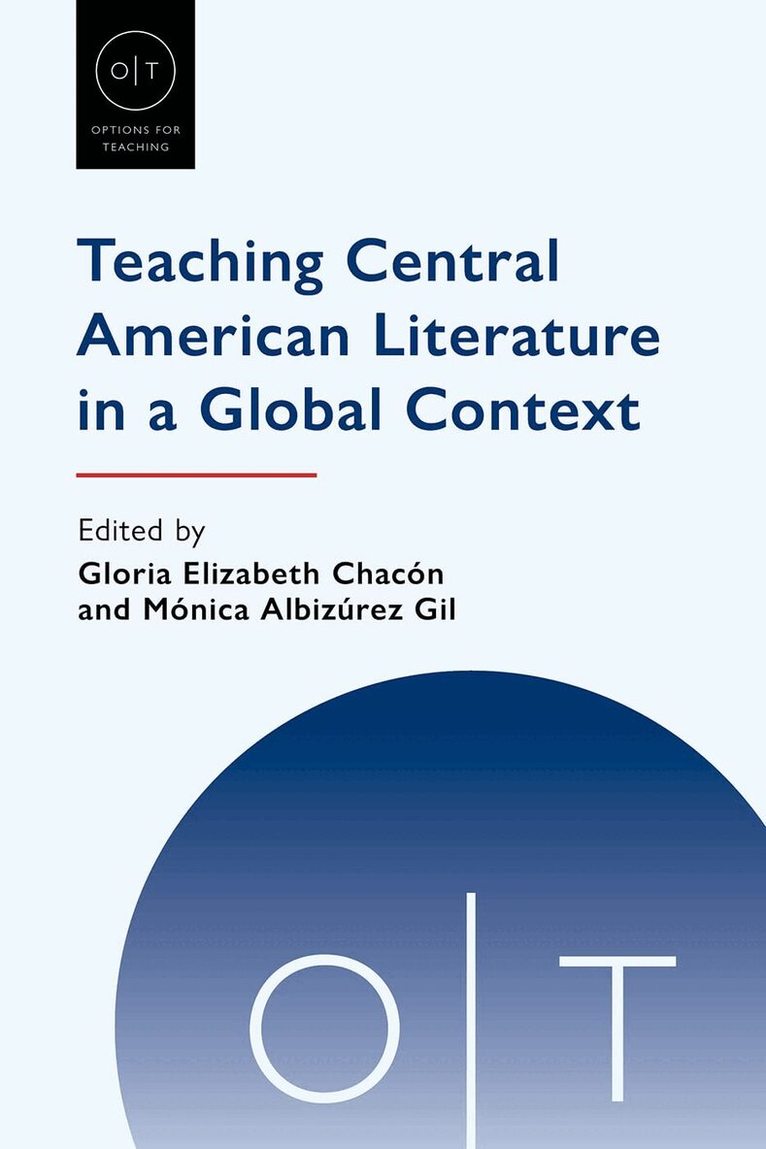
Central America has a long history as a site of cultural and political exchange, from Mayan and Nahua trade networks to the effects of Spanish imperialism, capitalism, and globalization. In Teaching Central American Literature in a Global Context, instructors will find practical, interdisciplinary, and innovative pedagogical approaches to the cultures of Central America that are adaptable to various fields of study. The essays map out classroom lessons that encourage students to relate writings and films to their own experience of global interconnectedness and to read critically the history that binds Central America to the United States, Mexico, and the Caribbean. In the context of debates about immigration and a growing Central American presence in the United States, this book provides vital resources about the region's cultural production and covers trends in Central American literary studies including Mayan and other Indigenous literatures, modernismo, Jewish and Afro-descendant literatures, nineteenth- and twentieth-century literature, and contemporary texts and films.
Häftad, Engelska, 2022
513 kr
Skickas inom 5-8 vardagar
Central America has a long history as a site of cultural and political exchange, from Mayan and Nahua trade networks to the effects of Spanish imperialism, capitalism, and globalization. In Teaching Central American Literature in a Global Context, instructors will find practical, interdisciplinary, and innovative pedagogical approaches to the cultures of Central America that are adaptable to various fields of study. The essays map out classroom lessons that encourage students to relate writings and films to their own experience of global interconnectedness and to read critically the history that binds Central America to the United States, Mexico, and the Caribbean. In the context of debates about immigration and a growing Central American presence in the United States, this book provides vital resources about the region's cultural production and covers trends in Central American literary studies including Mayan and other Indigenous literatures, modernismo, Jewish and Afro-descendant literatures, nineteenth- and twentieth-century literature, and contemporary texts and films.
E-bok
PDF, Engelska, 2018329 kr
Läs direkt efter köp
Latin America’s Indigenous writers have long labored under the limits of colonialism, but in the late twentieth and twenty-first centuries, they have constructed a literary corpus that moves them beyond those parameters. Gloria E. Chacón considers the growing number of contemporary Indigenous writers who turn to Maya and Zapotec languages alongside Spanish translations of their work to challenge the tyranny of monolingualism and cultural homogeneity. Chacón argues that these Maya and Zapotec authors reconstruct an Indigenous literary tradition rooted in an Indigenous cosmolectics, a philosophy originally grounded in pre-Columbian sacred conceptions of the cosmos, time, and place, and now expressed in creative writings. More specifically, she attends to Maya and Zapotec literary and cultural forms by theorizing kab''awil as an Indigenous philosophy. Tackling the political and literary implications of this work, Chacón argues that Indigenous writers'' use of familiar genres alongside Indigenous language, use of oral traditions, and new representations of selfhood and nation all create space for expressions of cultural and political autonomy.Chacón recognizes that Indigenous writers draw from universal literary strategies but nevertheless argues that this literature is a vital center for reflecting on Indigenous ways of knowing and is a key artistic expression of decolonization.
E-bok
PDF, Engelska, 20181 664 kr
Läs direkt efter köp
Latin America’s Indigenous writers have long labored under the limits of colonialism, but in the late twentieth and twenty-first centuries, they have constructed a literary corpus that moves them beyond those parameters. Gloria E. Chacón considers the growing number of contemporary Indigenous writers who turn to Maya and Zapotec languages alongside Spanish translations of their work to challenge the tyranny of monolingualism and cultural homogeneity. Chacón argues that these Maya and Zapotec authors reconstruct an Indigenous literary tradition rooted in an Indigenous cosmolectics, a philosophy originally grounded in pre-Columbian sacred conceptions of the cosmos, time, and place, and now expressed in creative writings. More specifically, she attends to Maya and Zapotec literary and cultural forms by theorizing kab''awil as an Indigenous philosophy. Tackling the political and literary implications of this work, Chacón argues that Indigenous writers'' use of familiar genres alongside Indigenous language, use of oral traditions, and new representations of selfhood and nation all create space for expressions of cultural and political autonomy.Chacón recognizes that Indigenous writers draw from universal literary strategies but nevertheless argues that this literature is a vital center for reflecting on Indigenous ways of knowing and is a key artistic expression of decolonization.