Glynda Hull – författare
Visar alla böcker från författaren Glynda Hull. Handla med fri frakt och snabb leverans.
7 produkter
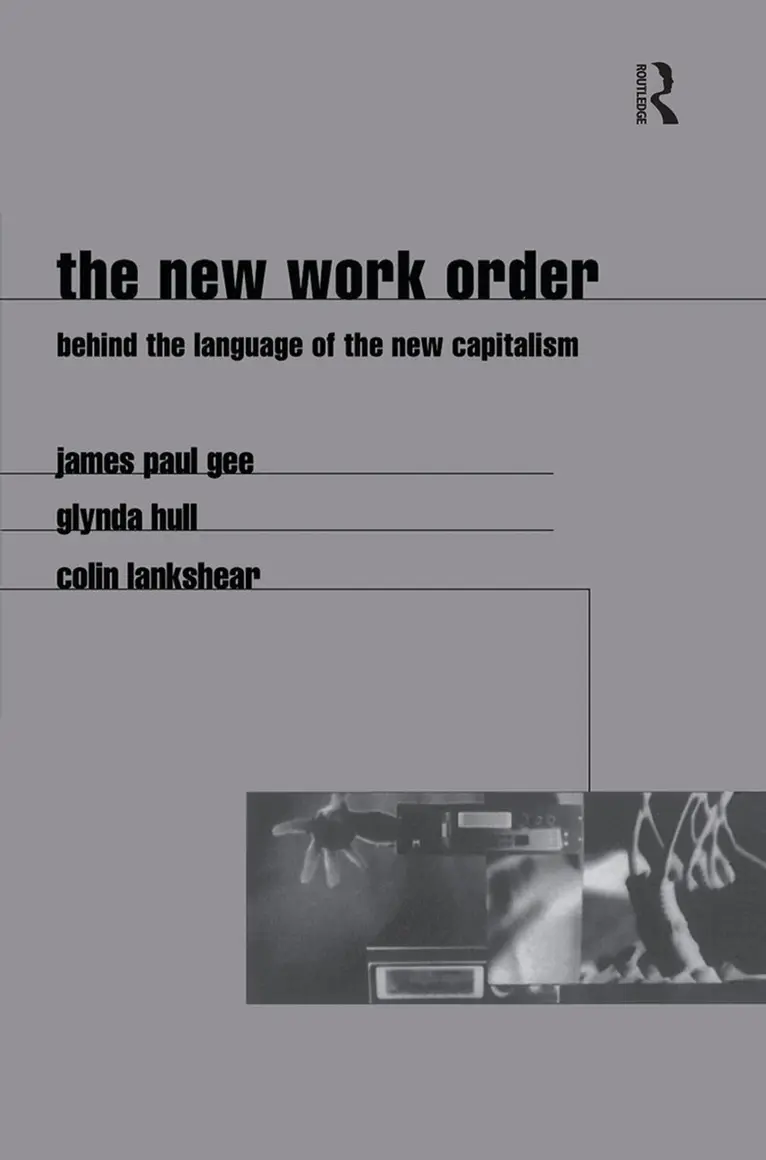
New Work Order
Av James Gee, Glynda Hull m. fl.
Inbunden, 2019
2510 kr
Lägg i varukorg
Workplace democracy. Empowerment. Team leaders. Knowledge workers. This is the language of ?the new work order? promoted by today's management, which promises more meaningful and satisfying work, greater respect for diversity, and more democratic distribution of knowledge.But Gee, Hull, and …
New Work Order
Av Colin Lankshear, Glynda Hull m. fl.
E-bok, 2018
842 kr
Lägg i varukorg
This book presents a sociocultural approach to language, literacy, and learning that deals directly with the new work order and that integrates concern for schools with concern for workplaces. It helps readers to confront complex problems and to construct their own broader theories.
New Work Order
Av Colin Lankshear, Glynda Hull m. fl.
E-bok, 2018
823 kr
Lägg i varukorg
This book presents a sociocultural approach to language, literacy, and learning that deals directly with the new work order and that integrates concern for schools with concern for workplaces. It helps readers to confront complex problems and to construct their own broader theories.
New Work Order
Av James Gee, Glynda Hull m. fl.
Häftad, 1996
714 kr
Lägg i varukorg
This book presents a sociocultural approach to language, literacy, and learning that deals directly with the new work order and that integrates concern for schools with concern for workplaces. It helps readers to confront complex problems and to construct their own broader theories.
Changing Work, Changing Workers
Critical Perspectives on Language, Literacy, and Skills
Av Glynda Hull
Inbunden, 1997
1144 kr
Tillfälligt slut
This glimpse into factories, hospitals, other work settings, and work-related literacy programs, shows the massive changes in expectations for workers' "skills" in the twenty-first century, especially regarding language and literacy.Changing Work, Changing Workers looks at U.S. factories and …
Changing Work, Changing Workers
Critical Perspectives on Language, Literacy, and Skills
Av Glynda Hull
Häftad, 1997
440 kr
Tillfälligt slut
This glimpse into factories, hospitals, other work settings, and work-related literacy programs, shows the massive changes in expectations for workers' "skills" in the twenty-first century, especially regarding language and literacy.Changing Work, Changing Workers looks at U.S. factories and …
School's Out!
Bridging Out-of-school Literacies with Classroom Practice
Av Glynda Hull, Katharine Schultz
Häftad, 2001
307 kr
Tillfälligt slut
This timely book uses research on literacy outside of school to challenge how we think about literacy inside of school. Bringing together highly respected literacy researchers, this volume bridges the divide in the literature between formal education and the many informal settings - homes, …