Goldsworthy – författare
Visar alla böcker från författaren Goldsworthy. Handla med fri frakt och snabb leverans.
4 produkter
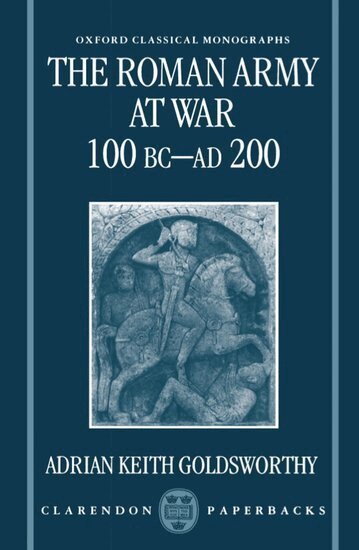
The Roman Army at War 100 BC - AD 200
Av Goldsworthy
Häftad, 1998
586 kr
Lägg i varukorg
This detailed examination of the way in which the Roman army operated during a war and how it fought a battle breaks away from existing studies that mostly concentrate on the army in peacetime and attempts to understand the army as an institution whose ultimate purpose was to wage war. Adrian …
Opportunities, use, and transfer of systems research methods in agriculture to developing countries
Proceedings of an international workshop on systems research methods in agriculture in developing countries, 22–24 November 1993, ISNAR, The Hague
Av Goldsworthy
Häftad, 1994
552 kr
Lägg i varukorg
In December 1993, ISNAR, in collaboration with International Consortium for Application of Systems Approaches, organized a three-day workshop on systems approaches and modelling for agricultural development. Sponsored by the Dutch Ministry for Development Cooperation, the workshop was attended by …
Opportunities, use, and transfer of systems research methods in agriculture to developing countries
Proceedings of an international workshop on systems research methods in agriculture in developing countries, 22–24 November 1993, ISNAR, The Hague
Av Goldsworthy
E-bok, 2013
734 kr
Lägg i varukorg
In December 1993, ISNAR, in collaboration with International Consortium for Application of Systems Approaches, organized a three-day workshop on systems approaches and modelling for agricultural development. Sponsored by the Dutch Ministry for Development Cooperation, the workshop was attended by …