Golnar Nabizadeh – författare
Visar alla böcker från författaren Golnar Nabizadeh. Handla med fri frakt och snabb leverans.
8 produkter
Fiction in the Age of Risk
Av Tony Hughes-d'Aeth, Golnar Nabizadeh
Häftad, 2020
795 kr
Lägg i varukorg
When Ulrich Beck theorised a ‘Risk Society’ (Risikogesellschaft) in 1986, the threat of global annihilation through nuclear war remained uppermost in the minds of his readership. Three decades on, questions about whether the sensation of risk has mutated or evolved in the intervening period, and …
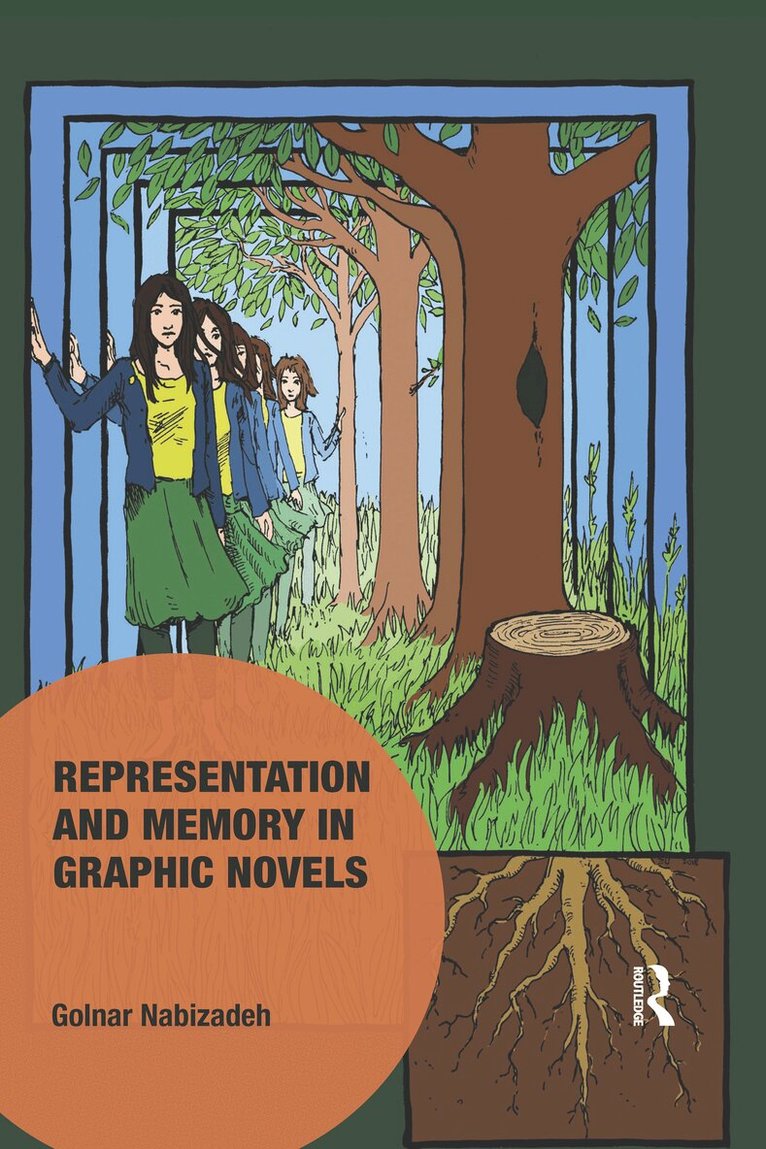
Representation and Memory in Graphic Novels
Häftad, 2020
757 kr
Lägg i varukorg
This book analyses the relationship between comics and cultural memory. By focussing on a range of landmark comics from the twentieth and twenty-first centuries, the discussion draws attention to the ongoing role of visual culture in framing testimony, particularly in relation to underprivileged …
Fiction in the Age of Risk
Av Tony Hughes-d'Aeth, Golnar Nabizadeh
Inbunden, 2018
2894 kr
Lägg i varukorg
When Ulrich Beck theorised a ‘Risk Society’ (Risikogesellschaft) in 1986, the threat of global annihilation through nuclear war remained uppermost in the minds of his readership. Three decades on, questions about whether the sensation of risk has mutated or evolved in the intervening period, and …
Representation and Memory in Graphic Novels
E-bok, 2019
916 kr
Lägg i varukorg
This book analyses the relationship between comics and cultural memory. By focussing on a range of landmark comics from the twentieth and twenty-first centuries, the discussion draws attention to the ongoing role of visual culture in framing testimony, particularly in relation to underprivileged …
Representation and Memory in Graphic Novels
E-bok, 2019
936 kr
Lägg i varukorg
This book analyses the relationship between comics and cultural memory. By focussing on a range of landmark comics from the twentieth and twenty-first centuries, the discussion draws attention to the ongoing role of visual culture in framing testimony, particularly in relation to underprivileged …
Fiction in the Age of Risk
Av Golnar Nabizadeh, Tony Hughes-d'Aeth
E-bok, 2020
909 kr
Lägg i varukorg
When Ulrich Beck theorised a ‘Risk Society’ ( Risikogesellschaft ) in 1986, the threat of global annihilation through nuclear war remained uppermost in the minds of his readership. Three decades on, questions about whether the sensation of risk has mutated or evolved in the intervening period, …
Fiction in the Age of Risk
Av Golnar Nabizadeh, Tony Hughes-d'Aeth
E-bok, 2020
936 kr
Lägg i varukorg
When Ulrich Beck theorised a ‘Risk Society’ ( Risikogesellschaft ) in 1986, the threat of global annihilation through nuclear war remained uppermost in the minds of his readership. Three decades on, questions about whether the sensation of risk has mutated or evolved in the intervening period, …
Representation and Memory in Graphic Novels
Inbunden, 2019
2760 kr
Lägg i varukorg
This book analyses the relationship between comics and cultural memory. By focussing on a range of landmark comics from the twentieth and twenty-first centuries, the discussion draws attention to the ongoing role of visual culture in framing testimony, particularly in relation to underprivileged …