Gordon Kipling - Böcker
Visar alla böcker från författaren Gordon Kipling. Handla med fri frakt och snabb leverans.
9 produkter
9 produkter
Del 296 - Early English Text Society Original Series
The Receyt of the Ladie Kateryne
Inbunden, Engelska, 1996
718 kr
Skickas inom 5-8 vardagar
This is the first critical edition of The Receyt of the Ladie Kateryne, a text which chronicles Katharine of Aragon's arrival in England, her triumphant entry into London (1501), her marriage to Prince Arthur, the tournament held in honour of their marriage, and Prince Arthur's funeral in Ludlow and Worcester a few months later. Divided into books and chapters, it casts its historical materials into the form of a medieval romance, occasionally borrowing cadences from Malory or Lord Berners to describe the actions of Katharine, Arthur, and Henry VII.No other contemporary source preserves such a full and vivid account of social history, visual arts, and drama in England at the beginning of the sixteenth-century. With the single exception of the interlude, which is well documented by a number of other texts, the Receyt provides a complete picture of the state of English court drama at a crucial point in its development.
3 971 kr
Skickas inom 7-10 vardagar
The civic triumph, or royal entry, was one of the great `spectacles of state' that stood at the heart of national and civic life in the Middle Ages. It originated in the late fourteenth century as a vast theatrical ritual that transformed the city into a stage and involved king and people alike as actors in a cosmic drama. It endured until a more neoclassical form replaced it in the late sixteenth century. Enter The King examines the medieval civic triumph not primarily as a programme of political emblems, but rather as a theatrical ritual designed to inaugurate the sovereign into his reign. As the king entered the city gates, he became the chief actor in an elaborate court spectacle defined by the citizens' pageantry and witnessed by his subjects. This inaugural purpose, indeed, gave the medieval civic triumph its distinctive form and purpose.Enter the King examines, for the first time, the ritual purposes and dramatic form of these spectacles. It explores the ways in which these ritualistic shows often draw their central ideas and inspiration from the medieval church's complex Advent liturgy to celebrate and acclaim the king's First Coming and to dramatize the meaning of the king's entry in terms of Christ's entry into Jerusalem. The roles which royal and civic actors performed on these occasions served to define the political, social, and religious ideals that bound them together into a community. Enter the King studies the medieval civic triumph as an international form of drama and as one of the defining rituals of late medieval society in England, France, and the Low Countries.
Del 39 - Medieval English Theatre
Medieval English Theatre 39
Stagecraft, Performance, Reception
Häftad, Engelska, 2018
290 kr
Skickas inom 7-10 vardagar
Newest research into drama and performance of the middle ages.Medieval English Theatre is the premier journal in early theatre studies. Its name belies its wide range of interest: it publishes articles on theatre and pageantry from across the British Isles up to the opening of the London playhouses and the suppression of the civic mystery cycles, and also includes contributions on European and Latin drama, together with analyses of modern survivals or equivalents, and of research productions of medieval plays.This volume features essays on stagecraft, performance, and reception across a wide range of theatrical genres. Overlapping themes include a return to the York Corpus Christi Play, the practicalities of pageant waggon construction and maintenance, mechanical stage effects, international influences, East Anglian theatre and "folk" happenings, academic Latin drama, and private gentry festivities.Contributors include Jamie Beckett, Phil Butterworth, Peter Happé, James McBain, Tom Pettitt, James Stokes, and Diana Wyatt.
321 kr
Skickas inom 7-10 vardagar
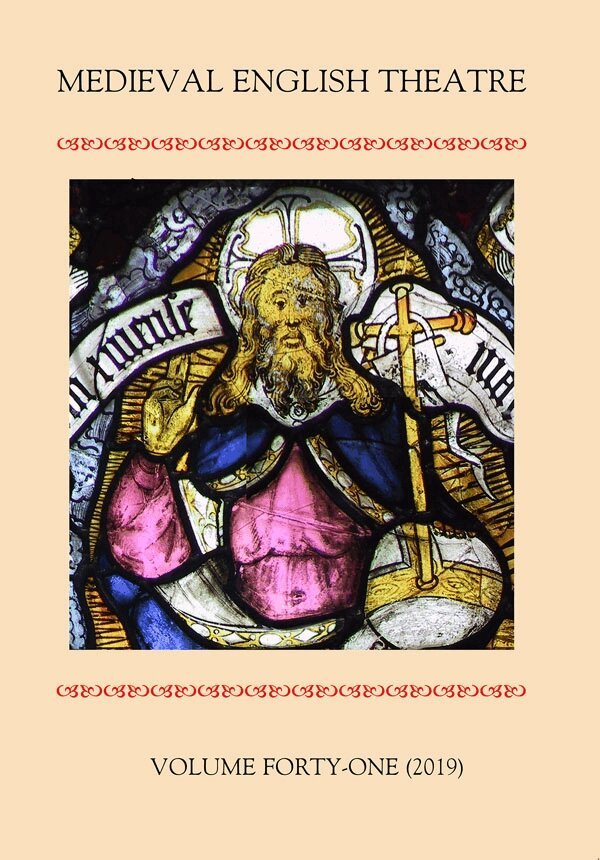
Essays on aspects of early drama.Medieval English Theatre is the premier journal in early theatre studies. Its name belies its wide range of interest: it publishes articles on theatre and pageantry from across the British Isles up to the opening of the London playhouses and the suppression of the civic mystery cycles, and also includes contributions on European and Latin drama, together with analyses of modern survivals or equivalents, and of research productions of medieval plays.The articles in this fortieth volume engage with the key communities for early theatre: royalty, city and household, and religious institutions. Topics include the Royal Entry of Elizabeth Woodville into Norwich (1469); Henry VIII's Robin Hood entertainment for Catherine of Aragon; the sun's contribution to stage effects in the York Corpus Christi Play: the engagement with local worthies in Mankind; and the convent drama of Huy, in the Low Countries.Contributors: Aurélie Blanc, Philip Butterworth, Clare Egan, John Marshall, Olivia Robinson, Michael Spence, Meg Twycross.
321 kr
Skickas inom 7-10 vardagar
Essays on the performance of drama from the middle ages, ranging from the well-known cycles of York to matter from Iran.Medieval English Theatre is the premier journal in early theatre studies. Its name belies its wide range of interest: it publishes articles on theatre and pageantry from across the British Isles up to the opening of the London playhouses and the suppression of the civic mystery cycles, and also includes contributions on European and Latin drama, together with analyses of modern survivals or equivalents, and of research productions of medieval plays.The articles here focus on civic theatre and display. Chester, York, Durham and Newcastle, and London. Practicalities are to the fore: what the Drawers of Dee actually did, how the actors in the York Corpus Christi Play knewwhat time it was, the difficulties presented to London pageantry by unauthorised house-extensions and horse-droppings. Even the stately entertainments of a royal tour by James VI & I featured (in Newcastle, of course) negotiationover the monopoly on coal disguised as a historical event in a play about King Alfred and Canute. Ranging further afield is an introduction to the living tradition of Iranian mystery plays, whose history and development have somethought-provoking parallels with those of medieval waggon plays in the West. Finally, the director and producer discuss their 2019 production of John Redford's Wit and Science by Edward's Boys, the first to be played by aboys' company since the sixteenth century.
321 kr
Skickas inom 7-10 vardagar
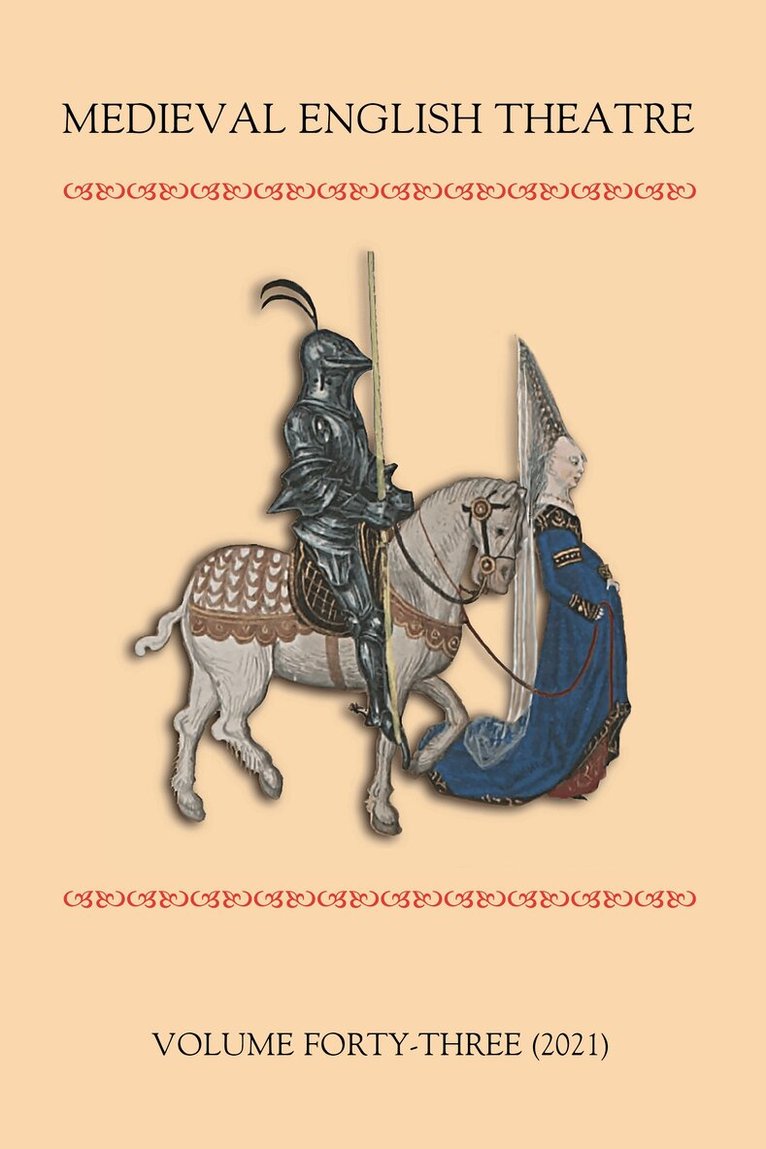
The ludic element of drama in the Middle Ages - or drama with early subject matter - is here to the fore.Medieval English Theatre is the premier journal in early theatre studies. Its name belies its wide range of interest: it publishes articles on theatre and pageantry from across the British Isles up to the opening of the London playhouses and the suppression of the civic mystery cycles, and also includes contributions on European and Latin drama, together with analyses of modern survivals or equivalents, and of research productions of medieval plays.This edition combines, perhaps unexpectedly, royalty and games. Games of all kinds, from jousting and "Christmas games" to those usually associated with children, are shown, it is suggested, to be more than they at first appear. Apparently run-of-the-mill entertainments, when presented to the court by the Londoners, by the court to a visiting emperor , or by the retainers of royalty and nobility to the general public for commercial gain, turn out to have unexpected political resonances; while the potential underlying sadism of children's games gains a horrific immediacy when diverted to the torturing of Christ. Even today, the musical SIX says a great deal more about royalty and role-playing than initially might appear, especially when set against eye-witness accounts of the first meeting of Anna of Cleves with Henry VIII, and what modern novelists have made of it . In the process we learn a great deal more about the detail of these games, from the maskerie costumes of James VI and Anna of Denmark to the elaborate fantasy challenges of the jousters in 1400/1401, which incidentally suggest that fourteenth-century court culture, whose language was Anglo-French, is a major missing link in the history of what is usually treated as purely English literature.Contributors: Philip Bennett, Philip Butterworth, Sarah Carpenter, Elisabeth Dutton, James Forse, Gordon Kipling, Michael Pearce, Meg Twycross.
321 kr
Skickas inom 7-10 vardagar
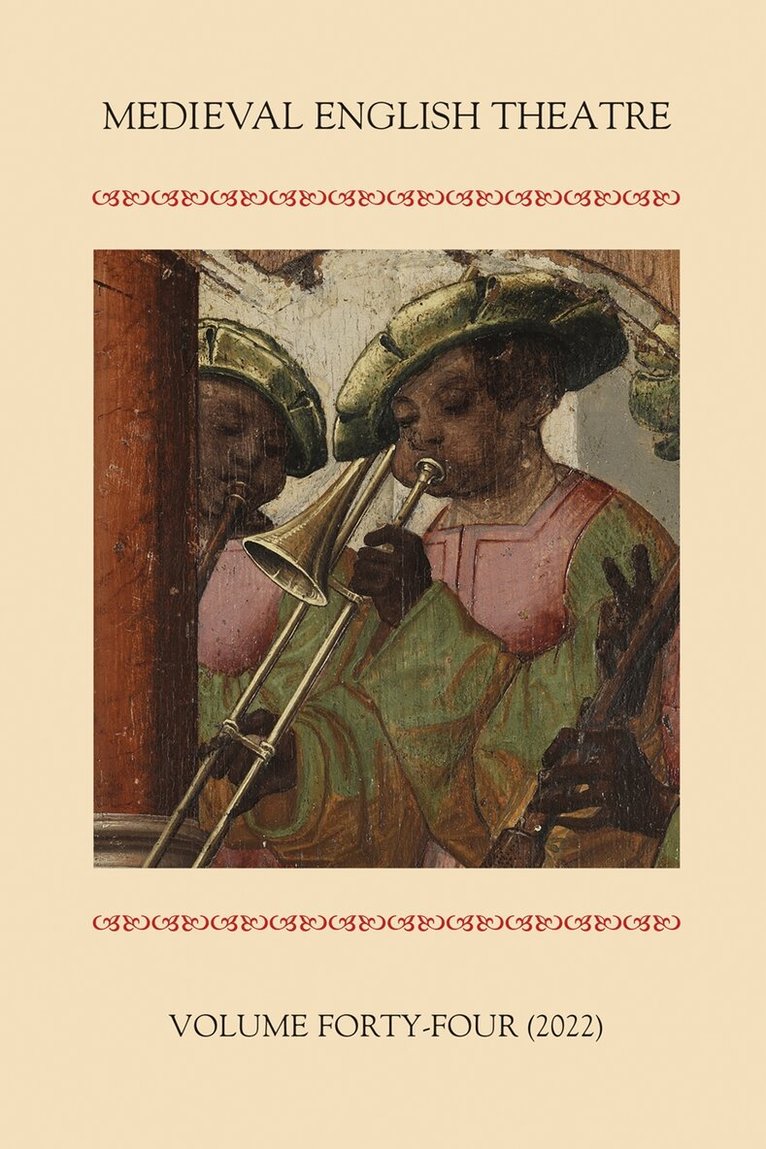
Newest research into drama and performance of the Middle Ages and Tudor period.Medieval English Theatre is the premier journal in early theatre studies. Its name belies its wide range of interest: it publishes articles on theatre and pageantry from across the British Isles up to the opening of the London playhouses and the suppression of the civic religious plays , and also includes contributions on European and Latin drama, together with analyses of modern survivals or equivalents, and of research productions of medieval plays.The papers in this volume explore richly interlocking topics. Themes of royalty and play continue from Volume 43. We have the first in-depth examination of the employment of the now-famous Black Tudor trumpeter, John Blanke, at the royal courts of Henry VII and Henry VIII. An entertaining survey of the popular European game of blanket-tossing accompanies the translation of a raucous, sophisticated, but surprisingly humane Dutch rederijkers farce. The Towneley plays remain fertile ground for further research, and this blanket-tossing farce illuminates a key scene of the well-known Second Shepherd's Play. New exploration of a colloquial reference to 'Stafford Blue' in another Towneley pageant, Noah, not only enlivens the play's social context but contributes to important current re-thinking of the manuscript's date. Two papers bring home the theatrical potential of food and eating. We learn how the Tudor interlude Jacob and Esau dramatises the preparation and provision of food from the Genesis story. Serving and eating meals becomes a means of social, theological, and theatrical manipulation. Contrastingly, in the N. Town Last Supper play and a French convent drama, we see how the bread of Passover, the Last Supper, and the Mass could be evoked, layered and shared in performance. In both these plays the audiences' experiences of theatre and of communion overlap and inform each other.
497 kr
Skickas inom 7-10 vardagar
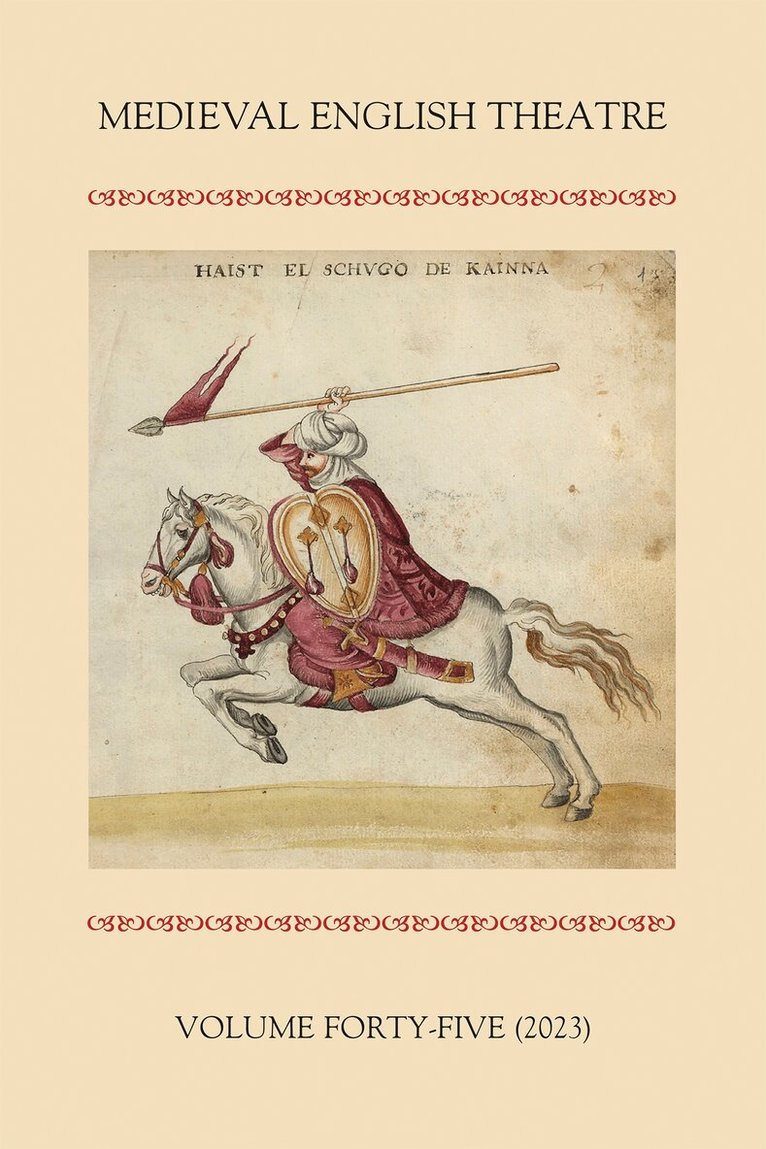
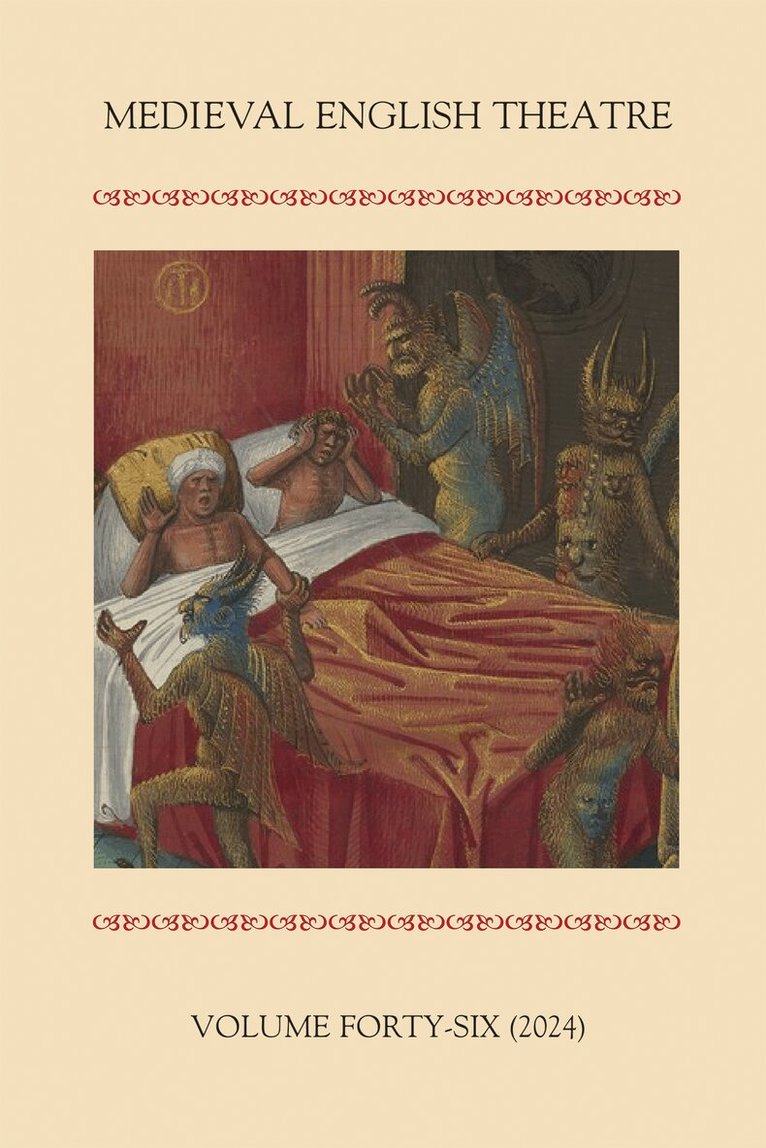
Newest research into drama and performance from the Middle Ages and the Tudor period. Medieval English Theatre is the premier journal in early theatre studies. Its name belies its wide range of interest: it publishes articles on theatre and pageantry from across the British Isles up to the opening of the London playhouses and the suppression of the civic religious plays, and also includes contributions on European and Latin drama, together with analyses of modern survivals or equivalents, and of research productions of medieval plays. This volume offers new perspectives in three important areas. It opens with an investigation of the tantalising image of the Black Tudor trumpeter, John Blanke, in the Westminster Tournament Roll. Complementing the assessment of the documentary evidence for his employment in our last volume, it uncovers the surprising complexity of how Islamic dress was represented at the court of Henry VIII. Two essays engage with the challenging Croxton Play of the Sacrament, discussing very different issues of bodily integrity. The first revealingly brings together medieval and posthumanist theory, proposing how in performance the play can move to obliterate the distinction between Jewish and Christian bodies. The second considers the play in the light of modern disability theory, before examining the often contrasting evidence of lives lived, and performances informed, by actual disabled performers. The final contributions focus on twentieth- and twenty-first-century performances of medieval material, and how it can be adapted for later times and sensibilities. Investigation of an almost unknown 1924 London performance of a fifteenth-century French nativity play reveals much about early twentieth-century views of medieval drama. Meanwhile, the 2023 coronation of King Charles III prompts an analysis of a spectacular ceremony balanced between asserting its medieval origins and demonstrating its modern relevance. Finally, a review of a story-telling performance assesses how the problematic material of The Seven Sages of Rome might be addressed to modern audiences and preoccupations.
497 kr
Skickas inom 7-10 vardagar
Newest research into drama and performance from the Middle Ages and the Tudor period.Medieval English Theatre is the premier journal in early theatre studies. Its name belies its wide range of interest: it publishes articles on theatre and pageantry from across the British Isles up to the opening of the London playhouses and the suppression of the civic religious plays, and also includes contributions on European and Latin drama, together with analyses of modern survivals or equivalents, and of research productions of medieval plays. This volume is testament to the lively range of current research across the field of medieval theatre. It investigates different traditions of performance, through a variety of theatrical, theological, and material approaches. It opens with an analysis of a fascinating Dutch rhetoricians play-text, revealing how its engagingly disruptive female character, "Everyday Chitchat", proves central to a serious discussion of censorship - in a play which was itself censored. Although no play-text survives from medieval Beverley, the next contribution shows how local records of its Corpus Christi plays offer rich details of a range of pageants and organisation not dissimilar from its more famous neighbour, York. The two following articles investigate theological issues. A nuanced re-reading of The Treatise of Miracles Playing considers how priestly involvement in performance raised anxieties about the role and authority of priests, including at the Mass. Attitudes to "dread", revealed through the taxonomies of fear developed by medieval theologians, then illuminate the didactic role of fear, engendered in the protagonists and audiences of the Macro morality plays. The volume closes with the second part of an investigation into "John Blanke's Hat". Following the first part's demonstration, in the previous volume of METh, that the Black trumpeter's headgear was not a marker of his faith, this uncovers the true identity of the hat, asking how far it can offer evidence for his history. The present volume thus throws new light on familiar texts and questions, offering important contributions to newly developing fields of study.