Gordon M. Shepherd – författare
Visar alla böcker från författaren Gordon M. Shepherd. Handla med fri frakt och snabb leverans.
15 produkter
15 produkter
Inbunden, Engelska, 2015
1 751 kr
Skickas inom 3-6 vardagar
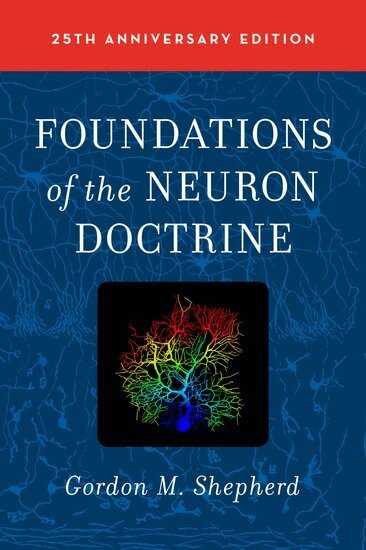
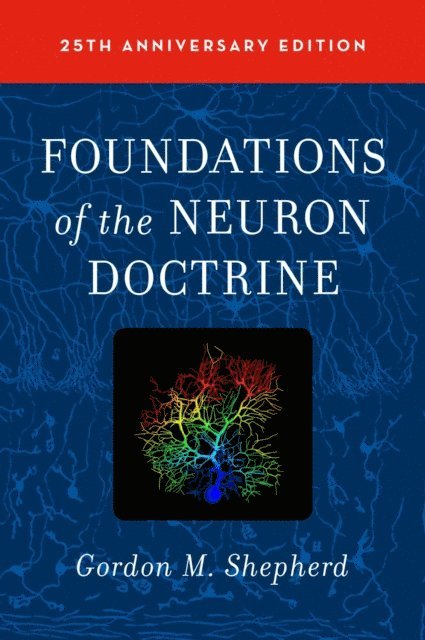
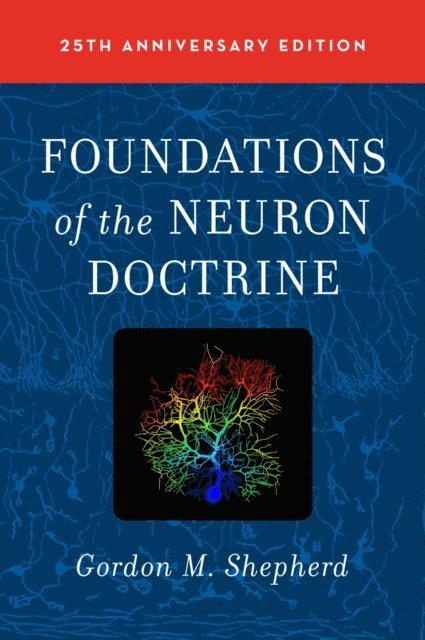
The neuron doctrine, first formulated in 1891, states that the brain is constructed of individual neurons, organized into functioning circuits that mediate behavior. Above all else, this is the main concept that underlies all of modern neuroscience. This 25th Aniversary Edition of The Foundations of the Neuron Doctrine explains how this theory was the product of an explosion of histological studies and vigorous debates near the end of the nineteenth century by an extraordinary group of scientists, most importantly the leading figure of the time, Santiago Ramon y Cajal of Spain, and includes the foremost nervous system investigators of many countries, such as Albrecht Kolliker, Sigmund Freud, Wilhelm His, August Forel, Fritdjof Nansen and Gustav Retzius. The neuron doctrine explains how these eminent scientists used a selective nerve cell stain invented by Camillo Golgi of Italy and followed him in describing the fabulous branching patterns of nerve cells, providing strong evidence that the cells interact as individual units to form circuits. This work also describes how this view was opposed by Golgi, who maintained that the nerve cells form syncytial networks. Studies in the 1950s appeared resoundingly to confirm the nerve cell as an individual unit, as embodied in the neuron doctrine, which became the basis for the rise of concepts of normal and disordered neural function in the remaining 20th century. This 25th Anniversary Edition concludes by discussing how recent studies are showing a much greater degree of complexity in neuronal organization, so that the debate of neuron versus network is again coming to the fore of neuroscience research. Unique to this anniversary edition is the inclusion of commentaries by distinguished leaders in the neurosciences on the continuing relevance of the neuron doctrine for modern studies of the brain at all levels, from genes and molecules to microcircuits, neural networks, and behavior.
E-bok
PDF, Engelska, 2015755 kr
Läs direkt efter köp
The neuron doctrine, first formulated in 1891, states that the brain is constructed of individual neurons, organized into functioning circuits that mediate behavior. It is the fundamental principal that underlies all of neuroscience and clinical neurology. Foundations of the Neuron Doctrine gives an authoritative account of how this theory was the product of an explosion of histological studies and vigorous debates near the end of the nineteenth century by an extraordinary group of scientists, led by Santiago Ramon y Cajal of Spain, using a selective stain discovered by Camillo Golgi of Italy. They were the first to describe the distinctive branching patterns of nerve cells, providing evidence that the cells interact as individual units to form circuits, opposed however by Golgi, who held out for a view that the nerve cells form syncytial networks. Studies in the 1950s appeared to confirm the nerve cell as an individual unit, as embodied in the neuron doctrine, which became the basis for the rise of concepts of normal and disordered neural function since then. This 25th Anniversary Edition is timely. Recent studies are showing a much greater degree of complexity in neuronal organization, so that the debate of neuron versus network is again coming to the fore in neuroscience research. Unique to this Anniversary Edition is the inclusion of commentaries by distinguished international leaders - Marina Bentivoglio, Xavier De Felipe, Sten Grillner, Paolo Mazzarello, Larry Swanson, and Rafael Yuste - on the continuing relevance of the neuron doctrine for modern studies of the brain at all levels, from genes and molecules to microcircuits, neural networks, and behavior. As this new wave of modern studies expands our concepts of nervous function as the basis of behavior, Foundations of the Neuron Doctrine will be a unique source providing conceptual continuity from classical times to the present and into the future.With commentaries fromMarina Bentivoglio Paolo Mazzarello Javier DeFelipe Larry Swanson Sten Grillner Rafael Yuste
E-bok
Engelska, 2015755 kr
Läs direkt efter köp
The neuron doctrine, first formulated in 1891, states that the brain is constructed of individual neurons, organized into functioning circuits that mediate behavior. It is the fundamental principal that underlies all of neuroscience and clinical neurology. Foundations of the Neuron Doctrine gives an authoritative account of how this theory was the product of an explosion of histological studies and vigorous debates near the end of the nineteenth century by an extraordinary group of scientists, led by Santiago Ramon y Cajal of Spain, using a selective stain discovered by Camillo Golgi of Italy. They were the first to describe the distinctive branching patterns of nerve cells, providing evidence that the cells interact as individual units to form circuits, opposed however by Golgi, who held out for a view that the nerve cells form syncytial networks. Studies in the 1950s appeared to confirm the nerve cell as an individual unit, as embodied in the neuron doctrine, which became the basis for the rise of concepts of normal and disordered neural function since then. This 25th Anniversary Edition is timely. Recent studies are showing a much greater degree of complexity in neuronal organization, so that the debate of neuron versus network is again coming to the fore in neuroscience research. Unique to this Anniversary Edition is the inclusion of commentaries by distinguished international leaders - Marina Bentivoglio, Xavier De Felipe, Sten Grillner, Paolo Mazzarello, Larry Swanson, and Rafael Yuste - on the continuing relevance of the neuron doctrine for modern studies of the brain at all levels, from genes and molecules to microcircuits, neural networks, and behavior. As this new wave of modern studies expands our concepts of nervous function as the basis of behavior, Foundations of the Neuron Doctrine will be a unique source providing conceptual continuity from classical times to the present and into the future.With commentaries fromMarina Bentivoglio Paolo Mazzarello Javier DeFelipe Larry Swanson Sten Grillner Rafael Yuste
Inbunden, Engelska, 2018
1 828 kr
Skickas inom 5-8 vardagar
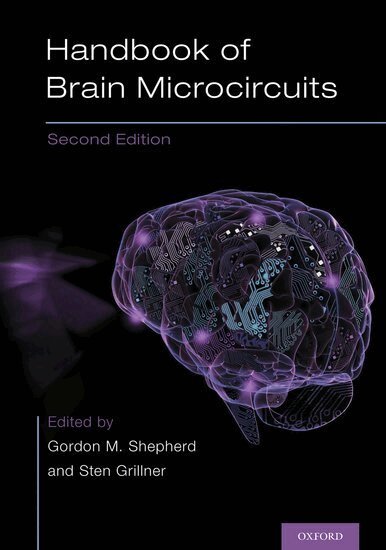
Updated and revised, the second edition of Handbook of Brain Microcircuits covers the functional organization of 50 brain regions. This now-classic text uses an interdisciplinary approach to examine the integration of structure, function, electrophysiology, pharmacology, brain imaging, and behavior. Through uniquely concise and authoritative chapters by leaders in their fields, the Handbook of Brain Microcircuits synthesizes many of the new principles of microcircuit organization that are defining a new era in understanding the brain connectome, integrating the major neuronal pathways and essential microcircuits with brain function. New to the Second Edition:· Insights into new regions of the brain through canonical microcircuit diagrams for each region· Latest methodology in optogenetics, neurotransmitter uncaging, computational models of neurons and microcircuits, serial ultrastructure reconstructions, cellular and regional imaging· Extrapolated data from new genetic tools and understandings applied to microcircuits in the mouse and Drosophila· Common principles across vertebrate and invertebrate microcircuit systems, one of the key goals of modern neuroscience
E-bok
PDF, Engelska, 20171 627 kr
Läs direkt efter köp
Updated and revised, the second edition of Handbook of Brain Microcircuits covers the functional organization of 50 brain regions. This now-classic text uses an interdisciplinary approach to examine the integration of structure, function, electrophysiology, pharmacology, brain imaging, and behavior. Through uniquely concise and authoritative chapters by leaders in their fields, the Handbook of Brain Microcircuits synthesizes many of the new principles of microcircuit organization that are defining a new era in understanding the brain connectome, integrating the major neuronal pathways and essential microcircuits with brain function. New to the Second Edition:? Insights into new regions of the brain through canonical microcircuit diagrams for each region? Latest methodology in optogenetics, neurotransmitter uncaging, computational models of neurons and microcircuits, serial ultrastructure reconstructions, cellular and regional imaging? Extrapolated data from new genetic tools and understandings applied to microcircuits in the mouse and Drosophila? Common principles across vertebrate and invertebrate microcircuit systems, one of the key goals of modern neuroscience
E-bok
Engelska, 20171 627 kr
Läs direkt efter köp
Updated and revised, the second edition of Handbook of Brain Microcircuits covers the functional organization of 50 brain regions. This now-classic text uses an interdisciplinary approach to examine the integration of structure, function, electrophysiology, pharmacology, brain imaging, and behavior. Through uniquely concise and authoritative chapters by leaders in their fields, the Handbook of Brain Microcircuits synthesizes many of the new principles of microcircuit organization that are defining a new era in understanding the brain connectome, integrating the major neuronal pathways and essential microcircuits with brain function. New to the Second Edition:? Insights into new regions of the brain through canonical microcircuit diagrams for each region? Latest methodology in optogenetics, neurotransmitter uncaging, computational models of neurons and microcircuits, serial ultrastructure reconstructions, cellular and regional imaging? Extrapolated data from new genetic tools and understandings applied to microcircuits in the mouse and Drosophila? Common principles across vertebrate and invertebrate microcircuit systems, one of the key goals of modern neuroscience
Del 6 - History of Neuroscience
Foundations of the Neuron Doctrine
Inbunden, Engelska, 1992
1 068 kr
Skickas inom 5-8 vardagar
For a century, the neuron doctrine has been the basis for our concepts of nervous organization and brain function, stating that the cell theory applies to the nervous system. Santiago Ramon y Cajal, Spain's greatest scientist, was its main architect; his main tool being a capricious nerve cell stain discovered by Camillo Golgi. This book reviews the original papers on which the neuron doctrine was based, showing that the evidence came from such contributors as Albrecht Kolliker, Sigmund Freud, Wilhelm His, August Forel, Fritdjof Nansen and Gustav Retzius. Many questions were raised which remain relevant today. Electron microscopical studies in the 1950s appeared to confirm the classical doctrine but subsequent studies revealed unsuspected complexities. This book reviews the new studies against the classical work and suggests new directions for revising our concept of the neuron as a basis for the functional organization of the nervous system.
Häftad, Engelska, 1994
2 076 kr
Skickas inom 5-8 vardagar
This widely used and highly praised textbook has been extensively revised to reflect the most exciting research across the entire range of neuroscience. A new feature is an introductory discussion of the mechanisms of gene regulation, while the superfamily of molecules responsible for membrane signalling is given new emphasis as a unifying theme throughout molecular and cellular neurobiology. The roles of these molecules in impulse conduction and synaptic transmission are fully explained, and illustrated by computer models. For the first time in a neurobiology text, these mechanisms can be explored by using a state-of-the-art interactive computer program provided with an accompanying tutorial handbook. In the sections dealing with neural systems, the comparative approach continues to be used to illustrate general principles. Students learn about the progress being made toward a molecular basis for sensory perception and new methods for revealing the neural activity underlying sensory and motor functions are described. There is an emphasis on the plasticity of both sensory and the motor circuits in mediating functions that reflect the effects of activity or recovery from injury. Central systems continue to be featured as the culmination of neural evolution. These include the systems vital for all animals, such as sleeping, feeding and reproduction, as well as the systems for language, emotion and higher cognitive functions that reach their peak in humans. There is special emphasis on recent work on memory, contrasting the mechanisms for short-term working memory and long-term memory and summarizing the present understanding of the mechanisms of long-term potential. The twin themes of organizational levels and comparative systems help bring together the vast range of studies and provides a conceptual framework that unifies the field of neurobiology. As in previous editions, the text contnues to draw on the advantages of having a single author. In addition, leaders in a number of specialties have assisted the author, so that the text represents the most up-to-date views of current research on the nervous system.
Häftad, Engelska, 2004
1 147 kr
Skickas inom 5-8 vardagar
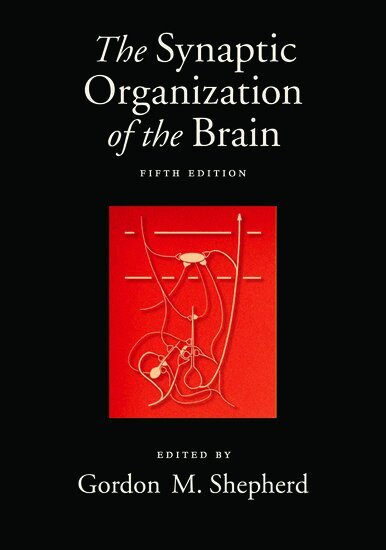
It is widely recognized that the neural basis of brain function can be fully understood only by integrating many disciplines at many levels. Studies os synaptic organization are bringing about a quiet revolution in achieving this goal, as documented by this unique book over the past 30 years. In this fifth edition, the results of the mouse and human genome projects are incorporated for the first time. Molecular biologists interested in functional genomics and proteomics of the brain will find answers here to the critical questions: what are the cell and circuit functions of gene products? Also for the first time, the reader is oriented to supporting neuroscience databases.Among the new advances covered are 2-photon confocal laser microscopy of dendrites and dendritic spines, biochemical analyses, and dual patch and multielectrode recordings, applied together with an increasing range of behavioural and gene-targeting methods. Leading experts in the best understood brain regions bring together the molecular, anatomical, functional, and behavioural data in authoritative integrated accounts. The chapters are organized in the same format, covering the neural elements, synaptic connections, basic circuits, physiology, neurotransmitters, neuromodulators, membrane properties, dendritic properties, and with a final section on how the circuits mediate specific behaviours. The uniform framework for each chapter enables the authors to higlight the principles that are common to all regions, as well as the adaptations unique to each, thus serving as a model for understanding the neural basis of behaviour.
Inbunden, Engelska, 2014
873 kr
Skickas inom 5-8 vardagar
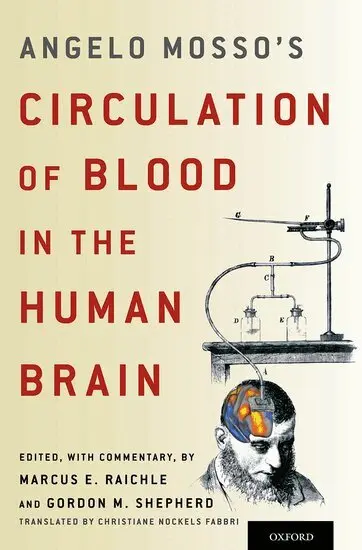
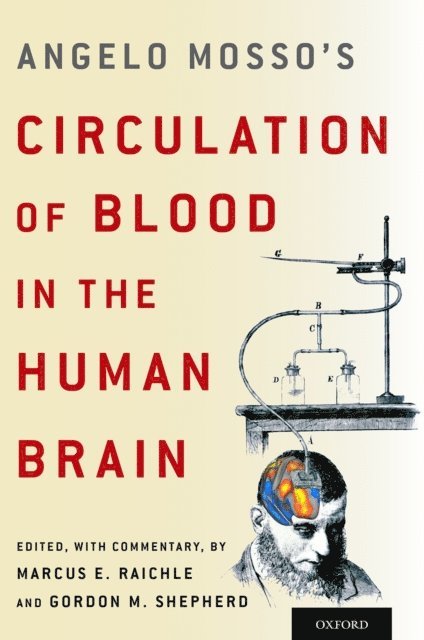
Modern brain imaging is revolutionizing the study of brain function in health and disease. Few realize that its origins began with a pioneering study in the nineteenth century by an Italian scientist, Angelo Mosso, of several subjects brought to him with head injuries that exposed their brains to direct observation. He took advantage of this opportunity to observe for the first time changes in cerebral blood flow in relation to different behaviors, the same changes that are the basis for the measurements underlying modern methods.Although Mosso was widely recognized for this highly original study by his contemporaries, through a German translation in 1881, there has never been a translation through which his magnificent achievement could be recognized in English. His rightful role as the pioneer in brain imaging has thus not been recognized. This unique volume corrects that deficiency. Through it, the modern reader, whether an expert in the field or an interested scientist or member of the public, can gain a new perspective on the remarkable insights Mosso gained into how behaviors as subtle as thinking about a subject or feeling an emotion can produce the changes in pulsations of the brain that he observed. The special features of this volume begin with a brief summary of Mosso's life. Two pioneers of modern brain imaging, Marcus Raichle and Gordon M. Shepherd, then provide an extensive commentary that succinctly summarizes Mosso's work and explains its relevance to modern methods. The authors not only emphasize Mosso's role as a pioneer in brain imaging, but also through this study as a pioneer in the eventual rise of cognitive neuroscience. The English translation then follows, together with all of the plates and illustrations of the original volume. The result is a classic of neuroscience now available for wide appreciation by neuroscientists, neurologists, psychologists, psychiatrists, historians of science and medicine, and the general public.
E-bok
PDF, Engelska, 2014725 kr
Läs direkt efter köp
Modern brain imaging is revolutionizing the study of brain function in health and disease. However, few realize that its origins began in the nineteenth century with Dr. Angelo Mosso''s pioneering experiments. A foremost Italian physiologist and scientist, Angelo Mosso studied several patients brought to him with head injuries that exposed their live brains to direct, long-term observation. He took advantage of these rare opportunities to document, for the first time, changes in cerebral blood flow in response to different stimuli, behaviors, and emotions, the very same changes that are now the basis for the measurements underlying modern functional brain imaging.Mosso was widely recognized by his contemporaries for his highly original studies, published both in Italian in 1878 and in German in 1881. Yet there has never been a translation through which this groundbreaking work could be appreciated by the English-speaking world. Indeed, Angelo Mosso''s sophisticated experiments were to neuroscience what surgeon William Beaumont''s in vivo observations were to gastric physiology fifty years earlier. This unique monograph establishes Mosso''s rightful role as the pioneer of brain imaging. Through it, the modern reader, whether expert neuroscientist or interested student, can gain a new perspective on the author''s remarkable insights: how behaviors as subtle as thinking about a subject or feeling an emotion produce the changes in pulsations of the brain that he observed and recorded for posterity. Special features of this volume include first a brief summary of Mosso''s life. Two pioneers of modern brain imaging, Marcus E. Raichle (winner of the Kavli Prize for Neuroscience) and Gordon M. Shepherd (Yale University Professor of Neurobiology) then review Mosso''s work and provide extensive commentary to explain its relevance to modern brain science. The authors not only emphasize Mosso''s pioneering role in brain imaging, but also his fundamental contribution to the rise of cognitive neuroscience. The English translation (by historian of medicine Christiane Nockels Fabbri) follows, together with all of the plates and illustrations of the original volume. The result is a classic of neuroscience, now available for wide appreciation by neuroscientists, neurologists, psychologists, psychiatrists, historians of science and medicine, and the general public.
E-bok
Engelska, 2014725 kr
Läs direkt efter köp
Modern brain imaging is revolutionizing the study of brain function in health and disease. However, few realize that its origins began in the nineteenth century with Dr. Angelo Mosso''s pioneering experiments. A foremost Italian physiologist and scientist, Angelo Mosso studied several patients brought to him with head injuries that exposed their live brains to direct, long-term observation. He took advantage of these rare opportunities to document, for the first time, changes in cerebral blood flow in response to different stimuli, behaviors, and emotions, the very same changes that are now the basis for the measurements underlying modern functional brain imaging.Mosso was widely recognized by his contemporaries for his highly original studies, published both in Italian in 1878 and in German in 1881. Yet there has never been a translation through which this groundbreaking work could be appreciated by the English-speaking world. Indeed, Angelo Mosso''s sophisticated experiments were to neuroscience what surgeon William Beaumont''s in vivo observations were to gastric physiology fifty years earlier. This unique monograph establishes Mosso''s rightful role as the pioneer of brain imaging. Through it, the modern reader, whether expert neuroscientist or interested student, can gain a new perspective on the author''s remarkable insights: how behaviors as subtle as thinking about a subject or feeling an emotion produce the changes in pulsations of the brain that he observed and recorded for posterity. Special features of this volume include first a brief summary of Mosso''s life. Two pioneers of modern brain imaging, Marcus E. Raichle (winner of the Kavli Prize for Neuroscience) and Gordon M. Shepherd (Yale University Professor of Neurobiology) then review Mosso''s work and provide extensive commentary to explain its relevance to modern brain science. The authors not only emphasize Mosso''s pioneering role in brain imaging, but also his fundamental contribution to the rise of cognitive neuroscience. The English translation (by historian of medicine Christiane Nockels Fabbri) follows, together with all of the plates and illustrations of the original volume. The result is a classic of neuroscience, now available for wide appreciation by neuroscientists, neurologists, psychologists, psychiatrists, historians of science and medicine, and the general public.
Inbunden, Engelska, 2011
264 kr
Skickas inom 5-8 vardagar
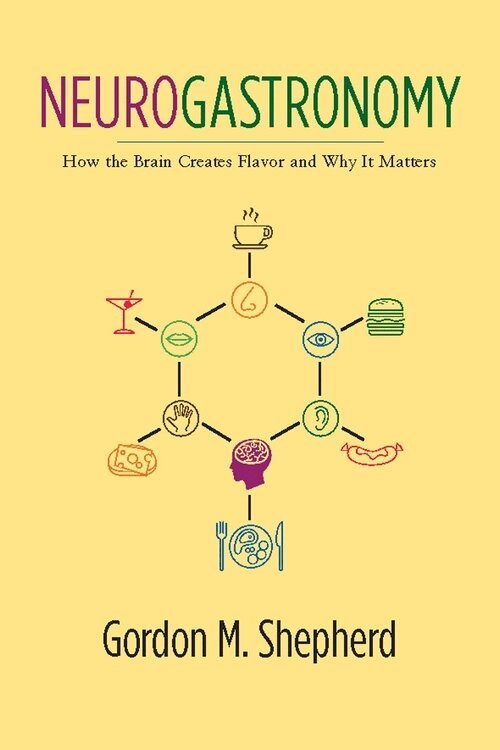
Leading neuroscientist Gordon M. Shepherd embarks on a paradigm-shifting trip through the "human brain flavor system," laying the foundations for a new scientific field: neurogastronomy. Challenging the belief that the sense of smell diminished during human evolution, Shepherd argues that this sense, which constitutes the main component of flavor, is far more powerful and essential than previously believed. Shepherd begins Neurogastronomy with the mechanics of smell, particularly the way it stimulates the nose from the back of the mouth. As we eat, the brain conceptualizes smells as spatial patterns, and from these and the other senses it constructs the perception of flavor. Shepherd then considers the impact of the flavor system on contemporary social, behavioral, and medical issues. He analyzes flavor's engagement with the brain regions that control emotion, food preferences, and cravings, and he even devotes a section to food's role in drug addiction and, building on Marcel Proust's iconic tale of the madeleine, its ability to evoke deep memories.Shepherd connects his research to trends in nutrition, dieting, and obesity, especially the challenges that many face in eating healthily. He concludes with human perceptions of smell and flavor and their relationship to the neural basis of consciousness. Everyone from casual diners and ardent foodies to wine critics, chefs, scholars, and researchers will delight in Shepherd's fascinating, scientific-gastronomic adventures.
Häftad, Engelska, 2013
258 kr
Skickas inom 5-8 vardagar
Leading neuroscientist Gordon M. Shepherd embarks on a paradigm-shifting trip through the "human brain flavor system," laying the foundations for a new scientific field: neurogastronomy. Challenging the belief that the sense of smell diminished during human evolution, Shepherd argues that this sense, which constitutes the main component of flavor, is far more powerful and essential than previously believed. Shepherd begins Neurogastronomy with the mechanics of smell, particularly the way it stimulates the nose from the back of the mouth. As we eat, the brain conceptualizes smells as spatial patterns, and from these and the other senses it constructs the perception of flavor. Shepherd then considers the impact of the flavor system on contemporary social, behavioral, and medical issues. He analyzes flavor's engagement with the brain regions that control emotion, food preferences, and cravings, and he even devotes a section to food's role in drug addiction and, building on Marcel Proust's iconic tale of the madeleine, its ability to evoke deep memories.Shepherd connects his research to trends in nutrition, dieting, and obesity, especially the challenges that many face in eating healthily. He concludes with human perceptions of smell and flavor and their relationship to the neural basis of consciousness. Everyone from casual diners and ardent foodies to wine critics, chefs, scholars, and researchers will delight in Shepherd's fascinating, scientific-gastronomic adventures.
E-bok
Engelska, 2011142 kr
Läs direkt efter köp
Gordon M. Shepherd, a leading neuroscientist at Yale University, embarks on an eye-opening trip through the human brain's "flavor system," establishing the parameters of a new field: neurogastronomy. Challenging the belief that humans' sense of smell diminished as they made the leap from primate to human, Shepherd contends this sense, the main element of flavor, is far more powerful and important than we think.Shepherd begins with the mechanics of smell, the way it stimulates the nose as it hits the back of the mouth. From the food we eat, the brain represents smells as spatial patterns, and out of these, it constructs flavor. He then considers the effect of the flavor system on many contemporary social, behavioral, and medical issues. He analyzes flavor's engagement with the brain regions controlling emotion, food preferences, and cravings, and he even devotes a section to food's role in drug addiction and, building on Proust's iconic tale of the madeleine, its ability to evoke deep memories. Shepherd discusses the link between his research and trends in nutrition, dieting, and obesity, particularly the challenge to eat healthy. He concludes with human perceptions of smell and flavor and their insight into the neural basis of consciousness. Everyone from casual diners and amateur foodies to wine critics, chefs, scholars, and researchers will be thrilled by Shepherd's scientific-gastronomic adventures.