Marcus E. Raichle – författare
Visar alla böcker från författaren Marcus E. Raichle. Handla med fri frakt och snabb leverans.
3 produkter
3 produkter
Inbunden, Engelska, 2014
873 kr
Skickas inom 5-8 vardagar
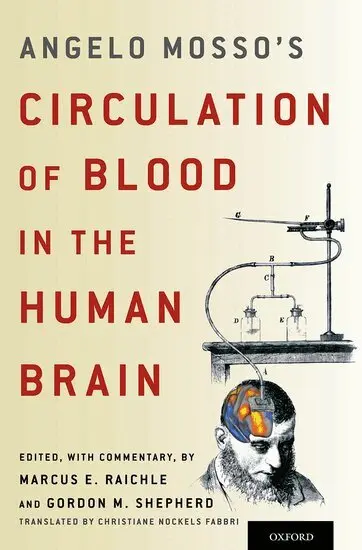
Modern brain imaging is revolutionizing the study of brain function in health and disease. Few realize that its origins began with a pioneering study in the nineteenth century by an Italian scientist, Angelo Mosso, of several subjects brought to him with head injuries that exposed their brains to direct observation. He took advantage of this opportunity to observe for the first time changes in cerebral blood flow in relation to different behaviors, the same changes that are the basis for the measurements underlying modern methods.Although Mosso was widely recognized for this highly original study by his contemporaries, through a German translation in 1881, there has never been a translation through which his magnificent achievement could be recognized in English. His rightful role as the pioneer in brain imaging has thus not been recognized. This unique volume corrects that deficiency. Through it, the modern reader, whether an expert in the field or an interested scientist or member of the public, can gain a new perspective on the remarkable insights Mosso gained into how behaviors as subtle as thinking about a subject or feeling an emotion can produce the changes in pulsations of the brain that he observed. The special features of this volume begin with a brief summary of Mosso's life. Two pioneers of modern brain imaging, Marcus Raichle and Gordon M. Shepherd, then provide an extensive commentary that succinctly summarizes Mosso's work and explains its relevance to modern methods. The authors not only emphasize Mosso's role as a pioneer in brain imaging, but also through this study as a pioneer in the eventual rise of cognitive neuroscience. The English translation then follows, together with all of the plates and illustrations of the original volume. The result is a classic of neuroscience now available for wide appreciation by neuroscientists, neurologists, psychologists, psychiatrists, historians of science and medicine, and the general public.
E-bok
PDF, Engelska, 2014725 kr
Läs direkt efter köp
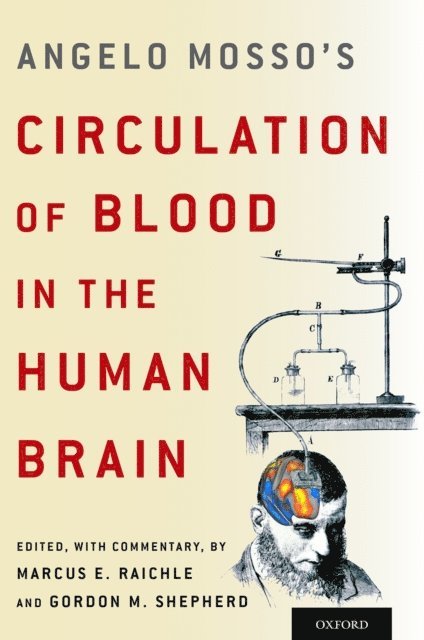
Modern brain imaging is revolutionizing the study of brain function in health and disease. However, few realize that its origins began in the nineteenth century with Dr. Angelo Mosso''s pioneering experiments. A foremost Italian physiologist and scientist, Angelo Mosso studied several patients brought to him with head injuries that exposed their live brains to direct, long-term observation. He took advantage of these rare opportunities to document, for the first time, changes in cerebral blood flow in response to different stimuli, behaviors, and emotions, the very same changes that are now the basis for the measurements underlying modern functional brain imaging.Mosso was widely recognized by his contemporaries for his highly original studies, published both in Italian in 1878 and in German in 1881. Yet there has never been a translation through which this groundbreaking work could be appreciated by the English-speaking world. Indeed, Angelo Mosso''s sophisticated experiments were to neuroscience what surgeon William Beaumont''s in vivo observations were to gastric physiology fifty years earlier. This unique monograph establishes Mosso''s rightful role as the pioneer of brain imaging. Through it, the modern reader, whether expert neuroscientist or interested student, can gain a new perspective on the author''s remarkable insights: how behaviors as subtle as thinking about a subject or feeling an emotion produce the changes in pulsations of the brain that he observed and recorded for posterity. Special features of this volume include first a brief summary of Mosso''s life. Two pioneers of modern brain imaging, Marcus E. Raichle (winner of the Kavli Prize for Neuroscience) and Gordon M. Shepherd (Yale University Professor of Neurobiology) then review Mosso''s work and provide extensive commentary to explain its relevance to modern brain science. The authors not only emphasize Mosso''s pioneering role in brain imaging, but also his fundamental contribution to the rise of cognitive neuroscience. The English translation (by historian of medicine Christiane Nockels Fabbri) follows, together with all of the plates and illustrations of the original volume. The result is a classic of neuroscience, now available for wide appreciation by neuroscientists, neurologists, psychologists, psychiatrists, historians of science and medicine, and the general public.
E-bok
Engelska, 2014725 kr
Läs direkt efter köp
Modern brain imaging is revolutionizing the study of brain function in health and disease. However, few realize that its origins began in the nineteenth century with Dr. Angelo Mosso''s pioneering experiments. A foremost Italian physiologist and scientist, Angelo Mosso studied several patients brought to him with head injuries that exposed their live brains to direct, long-term observation. He took advantage of these rare opportunities to document, for the first time, changes in cerebral blood flow in response to different stimuli, behaviors, and emotions, the very same changes that are now the basis for the measurements underlying modern functional brain imaging.Mosso was widely recognized by his contemporaries for his highly original studies, published both in Italian in 1878 and in German in 1881. Yet there has never been a translation through which this groundbreaking work could be appreciated by the English-speaking world. Indeed, Angelo Mosso''s sophisticated experiments were to neuroscience what surgeon William Beaumont''s in vivo observations were to gastric physiology fifty years earlier. This unique monograph establishes Mosso''s rightful role as the pioneer of brain imaging. Through it, the modern reader, whether expert neuroscientist or interested student, can gain a new perspective on the author''s remarkable insights: how behaviors as subtle as thinking about a subject or feeling an emotion produce the changes in pulsations of the brain that he observed and recorded for posterity. Special features of this volume include first a brief summary of Mosso''s life. Two pioneers of modern brain imaging, Marcus E. Raichle (winner of the Kavli Prize for Neuroscience) and Gordon M. Shepherd (Yale University Professor of Neurobiology) then review Mosso''s work and provide extensive commentary to explain its relevance to modern brain science. The authors not only emphasize Mosso''s pioneering role in brain imaging, but also his fundamental contribution to the rise of cognitive neuroscience. The English translation (by historian of medicine Christiane Nockels Fabbri) follows, together with all of the plates and illustrations of the original volume. The result is a classic of neuroscience, now available for wide appreciation by neuroscientists, neurologists, psychologists, psychiatrists, historians of science and medicine, and the general public.